Published
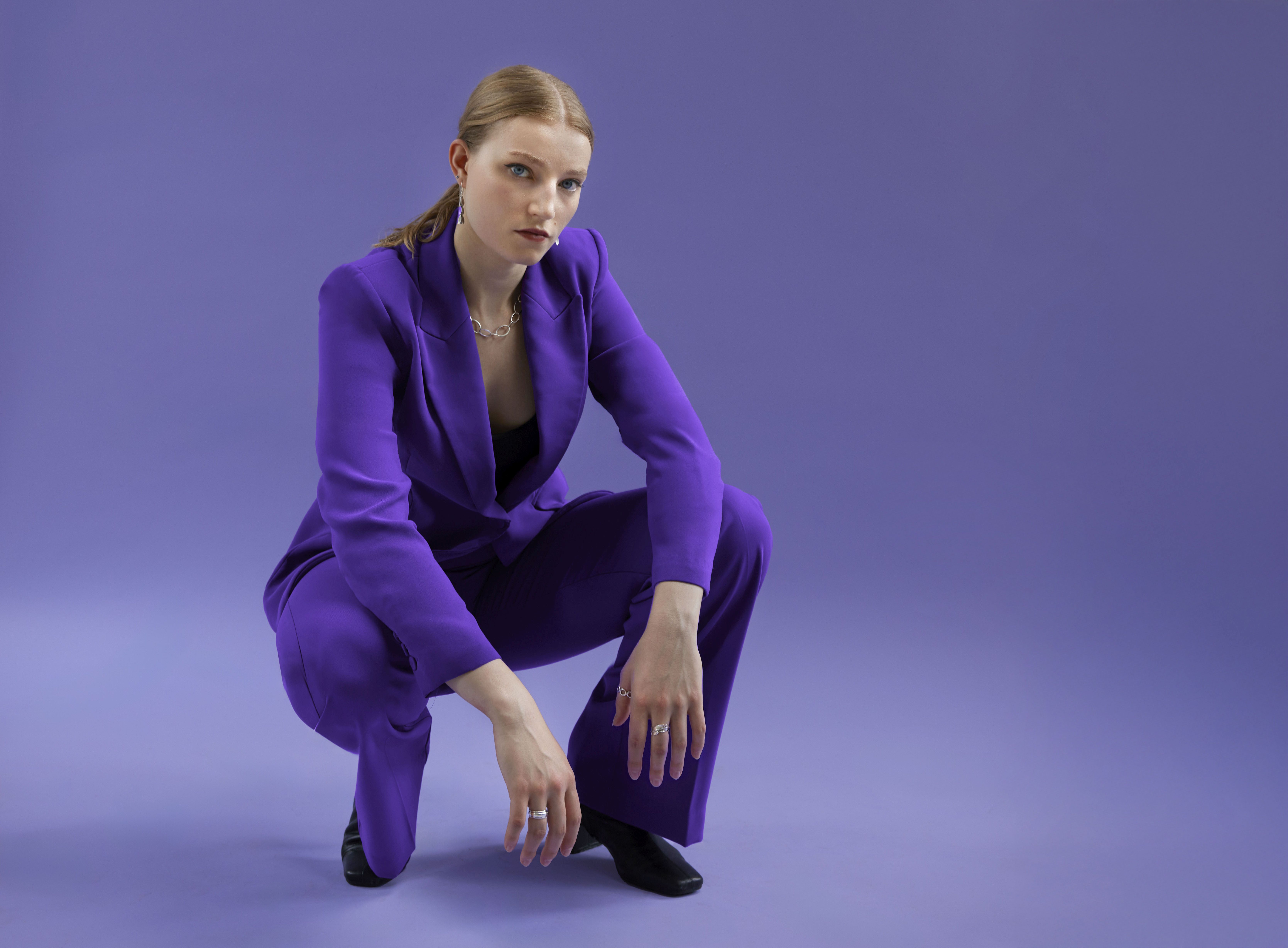
Name: Emma Rawicz
Occupation: Saxophonist, multi-instrumentalist, composer
Nationality: British
Current release: Emma Rawicz's new album Inkyra is out via ACT October 31st 2025. Check out the single "Time and other Thieves" here.
Topic that I am passionate about but rarely get to talk about: A few things outside of music that I’m extremely passionate about include languages, books and weightlifting! I have always been a total bookworm ever since I could read at all, and I find a lot of comfort in books. They provide a space for me where I can switch off entirely and just exist for a while in the world of whatever I’m reading. I feel similarly about languages – I get a similar buzz when speaking another language to when I play music! I’m so fascinated by the structure of other languages and how that might influence the way we see the world. I also cherish the opportunity to connect on a deeper level with other human beings by making the effort to speak to them in their mother tongue.
As for weightlifting, it keeps me sane, and is the reason why I can carry sometimes up to 50kg of gear on the road! It took me a little while to find it, but now I definitely feel as though I’ve found my sport, which is a great feeling.
If you enjoyed this Emma Rawicz interview and would like to stay up to date with her music and current live dates, visit her official homepage. She is also on Instagram, and Facebook.
Where does the impulse to create something come from for you? What role do often-quoted sources of inspiration like dreams, other forms of art, personal relationships, politics etc play?
For me, the need to create is one that is non-negotiable in my life, and I am at my happiest when I am creating in one way or another every day.
I find inspiration in a wide variety of places, be that in visual art, literature, people I meet and those closest to me, dreams and more, but the thing that ties all of these stimuli is an outpouring of emotion. I feel the itch to make something, usually composition, when a wave of emotion needs to be released somehow, and I know that what I’ve made is hitting its mark when it feels like it's fuelled by that emotion.
When writing is at its easiest, I feel like my emotional self flows right into the music I’m making, and it feels very cathartic, and I am always left with a sense of hope or anticipation.
For you to get started, do there need to be concrete ideas – or what some have called a 'visualisation' of the finished work? What does the balance between planning and chance look like for you?
I almost never plan what I’m going to write, and I just try to let whatever needs to come out, come out.
I am often surprised by the result in one way or another, and sometimes have a sense of some other person having written some of the music while I was somewhere else. This feeling grows over time and I often come back to a piece months after its completion and genuinely wonder how I came up with it!
Of course, sometimes I do like to set myself challenges or “briefs” of one sort or another, but this is usually for a functional reason and is definitely in the minority.
Is there a preparation phase for your process? Do you require your tools to be laid out in a particular way, for example, do you need to do 'research' or create 'early versions'?
I have no set preparation process, but I always find writing easier with a quiet environment, nice manuscript paper and more than anything a nice piano.
Sometimes when an idea comes out of nowhere I find myself frantically trying to find a pencil and paper before I forget it!
Do you have certain rituals to get you into the right mindset for creating? What role do certain foods or stimulants like coffee, lighting, scents, exercise or reading poetry play?
I always feel most productive when in a peaceful environment, for example where I can choose to be outside in nature whenever I need to.
I like practising yoga anyway but it definitely helps to clear my head before trying to be creative. I also seem to end up drinking endless cups of tea while writing …
For Inkyra, what did you start with? If there were conceptual considerations, what were they?
My latest release began in the seed of an idea, which you hear at the beginning of the album in the form of the opening melody of “Earthrise.”
I was sitting in a composition class at the Royal Academy of Music with Pete Churchill, who has been a huge influence on my writing and a great inspiration to me in general. This melody suddenly appeared in my head and I remember running home after the class singing it over and over in order to not forget it before I had the chance to write it down! It all really grew from there.
Concept wise, a lot of the album is inspired by fragments of Joni Mitchell lyrics, and that came from the fact that at the time I was listening to so much of her fantastic music, and I started to notice elements of her alternative tuning harmonies making their way into the music I was writing – chords I had never thought to use before.
On top of that, I’ve always admired Joni as a poet, for the pictures she manages to create with just a few words, so I started collecting my favourite lyric fragments.
Tell me a bit about the way the new material developed and gradually took its final form, please.
For much of the development of the music, especially in its early days, I have to thank my fantastic band. The music was mostly written over the course of the Summer of 2022, when I’d been offered a significant residency at a small London nightclub.
This felt like the perfect chance to explore some new places musically, and Scottie, David, Gareth, Kevin and Jamie were absolutely committed from day one. I used each new concert (we played roughly once a week) as a deadline for a new composition especially for the band, and we explored it, took it apart and reinvented it on the Saturday night when we would play it for the first time.
It was an extremely exciting process and so much of the sound of the album comes from that time, and the unwavering commitment and generosity of those musicians.
Many writers have claimed that as soon as they enter into the process, certain aspects of the narrative are out of their hands. Do you like to keep strict control or is there a sense of following things where they lead you?
When I’m writing, I feel more as though I’m searching for the starting point of a thread that I will follow, rather than making something from scratch.
I usually hear aspects of the music in my head reasonably fully formed, and a piece usually seems to have a direction it wants to go in. I can try to alter this direction somewhat, but the process is usually more rewarding if I just follow the idea to its natural conclusion and wait to find out what I’ve written at that point.
There are many descriptions of the creative state. How would you describe it for you personally? Is there an element of spirituality to what you do?
When I’m really in the creative state, I feel a sort of warm buzz all over me, like a sort of charge that comes with ideas flowing. I feel absolutely in the moment but also somehow restless as if I can’t get the ideas out fast enough.
Being able to write in the way I want releases a deep feeling of joy and satisfaction for me. I suppose there is an element of spirituality in that I don’t think I can control when these moments or ideas come, I just have to be open and ready to listen and receive them when they do.
Once a piece is finished, how important is it for you to let it lie and evaluate it later on? How much improvement and refinement do you personally allow until you're satisfied with a piece? What does this process look like in practise?
I know that many people are constantly reworking and revisiting older pieces, even ones they wrote years ago, trying to perfect them, but that’s not something I ever really do. I try to give each piece as much air and space to develop while I am in the writing process initially and trust that when it feels like it has really reached a conclusion, then that is what it is.
Of course, when arranging music for Jazz Orchestra or large ensemble the piece may take on a new identity and I might feel that it’s appropriate to make some changes or enhancements, but this is always in service of the particular musical situation I’m working on at the time.
I also love to invite the musicians I play with to offer their ideas and feedback and also to be as free as possible to reinvent the music as we play it, and so my music often develops and takes on a new life in this way.
How do you think the meaning, or effect of an individual piece is enhanced, clarified or possibly contrasted by the EPs, or albums it is part of? Does each piece, for example, need to be consistent with the larger whole?
I definitely feel that context is important for the listener, and I always try to present my music in the best way I can, be that in the context of a whole album, its place in the track order, where it appears in the setlist of a live gig etc. Therefore yes, it is very important to me that each project or record has a strong identity, and that is absolutely something I aim for.
However, I do hope that any individual piece has its own identity that is strong enough to stand on its own regardless of the situation in which it is heard.
What's your take on the role and importance of production, including mixing and mastering for you personally? In terms of what they contribute to a song, what is the balance between the composition and the arrangement (performance)?
In my opinion, to make a truly great album, everything is important. Of course all of these different elements are in focus at different stages of the album’s creation, so it’s hard to think about them all in the same way.
For me the aim is always to commit to doing every single stage of the process to the absolute highest level possible. For me it’s all in service of helping the music to come across as best it can, and in the end when the music is heard, the lines between production, composition and performance are often blurred into one impression anyway, unless you happen to be an expert in one of those specific areas.
One thing I will say, though, is that if the original composition is not strong, it’s very difficult, if not impossible, to disguise or fix that in later stages of the process.
After finishing a piece or album and releasing something into the world, there can be a sense of emptiness. Can you relate to this – and how do you return to the state of creativity after experiencing it?
I don’t really have this feeling, since I am constantly thinking ahead to the next two, three or four projects in the future! I am always writing and thinking about exciting new possibilities, so I never feel empty when a release is out there.
I do feel a satisfying sense of fulfilment, that the circle has been closed and the music is finally out there, and “released” in the fullest sense of the word. Releasing my music allows me to feel free to move on to whatever it is I want to do next.
Creativity can reach many different corners of our lives. Do you personally feel as though writing a piece of music is inherently different from something like making a great cup of coffee? What do you express through music that you couldn't or wouldn't in more 'mundane' tasks?
I think that creativity can be found in all aspects of our lives, and is governed more by the intention with which we set out to do those tasks rather than the task itself.
It is not my life’s ambition to make the best cup of coffee in the world, but it probably is someone else’s passion. We have a different relationship with different things in our lives, but that doesn’t reduce the inherent value or creative potential of the things that don’t speak to us personally.
For me, music is it, and the written word is it, and these things allow me to be the fullest version of myself with no explanation needed. I can just “be” in the freest sense, and that feels like a real gift. I am sure that others find this feeling in many surprising and varied places that would not initially occur to me, and indeed I hope they do.