

Name: Éric Normand
Nationality: Canadian
Occupation: Epidisciplinary musician, composer, improviser, multi-instrumentalist
Current Release: Éric Normand teams up with Louis Beaudoin-de la Sablonnière (electric guitar), Ingrid Laubrock (saxophone), Jonathan Huard (vibraphone) and Marianne Trudel (piano) for Folio #5, out via Tour de Bras.
If you enjoyed this Éric Normand interview and would like to know more about his music, visit his official homepage. He is also on bandcamp.
What were some of the musical experiences which planted a seed for your interest in jazz?
I'm from a punk rock background. I discovered jazz and improvised music on the Canadian Broadcasting Corporation which had very good musical programs.
My first interests were for the most radical part of the "jazz" thing: free improv, noise … and I got interested in what was called at the time "Musique Actuelle" that is kind of a connection between radicalism of free jazz, Carla Bley-like humoresque sophistication and attitudes and languages of rock. Perfect fit for me.
From that point onward, I started digging a large array of music usually associated with the term "jazz". I've had pleasure then to hear people like Roscoe Mitchell, John Butcher, Cecil Taylor live on the CBC and then at the Festival in Victoriaville. Such life changing experiences.
What does the term jazz mean today, would you say?
I'm not sure. In a way, I see it as the heritage of (great) black music. And I ask myself who am I to handle this precious knowledge. In balance, I also feel in the term all the academic charge.
I will not pretend I play jazz. But I'm interested in jazz. Let's just play music, for now.
As of today, what kind of materials, ideas, and technologies are particularly stimulating for you?
Simplicity. Getting older, I really feel that simple things are more deep, even more when you play with others. It's not a universal formula.
But the way I feel now: trying to give balance to everyone's creativity through organic, simple systems.
What have been some of the most fruitful collaborations for you recently and what approaches to and modes of collaboration currently seem best to you?
As an improviser, collaboration is the essence of the art. I like to work with people living far away (sometimes 16 000 kilometres). It gives so much importance to the moments we spend together.
Usually I try to book a 2 weeks tour and we book a studio on a day-off. The context of playing a lot of gigs gives fuel to the recording session.
What, would you say, are the key ideas behind your approach to improvisation?
Listening. And mapping a territory. Depending on who I play with, mostly, I make up my mind at the sound check. I will pick a number of ideas / matters that I will use, without knowing what these matters are. This number could be between 3 and 8, not much.
Then I listen and I find out where to put a brick on.
The Montreux Festival intends to preserve its archive of recordings for future generations. Do you personally feels it's important that everything should remain available forever - or is there something to be said for letting beautiful moments pass and linger in the memories of those that experienced them?
I'm split on this. Of course, I think archives are important for preservation purposes.
But I'd like to see that we have a vision of diversity when it comes to the contents - rather than merely showcasing the culture of rich civilizations.

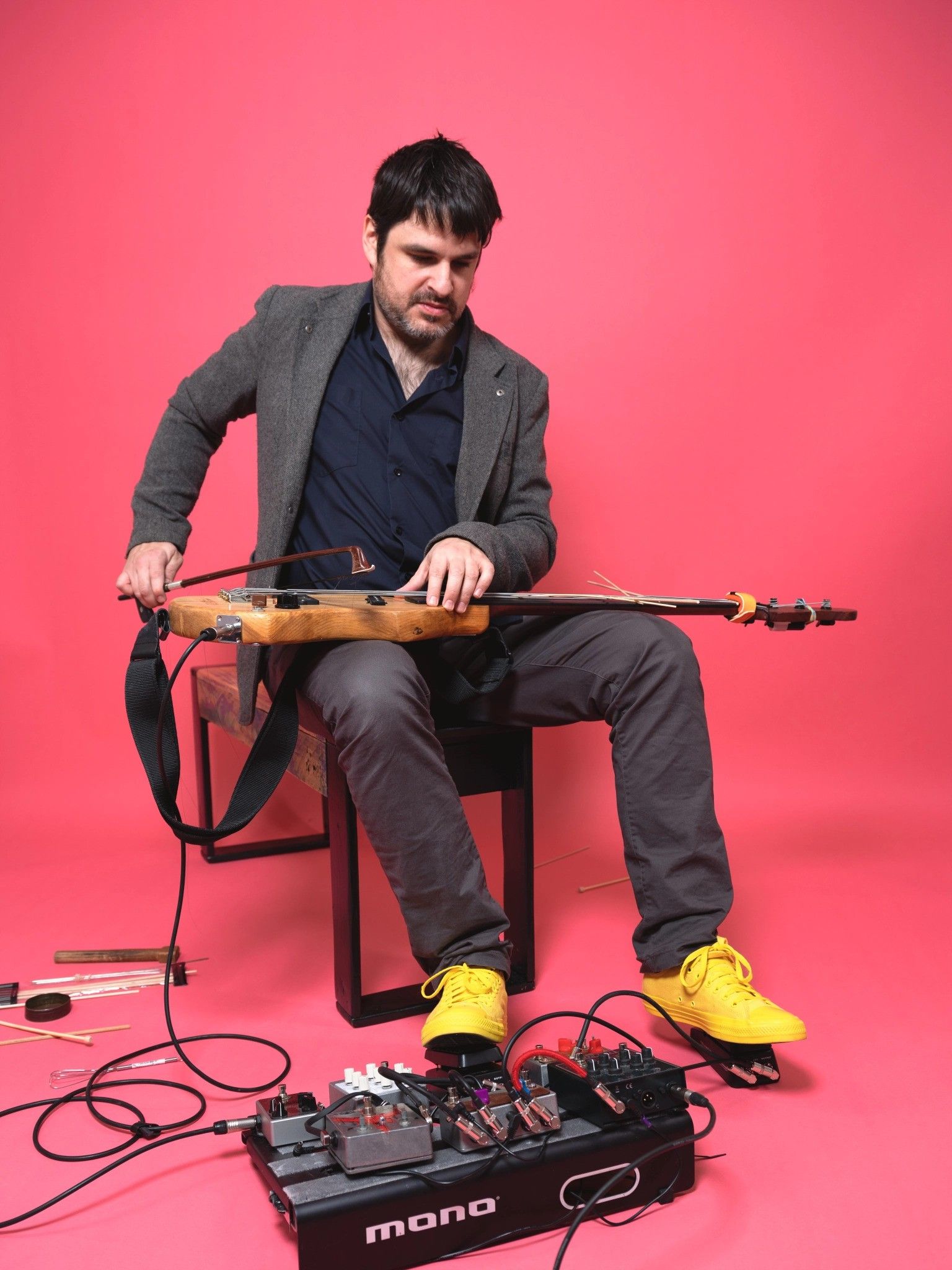 Éric Normand Interview Image by Cédric Bouillon
"I will not pretend I play jazz. Let's just play music, for now."
Video
