Published
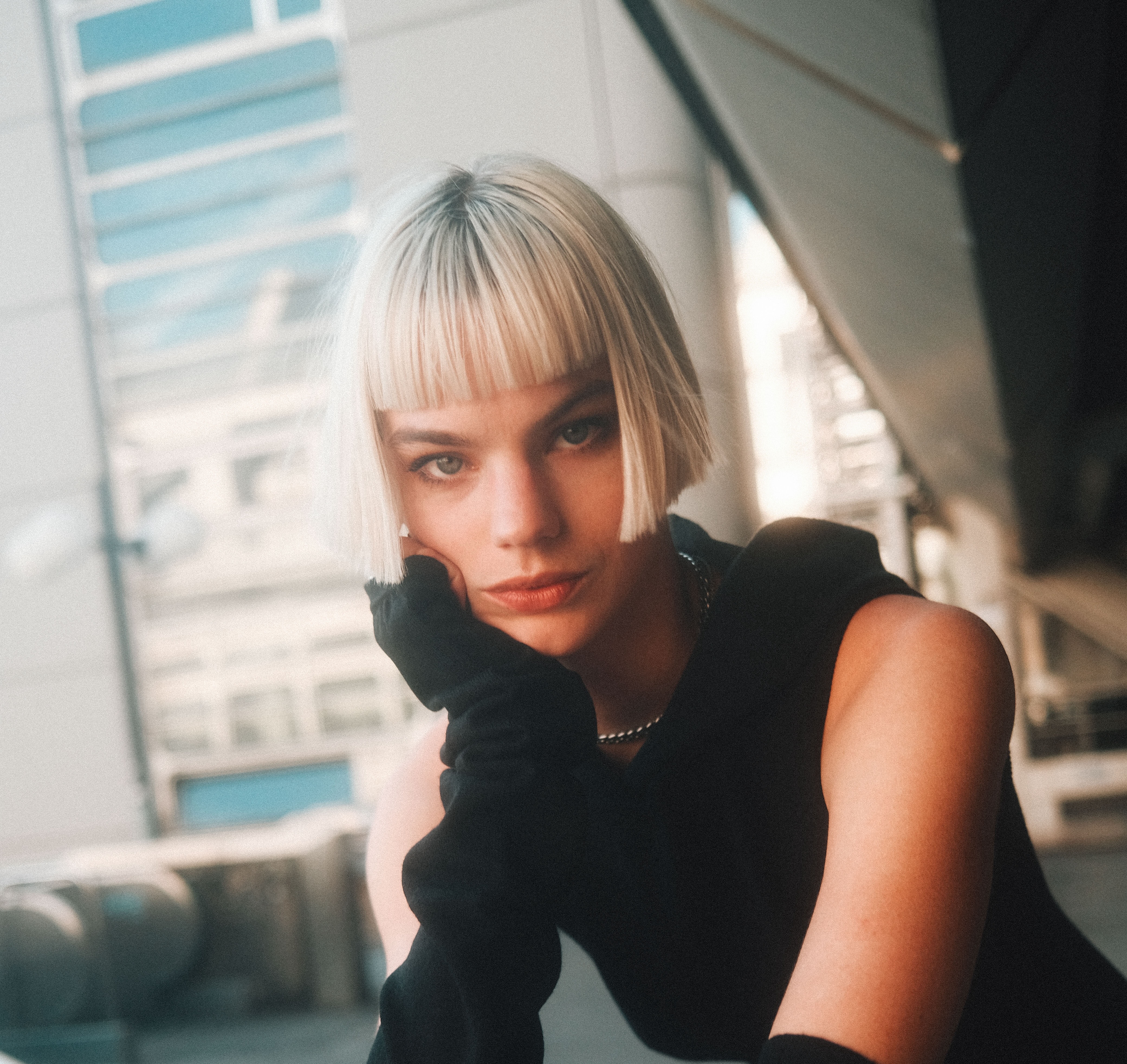
Name: Estella Boersma
Nationality: Dutch
Occupation: Producer, DJ, label founder at EB-REX
Current Release: Estella Boersma's new EP EB002 is out via EB-REX.
Global Recommendations: I grew up in Amsterdam, and would absolutely recommend going to Killacutz to score the best records, and then eat a delicious apple pie at Cafe Winkel!
Currently I am living in Berlin tho, and here I would 100% recommend visiting Audio In for the vinyl, take a walk around Treptower Park to get some fresh air and close the evening with a beer at a local Kneipe :)
Things I am passionate about but rarely get to talk about: One thing I love as much as I love music, is videogames! Many games have influenced me and my musical taste since I can remember. Growing up I played games like SSX, GTA Vice City,, WoW, Final Fantasy and much more.
A lot of the soundtracks of these games, especially the composed ones like in Final Fantasy 10 for example, are simply mindblowing, taking you on a venture in- and outside of the game. It’s something I really enjoy not just for fun, but also to admire as an artform of its own :)
If you enjoyed this Estella Boersma interview and would like to know more about her music, visit her on Instagram, and Soundcloud.
The path to becoming a producer is a process - but from many interviews, I am under the impression that there are nonetheless one or a few defining moments. If this was the case for you – what were they and why were they so incisive?
Absolutely! The moment I fell in love goes all the way back to my very first rave in De School in Amsterdam. It was absolutely incredible being in this free environment, in the moment, dancing and connecting with others. In this moment, techno really made a massive impact on me, and I knew I wanted to be a part of it in some way.
Not long after, when visiting a dear friend, I saw a giant Modular system in the room and couldn’t help but ask ‘What is this wild-looking Star Trek space machine?’ The moment we turned it on, played around with the modules and tweaked the sounds, I instantly fell in love with the idea of producing with hardware.
The same day we went to the local music store in Amsterdam, bought my first synthesizer, soundcard and monitors, and dived right in!
Tell me about one or two of your early pieces that you're still proud of (or satisfied with) in terms of production – and why you're content with them.
“Multipass” released on Dance Trax, is one of the very first tracks I ever released publicly, and I love it to this day. At the time I was less skilled as a producer, but the rawness of the track still really speaks to me.
I used my first studio setup back then, working with samplers and drummachines like the MFB Tanzbar, Octatrack, my voice, the Sequential Prophet REV2 and the DX7 plugin for the wild acid line.
Another track that still resonates with me is the ambient piece called "Evolve" released on Club Glow.
Using flipped and reversed vocal samples pulled through the ‘Ovox’ Vocoder, with synths added from the Udo Super 6, this track feels like a breath of fresh air for me.
Making compositions or ambient soundtrack-like pieces is something I really enjoy.
In how far, would you say, was your evolution as an artist connected to the evolution of your music set-up and studio? Were there shared stepping stones?
I loved to play what I made in the studio to the people, and to see how the music would make us feel and connect us together.
I started producing before starting to DJ, which made the transition to play the music in front of people very fun. It was really exciting to have a direct way to share the music, and to have an instant way to communicate what I made before with the people on the dance floor.
I love to be spontaneous, both in the booth and in the studio, to keep things fresh and exciting.
There are artists who can realise their ideas best with a traditional – or modified – piano interface, others with a keyboard and a mouse, yet others by turning knobs or touching screens. What's your preferred and most intuitive/natural way of making music and why?
I love a hands-on approach when it comes to the first phase of building my tracks. Each machine has a life of its own and the analogue machines give the colour to the sound, warm or cold depending on the amps, which is the most beautiful thing.
After recording my sounds and takes, I will arrange and fine tune the rest in the box, and add the missing pieces to make it whole. When working with Synth plug-ins, I mostly map the parameters to a midi-controller to keep the workflow organic.
Tell me about the space of your current studio/workplace and how you've set it up to optimise creativity.
The studio space is my absolute favorite place to be in, it’s a place where I set no rules, but just have fun and explore all the different ways to make sound and most importantly, to have fun in this little spaceship made of my favorite gear!
It’s a sound proofed space, with warm and colored lights, some art, incense and last but not least, my equipment. The warm, more lived-in space creates a more relaxed working environment, where it’s easy to both focus and experiment.
From the earliest sketches to the finished piece, tell me about the production process for your current release, please.
EB002 is a release where I really wanted to focus on the variety of sounds.
From the deeper, psychedelic sounds in “Flying Saucer”, to the more rolling and driving techno sounds in “Mars”, a more lighthearted take in “Vision” and finishing the EP with an ambient, more soundtrack-like take on the A1 with “Floating Saucer.”
The Roland 909 was one of the machines all the tracks have in common, with its powerful groove it’s by far my favorite drummachine. Followed by the Hydrasynth, which is used for all the main sounds in “Flying Saucer” and some of the prominent sounds in “Mars.”
While working on this track, another idea spontaneously spawned into my head and I took this chance to create a second track from the existing elements, which then became the more soft, cinematic sounding “Floating Saucer” on the release.
All in all, the process of all the tracks was incredibly organic, and once they were ready, I felt they connected together really well as a whole.
Late producer SOPHIE said: “You have the possibility with electronic music to generate any texture, and any sound. So why would any musician want to limit themselves?” What's your take on that?
Electronic music is limitless. As it can be anything you want it to be, and that’s the beauty of it!
Some limitations can be good, which is where working with hardware comes in. Being limited by a machine's capabilities can be a good thing as it forces you to think differently, and use the sounds as they come and work from there.
But there is no right or wrong way to write music. Some days a limited setup works best, while on other days it’s amazing to let the creative mind flow, and just write what comes out in the moment, if that’s in the box, with gear, or with one's voice, there’s no limit to the process.
Tell me about your aesthetic preferences for picking effects like reverb, delay, compression, chorus etc … - What was the role of these effects in the production of your current release?
For effects I have 2 different options in the studio. We have a small pedalboard which includes the Strymon Big Sky for reverb, the Eventide H9 Multi FX Pedal and the Strymon Timeline for delays, which all sound fantastic.
Of course there’s also amazing plug-ins to add to the productions in the box, which I mostly use to make all the elements sound like they come from the same room or space, and also give them a bit of extra colour and flavour.
The current production process allows for fast and infinite variations. Can you tell me about how you deal with this potential for the infinite and what ultimately decides on how many iterations to create and which version to release?
Infinite options can be paralyzing. Mostly I try to trust my instincts and go with what feels right, and stick with that. If something feels right from the beginning, it’s mostly the way to go for me.
I let the process flow and once I feel the track is finished, I listen to it while taking a walk and of course in the club, to see how it feels. When I then notice something that still feels off, I will come back to it and adjust it.
But once a project is done, I let it be and move onto the next!
Tell me about the role collaboration played in your recent productions – and how you see the potential for machines as collaborators compared to humans.
Everyone is part of the process. From the artist, mastering, record pressing, PR, distribution and label owners, everyone contributes and gives energy to the release itself.
When it comes to the music process, humans and machines both collaborate and react to one another. Utilizing a piece of gear can make it come to life, while the gear also gives back sound, feeling and inspiration to the creator.
Production, as opposed to live performance, can be a lonely process and feedback from listeners isn't always tangible. What is it about it that gives you satisfaction?
It’s like keeping a secret for a while. You build a whole world, universe in your head and when you finally let it out, it’s a cathartic moment. Even if no one hears it right away or in the future, it still exists as a creation of your own. That’s beautiful, and also meditative.
Losing hours in the studio to the sounds, loops and creations, is a way to express and let go for me.
We can watch videos on production, take producer courses, and exchange deep insights on gear forums. Amidst these options to improve one's chops/skills, how do you keep things playful?
It’s the unexpected and random moments that keep things playful. Like using a piece of gear you haven’t used in a while, going through a sample bay and finding an unexpected sound that inspires you, or simply just twitching knobs until a strange unexpected sound comes out, this is what keeps things fun.
Besides making techno, I really enjoy making tracks which are not for the dance floor. Soundtrack-like compositions or ambient tracks are a way for me to express what otherwise wouldn’t see the light of day, or the emotions that aren’t shared as often.
From flowy violin compositions, to massive pads or strange vocals, this is what creates pieces that sometimes end up being the best ones.
AI is already capable of making something most people would recognise as music. I am curious, though, and will keep this question somewhat broad on purpose: What do you think that means?
We can always ask ourselves what makes human-made music human.
For me this is the emotion, imperfection, context and expressive feel that comes with human art. The connection to feeling is still ours.
Creativity can reach many different corners of our lives. Do you personally feel as though producing a piece of music is inherently different from something like making a great cup of coffee? What do you express through music that you couldn't or wouldn't in more 'mundane' tasks?
Music lets me express things I don’t have the words for.
It’s also a very direct way to express my emotions, and instantly convey how I feel through sound. I absolutely love that!