Name: Etienne Nillesen
Nationality: Dutch
Occupation: Composer, improviser, percussionist, performer
Current Release: Etienne Nillesen's en is out via Sofa September 6th 2024.
Recommendations: Artist Eva Jeske - her beautiful series called “Membrane” is worth checking out. She made all these works using old drumheads and the result is so powerful with an incredible depth! One of these artworks is on the cover of my solo album en
The International Nothing – “Just None of Those Things.” A piece of music with so much detail and beauty.
If you enjoyed this Etienne Nillesen interview and would like to know more about his music and upcoming performances, visit his official website. He is also on Instagram.
Do you think that some of your earliest musical experiences planted a seed for your interest in improvisation?
I’ve always liked the freedom of creating in the moment—making sounds that fit the music or even become the music.
I started playing the drums when I was 3 years old, and at that point, I had no knowledge of how to play. So, I would just sit down and start playing. You could say I was improvising, although on a very basic level, but that’s how I started.
When did you rst consciously start getting interested in musical improvisation? Which artists, teachers, albums or performances involving prominent use of improvisation captured your imagination in the beginning?
I remember having my first drum lesson with Marcel “Makki” van Engelen when I was 15 years old. He gave me a CD and told me to listen to it before our next lesson. The CD was Miles Davis’ My Funny Valentine, and it blew my mind. I had no idea what was happening and didn’t understand any of it, but it changed something in me.
Hearing Miles and especially Tony Williams play a tune with so much freedom and creativity was exciting and completely new to me. This was my introduction to the concept of improvisation, it sparked my curiosity, and I started to listen to and study jazz.
A few years later, I discovered Pakistani Pomade, an album by the Alexander von Schlippenbach Trio with the amazing Paul Lovens on drums, and that album put free improvisation on the map for me. I loved it and still do.
Tell me about your instrument and/or tools, please. What made you seek it out, what makes it “your” instrument, and what are some of the most important aspects of playing it?
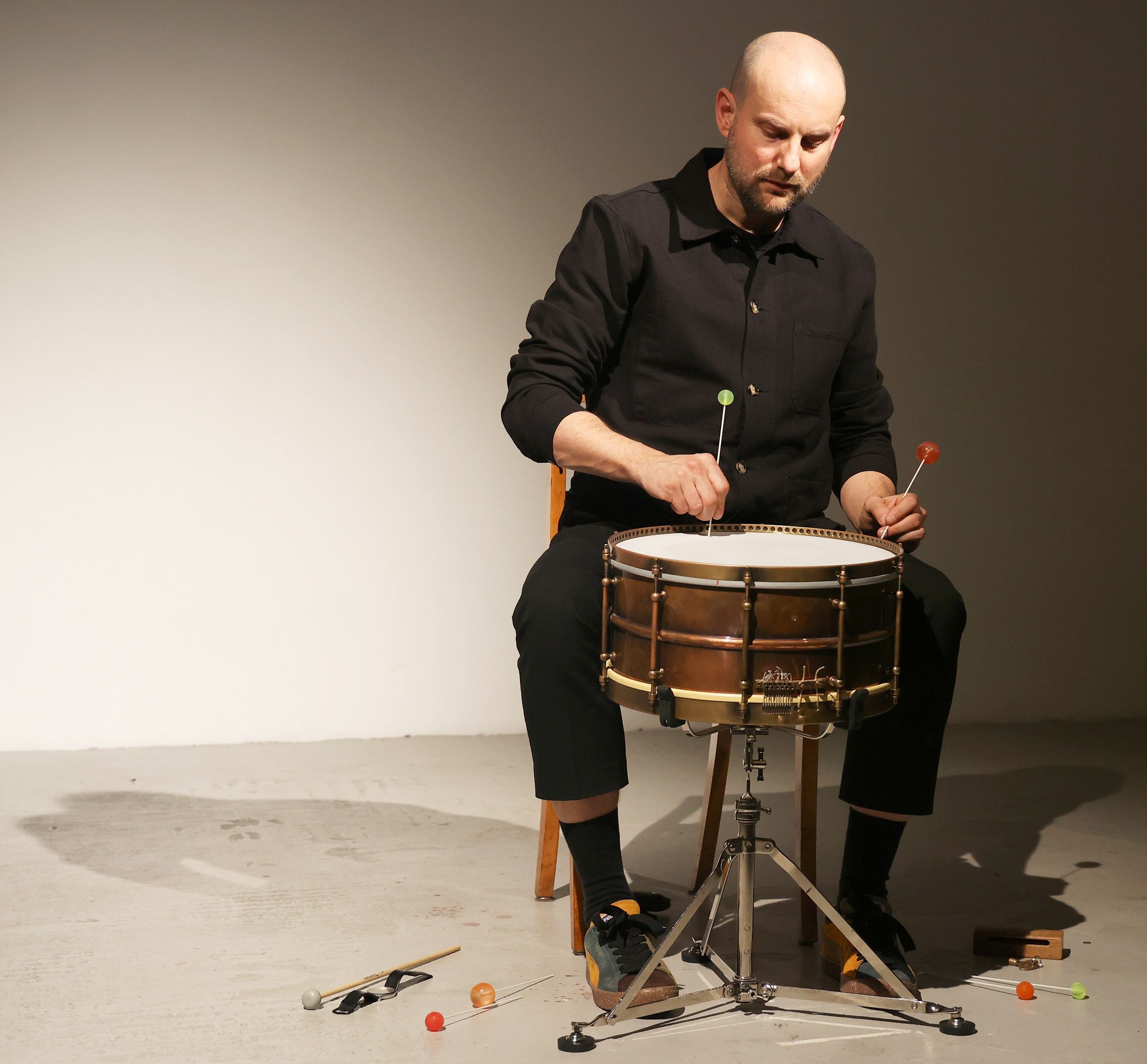
After playing the drum set for so long, I began looking for other ways to express myself. I was always fascinated by musicians who focus on just one instrument, in contrast to percussionists and drummers who often work with multiple instruments simultaneously. I realized that I was particularly drawn to the snare drum, so I decided to focus exclusively on it for at least a couple of years. I like simplicity and minimalism, so concentrating on just one instrument fit my personality well.
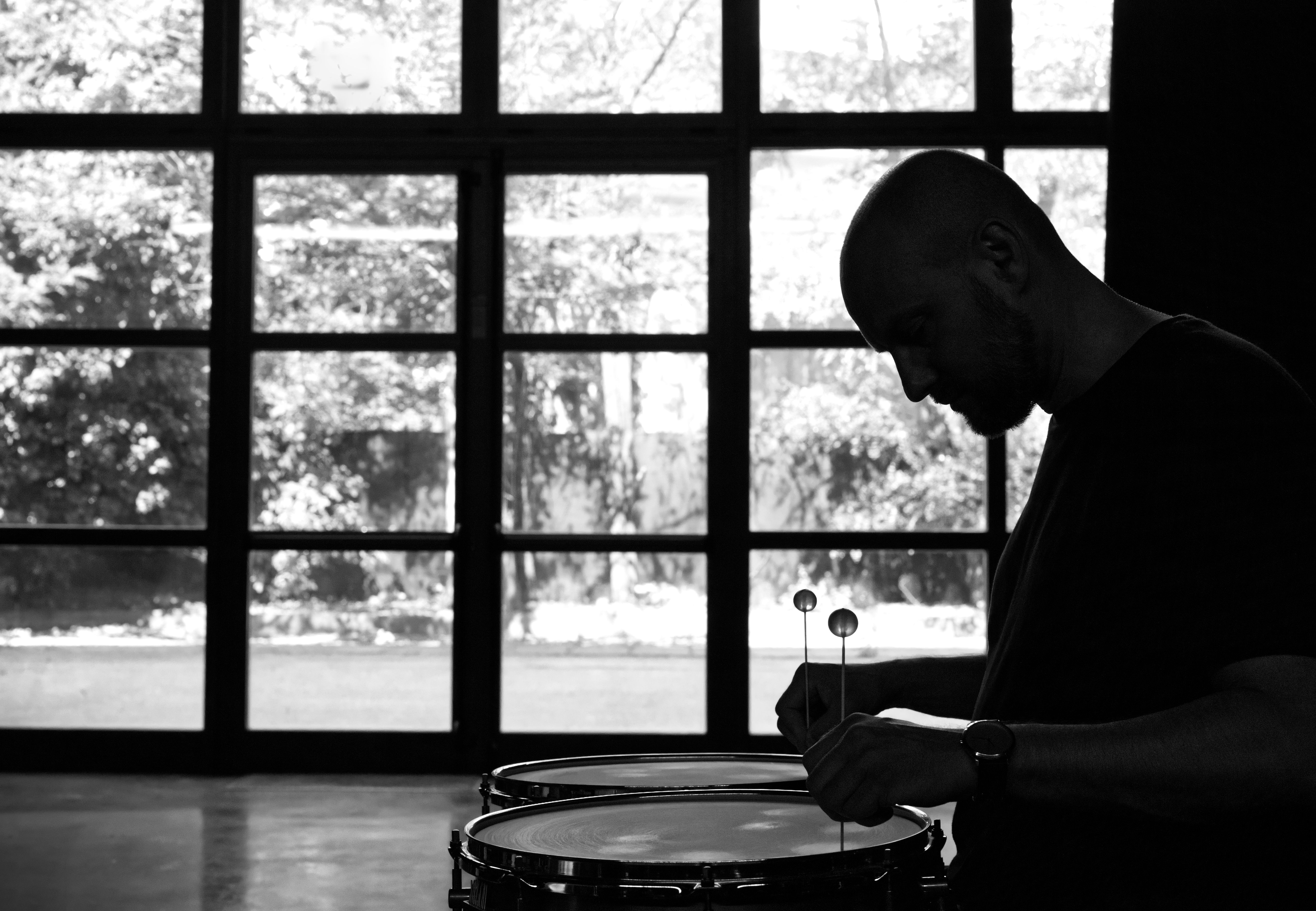
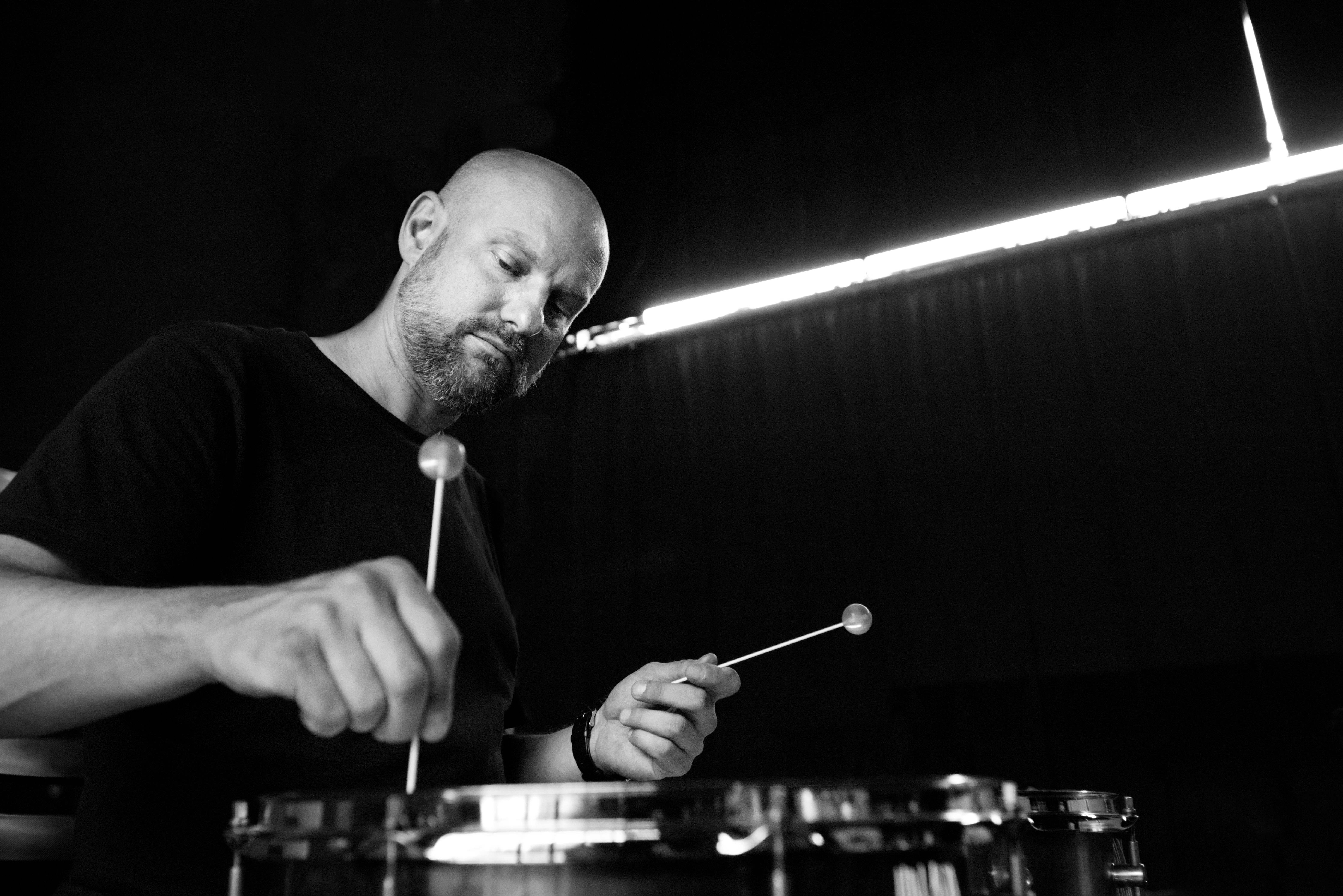
I soon started developing a technique that involves using a thin drumstick against the surface of a granular drum skin, which produces sustained pitches and harmonic layers. For me as a player, it's very exciting to explore ways to create these sounds. As far as I know, nobody has conducted this kind of research to this extent, so I can't copy or ask others for solutions.
On my solo album en (released on September 6th on SOFA Music), I play a 32-minute piece based entirely on these sounds.
Derek Bailey defined improvising as the search for material which is endlessly transformable. What kind of materials have turned to be particularly transformable and stimulating for you?
After discovering that I could play pitches and harmonic layers, I began exploring ways to use this material. Since I create these sounds using a circular motion, there's always a rhythmic component, and the speed of the motion dictates the volume.
This means that, depending on where I play on the drumhead and the speed of the rotation, I essentially have all the musical parameters I need to improvise and make music, such as dynamics, rhythm, melody, and harmony. I can manipulate these elements to adjust the sound, making it either cleaner or more abstract.
I remember playing with Axel Dörner for the first time years ago—he was an absolute master at controlling his material in a way that allowed him to transform it endlessly. This made every concert with him exciting and fresh. This level of mastery is definitely something I strive to achieve.
View this post on Instagram
Do you feel as though there are at least elements of composition and improvisation which are entirely unique to each? Based on your own work or maybe performances or recordings by other artists, do you feel that there are results which could only have happened through one of them?
I think there are many similarities, but the biggest difference for me is that improvisation happens in the moment, and there's no way to take back a musical decision once it's made. If it doesn’t feel right, you can create a context after the initial decision to make it work again—it might even become something great—but you can’t erase it once it’s out there. You have to deal with your decisions in the moment.
My solo album was recorded this way: one take, no overdubs or electronics. I just started playing, and every decision I made during those 32 minutes was something I had to deal with.
For me, this is very exciting, and I think you can hear that in this album and in improvisation in general.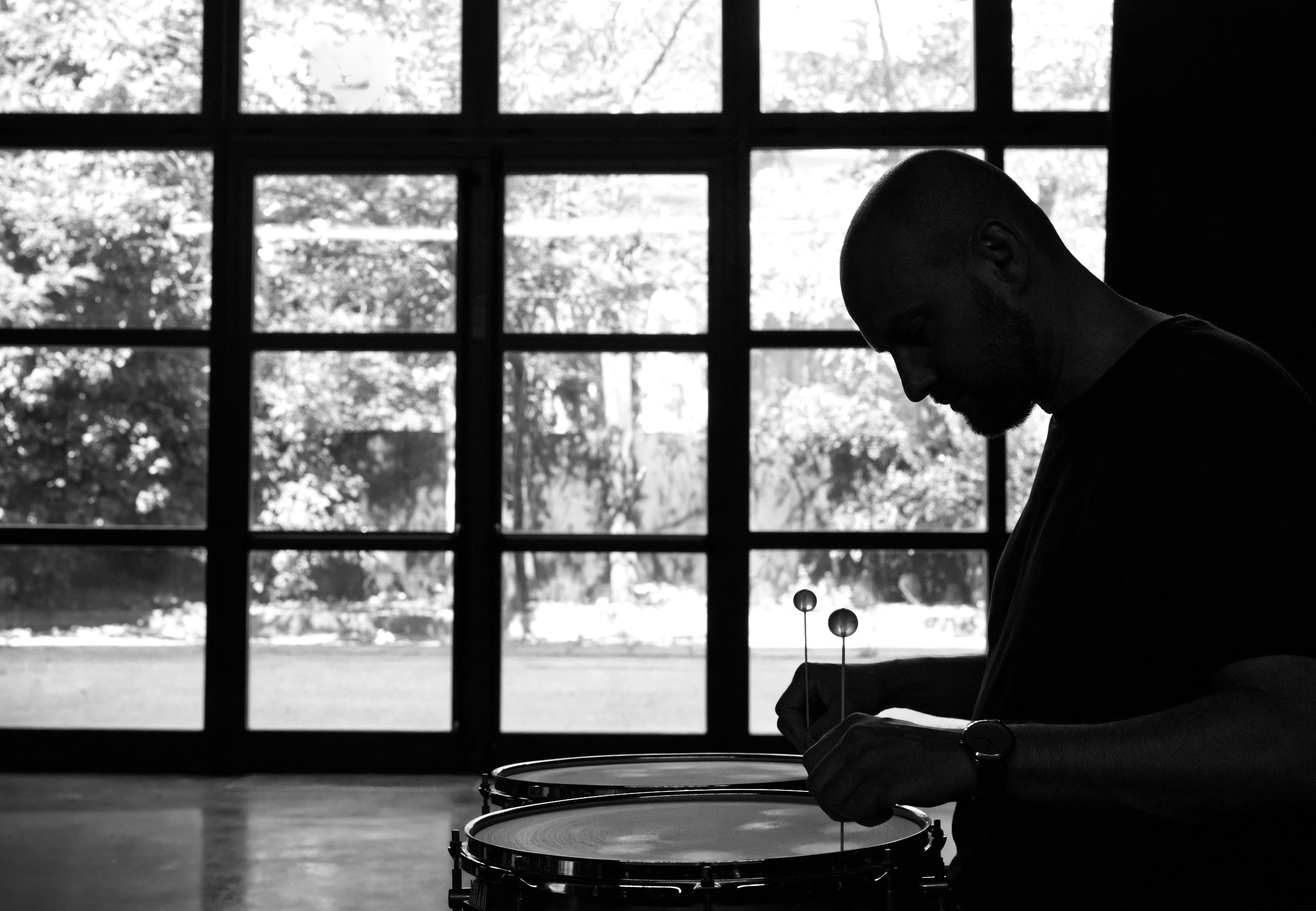
Etienne Nillesen Interview Image by IJ Biermann
When you're improvising, does it actually feel like you're inventing something on the spot – or are you inventively re-arranging patterns from preparations, practise or previous performances? What balance is there between forgetting and remembering in your work?
Every great improviser I know has put a lot of work into creating and shaping their language. This means years of practicing, thinking about music, and playing music. All of these experiences are carried with you onto the bandstand while improvising, and this is the material you actually use.
It’s like having building blocks that you can arrange in di erent ways, reassemble, and reorganize—collected over many years. So, for me it doesn’t feel like I am inventing something new on the spot.
In terms of your personal expression and the experience of performance, how does playing solo compare to group improvisations?
Playing solo means I have nowhere to hide. It’s just me, my instrument, the room, and the audience, and every decision I make is one I have to fully believe in. There’s no one to help if I make a 'bad' decision—I have full responsibility for the outcome of the piece. This offers a lot of freedom, but it’s also very demanding.
Group improvisation, as the name suggests, involves a group, which means the responsibility is shared among everyone, not just one person. There’s a safety net with other musicians, and if you’re unsure of what to play, you can simply not play, knowing the others will be there to support the music.
You can also choose not to play when performing solo, but that creates silence, which has a completely different impact on the music and its dramaturgy. This doesn’t mean one approach is better than the other—they’re just different.
Right now, I love playing solo concerts, and it's something I want to focus on even more. I want to become more comfortable with it, fully express what I envision, and showcase the full potential and richness of the sound.
In your best improvisations, do you feel a strong sense of personal presence or do you (or your ego) “disappear”?
In a perfect situation, my ego disappears. It’s not about me, but about the music. I don’t want to tell a story—I believe the sounds themselves are a complete and intricate world. If I dare to let go of my ego and truly listen, the music reveals itself in all its complexity and beauty.
Of course, without me, there would be no sound, so there’s a contradiction there. But I like to think that music is about the sounds, not the person who plays them.
In a live situation, decisions between creatives often work without words. From your experience and current projects, what does this process feel like and how does it work?
For me, it all comes down to trust. I’m fortunate to play with incredible musicians who inspire me, and I know that whatever happens, everyone will be there for each other and for the music. This trust means we don’t need to discuss what we’re going to do before a concert. As soon as the first note is played, everyone understands the direction and contributes their part.
In my current projects, we do spend a lot of time discussing music and different approaches to improvisation during rehearsals. I think it’s a misconception that improvising musicians don’t need to rehearse. In my experience, the more you rehearse and develop a shared language, the deeper the level of communication on stage. Understanding how other musicians think helps you anticipate their musical direction, making it easier to follow or respond to them during a performance.
This doesn’t mean you always have to agree, which is great because tension and release are fundamental to music. But at least when you disagree, you’re aware of it and can respond accordingly.
I believe there’s a risk in playing with people you don’t know. Sometimes it works out beautifully, but often the music lacks a certain depth and can feel superficial. That being said, it is also something that can be very rewarding.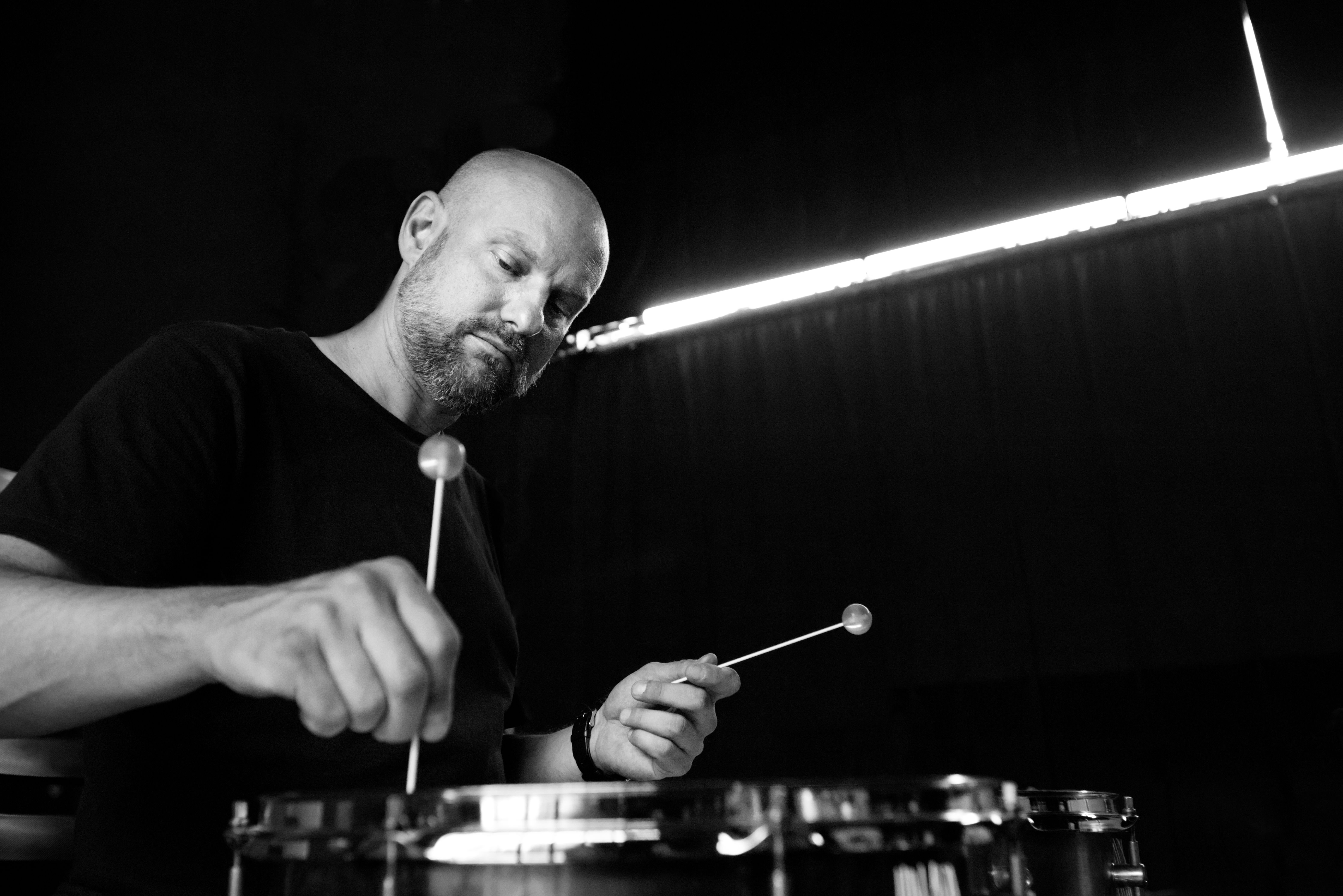
Etienne Nillesen Interview Image by IJ Biermann
Stewart Copeland said: “Listening is where the cool stu comes from. And that listening thing, magically, turns all of your chops into gold.” What do you listen for?
I agree with Stewart because listening allows you to perceive the full context. For me, music is all about the details—those details create the colors, tension, and release.
What I listen for are the nuances in texture, rhythm, melody, harmony, overtones, and so on. These elements inspire me to play and react.
I have always been fascinated by the many facets of improvisation but sometimes found it hard to follow them as a listener. Do you have some recommendations for “how to listen” in this regard?
I understand that this type of music can be difficult to grasp at times. My recommendation is to experience it live. While a recording can be wonderful, a live performance is an entirely different experience. Feeling the sound in the room, sensing the musicians' energy, and seeing where the sound originates is incredible.
The best approach is to sit back and listen—don’t try to analyze, understand, or follow it too closely. Just let it happen.
In a way, improvisations remind us of the transitory nature of life. When an improvisation ends, is it really gone, just like a cup of coffee? Or does it live on in some form?
In my opinion, it’s very much like a good cup of coffee. Even after the cup is empty, the taste lingers with you, and I believe improvisations do the same.
Yes, the music stops resonating in the room, but your ears, body, and mind continue to hold onto it. You take it home with you, and maybe a few days later, you find yourself recalling a certain sound or passage. The feeling you had during the performance resurfaces.
I think that’s the beauty of improvised music—or of music and art in general.