Published
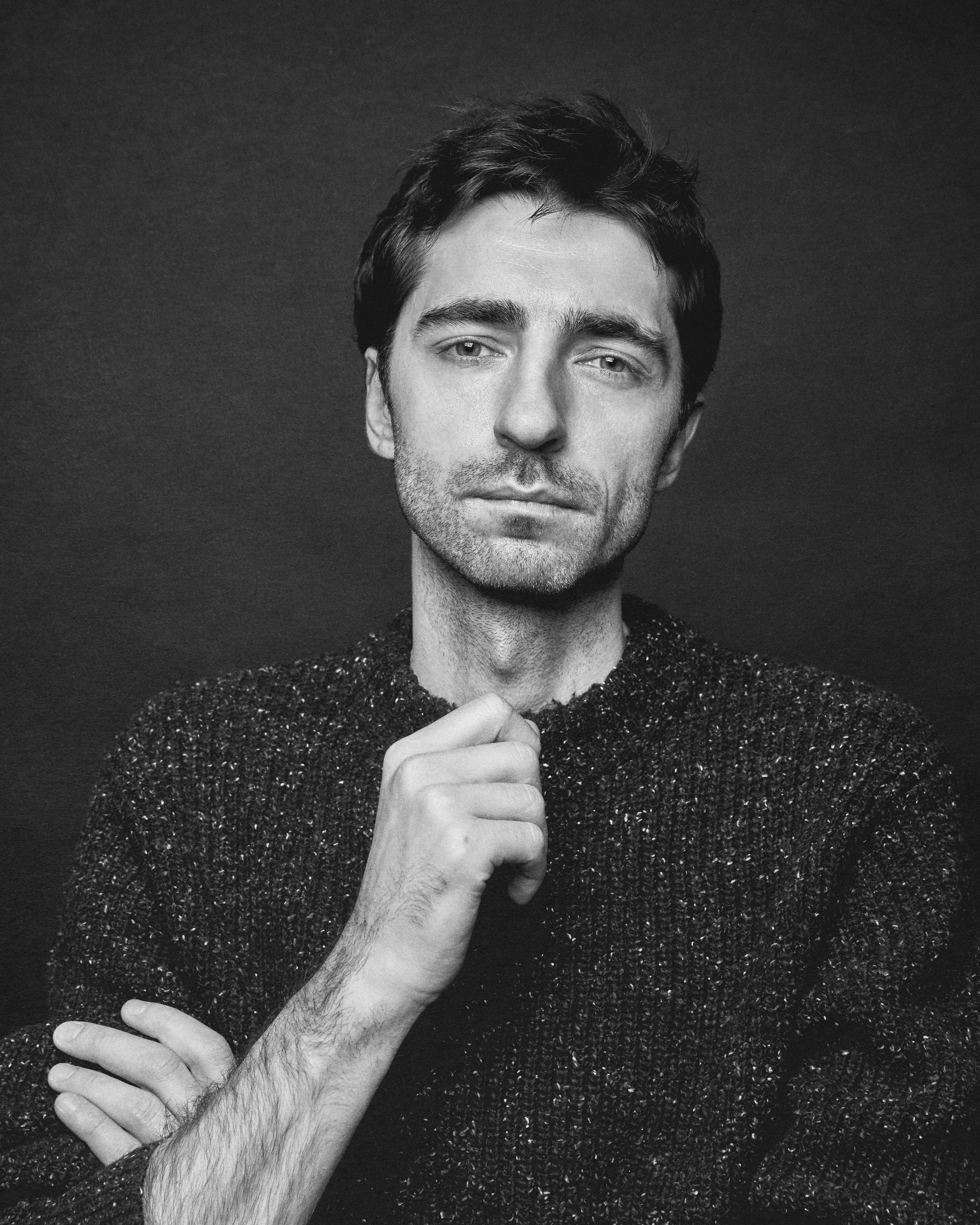
Name: Evgeny Grinko
Occupation: Composer, multi-instrumentalist
Nationality: Russian
Recent release: Evgeny Grinko's new full-length album Winter Moonlight is out February 7th 2025 via Nettwerk.
Things I rarely get to talk about: I love cats, tea and sweets. I would love for our next interview to be on these subjects, especially cats!
If you enjoyed this Evgeny Grinko interview and would like to find out more about his work, visit his official website. He is also on Instagram, Facebook, and tiktok.
Are there examples of minimalism in music – and outside of music - that impressed you early on?
Of course!
Philip Glass and Erik Satie are the most important figures in minimalism for me. But Simeon ten Holt was my earliest impression in the genre.
Were you ever interested in minimalism as a style – from the Philip-Glass-variety to solo instrumental work to minimal techno? If so, tell me a bit about your interest in this.
Shhhhh, don’t tell anyone but for me minimal techno is the most boring thing that happened with electronic music.
Do you tend to find that, as many claim, “less is more?” Are the notes you don't play really as important as the ones you do play?
It’s an interesting concept, but I never see what I do with this angle. My goal is never to play more or fewer notes. I play as I feel in the moment, without necessarily a vision as to the end product, and especially not a vision as to whether that end product should have “less” or “more.”
My compositional style is to jam around on the piano until I find the right notes. Maybe that’s how I interact with notes - it’s not “less” or “more,” but rather what feels “right” to me.
But maybe I take this into account without thinking about it, because my compositions do tend to have “less!”
Do you feel as that making music is a process of adding elements until it is done – or one where you chisel away pieces from something that is already there?
Making music for me is to be able to feel the beauty of creation in the moment when you press the keys on the instrument or hit the drums. That moment is the most important one.
My process involves recording a few different versions of a composition and then combining the best parts of the different versions into a complete and coherent whole. I do very little chiselling. There are however definitely moments where I add.
Each composition begins on the piano, and sometimes I have the vision to add strings or accordion or drums or other instruments. This is adding. I also love to add electronic flourishes to my compositions - this is a laborious process of finding just the perfect sound.
Many artists are becoming more minimalist in their music as the years go on, focusing on the “essence.” How is that for yourself and how would you describe your development in this regard?
It’s true. Tchaikovsky is a good example - it’s funny comparing his early super saturated works with his later minimalist ones.
That said, as a musician I never had any ambition to play complicated, highly skilled music, so I guess I don’t really see myself in this way.
I am however excited for the world to hear my variety as a composer and musician. I have several exciting projects in the works that will show different sides of me!
Do you like to set yourself limitations? If so, which were some of those limitations for the new pieces?
Unfortunately life has already set a number of limitations on my artistic process.
As an example, for one of my dramatic songs I wanted to record a coffin orchestra. I wanted to bring 20-30 coffins into the studio and record the sound of their lids slamming shut all at the same time. The label and sound engineer refused to help me with that idea.
Which is all to say, I try not to set limitations on myself, understanding all that life will throw my way no matter what!
Thanks to sampling and digital synthesis, there are endless possibilities for sculpting the sounds and overall sound design of a piece or album. What are your considerations in this regard?
It’s actually nice that we have such a huge variety of timbres to choose from. As I mention above, the sad thing is that I can spend a few days searching for the perfect timbre or sound or flourish to add to a song.
For example, on my new record Winter Moonlight, the song “Sonsoz” is composed of discarded sounds for the finishing of “Evening Bell.”
Would you say that you approach your creative tools with a minimalist mindset? Or do you need a wide choice of instruments and tools to make music?
I am not a trained classical musician. I try to record the sounds I hear in my head.
I’m sorry I can’t really help you here!
What were some of the most important pieces of gear or instruments for this release?
My baby grand piano and Turkish Tea were the most important pieces for this album
French producer Guillaume Duchastel told me: “Minimalism is about more than owning fewer things. It’s about focusing on what truly matters.“ What are some of your strategies for separating what matters from that which doesn't?
This is a fun interview - you are asking me questions I never thought about!
To put it simply I usually have a vision of what I want to hear as a final result, and I’m just trying to get as close as possible to that, understanding that life will always prevent me from reaching that perfect sound (see above re: limitations!).
If I need to re-record a piano part in a different room or acoustic environment, I will do that. If I understand that an oboe part does not fit in the final mix or does not translate to what I had in mind, I will replace it as appropriate with trumpet or accordion.
What truly matters to me in the end: am I happy with the end product? It may sound egoistic but I don’t think about fans or commercial potential in my music. I just want to make music that I am proud of.
With so much incredible music instantly available, are you finding that you want to take it all in – or that you need to be more selective? How do you pick the music you really want to invest in?
I’m very selective but these days find myself digging into the music of the 60s. Frank Zappa is a very interesting figure to me!