Published
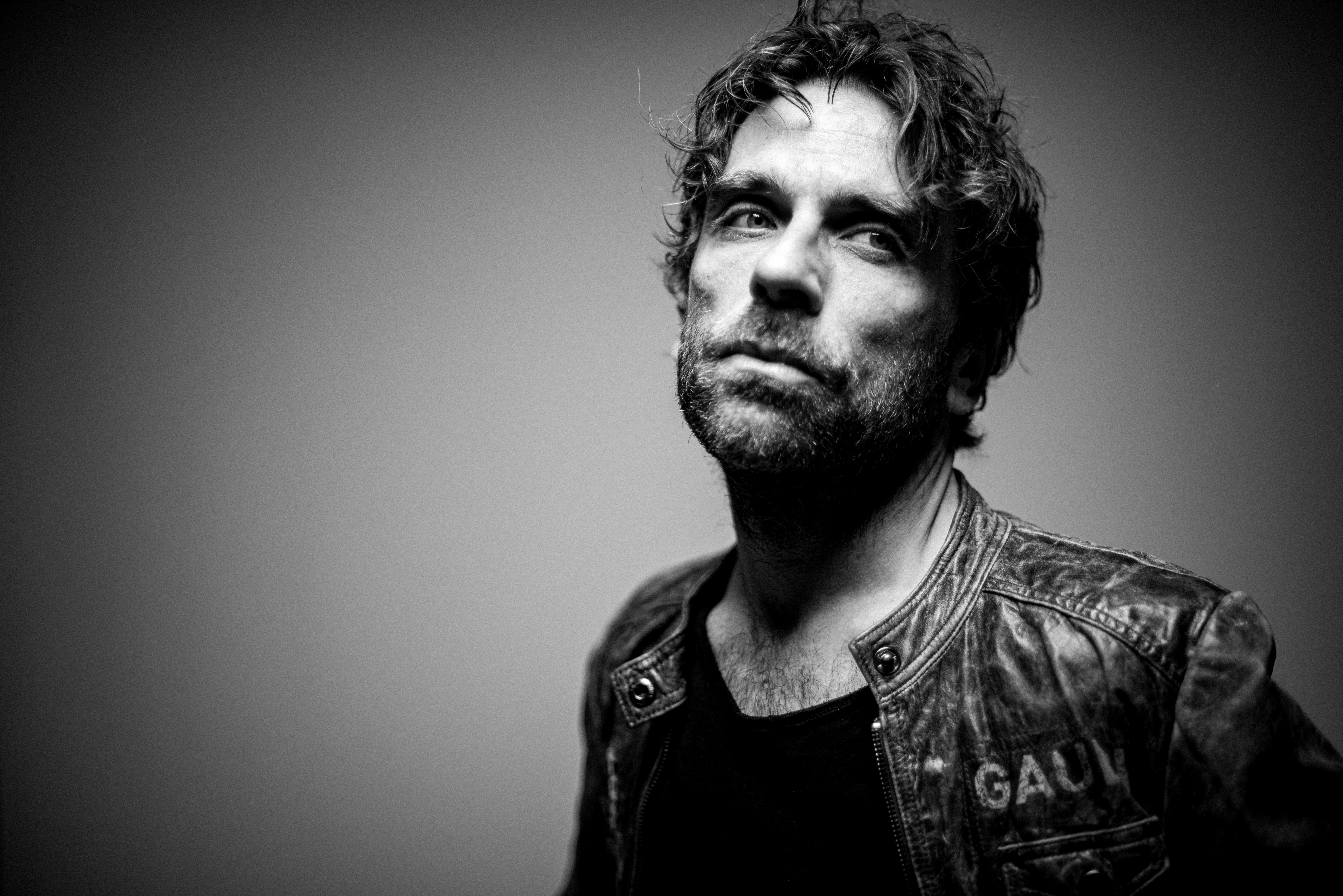
Name: Fabrizio Cammarata
Nationality: Italian
Occupation: Singer, songwriter
Current Release: Fabrizio Cammarata's new album Insularities is out via Fat Sounds.
Recommendations for Palermo, Italy: In Palermo, if you walk at night to avoid the daily tourist flood, there’s a square in the historical center where, within a few meters, you can see remnants of the 3,000-year-old Phoenician city walls, two 12th-century churches that look like mosques because they belong to the unique Arab-Norman blend. One of these churches has a façade rebuilt during the Baroque era in unmistakably Sicilian style. The pavement is made of the same flagstones that Garibaldi walked with his troops in the 1800s. If it has just rained, they become a perfect mirror — reflecting the reality of the most surreal city in the world: Palermo.
Topics that I am passionate about but rarely get to talk about: Surfing. History. Geopolitics. Russian Literature. Cuban Revolution. Analog photography. All things books.
If you enjoyed this Fabrizio Cammarata interview and would like to know more about his music and upcoming live dates, visit him on Instagram, and bandcamp.
Do you think that some of your earliest musical experiences planted a seed for your interest in writing lyrics or poetry? How and when did you start writing?
I remember some pivotal moments in my upbringing when I was struck by a mysterious and unexpectedly powerful force: the power of words in music.
I believe the first of those moments was when I listened to “Gypsy” by Suzanne Vega. I must have been 10 or 11 back then, and I remember being in awe of this song, which was so extremely poetic even if it was about a summer crush.
I think I started writing my first songs right after that, in my early teens, in a very broken yet greatly passionate English — possibly for some school crushes.
Then came Bob Dylan, Fabrizio De André, and Leonard Cohen, and that’s when I started aiming for a more minimal style, where each word has a huge specific weight. My first single ever, “Antananarive”, is a direct outcome of those learnings.
Entering new worlds and escapism through music and literature have always exerted a very strong pull on me. What do you think you are drawn to most when it comes to writing?
It’s hard to say … Writing takes me to my deepest, most archaic, most mysterious part. Simply put, I might say it’s the best therapy of all, because I must admit that many times writing a song has healed me from painful moments — regardless of whether it was ever published.
There’s a song of mine on my new album, called “The End Of Me Can Be Your Start”. It wasn’t meant to exist: the album tracklist was ready and I already had a closing track. But one night I felt the urge to put down these words and music, and as the sun was about to rise I placed a single mic in front of me and recorded it.
It felt so healing. It had to be the “real” closing track. Music also gives me hope because — it’s such a cliché, yet so true — beauty can save the world, and I feel this in my veins.
Lastly, let’s not forget the fun: I could never do this job if I didn’t continuously listen to my inner child, who wants to play. He’s the one who started guitar because he saw the “Johnny B. Goode” scene in “Back to the Future”.
What were some of the artists and albums which inspired you early on purely on the strength of their lyrics? What moves you in the lyrics of other artists?
I loved Bob Dylan’s capacity to play with words like a child, yet with the artistry of a Renaissance painter. The disarming honesty of Nick Drake. The powerful and conscious vulnerability of Leonard Cohen.
O by Damien Rice was the moment where I felt “legitimized” to become a professional songwriter. I thought: “He’s stripping naked in these songs, like a musical nudist … and that’s what I am too. I want my soul to be bare for people to enjoy and — hopefully — to relate to.”
Have there been song lyrics which actually made you change (aspects of) your life? If so, what do you think, leant them that power?
I always say that there’s a before and after listening to “La Llorona,” a traditional Mexican song so simple yet cutting so deep in its capacity to deal with death and love in the same line.
That’s why, even if I didn’t write it, I consider it the most “mine” of all the songs I perform live.
“Visions of Johanna” by Dylan made me aware of the power that can arise from changing perspectives.
“Famous Blue Raincoat” by Leonard Cohen taught me empathy in songs.
So many songs have changed my life, I couldn’t list them all.
Lately, I was struck by Leif Vollebekk’s “Surfer’s Journal”. I could never have expected that — as an amateur surfer myself — someone could build such a poignant metaphor of life using board stances, paddling, waves … It’s a song I wish I had written.
It is sometimes said that “music begins where words end.” What do you make of that?
I don’t relate to that. Maybe the hardest challenge for the “workers in songs” (quoting Leonard Cohen) is to make that gap disappear.
My songwriting changed completely as soon as I discovered flamenco and Sufi musical traditions. In these two cultures, which might appear incredibly distant, I saw the same will to make the “signifier” and the “signified” meet and merge, through the power of sound and voice. In both cases we give ourselves permission to be overwhelmed by this nuclear fusion: the melody “becomes” the word and the word “becomes” its meaning. It’s beautifully vertiginous.
That’s why I now refuse all genre and style boundaries — to me, everything is one. In this new album, a good majority of the songs are multilingual and multistylistic. I think this comes from my Mediterranean heritage: being from Sicily means having the tendency to melt multiple cultures and influences right into my blood.
I have always considered many forms of music to be a form of poetry as well. Where do you personally see similarities? What can music express which may be out of reach for poetry?
In music, the performative element opens a new dimension to the written word. The singing voice adds new meanings to something we may think we understood just by reading.
But differences disappear when poetry is read aloud, especially when the reader is the poet themselves: that, for me, equals going to a live concert. Not all songs can be read as poems, though — so poetry may retain an advantage.
I’m thinking out loud now, but maybe “The End Of Me Can Be Your Start” is one of those lyrics that could stand without music.
The relationship between words and music has always intrigued me. How do you see it? In how far can music take you to places with your writing you would possibly not have visited without it?
Again, it’s the power of the human voice — the physiological phenomenon that allows us to emit sounds through our vocal cords. It’s our first ever musical instrument, it’s been there for half a million years. No wonder we harbor in ourselves the capacity to create a close circuit between our soul and our singing through it.
I always write my songs starting from a vocal sound, which almost every time is a word. I follow that lead, convinced that the word is not there by chance, but because it’s what the song is meant to be about.
That’s what happened with “Asanta”: that eerie litany in Sicilian came out together with the words it carried, in a moment when I was walking in the countryside where my ancestors lived, loved, feared, and drew close to one another.
What are areas/themes/topics that you keep returning to in your lyrics?
Identity, because the pure fact of being Sicilian inevitably puts me in a condition of continuously questioning my roots. I have a theory about Sicilian identity: it’s foggy, vague, rooted in uncertainty, communion, and violent absorption. “Alone And Alive”, “Down Down”, “Misery”, “Asanta”, “Icarus”, “Come What May” are good examples of that.
Love, for sure, because I’m a hopeless romantic. But I reckon that many of my newest love songs can have different layers of interpretation, like “Água E Sal”, which is both a love song and a grief song, or — again — “The End Of Me Can Be Your Start”. That’s why lately I see more empathy emerging in my lyrics, and I attribute this to growing older, hopefully in a good way.
Another recurring theme is self-reflection, maybe because I’ve grown more and more interested in psychology and therapy. “The Woman In Me”, a song featuring Italian singer Casadilego and the Berlin-based choir Cantus Domus, is about getting in touch with the different parts of oneself, as if you were an archipelago of islands — or better, an inner family, where each member is a part of your personality.
For this, I drew inspiration from Internal Family Systems, a psychological framework that opened my inner journey.
On the basis of a piece off Insularities, tell me about how the lyrics grew into their final form and what points of consideration were.
Let’s take “The Woman In Me”. I began by invoking my feminine side, which I knew needed to burst into tears and speak to me: I wasn’t treating her well, and I had to come to terms with her.
But as I continued writing, I heard someone else knocking from within — my inner child, to whom I then decided to give voice. So, while at first I was writing about one side of myself, the track soon became a choir of voices. That’s why I felt the urge to add a real choir: Cantus Domus.
Do you tend to start writing with what will be the first line of the finished lyrics? The chorus? At a random point? What are the words that set the process in motion?
It’s never the same. Sometimes I’ve started a song from the last line or the last word, like in the multilingual suite “Come What May”. Other times it began with a chorus, as in “Água E Sal”, which — funny enough — came to me in Portuguese, a language I don’t speak fluently.
But to answer your question: yes, in my case, a song worth completing has always begun with a single word, a pivotal sound from which everything else blossoms.
I don’t know how I “choose” those words; if anything, I feel them in my body, in my skin, and that’s when I know everything needs to start from that sound.
I'd love to know how you think the meaning or effect of an individual song is enhanced, clarified or possibly contradicted by the EPs, or albums it is part of. Does the song, for example, need to be consistent with the larger whole?
It doesn’t have to. There are beautiful albums that are collections of songs, where the only thread linking them is that they belong to the same moment and space.
But that’s not my case with Insularities, which was conceived as a concept album from the beginning. The idea that we are islands belonging to the same archipelago, divided by an ocean of unpredictable and plastic matter, like water; that we have an archipelago of islands within ourselves, and that to know ourselves better we need to become explorers of distant horizons like the ancient Polynesians did when they colonized the Pacific; together with the fact that I am indeed tied to belonging to a real island — being a geographical islander myself and impregnated with the peculiar psychology of those surrounded by the sea …
It all made sense to me in such an orderly way. It felt like writing a novel in nine chapters, rather than a collection of short stories.
When you're writing song lyrics, do you sense or see a connection between your voice and the text? Does it need to feel and sound “good” or “right” to sing certain words? What's your perspective in this regard of singing someone else's songs versus your own?
Absolutely. I mentioned earlier how important it is for me to “choose” sounds. They feel right not because they look good on paper but because they feel good on my tongue.
Furthermore, the fact that I constantly work with languages that are not 100% familiar to me (including my native Italian, which musically feels more distant than English, given my upbringing) is a privilege, because I experience words as sounds before I process their meanings.
A representative example of this is my relationship with “La Llorona”. As with every cover I’ve decided to perform, I need to feel comfortable in the phonemes, in the pauses between words, in the vowels. Every time I sing this song, I forget who I am. I’m not Fabrizio anymore; I’m a woman, an old woman whose voice tells a whole life of suffering.
Of course, this is how I feel — I can only hope that this transformation is conveyed to the listener. Long before being a songwriter, I feel I am a singer, and some sort of actor. So I write a new song every time I decide to sing one that fits me, whether it’s mine or not.
I would love to know a little about the feedback you've received from listeners or critics about what they thought some of your songs are about – have there been “misunderstandings” or did you perhaps even gain new “insights?”
Many times. But that’s to be expected if you choose this job. The good thing is that I usually manage to detach from my albums: once they’re out, they’re no longer “mine” as they once were. They start growing on their own, taking on new meanings, new dimensions I wouldn’t have expected.
Sometimes it’s thrillingly beautiful: listeners who bring unexpected readings to my lyrics can enhance the songs, becoming co-authors, and adding value even for me. That happened with songs like “Long Shadows” and “Eileen”.
Other times it can feel as though the message completely missed its target, and I usually take accountability for that — it means I didn’t quite do it right.
Creativity can reach many different corners of our lives. Do you feel as though writing song lyrics or poetry is inherently different from something like making a great cup of coffee? What do you express through music that you couldn't or wouldn't in more 'mundane' tasks?
The only reason why music is my chosen means of expression is my limited capacity to see poetry in everyday tasks. I have the utmost esteem for those who can.
For instance, you can feel when somebody is cooking and they’re being artists in that moment — love shines through their work, you see their personality, and their will to connect.
There’s this beautiful Wim Wenders movie, Perfect Days, that captures exactly what I mean. I hope I can reach that level of receptiveness before I get too old.