Published
Name: Fernando Brox
Nationality: Spanish, Switzerland-based
Occupation: Flutist, composer, improviser
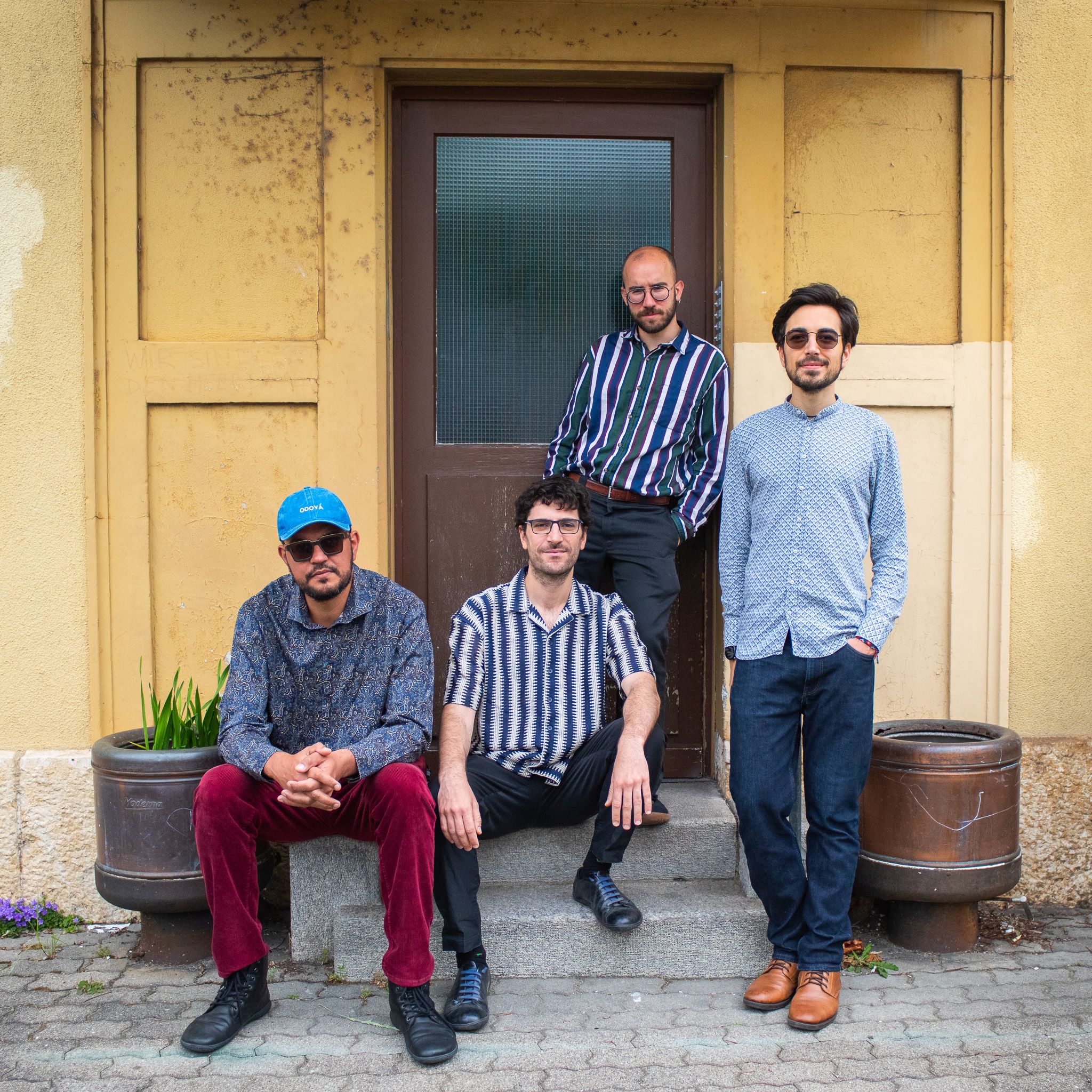
Current release: Fernando Brox's new album What We Don’t See is out via Loumi.
Shoutouts: I would name three of my dearest friends. They are low-key people who live for music and have been actively working for years to spread love and happiness through it: Enrique Oliver (tenor sax), Julián Sánchez (trumpet), and Toni Vaquer (band leader, composer/arranger, pianist)
If you enjoyed this Fernando Brox interview and would like to stay up to date with his music, visit his official homepage. He is also on Instagram, Facebook, and bandcamp.
What were some of the musical experiences which planted a seed for your interest in jazz?
Hearing a Charlie Parker record when I was around 10 years old.
I remember very well how little I understood and how much I loved it.
What does the term jazz mean today, would you say?
I don’t know what it means! I can say what it means to me though, and it has a very defined meaning.
To me, it’s a particular attitude towards making music that reflects on a particular tradition. It’s about finding your way and your personal voice as an individual within a community or collective.
As of today, what kind of materials, ideas, and technologies are particularly stimulating for you?
I'm mostly diving into some of the great composers from the 20th Century: Bartok, Hindemith, Messiaen …
I’m also very much into the music of people like Peter Ehld, Joel Ross, Marquis Hill or Kris Davis.
I would love to find a satisfactory way to use live processed effects, which is not so easy with an instrument like the flute.
Where do most of your inspirations to create come from – rather from internal impulses or external ones? Which current social / political / ecological or other developments make you feel like you need to respond as an artist?
I would say both internal and external impulses contribute equally.
On one hand, there is an inner drive that keeps me returning to creation — it’s a necessity for me. On the other, as a listener and music lover, I’m always inspired by external inputs, meaning the work of others.
In general, I think music is part of who we are, and it can have a deeply positive effect on people’s lives. It is also a powerful source of communication: one can convey a particular energy through music without words, directly from the source, without losing a hint of presence. I find that fascinating.
Also — and this connects with the second part of the question — music constantly reminds us that we need each other to survive, to be, to become. Music is about consciousness and togetherness, and we really need that, especially with all the challenges we are facing: climate change, individualism, out-of-control capitalism, and ultimately lack of consciousness.
We must realise we are all in the same boat and act consequently.
Tell me a bit about the sounds & creative directions, artists & communities, as well as the colleagues & creative hotspots of your current hometown, please. How do they influence your music?
These days I could say I have three hometowns, musically speaking.
I come from Málaga, Spain, but from 2015 to 2021 I lived in Barcelona. After that, and up to this day, I’ve been living in Basel, Switzerland. These three places are quite different, and I have many dear friends in all of them—not only friends, but deeply inspiring musicians and collaborators.
Here’s a tiny bit of what I like from the community of each place:
Málaga: the freshness and the easy-going spirit.
Barcelona: the love for tradition, the low key, chill vibes
Basel: a young, friendly, ultra-talented environment.
It would be difficult to define exactly how each scene has shaped me, but there is something they all have in common: it’s almost impossible to get decent gigs .
What role do electronic tools and instruments play for your creative process?
On my 2nd album release in 2020 (Broxila) I used effects in some of the tracks.
I love how these devices open up a whole new field of sound-aesthetic possibilities, but I haven’t found a way to use them safely and with guarantees in live concerts.
Too many times they unexpectedly stop working on the spot, which is very frustrating.
As I mentioned before, I would love to sort out how to use these tools. I have the feeling I could tremendously benefit from them
Jazz has always had an interesting relationship between honouring its roots and exploring the unknown. What does the balance between these two poles look like in your music?
I love paying homage to the artists I love. I think it’s beautiful to acknowledge someone else’s achievements and, at the same time, transform and incorporate them into your own thing. I can’t imagine making music without that.
I also appreciate tradition when it works in this way—not as a limitation that restrains you from being who you are, but as a collection of beautiful and meaningful treasures that are passed down from generation to generation for us to admire and reflect upon, while following our own path in the present moment.
How much potential for something “new” is there still in jazz? What could this “new” look like?
Plenty! As long as the world is the world and humans remain human.
There are people coming up who love this music — and I know plenty of them — so there’s a lot of hope. It’s a great feeling to see people in their twenties doing amazing stuff, paying respect to the masters of the past while doing their own thing at the same time.
For many artists, life-changing musical experiences take place live. How do you see that yourself?
Of course, live is the real deal and it’s not really comparable.
But I think one can have a life-changing musical experience listening to an album too. I had several!
How, would you say are your live performances and your recording projects connected at the moment? How do they mutually influence and feed off each other?
I can’t talk about this band because unfortunately we haven’t played live that much yet, but with the band from my last release (From Within) I did experience a very healthy and satisfying development.
With every concert the music went to different places; it never felt boring or weary, and it kept evolving from what we had recorded in the first place.
For that you need to have great and steady musicians on board, and even more importantly, gigs!
Improvisation is obviously an essential element of jazz, but I would assume that just like composition, it is transforming. How do you feel has the role of improvisation changed in jazz?
Difficult to say — it’s too broad a spectrum to cover with a single statement.
But I would say that, in general, there is a tendency toward concreteness rather than expansiveness.
What, would you say, are the key ideas behind your approach to improvisation?
Lately I’ve been focusing on sound and confidence. I also try to make everything I play meaningful in some way. I try to stay very relaxed and allow silence to be present in my phrasing.
I let myself rely more on the musicians I play with. I think that’s very important, because it creates a healthy atmosphere in which everyone feels like an active participant — and that makes everything better.
The Montreux Festival intends to preserve its archive of recordings for future generations. Do you personally feels it's important that everything should remain available forever - or is there something to be said for letting beautiful moments pass and linger in the memories of those that experienced them?
For me it is not one or the other; both contribute to different purposes.
As I said before, having access to older generations and their experience is of immense value, but so is having a “photo” of a great concert and being able to dive into it. What would be there for us without all the great records from the past?