Published
Name: ¡FIASCO!
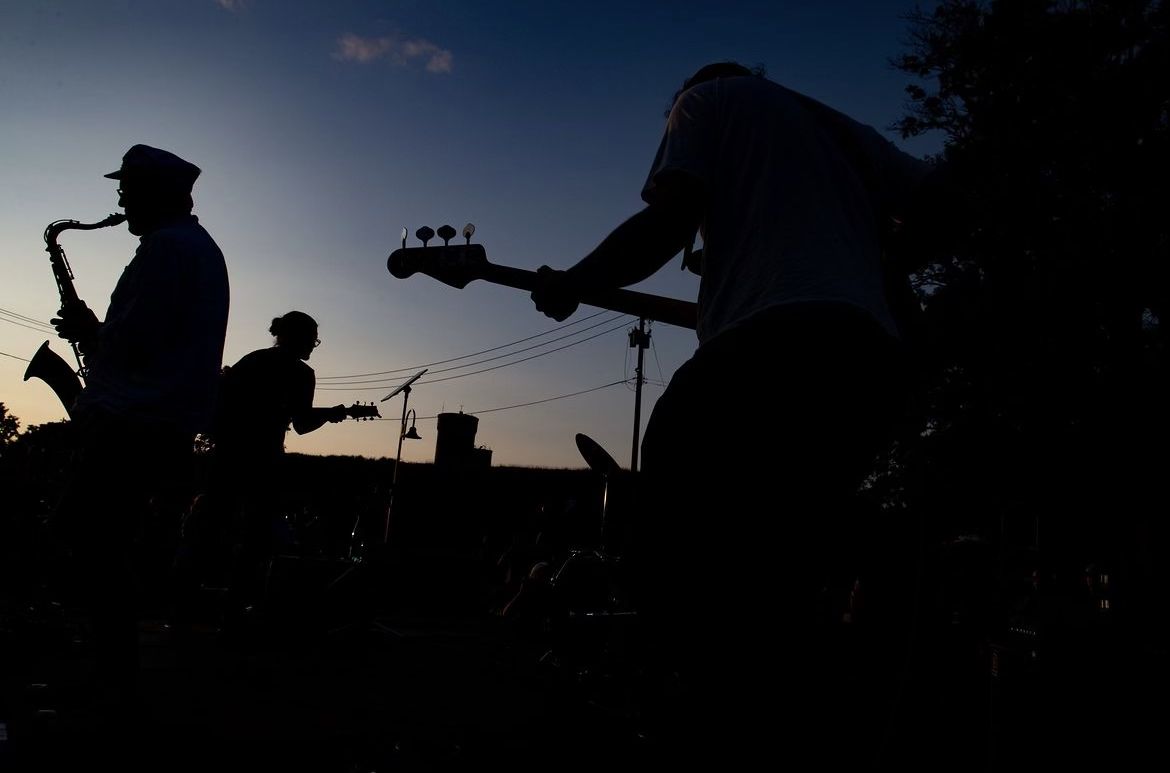
Members: Nelson Dougherty (guitar), Andrew Frankhouse (saxophone), Stephen Arnold (bass guitar), Keith Butler Jr. (drums)
Interviewee: Andrew Frankhouse
Nationality: American
Current release: ¡FIASCO!'s fourth full-length album Remember Your Flowers is out via Unit.
If you enjoyed this ¡FIASCO! interview and would like to know more about the band and their music, visit their official homepage. They are also on Instagram.
What were some of the musical experiences which planted a seed for your interest in jazz?
Like many in my generation I played in big bands through school, though it wasn’t until later in high school that the focus turned to interaction and improvisation.
It was then I really started listening more deeply to small group recordings: Kind of Blue, Mingus Ah Um, and Giant Steps were some of the first to capture my attention.
In college I jumped at every opportunity to see live music and was especially drawn to performances where bands stretched out. There was (and still is) a small-ish club in Asheville, NC called The Orange Peel, which had amazing shows week after week. Within a couple of years, I’d seen dozens of acts like Meshell Ndegeocello, Bill Frissell, Derek Trucks, Victor Wooten, Soulive, and even Bob Dylan up close.
Recordings are great, but there’s no substitute for seeing groups think, breathe, and form the music together in the moment.
What does the term jazz mean today, would you say?
It’s tricky. I think of jazz as both alive and dead.
Jazz isn’t the same as our elders pass on, no matter how we try to imitate them. In some ways and some settings, practitioners of jazz are like classical musicians, preserving a cultural asset and aesthetic of the past. Others are creating wholly new and exciting music in “jazz”, but there’s so much distance from “jazz” as it was, that it’s hard to call them the same thing.
So much has happened between the first half of the 20th century and today – so much music, so much technological evolution, so much social change. We’re pulling on the same musical threads as our predecessors, but we’re influenced by so much more than they could ever have been.
When I was younger, teachers and older cats would say things like “How can you not have heard of X jazz record?” and all I could ever think was “Sure, but what do you know about Rage Against the Machine or Outkast or Neil Young and Crazy Horse?” or a million other things.
There’s a reason ¡FIASCO! uses the label “not-jazz” – it’s a way of saying “we’re jazz adjacent, we play and understand jazz, we’re improvising and using jazz forms and language, but this is also something else.” ‘Born to Break’ from our most recent record, Remember Your Flowers is a great example.
In many ways it’s just a head chart, like any other jazz tune, with chord changes and a repeating form. We’ve made something new out of it by stretching the other elements – distorted guitar, effects pedals on the saxophone, rock feel and dynamics, and an overall interest in timbre and total sound, rather than harmonic intricacy and nuance.
Many people perceive jazz as a genre with high barriers of entrance, both for listeners and musicians. What have your own experiences been in this regard?
I think listeners are more discerning and open-minded than artists often give them credit for. ¡FIASCO! experienced this very early in its existence:
The band’s very first show was a concert of Paul Motian’s music at the late and legendary Twins Jazz in Washington, DC. We had a solid turnout and great show and came away feeling good about our start. The next day, our guitarist Nelson received a call from the club, asking us if we could perform again that night, as they had a cancellation.
As we were setting up, listeners who’d purchased tickets for the scheduled act (an established Afro-Cuban group) began showing up, and we became a bit worried. We didn’t have other material prepared and were planning a reprise of our Motian tribute. As soon as we began to play, one table protested to the club and walked out. The rest of the audience, primed for a night of Afro-Cuban jazz, stayed with us and the second performance was perhaps even more successful than the first.
I learned from one of my teachers, the under-sung Boston saxophonist Charlie Kohlhase, the importance of inviting the audience in. I’ve seen Charlie perform truly wild, free music, pulling the audience all the way in simply by genuinely and authentically asking them to engage with the music, and dropping just the right breadcrumbs to give them something to hold on to.
As for musicians, the barriers are real – it’s an elusive combination of pedigree, skill, and “vibe” that leads to real success. There are thousands of truly incredible players out there, and a new crop minted every year at Berklee, Juilliard, and the like. The result is a lot of creative musical output, and an overwhelming din of noise.
One of my favorite things that’s come out of jazz in the last 10 years is Jeff Goldblum playing jazz piano – not because he’s a great pianist or the music is mind-blowing, but because rarely do you see anybody in jazz (performer or audience) having that much fun.
What, would you say, are the key ideas behind your approach to improvisation?
At the moment, my improvisational focus is on texture and sound. There are a million ways to explain, teach, and learn to play the “right” (and “wrong”) notes at the “right” time, but at a certain level the notes are something of a given. Over the last few years my focus has become “How many sounds can I pull out of the instrument, and how and when can I apply them?”
It’s easy to get carried away on the saxophone exploring squeals, multiphonics, and other “extended techniques”, but there’s just as much to explore in, for example, playing softly. It’s an incredibly stimulating challenge to play softly and extremely fast, or in the extreme high register of the horn.
The other way this approach plays out is musical versatility. I play far more pop and swing gigs than creative ones these days, and it’s just as important to me to be able to nail the sound of a Kirk Whalum on a Whitney Houston record, or Ben Webster with the Basie band, as it is to conjure a frenzy like Albert Ayler.
There is something to be learned from all of this great music - I strive to have as few limitations on my playing and my concept as possible, and draw from as many sources as I can.
How would you describe your relationship with your instrument – is it an extension of your self/body, a partner and companion, a creative catalyst, a challenge to be overcome, something else entirely?
For me, the saxophone can be all of these things. I’ve been playing for so long at this point that it’s hard to remember a time where I didn’t play. I “think” musically with my hands as if they were on the saxophone - it’s the default place I go when hearing new music, trying to learn and understand music.
The instrument is also a lifelong challenge - no matter how much time one spends I think we all end up asking ourselves questions like “Am I actually any good at this?” “Am I doing this right?” “Is this the sound I want?” “Why can’t I do …” John Coltrane famously lamented about the curse of not ever being able to actually hear what was coming out of his horn - the feeling is very relatable. It is too, however, a font of endless inspiration, and it’s where, for me, new musical ideas are almost always sparked.
I resisted the idea for a long time, but I’ve enjoyed immensely extending the capabilities of the saxophone with effects pedals. There’s a whole other world of sound available to a player when a monotonic, “horizontal” instrument can suddenly occupy “vertical” space. Effects like reverb and delay can lend the instrument otherworldly sustain and presence, and things like pitch shifting, phasing, and frequency modulation can vastly extend the pitch and timbral limitations of the horn.
Jazz has always had an interesting relationship between honouring its roots and exploring the unknown. What does the balance between these two poles look like in your music?
It’s tempting to say that our music leans more into exploring the unknown, because in many ways it does. The bass stutter on our track “Anger Artist” is intentionally indeterminate, introduced at random times by an effect pedal.
At other moments, we’re not necessarily sure what instrument and electronics may produce, or how anyone in the group may choose to respond. Sometimes it doesn’t work out - we have far more failed studio takes than successful ones, and have occasionally fallen flat in a live setting. We performed “Arson”, from our first record, for 3 or 4 years before it finally “worked” for us.
That said, I think about “roots” a little differently – no musician in our generation, certainly in this band, has roots solely in jazz. Each of us brings influences from well beyond the borders jazz. Speaking for myself, I think a lot about the textures and sounds created by bands that influenced my early musical pursuits, groups like Smashing Pumpkins, Refused, At The Drive In, the Deftones, Incubus, and so on.
That’s not to say I’m devoid of jazz influence, I look back often on my time in Boston seeing The Fringe on Monday nights - George Garzone’s massive sound and range, and the pure human intuition of his playing.
For many artists, life-changing musical experiences take place live. How do you see that yourself?
I think every musician can list life-altering live performances - I’ll give a couple of examples:
In 2006 or so I saw Kenny Garrett with the band from his record Standard of Language at the Iowa City Jazz Festival. During the first tune, “just” a blues," the drummer Chris Dave was going at the kit so intensely that by the end of Kenny’s solo, he’d literally knocked the whole kit off the drum riser, and spent the better part of the piano solo putting it back together. I’d seen a lot of great performances, but had never seen a band approach the music with such fire-breathing intensity.
Another was 2011 or so, when I saw Charles Lloyd’s quartet from the record Mirror at the Regattabar in Boston. I’d been a huge Lloyd fan for a while, but with this band in particular every note, every little movement was so intentional, like it was destined to be played exactly as it was. I was able to sit close enough to hear the real, acoustic sound of Charles’ horns and Jason Moran’s piano - the whole experience blew me away. I was up all night thinking about that performance.
How, would you say are your live performances and your recording projects connected at the moment? How do they mutually influence and feed off each other?
An important goal we set for our recent releases Anger Artist and Remember Your Flowers was to capture as much of the sound and vitality of a live performance as possible.
We recorded both records with all instruments and amps in one space, no headphones, allowing us to breathe and respond to what we’re all hearing together. There’s no substitute for an Ampeg SVT pounding in the room, or guitar amp feedback getting a little out of control. Even the saxophone was amplified, as a means of hearing the effects in the room. The massive sound achieved this way is evident in tracks like “River of Noise”.
The other goal we set was to perform all the effects and transitions live, with no overdubs or major effects added in post. This is in part to lend authenticity to the recordings but is also a side effect of recording in a single room – anything dubbed or heavily edited would stand out and ruin the vibe of the recording.
Tracks like “Remember Your Flowers” are full of dense textures, layers of reverb, delay, and pitch manipulation, all of which is fully reproducible in the live setting.
Are there approaches, artists, festivals, labels, spaces or anyone/-thing else out there who you feel deserve a shout out for taking jazz into the future?
Rhizome is an art, education, and cultural institution in DC, fostering a real, tangible community of DIY creativity, teaching/learning, and expression. Rhizome provides space for artists to push in new directions, hosting an enormous range of musical performances over the years, and has become a de facto home for ¡FIASCO!’s work
The Montreux Festival intends to preserve its archive of recordings for future generations. Do you personally feels it's important that everything should remain available forever - or is there something to be said for letting beautiful moments pass and linger in the memories of those that experienced them?
I see it both ways - these recordings serve as an incredible archive of snapshots of artists in time. I’ve discovered all kinds of incredible performances through Montreaux, and see huge value in their preservation efforts.
That said, as we all know, even the best recording pales in comparison to the experience of a live performance - being a part of an audience, all taking something new in together, watching living, breathing human beings perform together in space and time. Those beautiful moments do pass and linger in the memories of those present, whether or not we choose to record and preserve the performances for the future.