Published
Name: Aron Dahl
Nationality: Norwegian
Occupation: Singer, songwriter
Current release: Aron Dahl's new album Moth/Flame is out November 1st 2024 via Abstract Tits.
Recommendations: Collected Short Stories Lydia Davis; «Six Knots», a short film by Ali Vanderkruyk
If you enjoyed this Aron Dahl interview and would like to know more about his music, visit his official homepage. He is also on Instagram, Soundcloud, and Facebook.
When I listen to music, I see shapes, objects and colours. What happens in your body when you're listening? Do you listen with your eyes open or closed?
It really depends on the music. I have a hard time sitting still and concentrating, so I like to listen to music on headphones when I’m in some sort of movement: Taking the train, walking or driving. The music really helps me connect to my surroundings and brings forth a feeling of euphoria. Or sadness, or hope and a sense of belonging.
I also love to listen to music through dancing, I have some weird dance moves that only come out after clocking in a couple hours on the dance floor. When I get to that state I feel like I’m pulling at some giant ethereal energetic taffy that moves throughout time and space and I imagine the stage as a big old campfire that we have all gathered around for thousands of years, performing the ritual of music and sound to connect with each other.
Entering/creating new worlds through music has always exerted a strong pull on me. What do you think you are drawn to most when it comes to listening to and creating music?
Being able to access my emotions. Understanding myself better. Understanding others better. Communicating hidden and vulnerable parts of myself to others. Feeling connected to humans and animals and nature throughout time.
Being able to communicate in ways and with a truthfulness I cannot in my everyday life.
According to scientific studies, we make our deepest and most incisive musical experiences between the ages of 13-16. What did music mean to you at that age and what’s changed since then?
Music meant a lot to me then, in a different way than now. But the way we listen to music has also changed so much! I had a tiny mp3 player I could wear as a necklace that could fit around 15 songs at a time.
I also had a Discman. It was a huge upgrade when I got one that didn’t skip when I walked! I would go to the record store and check out music for hours and then get a few CDs. I was starving for music, and I was an omnivore. Later I would go to any concert I could: Black metal, punk shows, jazz, noise shows, opera, Boulez, Bach, Messiaen. Anything I sensed was something worth listing to.
On a school trip to Berlin, when I was 14, me and my classmates snuck out at night to go to a blues bar where everyone was over 50. I don’t have that focus or appetite anymore. Now I tend to listen to the same things over and over.
But then when I do listen to something new I like I still get very enthusiastic and overjoyed. But adult life can be so noisy, so to be completely honest, my favorite music at the moment is silence.
Tell me about one or two of your early pieces that you're still proud of (or satisfied with) – and why you're content with them.
Last year the Norwegian trio Aksiom Trio played one of my very first pieces, «feeling sad about the past and being unable to articulate the future» for prepared piano, violin and cello. I wrote it when I was studying in Oslo, in 2012 and I haven’t heard it since.
Not to sound like an asshole but I was really impressed! It was so … hardcore. I could never have written it today. Very quiet, poetic, beautiful. Dark. All the emotions of how it was to be me at that tender age of 22 came back, I felt proud of that person that used to be me, and also that I’m grateful I’m not that person anymore.
What is your current your studio or workspace like? What instruments, tools, equipment, and space do you need to make music?
I’ve had a chaotic nomadic life for years now and have just been working on a laptop with a MIDI-keyboard. I finally got a studio just last month but I haven’t really been there yet. In my fantasy my studio has all my synths set-up and there is a piano there and a computer not connected to the internet. But in real life I need a notebook, the voice memo app on my phone and maybe a guitar or a piano. Nice to have a designated screen and mouse, too.
I like to be old fashioned and actually go into the studio to record/finish a track, and it tends to be good for me that there is someone else there, either someone I’m recording or a producer/engineer that can structure the session. I feel like the more gear I have access to, the harder it gets to actually make something.
I love to play around and fiddle too, for me it’s just a very different process from «now I’m making something», when I record or write a piece of music it feels more «live», like it’s happening in real time and I can’t go back and edit (although of course I can). So when I’m just playing it’s more just experimenting.
From the earliest sketches to the finished piece, tell me about the creative process for your current release, please.
Oh, it’s been long. But it’s always the lyrics first, then trying to sing the lyrics and feel what rhythm makes sense and then everything else come after that.
I moved to the US in 2018 with my then-husband, and I wanted to make a country album but had no idea how. Then we broke up around Christmas 2019, and I was heartbroken in a way I have never been before. A friend, she is a Dutch artist, invited me to stay for a few days in the compound out in the desert where she lives with another artist and a bunch of dogs and cats.
She said «Now you just have to get to work», and I reluctantly wrote and recorded a sketch for “Psycho Train” out there. Later Leah Levinson (Agriculture) worked out that calypso sounding bass part and I recorded her. Tim Feeney who teaches percussion at CalArts came in and added the crotales and triangle. I knew I wanted lots of triangle, I have no idea why.
“Lock&Key” I wrote in a day and had the idea I wanted it to sound like an old Stax-song, most of that happened in the studio with Anders Bach and we had friends come in and dub the guitar and organ parts.
“Ficken-3000” I had the lyrics and the reference was Craig David’s song “7 Days.” Somehow Anders got that and this was the result.
Lily Maase who plays guitar on “Losing You,” “Heart, Head” and “Ghost” really did all the guitar arranging on those songs. My ideas when bringing her in on what she should play were really open ended. “Heart, Head” was a favorite poem of mine for years but I had forgotten about it, and I reread it in the newspaper by coincidence. Later that day I was driving and I head a song in A-minor and I started singing those lyrics over it.
The concept for the album changed underway. When I started I had just came out as trans and started taking HRT, which meant my voice was about to change radically but I didn’t know in what way or when. So I felt like I was in a rush to record my voice how it was then, and also document the change.
I wanted to write an album of love songs, but my belief in romantic love had been crushed, and also writing love songs felt regressive, so to make that concept palatable for myself I decided each love song had to be to a different person.
What role and importance do rituals have for you, both as an artist and a listener?
Important! As a performer I feel like every gig is a ritual and I take it very seriously in that way. When I’m on stage I feel like I have magical powers, almost like I can bend time and space. I’m very mindful of the way I move and when I write for others I try to work with the musicians in being aware of their non-playing gestures to maximize a deep focus.
As a listener, again, the dance floor is such an important ritual for me, I feel like that’s were I work out all my problems, ask the Gods for help etc. And then it’s also the ritual of gathering around the campfire together in a modern version.
I wish I was more consistent with my every day rituals, in periods where I mediate and journal and do those small things consistently I feel much better and am able to focus more on the things I care about.
Late producer SOPHIE said: “You have the possibility [...] to generate any texture, and any sound. So why would any musician want to limit themselves?” What's your take on that?
That I don’t want to limit myself. Hence my eclectic output.
Although, to me, too many possibilities are not constructive for my creativity, I need a deadline and a set format to get anything done. Thinking of all the possibilities feels daunting and overwhelming most of the time, and can make it really hard to commit to one idea. 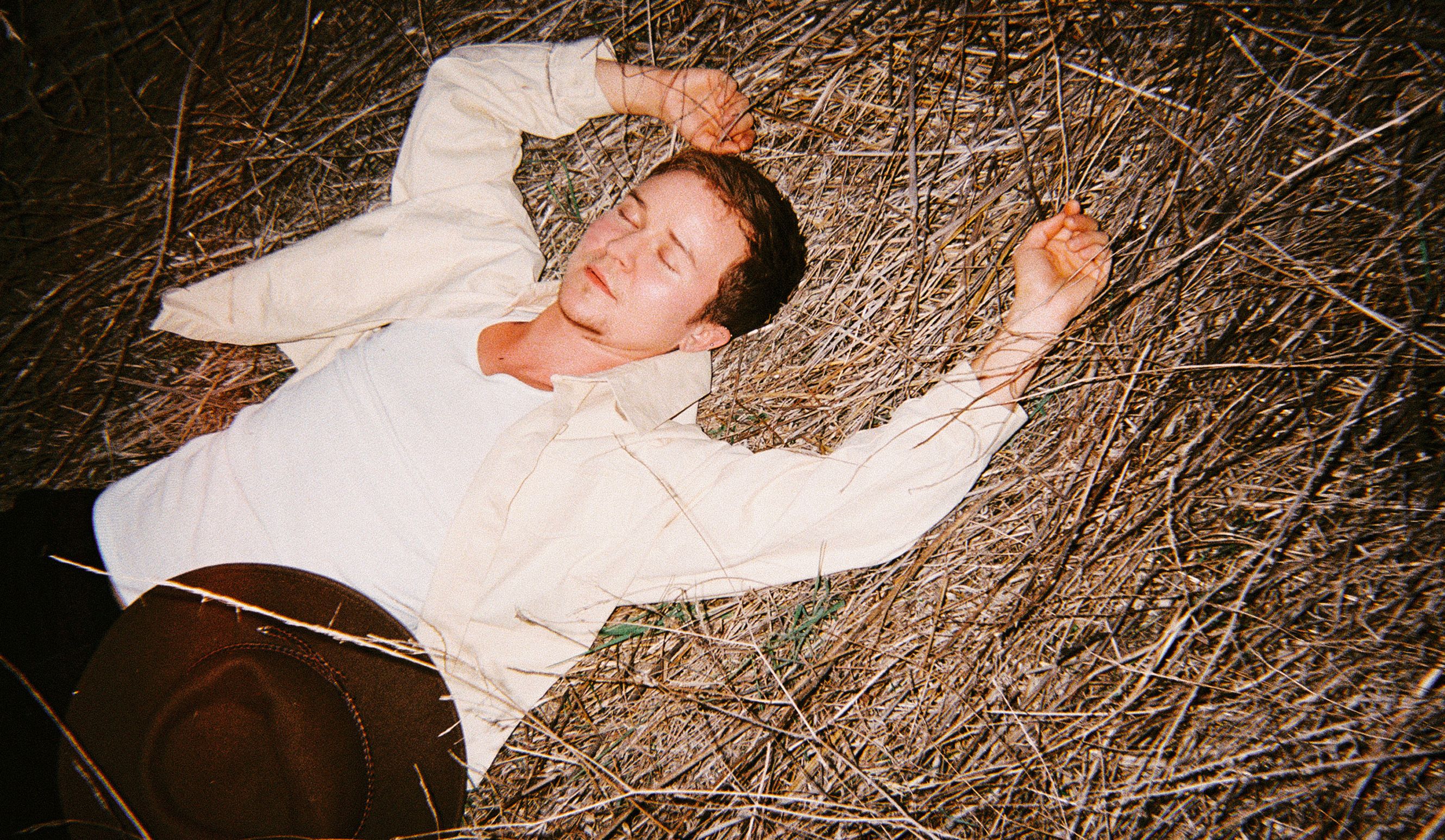
Aron Dahl Interview Image by Angel LaBarthe
Once a piece is done and released, do you find it important that listeners understand it in a specific way? How do you deal with “misunderstandings?”
It’s very rewarding for me if it moves them in some way or makes them think about something in their own life. But I don’t think it’s possible to know beforehand how someone else will understand something, and I don’t think we can ever really understand each other.
Of course I feel seen when someone hears my music and I feel they ‘get it.’ But it’s equally interesting if they hear something I’ve never even thought about. Or if they deeply hate it! Although I prefer to be liked. So I don’t think there is such a thing as a «misunderstanding», except maybe if someone just doesn’t get the point, aka holds the music to a standard that belongs in a different genre or thinks I haven’t thought about something that is intentional. That can annoy me.
But generally if it’s out in the world people should listen and understand my music how ever they like, it’s out of my hands. Although … indifference is challenging to accept sometimes.
Sound, song, and rhythm are all around us, from animal noises to the waves of the ocean. What, if any, are some of the most moving experiences you've had with these non-human-made sounds? In how far would you describe them as “musical”?
I had an out of body experience listening to the trains waiting at the train station in Halden, of all places, when I was still a teenager. I had been reading John Cage and I felt like in that moment I understood everything.
I have hours of frog-recordings when I lived by a pond in a trailer park in California, just couldn’t get enough of those endless polyrhythms.
The quiet of cross country skiing alone in the dark can also be quite moving and profound.
We can surround us with sound every second of the day. The great pianist Glenn Gould even considered this the ultimate delight. How do you see that yourself and what importance does silence hold?
I mean, as long as we are living, we do surround ourselves with sound every second of the day, of our surroundings and of our bodies functioning. Silence is an idea, something we cannot ever fully experience.
But the quote I assume is about the delight of being surrounded by intentional human made- sounds. I agree that listening is a delight and a privilege, but it applies just as much to being able to listen to «silence».
Do you feel as though writing or performing a piece of music is inherently different from something like making a great cup of coffee? What do you express through music that you couldn't or wouldn't in more 'mundane' tasks?
It depends on the intention behind the action. I am usually not ‘performing’ when I make a cup of coffee. I still take care and try to do it well, but I am in a different state of mind.
When I write music I also think about it as a type of performance, it is a type of focus with a middle and an end and I try to write «live» as much as I can, and then I go back and revise. The revision is probably more like any other everyday task.
This might sound pretentious but in the act of creating there is an opening or an awareness to something that is not me, the Universe or God or the subconscious or the Zeitgeist or whatever it is. Me personally am not doing anything, I’m just opening myself up for ideas to pass through me. I don’t normally try to tune into that frequency in my everyday life. Maybe I should though!
Although I absolutely think one could make a cup of coffee as a performance or being in that state just in everyday life. My friend Niklas Adam used to do some amazing performances boiling water. And if you’ve ever had the privilege of experiencing a Buddhist monk serving you tea, it becomes clear that any mundane task can be performed in a way that transcends the everyday and turns it into a work of art or a prayer. You can mediate sitting cross-legged on a pillow, or your meditation can be doing the dishes. For me, the ritual and framework of the concert helps, but I don’t think it is essential.
Oh, I guess also another aspect of making music that I can’t find otherwise, I also make music to feel my feelings, which can be hard for me to do otherwise. So I can have a certain ache or tension in my body, sit down and write something and maybe record a sketch, and then I can listen back and be like «Oh, what a sad song, I guess I’m grieving» or «Wow, this conflict that happened has been really bugging my much more than I realized» or «Damn, I have a crush on this person».
What is a music related question that you would like to ask yourself – and what's your answer to it?
This is the hardest question! Maybe a nerdy one: What is your favorite drum machine of all time:
The Korg Minipops!