Published
Name: the BIG TUSK
Members: Shems Bendali (trumpet, percs), Théo Duboule (guitar), Andrew Audiger (keyboards, bass keyboard), Nathan Vandenbulcke (drums)
Interviewee: Théo Duboule, Shems Bendali
Nationality: French-Algerian (Shems Bendali), Swiss (Théo Duboule), French (Andrew Audiger, Nathan Vandenbulcke)
Current release: the BIG TUSK's IT'S ALIVE! is out via Jazz-o-Tech.
Recommendations: A Love Supreme - John Coltrane; 2001, a Space Odyssey - Stanley Kubrick
If you enjoyed this the BIG TUSK interview, and would like to know more about the band and their music, visit the quartet on Instagram, and Facebook.
When I listen to music, I see shapes, objects and colours. What happens in your body when you're listening? Do you listen with your eyes open or closed?
I believe that music can speak to different parts of our soul and body. Some music will make us dance, other music will make us cry, some will make us nostalgic, and others will give us energy.
Some very rare artists put me into a kind of trance. I tense up, get rigid, and start to cry ... this is the case with John Coltrane (especially in the 60s), who, for me, violently and with no filter, expresses the fervor of the human condition when he plays and improvises.
I feel like I am connected to all human emotions at once, and my body struggles to handle it. I have forbidden myself from listening to these albums while driving ...
Entering new worlds and escapism through music have always exerted a very strong pull on me. What do you think you are drawn to most when it comes to listening to and creating music?
I believe that different styles of music generate varied emotions and serve very different roles.
For example, I feel (this is all very subjective) that electronic music, with its "robotic" aspect, tends to take listeners out of their human condition, out of their lives, and transports them to other universes where everything is well-arranged and perfectly combined. It's a bit like the pleasure of discovering ultra-futuristic and technological science fiction worlds. Suddenly, everything works perfectly.
Classical music (for example, orchestral music) brings me back to a state of matter. I feel the fluid, the solid, the movement, the space... Improvised music (jazz) truly brings me back to my human condition, in the best cases, with no filters. We are in direct connection with a human (a soloist) who is expressing themselves as authentically as possible, in the midst of a supportive collective. It’s the human-scale aspect of this music that I love immensely.
This element can be found in many Afro-descendant music styles, among others. With the BIG TUSK, we try to bring this element into aesthetics that are historically more distant from it.
According to scientific studies, we make our deepest and most incisive musical experiences between the ages of 13-16. What did music mean to you at that age and what’s changed since then?
At 16 years old, my friends and I would smoke joints and play prog rock songs really loud in the dark for four hours straight. That was an incredible way to escape the extremely routine and boring daily life of a high school student in Switzerland.
I have always kept this ambition for freedom when making music, and I carefully avoid musical situations where this freedom is compromised.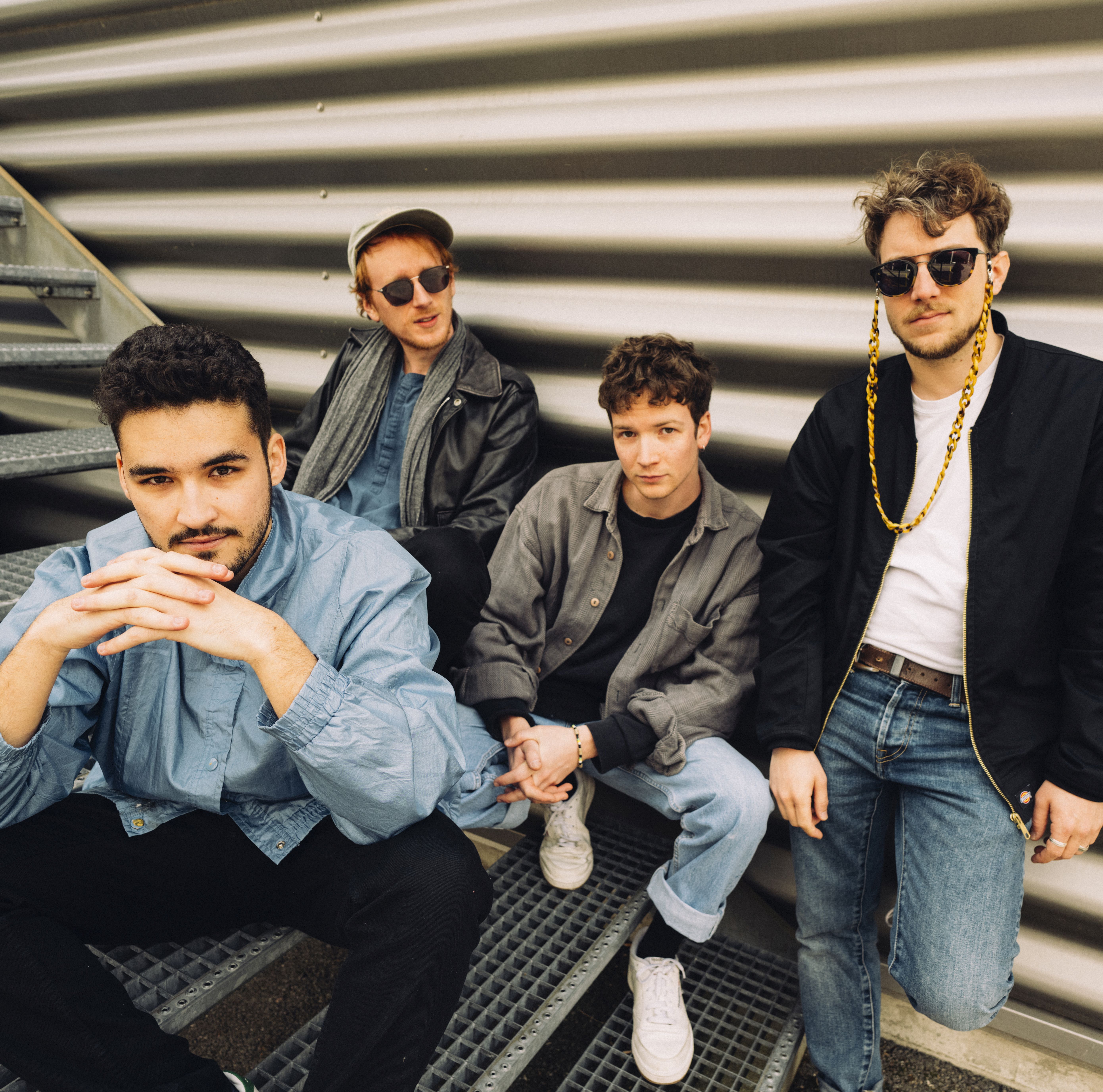
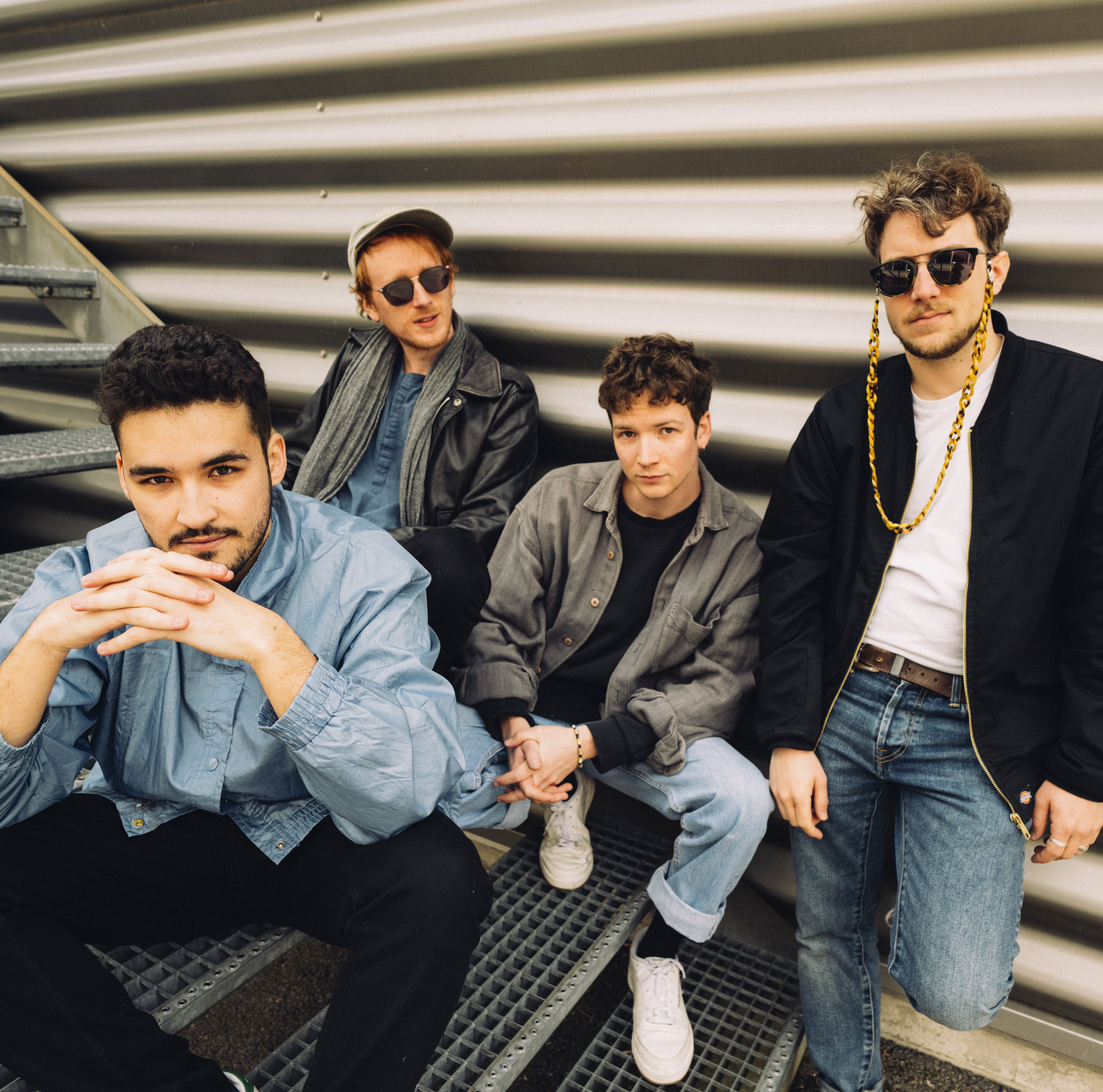
the BIG TUSK Interview Image (c) the artist
Where does the impulse to create something come from for you? What role do often-quoted sources of inspiration like dreams, other forms of art, personal relationships, politics etc play?
First, there is an almost animal impulse. I feel good when I play, and I feel bad if I don't play for three days. It's like athletes who are addicted.
Then, I am inspired by people who emancipate themselves, who manage to break out of molds and rediscover their humanity. These inspirations can be found in all forms of art, but also in social movements and individuals.
If music is a language, what can we communicate with it? How do you deal with misunderstandings?
There is no misunderstanding, as long as there is no well-understanding.
Music has the good fortune of being a perfectly abstract art, offering nothing but vibration. Each person, provided they are attentive and honest, will understand it as they hear it, as they should.
Making music, in the beginning, is often playful and about discovery. How do you retain a sense of playfulness and how do you still draw surprises from tools, approaches and musical forms you may be very familiar with?
Improvising as a band (which is the core of our concept) is the main source of excitement in our music. You never know how the concert is going to go when you get up on stage.
We like to surprise ourselves and approach songs differently, depending on the energy of the moment and of each individual.
Not only is this very exciting. It's also the best way for us to be as honest as possible in our performance.
Sound, song, and rhythm are all around us, from animal noises to the waves of the ocean. What, if any, are some of the most moving experiences you've had with these non-human-made sounds? In how far would you describe them as “musical”?
In 2018, I spent 3 months in Hangzhou, China, for an extraordinary residency in the middle of an extremely noisy megalopolis (Hangzhou). There was a constant mix of road noise, horns, telephones, advertisements and cicadas (very loud insects).
After that, I went to meet some family in the countryside in Japan, and I remember waking up in tears in the morning to birdsong and the sound of the garden stream. I couldn't believe it.
There seems to be an increasing trend to capture music in algorithms, and data. But already at the time of Plato, arithmetic, geometry, and music were considered closely connected. How do you see that connection yourself? What aspects of music do you feel can be captured through numbers, and which can not?
I believe that a super-developed AI will be able to produce music that is practically indistinguishable from human music, in the future.
I also think it will certainly not be of much artistic interest, because the listener isn't ultimately looking for a product to consume in music, but rather a human expression with which he or she can identify.
How does the way you make music reflect the way you live your life? Can we learn lessons about life by understanding music on a deeper level?
Certainly. As creators, what we produce is a direct image of our inner self. Analyzing our creations gives very precise indications of our potential personality flaws, which we need to know how to overcome if we are to progress in our art.
The music we produce also speaks volumes about our construction as social animals. This music reflects all the injunctions that are addressed to each of us, as well as our constructions, often without our even realizing it.
On another level, creating music in a band context, for example, teaches us the beauty and the opportunities of compromise, of joint action, of community.
How would you describe your own relationship with your instrument, tools or equipment?
The relationship with an instrument is deeply personal and multifaceted.
An instrument serves as a tool to express one's inner musical voice, a voice that might otherwise remain silent. It becomes an extension of the body, almost like a part of oneself, allowing the conveyance of emotions and thoughts that words can't capture. Many instrumentalists strive to make their instruments as expressive as the human voice, seeking that level of intimacy and nuance.
However, there are times when the instrument seems to have a mind of its own, attempting to dictate what is played. It’s crucial to ensure that you remain in control, guiding the instrument to follow your artistic vision. Additionally, to shape a unique sound, some instrumentalists require additional equipment. This adds another layer of complexity, especially when blending the natural sound of the instrument with electronic effects.
I think playing an instrument can be seen as an honest reflection yourself as an individual. It’s a great journey and a significant challenge to deconstruct this relationship and ask difficult questions about what you want to achieve in music.
Many spend a lifetime exploring these questions, and the answers can be elusive. But it's this ongoing exploration that makes the journey so rewarding.
We can surround us with sound every second of the day. The great pianist Glenn Gould even considered this the ultimate delight. How do you see that yourself and what importance does silence hold?
I think to truly enjoy something throughout your life, it’s important to know how to distance yourself from it occasionally. Listening to music extensively is vital for developing artistic skills and refining one's sense of taste, but saturating the brain with sound constantly can be exhausting.
The importance of silence and the need to step back from sound is different for everyone. Finding that balance is essential for sustaining a lifelong appreciation and engagement with music.
As a band that frequently improvises on stage, we often find that taking our time before adding an idea or an extra layer to the music is crucial. One of the best ways to discover a fitting idea amidst everything is by waiting and listening. Playing with silence is one of the most challenging, yet remarkable, qualities of a skilled improviser.
If you could make a wish for the future – what are developments in music you would like to see and hear?
To stay independant from the industry as much as we it can, and to be accessible to everyone to be listened and created, with their own codes and wills.