Published
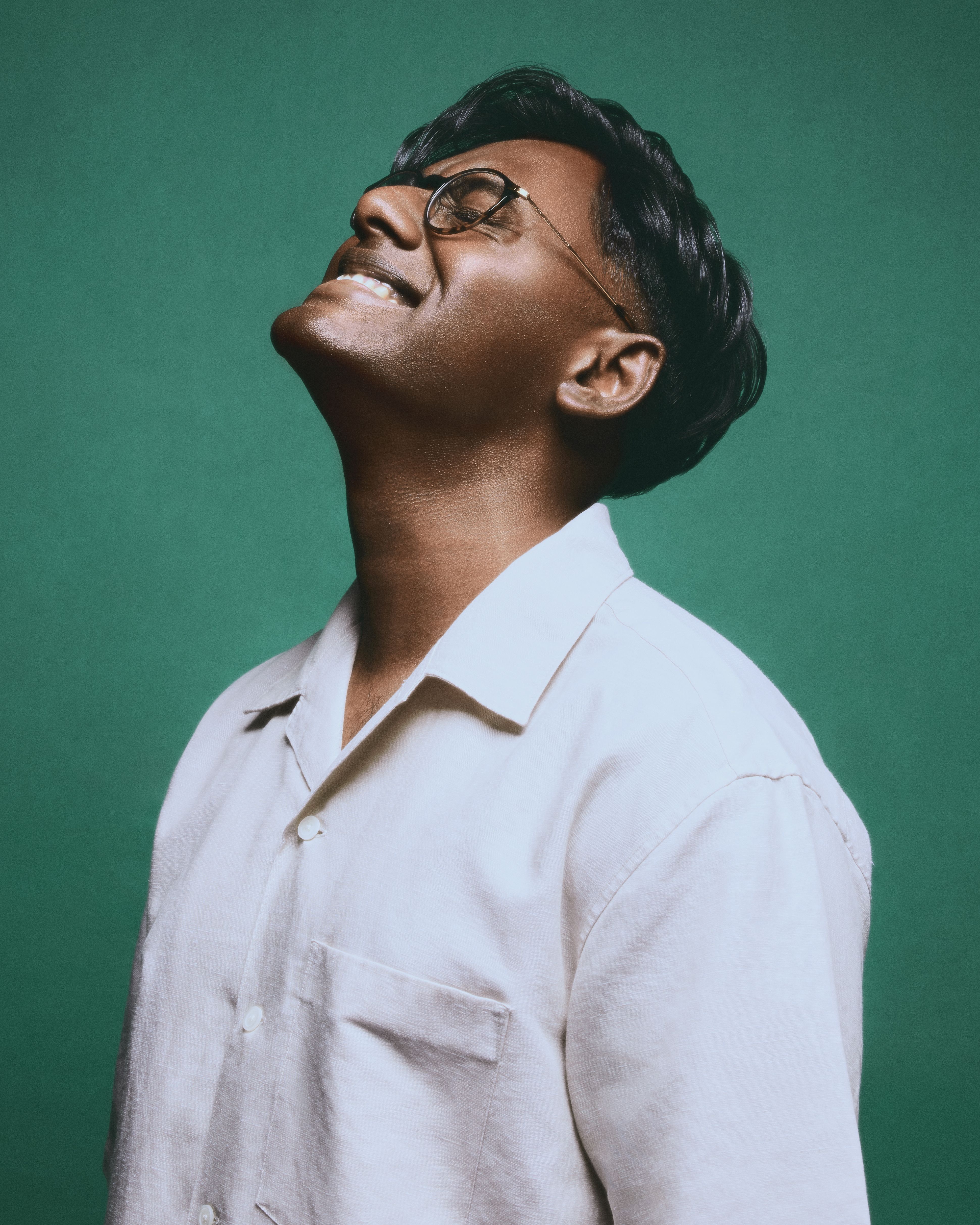
Name: Cephas Azariah
Nationality: Indian
Occupation: Composer, producer
Current event: Cephas Azariah's new album Joy Paradox is out via Reflections.
Recommendations:
1. Book - Show Your Work by Austin Kleon
This gave me a lot of fundamentals in the early days of my music career.
2. Music - "Daydreaming" by Anoushka Shankar (feat. Nils Frahm)
[Read our Nils Frahm interview]
If you enjoyed this Cephas Azariah interview and would like to know more about his music, visit his official homepage. He is also on Instagram, twitter, and Soundcloud.
When I listen to music, I see shapes, objects and colours. What happens in your body when you're listening? Do you listen with your eyes open or closed?
I have a positive condition called synaesthesia - where I can taste colours and hear.
I rely on these senses a lot when I listen to music to really experience what I’m hearing. Sometimes I have my eyes open, sometimes closed depending on where I am.
How does tasting colours work?
My taste of colours was noticeable at a young age but it developed significantly while I was working at a coffee roaster.
I was training in quality control which required tasting coffees 3 times a day to make sure the roast profile matched the taste and colour profile of the beans. Each taste note would coordinate with a specific colour (or shade) which we would reference daily so that the coffee beans sent to customers consistently matched the taste + colour profile.
Ever since the intense calibration of my palette I’ve been “tasting colours” with greater detail.
Entering/creating new worlds through music has always exerted a strong pull on me. What do you think you are drawn to most when it comes to listening to and creating music?
I’m drawn to my own experiences when I create music, this is the only place I can truly create from. I’m not able to tell stories about what I haven’t experienced.
Although I do try and imagine a different world sometimes that is always attached to my experience - an attached imagination if you will.
According to scientific studies, we make our deepest and most incisive musical experiences between the ages of 13-16. What did music mean to you at that age and what’s changed since then?
Music for me at that age was a constant escape. My favourite bands were Relient K and Paramore - and I was learning to play drums, so I spent hours in the shed just slamming the kit along to Mmhmm and Riot.
Since then I’ve ventured into bands that came out of Tooth&Nail and eventually when I started writing for film & TV - the contemporary film composers and ambient artists.
Tell me about one or two of your early pieces that you're still proud of (or satisfied with) – and why you're content with them.
“Low Sun” is a track I’m proud of. I wrote that with very little knowledge on how to record a piano or a violin but I went for it and listened to references repeatedly to make sure it was sounding decent.
Also capturing the sunset in music and telling a meaningful story is something I’m happy I managed to achieve.
What is your current your studio or workspace like? What instruments, tools, equipment, and space do you need to make music?
Currently, I’m occupying the spare bedroom in my house, where I have all my instruments set up and ready to go. An upright (Keyboard) that’s mic'd, a Sequential take 5 for any synths/arps, the KOII by Teenage Engineering for sampling and a little pedal board with the Microcosm and a couple of Meris pedals completes the gear run.
I also have a template saved on Logic X where I can turn everything on and record straight away. Something I wanted in a studio was to put ideas down quickly, so I feel like I’ve nailed the setup and recording process.
Ideally, I’d like to have a studio somewhere with giant windows and a recording space with a beautiful view.
From the earliest sketches to the finished piece, tell me about the creative process for your current release, please.
Joy Paradox was written over 2-3 years. I’d jot down ideas, motifs and spend time listening to early versions on repeat until I heard something I could develop or I thought it was done.
Once I had acceptable demos, I then booked a cabin in the Scottish Highlands to finish the project - I wrapped up about 11 songs in 3 days. Being surround by mountains and lakes enables me to develop ideas so quickly.
I think its because I’m face to face with what inspires me the most - nature - so my flow state is more effective.
What role and importance do rituals have for you, both as an artist and a listener?
I only listen to music on Mondays and in the mornings, while making coffee, I put on one side of a record. My ears are then preserved to hear my ideas and keep them far from sonic fatigue.
As an artist, I want to stay grounded so my faith in God is key to creating sustainable works of art and living in humility no matter the success or the lessons that come my way.
Are you acting out parts of your personality in your music which you couldn't or wouldn't in your daily life? If so, which are these?
I’m not sure - I’d say my personality translates into my music quite seamlessly. I hope I can keep that honesty going.
Late producer SOPHIE said: “You have the possibility [...] to generate any texture, and any sound. So why would any musician want to limit themselves?” What's your take on that?
That’s great. We are the architects of our limitations, and we need to be aware of that creeping in otherwise we’ll be stuck in a fleeting creative loop.
Do you feel that your music or your work as an artist needs to have a societal purpose or a responsibility to anyone but yourself?
Yes. I have a long-standing mandate to bring peace into people’s spaces through my art.
I began this journey by writing music for myself. However, it is wonderful to hear many stories and moments where people resonate, feel something and gain insight whilst listening to what I’ve made. That’s surreal.
I’d happily make art for myself, but my responsibility on this earth is clear and I have this deep desire to help people.
Once a piece is done and released, do you fnd it important that listeners understand it in a specific way? How do you deal with “misunderstandings?”
Not particularly. The spirit with which the music is made brings clarity when people hear my work - to the point where people’s interpretations are encouraged.
There’s a fundamental search for peace in every human. The kind of music I write leaves room for the listener’s story and circumstance. I’m not here to push my agenda into people’s ears, they can receive it how they like.
Sound, song, and rhythm are all around us, from animal noises to the waves of the ocean. What, if any, are some of the most moving experiences you've had with these non-human-made sounds? In how far would you describe them as “musical”?
I do love the sounds of birds and the ocean. They have their song that I’m overwhelmed by and relate to. Of course, it’s music, just not in the way we would write or compose it.
Sound is fundamental to the creation of the universe; therefore, ordered sound - music - is in everything!
We can surround us with sound every second of the day. The great pianist Glenn Gould even considered this the ultimate delight. How do you see that yourself and what importance does silence hold?
Silence or “less sound” is important to me.
As I mentioned earlier, I do my best to avoid sonic fatigue, and I want to maintain intrigue in the sounds around me. I sit in silence whenever I have a moment to notice smaller sounds that I take for granted and to develop an ear for details.
Do you feel as though writing or performing a piece of music is inherently different from something like making a great cup of coffee? What do you express through music that you couldn't or wouldn't in more 'mundane' tasks?
Coffee is far beyond utility for me. I have one top-tier coffee a day and worked in that industry until the opportunities in music became sustainable.
One thing that is common between mundane tasks and creating music is the attention to detail. I can’t suppress that. For example, I’ll weigh out beans or pour the water over the coffee with the same care as I would record a take on the piano.
One thing that is different between mundane tasks and creating music would be the stories I’m able to tell. Music is a language that enables me to express my peace to others which isn’t quite possible through most mundane tasks.
What is a music related question that you would like to ask yourself – and what's your answer to it?
Q: If you could be a musical instrument, what would you be?
A: Probably a Danish paniette or a mini piano. They are so understated and meek which kinda resembles my personality a bit.