Published
Name: Claudio Corona
Nationality: Italian, London-based
Occupation: Keyboardist, composer, producer
Current release: Claudio Corona's new album Imagination Unlimited is out via Vintage League.
Recommendations: Kind of Blue by Miles Davis; Missouri Sky by Pat Metheny
If you enjoyed this Claudio Corona interview and would like to know more about his music, visit his official homepage. He is also on Facebook.
When I listen to music, I see shapes, objects and colours. What happens in your body when you're listening? Do you listen with your eyes open or closed?
I’ve got a visual memory. I tend to visualise things ahead when I am creating.
When I am listening to music that I really love I feel very connected to it, and I might start dancing, smiling and I am completely taken away from reality.
Entering new worlds and escapism through music have always exerted a very strong pull on me. What do you think you are drawn to most when it comes to listening to and creating music?
A journey. I really like when a song/tune is a story being told.
What were your very first steps in music like and how would you rate the gains made through experience?
I started playing mandolin when I was a kid.
I didn’t quite connect with the instrument but that experience brought me to be exposed to lots of classic music. I think I’ve developed a good sense of melody and harmony listening to that.
According to scientific studies, we make our deepest and most incisive musical experiences between the ages of 13-16. What did music mean to you at that age and what’s changed since then?
When I was around that age, I loved putting a band together and play/practice our favourite tunes from our favourite bands. I loved sharing and having a sense of comrades with other musicians.
Nowadays it’s more about the individual artist, creating videos and content for social media. There are pros about this but it is sad that we have been seeing fewer bands around.
How would you describe your own relationship with your instrument, tools or equipment?
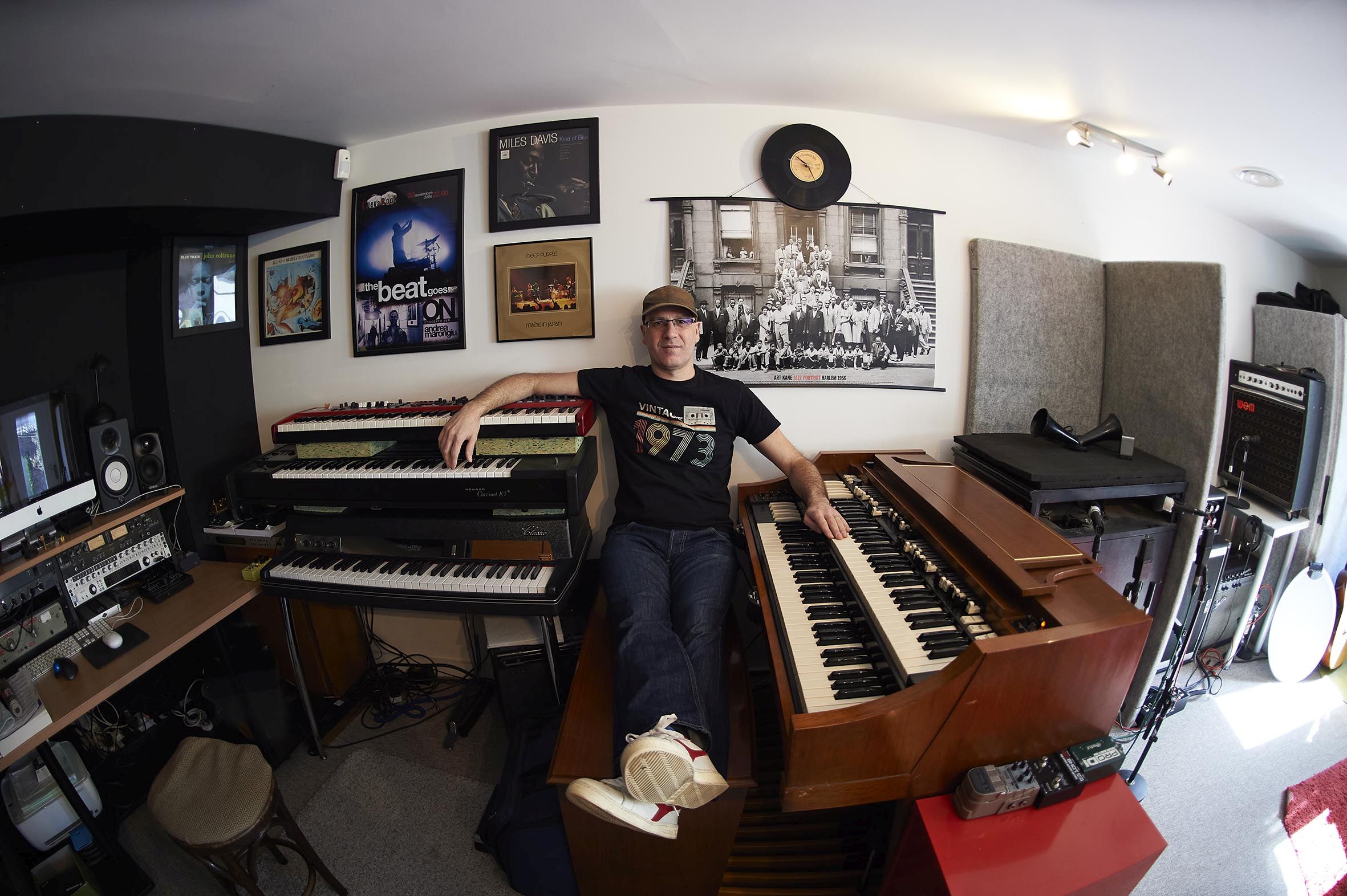
I love my vintage instruments. Hammond Organ, Fender Rhodes, Wurlitzer , Clavinet.
They’re all big and heavy, there is a sense of physicality when playing them that I miss when I play modern keyboards.
[Read our feature on the Hammond Organ]
Where does the impulse to create something come from for you? What role do often-quoted sources of inspiration like dreams, other forms of art, personal relationships, politics etc play?
When the creative process kicks in I find myself sitting at a piano, electric piano, organ or electric bass and trying to explore melodies, riffs, harmonic changes to see if I can create a story with those ideas.
Are you acting out parts of your personality in your music which you couldn't or wouldn't in your daily life? If so, which are these? What, would you say, are the key ideas behind your approach to music?
Music comes first, always. That’s my philosophy. Our job is to serve the music and do the best job we can.
That means we have to put our ego aside sometimes to serve the music and not our career path.
If music is a language, what can we communicate with it? How do you deal with misunderstandings?
Misunderstanding is part of the job. There are well known example of artists that were ahead of their time and they were not understood, and sadly only valued later on.
As I mentioned before it’s the price to be paid to serve the music.
Making music, in the beginning, is often playful and about discovery. How do you retain a sense of playfulness and how do you still draw surprises from tools, approaches and musical forms you may be very familiar with?
The love of musical instruments and, recently, recording studio gear helps me having fun with new tools all the time.
Sound, song, and rhythm are all around us, from animal noises to the waves of the ocean. What, if any, are some of the most moving experiences you've had with these non-human-made sounds? In how far would you describe them as “musical”?
Some people say that part of my music is very cinematic.
I like implementing sounds that comes from nature, such wind, a waterfall, rain, a busy motorway, adding that sound/noise to the recording project I am creating and letting that sound shape my playing and rest of the composition.
There seems to be an increasing trend to capture music in algorithms, and data. But already at the time of Plato, arithmetic, geometry, and music were considered closely connected. How do you see that connection yourself? What aspects of music do you feel can be captured through numbers, and which can not?
I am not so sure. It depends on what we mean by “music”. Artificial Intelligence is already able to make “music”.
But people connect to “stories”, ideas and energy through the music.
How does the way you make music reflect the way you live your life? Can we learn lessons about life by understanding music on a deeper level?
I guess so. I think it’s often the artist behind the music, with his values and story that can have an impact.
I learned “Music comes first” from Miles Davis and his music, especially what he did with it.
We can surround us with sound every second of the day. The great pianist Glenn Gould even considered this the ultimate delight. How do you see that yourself and what importance does silence hold?
Silence is very important to me. I need some time off from music and sounds to kick off my creativity again.
Do you feel as though writing or performing a piece of music is inherently different from something like making a great cup of coffee? What do you express through music that you couldn't or wouldn't in more 'mundane' tasks?
I guess it’s the difference between “Art” and a “Job”. Art makes you feel.
If you could make a wish for the future – what are developments in music you would like to see and hear?
Bands. More bands. And live gigs. More live gigs.
But I guess they’re both becoming rarer …