Published
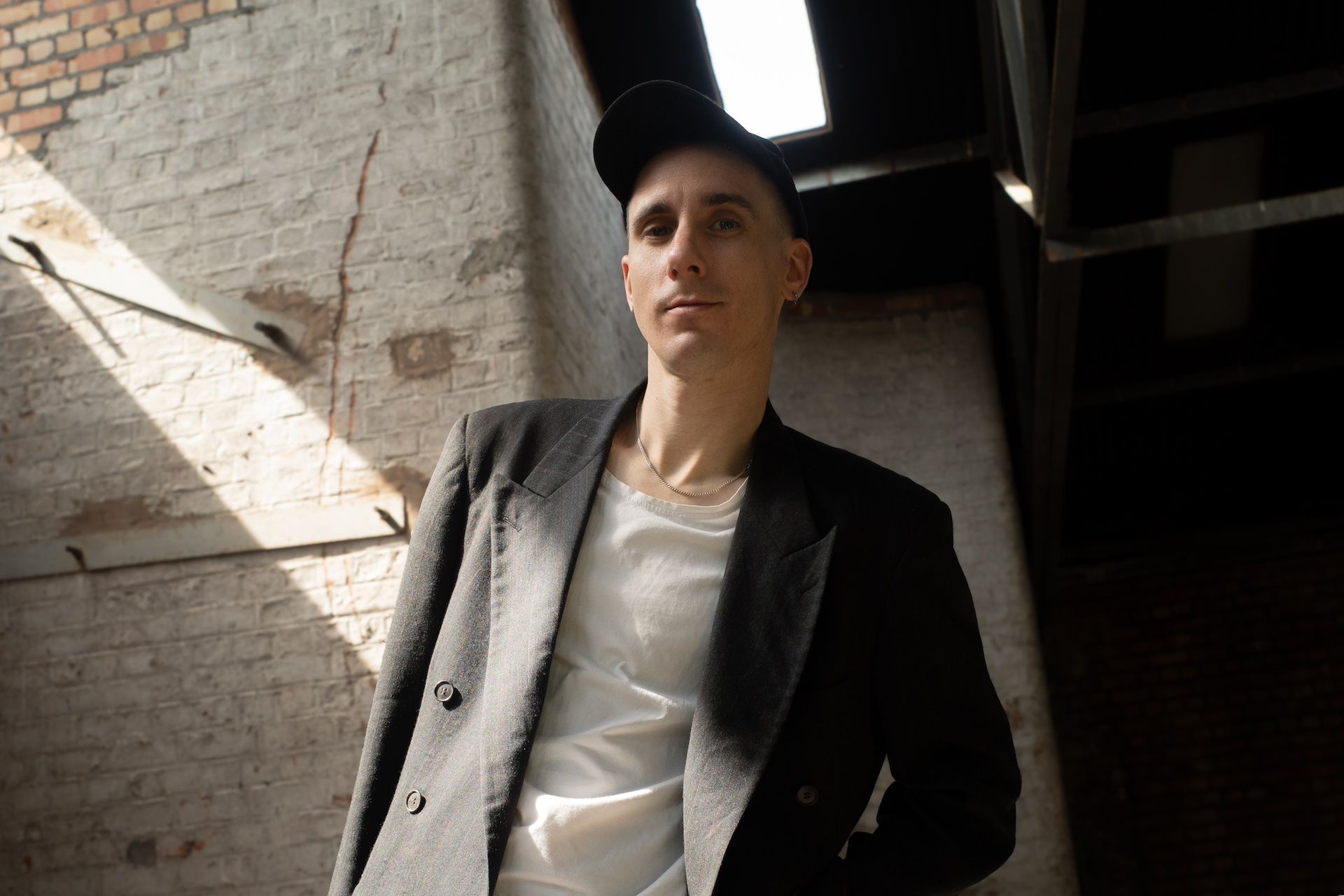
Name: Andrew Hunt aka Dialect
Nationality: British
Occupation: Composer, producer
Current release: Dialect's Atlas of Green is out via RVNG Intl.
Recommendations: Always Coming Home by Ursula K. Le Guin; Clarissa Connelly - World of Work
If you enjoyed this Dialect interview and would like to know more about his music, visit his official homepage. He is also on Instagram, and twitter and has his own page on the website of his label RVNG Intl.
When I listen to music, I see shapes, objects and colours. What happens in your body when you're listening? Do you listen with your eyes open or closed?
My dad was a classical music obsessive, he used to listen to Debussy and Stravinsky in the living room with his eyes closed. I found it kind of weird seeing him totally lost in the sound but it has really stayed with me.
When I’m listening to music I’m often creating some sort of mental map of the sounds I’m hearing, maybe it’s pitch relationships or perhaps some image. When I’m working on music I often have to go over sections many many times and I realised that once everything is right I can feel a tension in my muscles dissipate, so now I pay attention to that.
My body lets me know when something needs fixing.
Entering/creating new worlds through music has always exerted a strong pull on me. What do you think you are drawn to most when it comes to listening to and creating music?
I’m very moved by tones and the emotional effect of different pitches and timbres together. To me that is a kind of magic. I’m also very interested in harmony, broadly speaking - the way elements relate to each other and the structures they suggest.
When I’m making music I’m interested in establishing a sound-world which can act as a sort of container for whatever ideas I’m preoccupied with at the time. I have to find a pallet and an approach which can provide a sense of scale for the music to exist within. Establishing these boundaries affords me a lot of freedom within them.
Then when it comes to the actual material I can let myself be guided by emotion and intuition, whatever feels vivid and authentic.
According to scientific studies, we make our deepest and most incisive musical experiences between the ages of 13-16. What did music mean to you at that age and what’s changed since then?
At that age I was pretty obsessed with classic rock but was starting to get more into psychedelic stuff, starting with Pink Floyd, into jazzier stuff and then heavier stoner stuff.
All that music suggested a sort of vastness, a world of possibilities. I’m still pretty taken by that feeling.
Tell me about one or two of your early pieces that you're still proud of (or satisfied with) – and why you're content with them.
There’s a “piece” I wrote for guitar when I was about 9 which I still remember how to play. I played it in front of my class and I remember people looked at me like I was from another planet. It’s very simple but it has quite a strong melody and naturally it’s quite unselfconscious.
It can be hard to retain that sense of naivety in music as you progress.
What is your current your studio or workspace like? What instruments, tools, equipment, and space do you need to make music?
I’m lucky to share a decent sized space with a friend in the basement of my old house. It’s very affordable and surrounded by friends so it’s a real blessing. I have a piano in there and a bunch of other instruments and gear we’ve accumulated over the past 20 years of music making. I sometimes think that I don’t need all this stuff and maybe it would be fun to make something just on my computer.
Having said that, I love moving between the acoustic and digital space when I’m working, that fluidity is sort of how I found my voice.
From the earliest sketches to the finished piece, tell me about the creative process for your current release, please.
The earliest sketches came together on a residency at Bidston Observatory Artistic Research Center, near where I grew up on the Wirral. From there the ideas slowly developed alongside an interest in fantasy fiction and the work of Federico Campagna, a philosopher whose work influenced me a lot.
Fairly early on in the process I started getting asked to play live shows, so I began performing work-in-progress at these gigs, developing ideas through playing live, which helped define the equipment and general aesthetic of the record.
At some point I had the idea for the album to have a protagonist named Green who was trying to navigate some sort of future world, encountering broken fragments of the past. That image was very important in bringing the whole album together.
What role and importance do rituals have for you, both as an artist and a listener?
For me it’s less ritual and more routine. If I don’t have some other work or commitments I’ll work pretty much 9-5. My best ideas are usually in the morning, it feels like the brain is more elastic then.
As a listener I tend to be very focused, as if I’m watching a movie, which directly impacts how I compose. I get lumped in with ambient music a lot of time, which I sort of understand but my music is constantly going somewhere and doing something, it doesn’t work that well as background music, it needs your attention to be successful.
Are you acting out parts of your personality in your music which you couldn't or wouldn't in your daily life? If so, which are these?
Not really but I find I’m able to express my general sensibility most effectively through music. For some people its words or clothes, for me its music.
Late producer SOPHIE said: “You have the possibility [...] to generate any texture, and any sound. So why would any musician want to limit themselves?” What's your take on that?
I think when you’re doing anything creative its good to have a period where you’re totally unconstrained so that ideas can just emerge.
For me, it's good to then have a period where you’re quite hard on yourself about what works and what doesn’t and what the commonalities are. You might then go back to making things again but generally speaking there is a process of slowly increasing the amount of limitation until eventually you have something coherent.
So while I like the idea of 'no limits', I think limitation is how you create identity, it’s ‘this’ because it’s not ‘that’ etc
Do you feel that your music or your work as an artist needs to have a societal purpose or a responsibility to anyone but yourself?
Being an artist can be quite self involved so I find it necessary to try and offset that in various ways. Volunteering my time and skills to people in the neighbourhood regularly are some of the ways I find balance in my life these days. I do quite a bit of work with children, care giving etc and its become part of how I see the world.
Naturally I feel art has a social value but it's subjective and always changing. Finding some small, local way to try and help is empowering and gives you perspective. Meeting people who are different from you and who don’t share your interests - it’s part of world building actually.
Once a piece is done and released, do you find it important that listeners understand it in a specific way? How do you deal with “misunderstandings?”
I have no problem with misunderstanding, in fact I think that’s often a very creative place :)
I often use concepts to guide me in my creative practice but it's important that the music stands up on its own. A linguistic framework might help me organise my material or offer a listener some kind of starting point but ultimately the power of music is its ability to go beyond language and directly grasp some kind of truth. I feel pretty strongly about that.
Sound, song, and rhythm are all around us, from animal noises to the waves of the ocean. What, if any, are some of the most moving experiences you've had with these non-human-made sounds? In how far would you describe them as “musical”?
There was a thing that went viral on TikTok recently with this girl harmonising with the extractor fan in her apartment and I guess like a lot of people I immediately thought “I do that!”.
I remember doing it as a kid and maybe on some very simple level realising that vibration is sound and that we are free to perceive sound in any way we want.
I’m also a big birder and think the overall form of birdsong is incredible, I certainly think of it as musical, it can be incredibly striking and yet totally unobtrusive at the same time. I could never aspire to that.
We can surround us with sound every second of the day. The great pianist Glenn Gould even considered this the ultimate delight. How do you see that yourself and what importance does silence hold?
Well we are surrounded by sound whether we like it or not! There is no such thing as silence but our capacity to tune in or out of sound is pretty amazing.
Sound is so rich, it can describe so much but I have to be careful what I give my attention to. I don’t like to have music on all the time for instance.
Do you feel as though writing or performing a piece of music is inherently different from something like making a great cup of coffee? What do you express through music that you couldn't or wouldn't in more 'mundane' tasks?
I’ve yet to make a cup of coffee which I felt really summed me up as a person but maybe I’m not doing it right!
Maybe it’s about intention, maybe it's about level of skill … For me it's inherently different because I’m not trying to ‘say anything’ when I’m making a coffee, it's functional. The special thing about art is that it's often not ‘for anything’, it's open ended.
I think for a listener (or drinker) it's different because our senses are so subjective and our brains so associative. I have no problem believing that drinking a great cup of coffee could be as deep an experience as listening to my album. ;)