Published
Name: Foundling
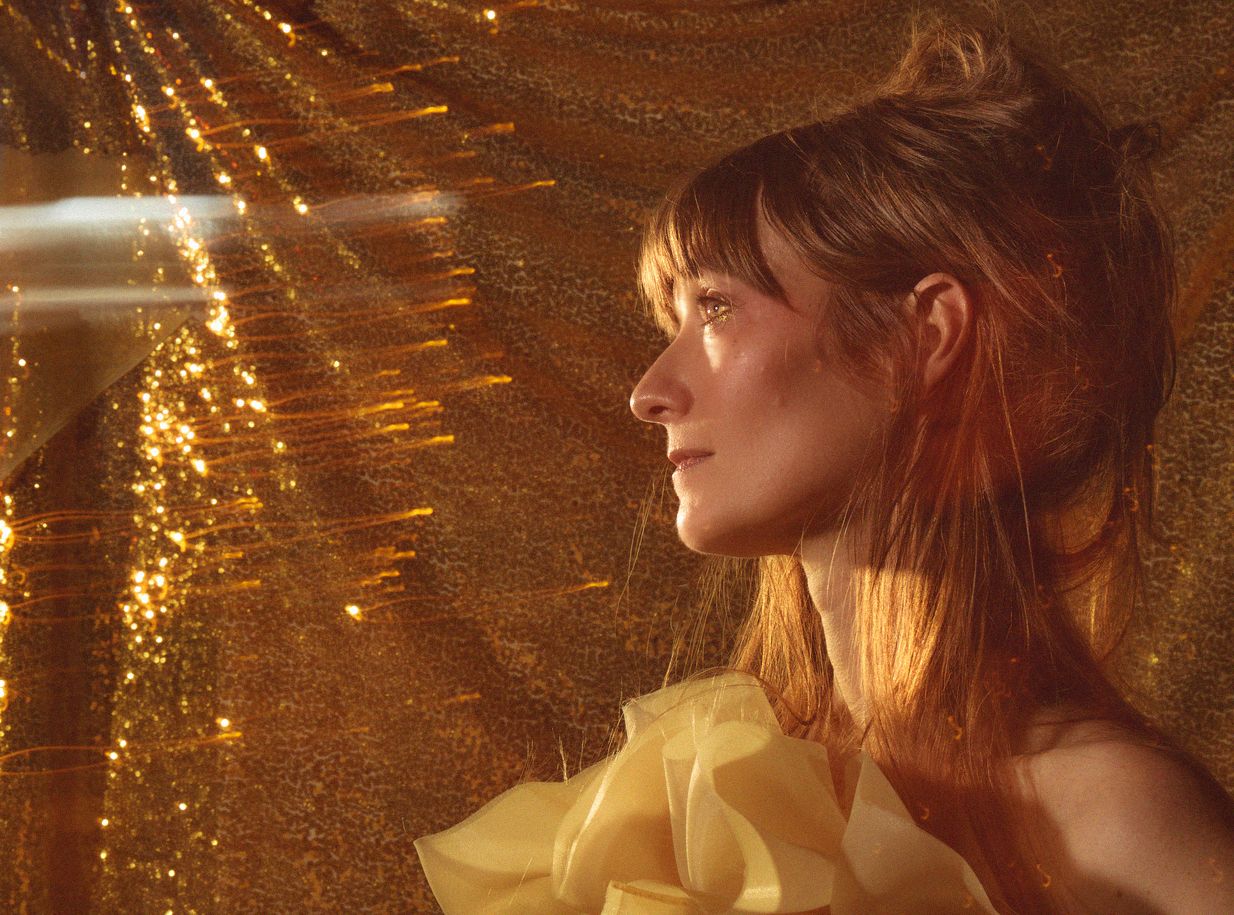
Members: Erin Lang (voice, bass, harp), Samuel Hall (percussion), David Georgos (synths, keys, programming), Peter Hanson (sax, flute), Dino Karlis (drums)
Nationality: American (Peter), Australian (Samuel), Canadian (Erin), German (David), New Zealand (Dino)
Current event: Foundling's new album Equilibria is out via Lakeview Enterprises. They will officially launch the album on May 26th 2024 at ACUD Club, Berlin.
Recommendations: Erin: Braiding Sweetgrass is such a powerful book I read recently ... so many of Robin Wall Kimerer’s stories feel like they are bringing to light innate if dormant feelings that need awakening. Showing the depth of connections in life and nature.
There is so much music to recommend but today I am feeing Violeta Parra - “Volver a los 17 | Letra.”
The first time I heard this song I needed to immediately play it again at least 8 times, not even understanding the lyrics, but Violeta Para’s voice just squeezes your heart so intensely. Since then, I’ve lived with this song in so many powerful moments where I need someone to sing out the deepest feelings for me.
If you enjoyed this Foundling interview and would like to know more about the band, visit their official website. They are also on Instagram, and Facebook.
For a deeper dive, also read our Erin Lang interview, and our Samuel Hall interview.
When I listen to music, I see shapes, objects and colours. What happens in your body when you're listening? Do you listen with your eyes open or closed?
Samuel Hall: This is a great question! The easy answer is both. But ... It really depends on the situation I'm in. Most of the time when I play my instrument I have my eyes closed. I find the visual isolation opens up the ears more and you can’t rely on visual cues for interacting with other musicians. You really have to listen. Of course if a certain playing situation demands visual cues or it is more relevant from a performance perspective, I will play with eyes open.
When listening for enjoyment I tend to listen with eyes closed and see if any visual information is triggered by the music, like you mention, colours, shapes, sometimes faces that morph into animalistic figures. If I’m taken on a visual journey in this way I’m really getting sucked in deep by the music. Usually a good sign!
As a drummer I have a lifelong privilege of twitching and tapping so I’m often hearing rhythms or melodies in my head that are improvising along with the music I am listening to and then tapping them out as quietly as possible …. As an improviser I'm always listening for ways I might interact with a piece of music or how the music is inspiring me to hear my instrument in a different way, so there are often a lot of thoughts processing along with the music.
Finally … There are also times where I love to listen and sing along to something dear to me and really just enjoy the energy of the music as a pure fan.
Entering new worlds and escapism through music have always exerted a very strong pull on me. What do you think you are drawn to most when it comes to listening to and creating music?
David Georgos: What I seek from music is to awaken in me a certain reflection of the emotions or feelings that are inside me and to give them an expression. Sometimes I know exactly what I want to feel and choose music specifically and sometimes I don't know. And then I skip through different genres and songs until everything suddenly feels somehow coherent.
Music can help me to understand what lies dormant inside me and wants to be awakened. Making music is no different.
What were your very first steps in music like and how would you rate the gains made through experience?
Erin Lang: The first baby step I can remember is my grandmother giving me her very old hand held radio that only had one channel and a single ear phone crackling songs from the 40s and 50s and sitting under the cherry tree being totally entranced by this music for hours and hours.
After that my father would play “Blackbird” by the Beatles on the guitar and I desperately wanted to play it too ... Like desperately ... I would cry that I was too small to learn at first.
Eventually I did when I was about 11, he taught it to me and I can vividly remember the intensely joyful feeling of having this music under my fingers. I started playing bass guitar shortly after that and I remember my first band practice and the wash of feeling from that shared musical space, making something together you can’t make alone.
Since those very early days I’ve played in all kinds of bands and toured internationally. Seen and felt and been a part of so much amazing music and it has informed how I move through the world completely.
Making these last albums with Foundling, who are also my best friends and such incredibly talented musicians, inspires me to keep making things and growing as a musician and a person.
According to scientific studies, we make our deepest and most incisive musical experiences between the ages of 13-16. What did music mean to you at that age and what’s changed since then?
Peter Hanson: I’m always thinking back on this time, during which I had several inspiring music teachers. Our band director was able to get us paid gigs at the local country club.
One weekend I was finally invited by my older and more talented friends to play in their jazz combo. I think something for me clicked and I realised, “I’m going to buy some weed with this money.”
I’m so grateful to still be making music after all of these years, and for the role music plays in my overall well-being.
How would you describe your own relationship with your instrument, tools or equipment?
Samuel Hall: My relationship is a very deep and ongoing one. I’ve been playing drums and percussion since I was about 6 years old, which is over 30 years I've been interacting with this medium. I have studied with masters from around the world and received wisdom that applies beyond just playing an instrument, it really has been an honour to go through life with percussion as my guide.
It has always been a part of my life and an extension of my body and mind. My gravitation towards experimental music offered a much broader understanding of how to approach sound in general as well as the possibilities to extend what ‘drums and percussion’ means. This relationship has developed a broad vocabulary both musically and otherwise.
More recently I have been investigating electro-acoustic instruments, modular synthesis, and preparing the drums with these processes. This has really broadened my sound palette and deepened the relationship I have with the instrument. I can really say that my instruments are an extension of my spirit, a way to express myself very honestly, offer a medium to interact with people that I otherwise wouldn’t be able to communicate with on such a high level, and has informed my life choices and the places I’ve been, people I've met.
It is, they are ... me.
Where does the impulse to create something come from for you? What role do often-quoted sources of inspiration like dreams, other forms of art, personal relationships, politics etc play?
Constantine Karlis: It’s a primal need like the need to eat or sleep. If I go too long without making something, I feel uncomfortable. Itchy. It is both an essential, and the greatest luxury.
A great deal of inspiration comes from birds, insects, architecture, and mathematics.
If music is a language, what can we communicate with it? How do you deal with misunderstandings?
Constantine Karlis: If music is a language, it’s an inarticulate one. But that’s its strength. It relies on shared context. It hints rather than specifying.
This leaves a huge of space for the listener to fill in the gaps. It makes each person’s experience unique.
Misunderstandings are often (usually?) the best bits.
Making music, in the beginning, is often playful and about discovery. How do you retain a sense of playfulness and how do you still draw surprises from tools, approaches and musical forms you may be very familiar with?
Peter Hanson: As a saxophonist, I was very surprised to learn it is actually the voice which unlocks the most secrets for me in music.
Singing is quite literally the embodiment of sound, and it always makes me happy. If I am trying to learn a piece of music I will try sing it, to find the correct way to play it. Rhythmic babbling has been a great tool for creating rhythmic ideas or for jazz improvisation.
Recently I have had some great success using the solfege system (Do, Re, Mi) for note reading and ear training.
Sound, song, and rhythm are all around us, from animal noises to the waves of the ocean. What, if any, are some of the most moving experiences you've had with these non-human-made sounds? In how far would you describe them as “musical”?
Peter Hanson: Animals, and the sounds they make, are a great source of inspiration for me.
A long time ago I participated in a puppet band which made characters out of musical instruments, called Living Things. Some examples include: an accordion with black furry arms that plays itself, or a dancing gourd penguin with a tambourine foot, a plush feedback frog holding a hot dog, etc.
As we got to know each character’s preferences and personalities we realised they were only capable of being themselves. Our role was just kind of facilitating their social lives on stage, which inevitably resulted in some very weird sounds.
There seems to be an increasing trend to capture music in algorithms, and data. But already at the time of Plato, arithmetic, geometry, and music were considered closely connected. How do you see that connection yourself? What aspects of music do you feel can be captured through numbers, and which can not?
David Georgos: This question can be understood and answered in different ways. Algorithms based on listening behaviour for instances can be helpful in suggesting suitable music. But in my opinion, our listening behaviour can be much more dynamic than what is captured by algorithms.
I think we humans also tend to suddenly want to listen to something different from what we are currently listening to, as our mood suddenly changes, triggered by the diversity of stimuli. However, our inertia then allows us to continue to run the algorithm, which is like a self-fulfilling prophecy. And then we are trapped in the loop.
To a large extent, art and music follow laws that we can grasp, study and execute. This helps us a lot to use art and music as a language. But it also harbours the danger of falling into self-similarity. This can be a good thing, but uniqueness requires an individual composition of form and shape, of frequency and resonance.
So it's a double-edged sword, if you like.
Do you feel as though writing or performing a piece of music is inherently different from something like making a great cup of coffee? What do you express through music that you couldn't or wouldn't in more 'mundane' tasks?
David Georgos: I believe that every time two ingredients come together, a unique mixture is created. Whether that's boiling water with coffee powder or a guitar and a bass track.
But as soon as you try too hard to create what tastes good or what sounds like this or that, then it's functional and gives security, but it will no longer be unique.
If you could make a wish for the future – what are developments in music you would like to see and hear?
Constantine Karlis: That the streaming services are somehow forced to pay ethically for the music they profit from.