Published
Name: Garth Erasmus
Nationality: South African
Occupation: Visual artist, musician
Current release: Garth Erasmus's Threnody for the Khoisan is out via TAL.
Recommendations: All the poetry of Seamus Heaney the great Irish poet. The Wages of Rebellion by Chris Hedges (book)
If you enjoyed this Garth Erasmus interview and would like to know more about his music, visit him on Instagram, and Soundcloud.
When I listen to music, I see shapes, objects and colours. What happens in your body when you're listening? Do you listen with your eyes open or closed?
Vibrations. When I listen to my favourite kind of music my body responds to the vibrational impulse of it all. I never listen passively.
Usually my eyes are open because I want to be in touch with my surroundings. I don’t really have the luxury of time and so music is always the ambience of my life. My senses are heightened and in this state of openness I am very aware and ready for whatever the music will give me.
I can be inspired by just a note, or a few notes, or an atmosphere, or a mood. I’m amazed sometimes at my emotional responses when something in the music moves me and usually that something becomes influential in my own music-making.
Entering new worlds and escapism through music have always exerted a very strong pull on me. What do you think you are drawn to most when it comes to listening to and creating music?
Yes, I can understand the escapism because that is what happens to me as well. What draws me in is how music can sooth my soul because the world can be so tormenting to one’s spirit.
Music is definitely a therapy for me and I need it more and more. For me music is magical and mysterious and has the ability to affect one’s emotional state in a very direct way and bypassing the intellectual and the rational. More so than any other art form.
What were your very first steps in music like and how would you rate the gains made through experience?
Making music and making instruments happened by accident for me.
At a certain point in my twenties I had reached a point of frustration with my art work. It was still the days of struggle during Apartheid in South Africa and at the time I was a visual artist, mostly painting, with a very highly charged political focus … but after many years of doing this I probably reached a point of maturity where this kind of work was not emotionally satisfying anymore. I wanted to go beyond the superficial politics to a deeper understanding of things.
This was precipitated by questions that had been quietly troubling me for a long time that related to a desire to find out more about my own family history and the history of the indigenous people, the KhoiSan, and also to learn more about the history of colonialism.
Because of Apartheid these were issues that were never spoken about. Anyway, I started on this journey of research by myself and in the process discovered the rich musical heritage of the KhoiSan people. One outcome was that I started experimenting with building some of these instruments and discovering the sound, the music.
After almost forty years I am still on this journey and still making discoveries that continue to nurture creativity in my life.
According to scientific studies, we make our deepest and most incisive musical experiences between the ages of 13-16. What did music mean to you at that age and what’s changed since then?
Music meant nothing to me besides the music my mother played at home. She played piano and had a beautiful singing voice.
You see, the reason why I say it meant nothing is because of the Apartheid situation at that time which meant the education system was fucked up for Black people. We never had art or music or drama at our schools. The schooling system was designed to make a slave out of you.
Those were the conditions of my childhood. Things have changed since Apartheid has fallen.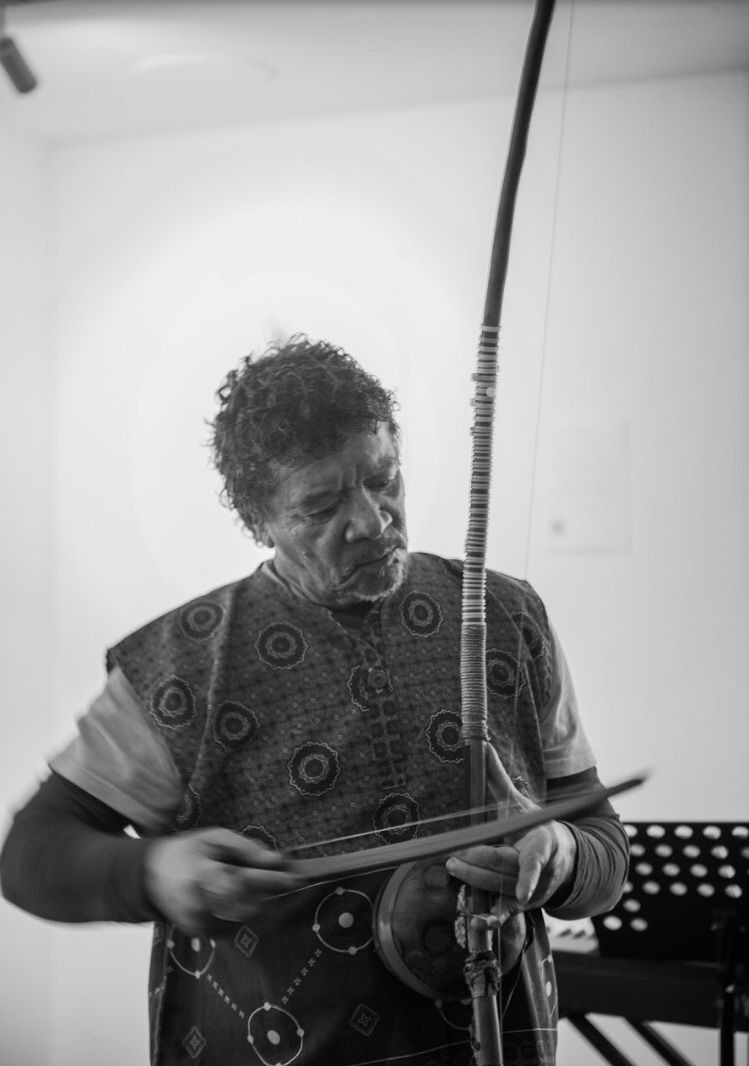
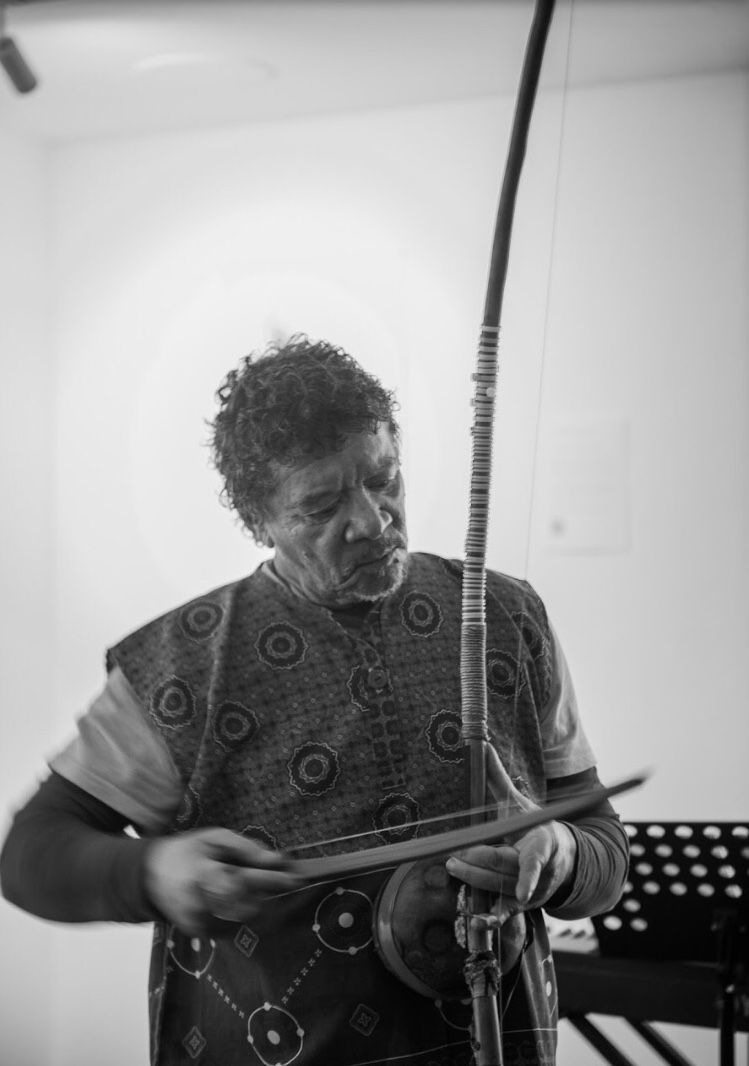
Garth Erasmus Interview Image by Esther Marie Pauw
How would you describe your own relationship with your instrument, tools or equipment?
It’s a love relationship and it’s mutual, it goes both ways … there’s this give and take. And it’s about respect as well. All that is true when musicians talk about the importance of discipline and dedication. What you get out is equal to what you put in.
But the greatest gift my instrument has given me is a sense of self-pride and loss of fear … to not be frightened to display your talents and take your place in the world.
Where does the impulse to create something come from for you? What role do often-quoted sources of inspiration like dreams, other forms of art, personal relationships, politics etc play?
Well, my creative impulse is wrapped up in the particular context of life in South Africa so I guess politics … but politics is the umbrella under which all our dreams, art, relationships are influenced.
What really interests me in my situation back home is trying to make a positive contribution to this new society we have to create now out of the shadow of Apartheid. This is the space where I believe creativity can have the biggest impact.
So you could say my impulse comes from my dream of a new society.
Are you acting out parts of your personality in your music which you couldn't or wouldn't in your daily life? If so, which are these? What, would you say, are the key ideas behind your approach to music?
Playing music at a deep level is transformative for me. It takes me away. And you can feel that power inherent in reaching states of trance. But true trance has only happened to me a couple of times. It’s wonderful and incredible and it’s the inspiration to want to get there again and again. So, yes, in a sense you do access a different you from your normal self.
Free improvisation is what I do … my approach … it’s the only thing I can do because I’m not a schooled musician and have no knowledge of reading notes. This allows me the freedom to create on my own terms and investigate emotional responses in a spontaneous way, an honest way … and this is not always possible in daily life with its rational control.
If music is a language, what can we communicate with it? How do you deal with misunderstandings?
Music is the language of the soul and the spirit. It is the language of expression and feelings and for me this is most evident in improvisation because what these expressions reflect are the accumulated yearnings, dreams, wisdom of the soul.
Improvisation is also live inspiration where so-called mistakes are embraced because they lead you to new areas of discovery.
Making music, in the beginning, is often playful and about discovery. How do you retain a sense of playfulness and how do you still draw surprises from tools, approaches and musical forms you may be very familiar with?
I am lucky in the sense that a big part of my interest in music is about building new instruments. This impulse comes from the fact that I am primarily a visual artist and love to build things. So this keeps me connected and keeps my interest fresh.
The thing is with me that the invention of a new instrument is usually based on a knowledge of a prior model … there is evolution from one to the next with a high level,of experimentation. This in itself is a playful exercise.
Like with, say a visual art piece, it all starts in your imagination … I dream something into existence you could say … I see a vision of It … what it looks like and imagine the possibilities of its sound and work from there …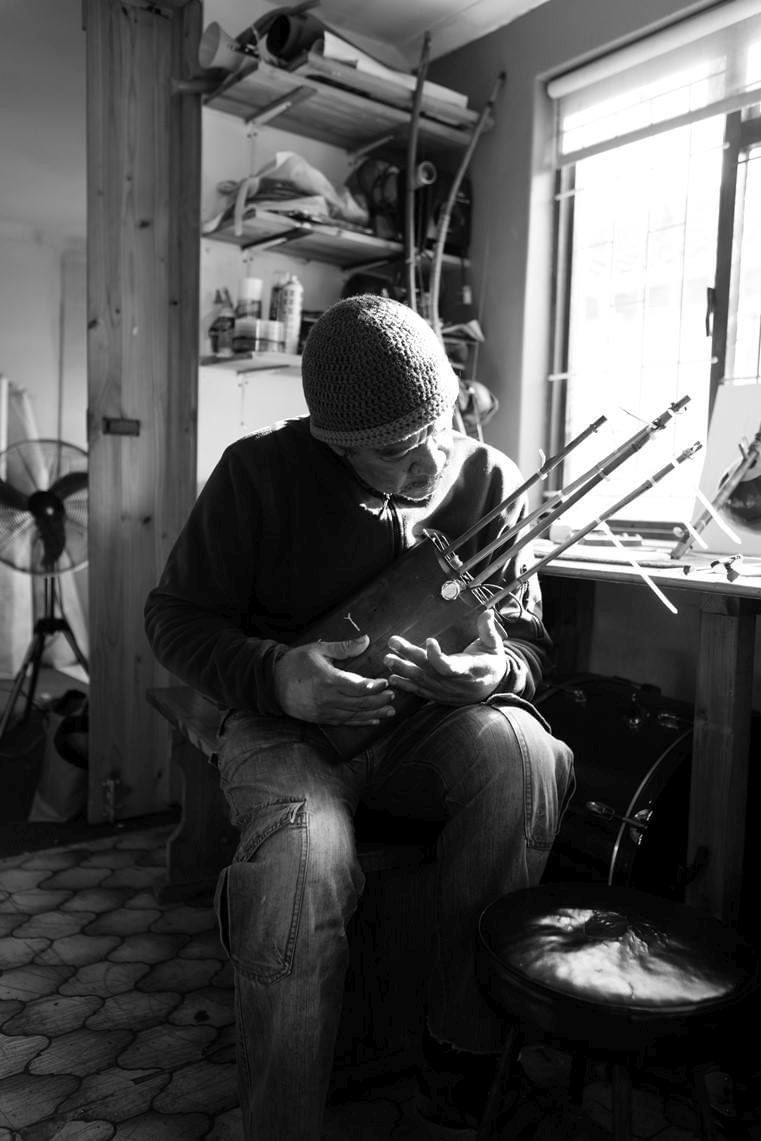
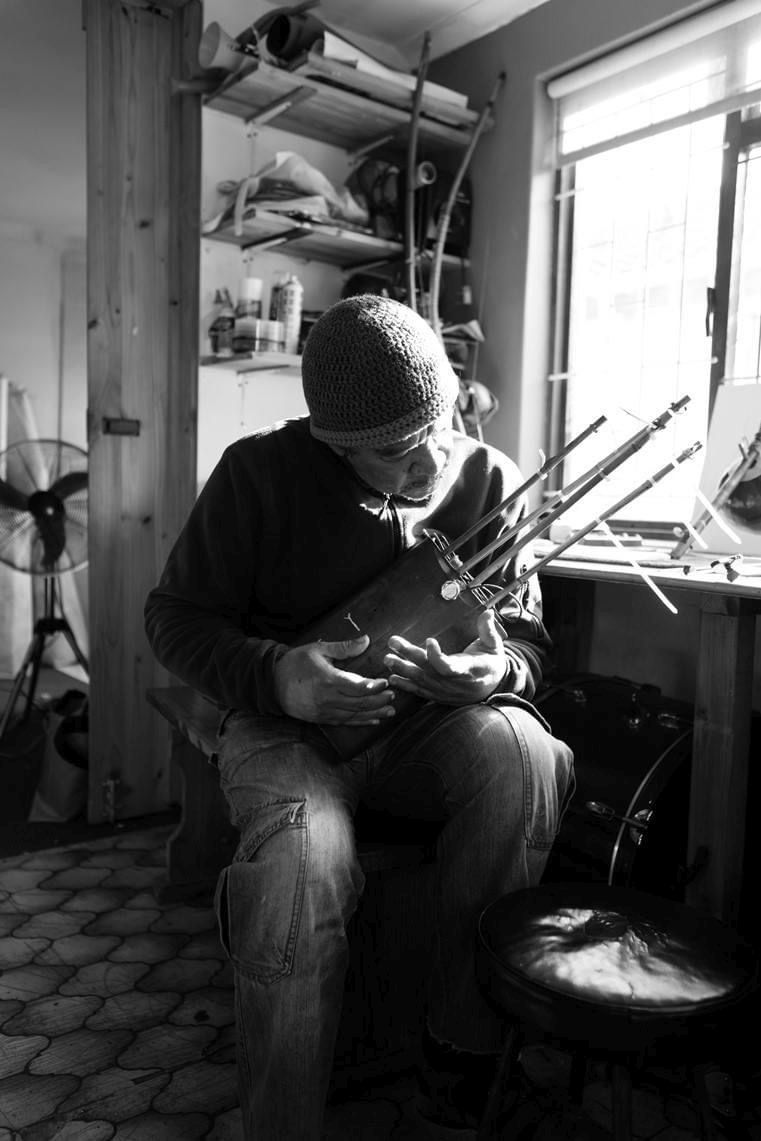
Garth Erasmus Interview Image by Esther Marie Pauw
Sound, song, and rhythm are all around us, from animal noises to the waves of the ocean. What, if any, are some of the most moving experiences you've had with these non-human-made sounds? In how far would you describe them as “musical”?
Some of those experiences have come from the wind. Cape Town, being a coastal city, can become very, very windy. One of my most moving experiences happened a very long time ago but it was so pivotal that it still inspires me to this day …and I still try to appropriate that experience in music terms.
This happened in a squatter camp where I was visiting a friend. You know what a squatter camp is, right? Where people have built dwellings made out all kinds of found material they’ve accessed in the environment … the most common substance in this architecture being corrugated iron sheets, cardboard, wood, planks, lots of tin, plastic sheeting to protect against rain, and so on. Squatter camps have sadly become a feature of life in South Africa.
Anyway, I was in this camp and it was very windy and it was nighttime, so it was relatively quiet … then all of a sudden I became aware of the most amazing music in the air. The many hundreds of dwellings all around were themselves the music! They strong gusts of wind sweeping over everything were causing interesting audible responses from the housing materials, lots of it being gentle percussive sounds from loose materials.
But the most interesting and the thing that drew my attention the most was the gentle whistling sound of the wind playing in between the spaces and gaps of things. A genuine flute-like music. And together with the soft rustling percussion noises this was a symphony.
There seems to be an increasing trend to capture music in algorithms, and data. But already at the time of Plato, arithmetic, geometry, and music were considered closely connected. How do you see that connection yourself? What aspects of music do you feel can be captured through numbers, and which can not?
Even though I’m not tech-savvy … I’m a bit too old school … I love the idea of modern technology in music production. I myself am very curious about the potential and possibilities of working in this area and especially working at the interface of modern technology and ancient instrumental sound.
Essentially, the instruments I make and play could be considered as coming from an ancient indigenous knowledge system which is itself advanced. So I believe there is a valid connection between the old and the new and the possible reciprocal relationship between these technologies exist in a real way.
I’m a firm believer in the concept that the newest thing is the oldest thing newly discovered.
How does the way you make music reflect the way you live your life? Can we learn lessons about life by understanding music on a deeper level?
Well my lived experience with making music has taught me a sense of discipline and dedication I would not have gained in any other way. This lesson is the ultimate gift for me. And of course this radiates outward to one’s physical and mental health and all round spiritual wellbeing.
Added to this is the sense of tolerance and patience that one acquires by default when practising music in community with others at a deeper level.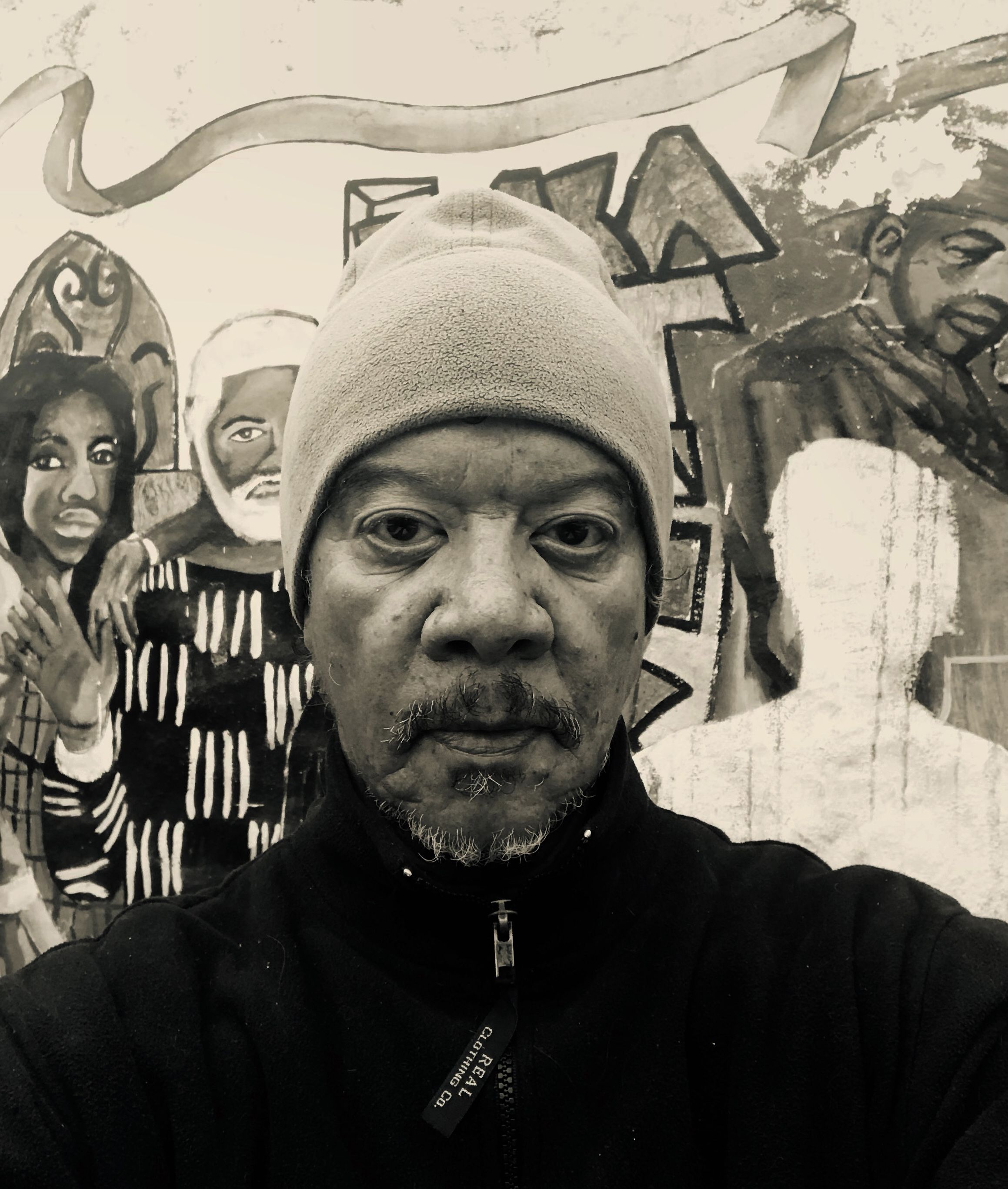
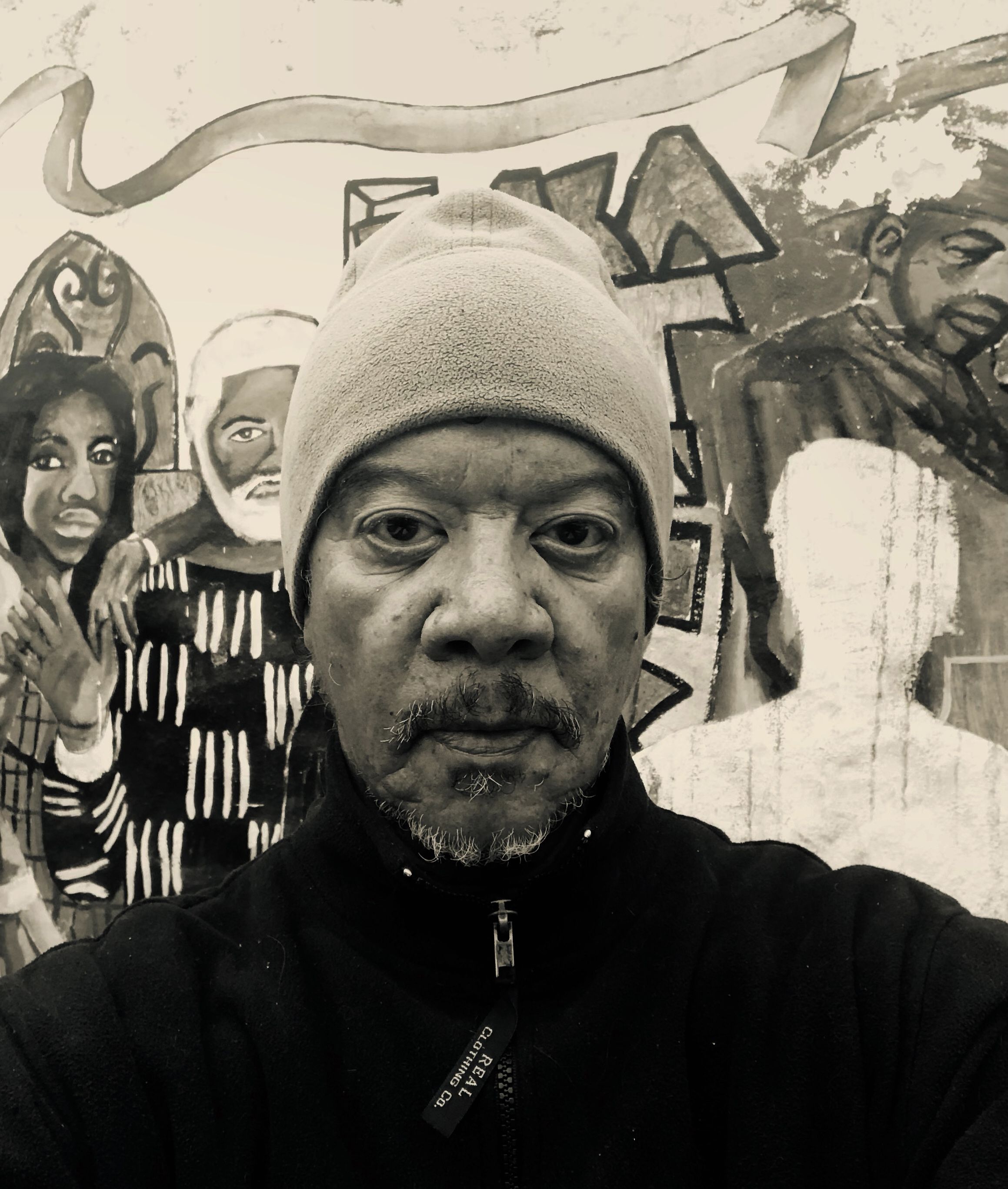
Garth Erasmus Interview Image by Esther Marie Pauw
We can surround us with sound every second of the day. The great pianist Glenn Gould even considered this the ultimate delight. How do you see that yourself and what importance does silence hold?
I do enjoy the value of silence as an antedate for this noisy modern world and the benefits of meditational practices.
South Africa’s rugged and dry hinterland is never far away in our lives and is full of silence. Frequent trips into this environment is a way of life for us. When you speak of silence this is the silence I mean in my context. I need silence also. Usually silence is the moment that stimulates the brain, the moment in which creativity is unlocked.
Silence can be uncomfortable but this is good to process thoughts and feelings that cause tension because you could have then the clarity needed to work things out.
Do you feel as though writing or performing a piece of music is inherently different from something like making a great cup of coffee? What do you express through music that you couldn't or wouldn't in more 'mundane' tasks?
Again, there are certain experiences I’ve had - and this is mostly because of the special South African context in which I work - where performance of music can have this power of transformation … and this applies as much to the audience as it does to me.
In ZA the very sight of the kinds of instruments I play can have huge value in creating consciousness that go beyond the verbal. In the case of ZA we have a society that has been traumatised not only by Apartheid but also through centuries of colonialism, genocide, slavery. A society with so much inherited trauma.
One thing I believe is that we have a collective unconscious that is closed and trapped and looking for and needing release. The mere fact of walking with my instrument in full view has the effect of performing your culture. This can already be transformative for some.
So even though making a great cup of coffee can be mundane, making a great cup of coffee with your instrument beside you can be revaluation.
If you could make a wish for the future – what are developments in music you would like to see and hear?
If I can use the metaphor of harmony … the world needs harmony. For me it is that interface between the new and old technology. I believe this is where magic resides.
I hope modern technology can have the intelligence to embrace the ancients with humility in the knowledge that the rhythms of the old together with the rhythms of the new can create the harmony we need.