Published
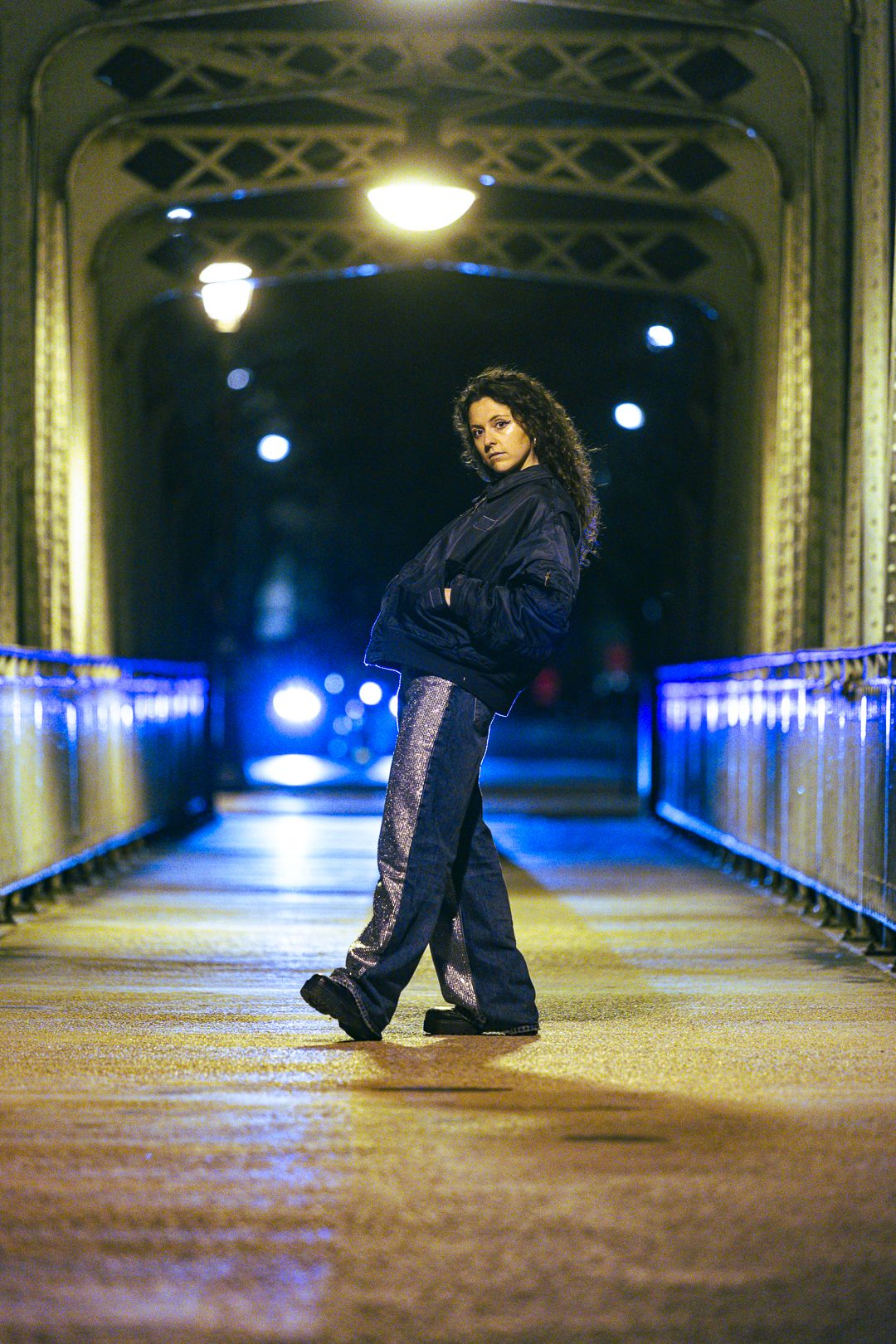
Name: GOTIS
Nationality: French
Occupation: Producer
Current Release: GOTIS's Red Therapy EP is out via Moonstart. She also has a track on the winter 2025 compilation on After O'Clock.
Recommendations for her current hometown: Décadence, in Montpellier. It’s an amazing eatery, beautifully decorated—a real pleasure to go there.
Topic I rarely get to talk about: I’m passionate about cooking and mixology because I love experimenting and creating flavor combinations. It’s a real pleasure to mix different ingredients and discover new sensations. To me, it’s also a way to show love—preparing a dish or a cocktail for someone is a personal way of sharing something and bringing joy. Like music, cooking and mixology play with textures and sensations, making them a creative way to make others happy.
If you enjoyed this GOTIS interview and would like to stay up to date on her music, visit her on Instagram, and Soundcloud.
When I listen to music, I see shapes, objects and colours. What happens in your body when you're listening? Do you listen with your eyes open or closed?
When I listen to music, it’s almost physical—I feel like I’m picking up on vibrations. I often get goosebumps, sometimes a weight suddenly lifts, like a tension that disappears.
If I close my eyes, it’s because I want to dive deeper into the listening experience, as if I’m putting the outside world on pause.
If we forget about streaming numbers, target audiences, social media followers, and sales - why are you drawn to sound and music as a creator and listener? What is it that you give and receive through it?
For me, music is primarily a way to translate emotions, moments, or reflections that words alone can’t convey. As a producer, it’s an outlet and a way to offer something that I hope resonates with others.
In return, when I see that someone connects with or finds meaning in what I’ve created, it gives everything immense purpose.
According to scientific studies, we make our deepest and most incisive musical experiences between the ages of 13-16. What did music mean to you at that age and what’s changed since then?
Around the age of 15, I was into rock. My approach to music back then was much more raw and instinctive. There was a certain innocence because I was still discovering everything—playing instruments, structuring songs, and expressing emotions through sound.
Today, that spontaneity is still there, but it coexists with much more thoughtfulness. I think more about how to construct a track, how to make it work, what techniques will be effective.
The discovery phase has given way to a search for balance between emotion and technical skill.
Tell me about one or two of your early pieces that you're still proud of (or satisfied with) – and why you're content with them.
I could talk about my first EP, which was also my very first solo project.
I’m very proud of it because it marks an important step in my journey as an artist. It wasn’t created with the intention of being released or specifically made for clubs. It was first and foremost a personal, almost intimate, process—an opportunity to freely explore my ideas and emotions without external pressure.
What is your current your studio or workspace like? What instruments, tools, equipment, and space do you need to make music?
My studio is a mix of simplicity and efficiency. I have a Novation MIDI keyboard, a Korg Minilogue synthesizer, and a Korg Volca Drum, which I love for its rhythmic textures. There’s also my electric guitar, which remains one of my first musical loves. Recently, I got a Shure microphone and a Behringer mixing console.
But beyond the equipment, the atmosphere of my workspace is crucial. Lighting plays a big role—I need a cozy space with soft, warm lights that foster creativity. This welcoming environment helps me focus, relax, and let my musical ideas flow freely.
From the earliest sketches to the finished piece, tell me about the creative process for your current release, please.
For this EP, everything started with sensations and emotions. Each track was born from a feeling that I tried to translate into sound. Sometimes it started with a synth melody, other times with a rhythm. Then I spent hours refining it, adding textures, layering sounds until everything fit together as I imagined.
In the end, I left some room for imperfection because that’s what makes music feel alive.
What role and importance do rituals have for you, both as an artist and a listener?
Rituals are important in my creative process. I love listening to music before I start composing—it helps me adopt a fresh perspective and gain distance from my own work.
Listening to other artists also fuels my creativity, providing inspiration and sometimes even leading me in directions I wouldn’t have considered otherwise.
Are you acting out parts of your personality in your music which you couldn't or wouldn't in your daily life? If so, which are these?
I’d say my darker sides find their place in my music. I don’t necessarily hide them in daily life, but they stay in the background. I express them particularly through the nostalgia in my tracks, the melancholy that often runs through my creations.
Late producer SOPHIE said: “You have the possibility [...] to generate any texture, and any sound. So why would any musician want to limit themselves?” What's your take on that?
I completely agree with this perspective. The idea of self-imposing limits in a world where anything is possible seems almost unnatural.
But paradoxically, I also think constraints can be incredible creative tools. Telling yourself, "I’m going to create using just a piano and my voice," can sometimes lead to deeper results than drowning in endless possibilities.
Do you feel that your music or your work as an artist needs to have a societal purpose or a responsibility to anyone but yourself?
I believe that art, whether intentionally or not, has an impact on the world. But I don’t think an artist is obligated to have a "message."
Sometimes, simply conveying an emotion or providing an escape is already huge. If my music can touch someone or spark a thought, that’s great. But it’s not always intentional.
For me personally, music has in many instances influenced my decisions and views and literally changed my life. What has this been like for you and how do you think does music make its power felt?
Music has definitely influenced my life and choices.
It has guided me, sometimes without me even realizing it, by giving me a sense of direction when everything felt uncertain. It connects us to ourselves, but also to others—that’s what makes it so powerful.
I would love to know a little about the feedback you've received from listeners or critics about what they thought some of your songs are about or the impact it had on them – have there been “misunderstandings” or did you perhaps even gain new “insights?”
I’ve mostly received positive feedback. My EP was well received, and people told me they appreciated the atmosphere and emotions they found in it.
There weren’t any misunderstandings, but some responses helped me see my tracks from a different angle and understand how they can be perceived in various ways.
Sound, song, and rhythm are all around us, from animal noises to the waves of the ocean. What, if any, are some of the most moving experiences you've had with these non-human-made sounds? In how far would you describe them as “musical”?
I love the sounds of nature because I come from a village and grew up in the countryside. The sounds of birds, the wind, rustling leaves—they all touch me deeply.
It’s raw music, almost primal, but so rich. These sounds are very inspiring to me.
We can surround us with sound every second of the day. The great pianist Glenn Gould even considered this the ultimate delight. How do you see that yourself and what importance does silence hold?
I love being surrounded by sound, but silence is just as precious. It allows the mind to rest and lets thoughts or inspirations emerge.
Silence is where many ideas take shape, like a blank canvas. For me, silence is an essential part of music.
Do you feel as though writing or performing a piece of music is inherently different from something like making a great cup of coffee? What do you express through music that you couldn't or wouldn't in more 'mundane' tasks?
Making a good coffee is an art in its own way—it requires precision and intention. But with music, you reach an emotional and universal dimension that no other activity can truly match.
Through music, I express things that have no words, nuances of emotion that no everyday task could ever fully convey.