Published
Name: Hanry
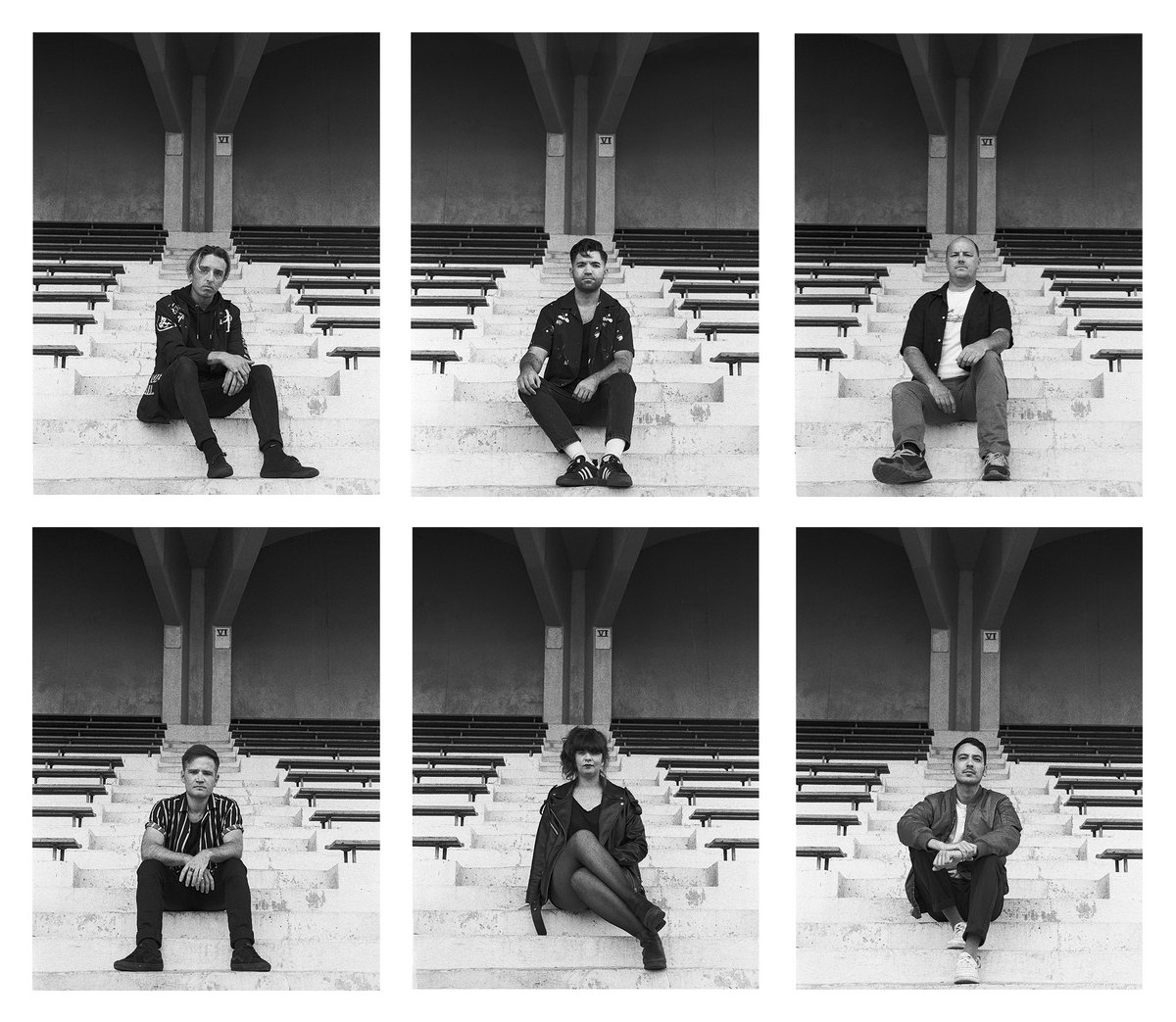
Members: Anthony Leliard (guitar), Marc Mifune (keys), Jean-Anaël Aubaux (guitar), Mathilde Lejas (bass), Clément Champigny (drums), Hadrien Benazet (guitar)
Interviewee: Anthony Leliard
Nationality: French
Current Release: Hanry's Disruption EP is out via Pelagic.
Recommendations for their current hometown: We live in Rennes, the capital of Brittany in France. I’d suggest exploring Brittany, which is probably the region with the richest culture and the most beautiful landscapes in the country. Otherwise, I’d recommend attending the Transmusicales Festival in December, which is one of the most iconic festivals in France.
Topic I rarely get to talk about: I’m a true “bon vivant” and deeply passionate about cooking. If I were to change careers, it would probably be in this field.
If you enjoyed these thoughts by Hanry and would like to stay up to date on the band their music, visit them on Instagram, and Facebook.
When I listen to music, I see shapes, objects and colours. What happens in your body when you're listening? Do you listen with your eyes open or closed?
Music stimulates the senses and emotions, creating highly personal experiences.
Listening with your eyes closed can amplify sensations by focusing attention solely on sound.
If we forget about streaming numbers, target audiences, social media followers, and sales - why are you drawn to sound and music as a creator and listener? What is it that you give and receive through it?
For creators, music is a form of expression that goes beyond words. It translates complex emotions and fosters connections with oneself and others.
As a listener, music can offer comfort, inspiration, or escape.
According to scientific studies, we make our deepest and most incisive musical experiences between the ages of 13-16. What did music mean to you at that age and what’s changed since then?
At that age, music is often an identity marker, a way to build and differentiate oneself. Over time, the relationship with music can expand, deepen, or simply evolve.
Today, music is both my passion and my profession, which can sometimes be conflicting. But when the two align, it’s the perfect formula.
Tell me about one or two of your early pieces that you're still proud of (or satisfied with) – and why you're content with them.
I could talk about Hanry’s very first song, "Cavale," which was the foundation of the band’s creation.
Without that song, created in my bedroom during the COVID-19 lockdown, the band would never have come into existence.
What is your current your studio or workspace like? What instruments, tools, equipment, and space do you need to make music?
We usually work in two studios to create our music. Primarily at DiscoCasino Studio in Rennes, a professional studio where we have everything we need to record in optimal conditions.
But we also use my small home studio to create the foundation of our compositions.
From the earliest sketches to the finished piece, tell me about the creative process for your current release, please.
For the EP Disruption, most of the songs were created in my home studio with Marc Mifune and Jean-Anaël Aubaux to build the skeleton of the tracks. Then we move to DiscoCasino Studio to develop and record the final versions.
What role and importance do rituals have for you, both as an artist and a listener?
We don’t really have any specific rituals.
Are you acting out parts of your personality in your music which you couldn't or wouldn't in your daily life? If so, which are these?
I’m generally a cheerful and positive person, so perhaps it’s a darker side that unconsciously comes through in some tracks.
But overall, our music is more about expressing dreams.
Late producer SOPHIE said: “You have the possibility [...] to generate any texture, and any sound. So why would any musician want to limit themselves?” What's your take on that?
In our creative process, we try not to limit ourselves to discover new textures. However, it’s important to set some boundaries to avoid things spiralling out of control.
Today, we’re lucky to have access to countless physical and digital effects, which often form the foundation of our music.
Do you feel that your music or your work as an artist needs to have a societal purpose or a responsibility to anyone but yourself?
It depends on the artist’s intention. Some focus solely on personal expression, while others aim to raise awareness, inspire, or provoke societal change through their art.
For me personally, music has in many instances influenced my decisions and views and literally changed my life. What has this been like for you and how do you think does music make its power felt?
Music has a unique power to touch human emotions, create powerful memories, and transform perceptions. It can inspire, motivate, or even heal.
I would love to know a little about the feedback you've received from listeners or critics about what they thought some of your songs are about or the impact it had on them – have there been “misunderstandings” or did you perhaps even gain new “insights?”
The goal of our instrumental music is to let listeners create their own mental images. It’s always interesting to hear what sensations it evokes in others because they are all different.
Sound, song, and rhythm are all around us, from animal noises to the waves of the ocean. What, if any, are some of the most moving experiences you've had with these non-human-made sounds? In how far would you describe them as “musical”?
Natural sounds, like waves or birdsong, can be deeply musical. They often evoke a primal and soothing connection with the world.
We can surround us with sound every second of the day. The great pianist Glenn Gould even considered this the ultimate delight. How do you see that yourself and what importance does silence hold?
Silence can be as powerful as sound. It’s a space to refocus, reflect, and better appreciate music when it resumes.
Do you feel as though writing or performing a piece of music is inherently different from something like making a great cup of coffee? What do you express through music that you couldn't or wouldn't in more 'mundane' tasks?
Making a cup of coffee can be an art in itself, but music allows for emotional expression and a more universal connection than daily tasks.