Published
Name: Howard J. Davis aka HAUI™
Nationality: Canadian
Occupation: Mixed-media artist, composer
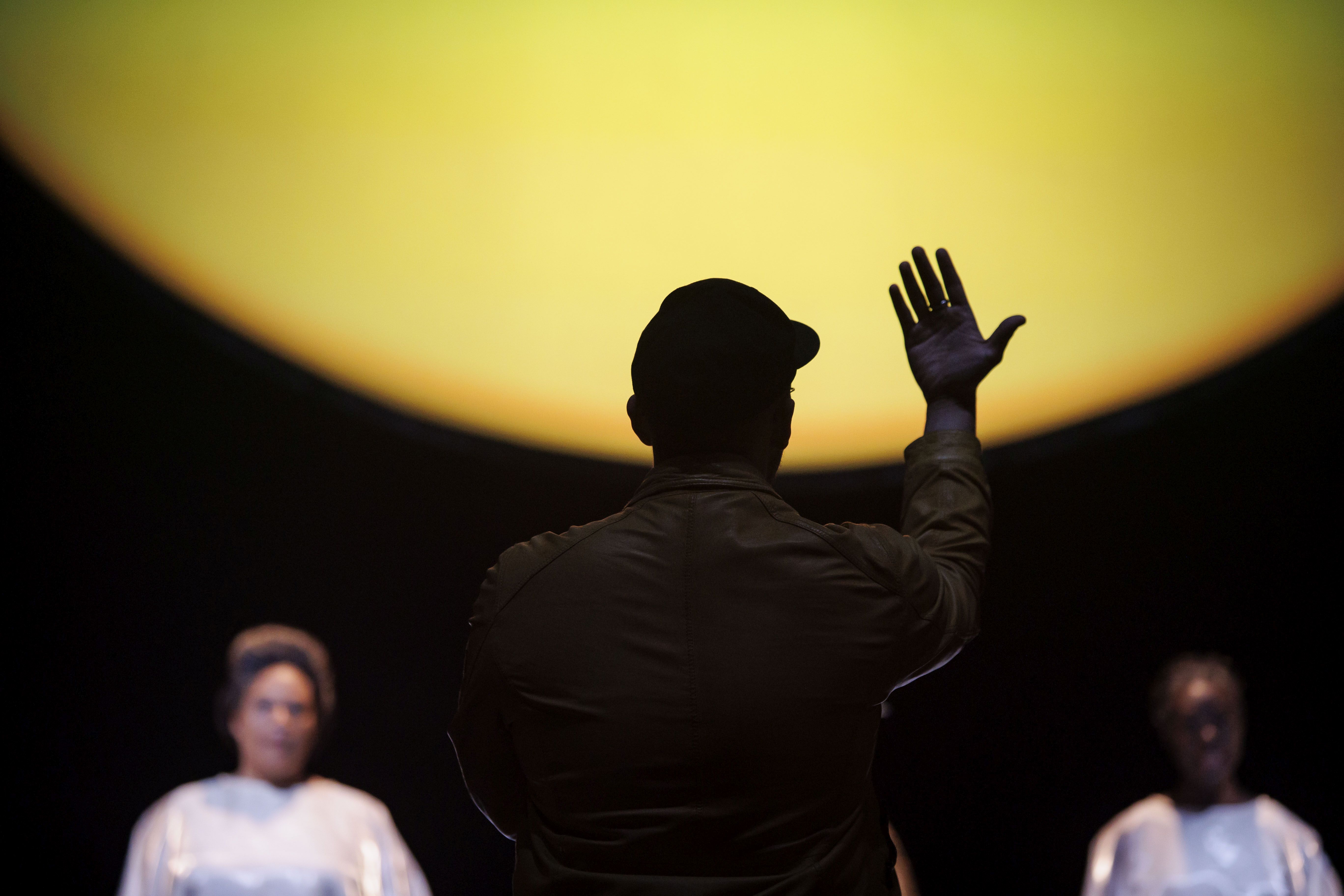
Current event: HAUI™’s Aportia Chryptych; A Black Opera for Portia White was just premiered in a production by the Canadian Opera Company.
Recommendations: I will shamelessly self promote my recent opera Aportia Chryptych: A Black Opera for Portia White we are excited to look for presenters In 2025 onward.
The second piece I would recommend is Leonard Cohen’s HOW TO SPEAK POETRY – first published in 1977. This insightful piece was introduced to me by a very special person. A mentor and huge guide in my creative journey. It is a helpful reminder that music, poetry and language demand simplicity and authenticity.
If you enjoyed this HAUI™ interview and would like to know more about their music, visit their official homepage. They are also on Instagram.
When I listen to music, I see shapes, objects, and colours. What happens in your body when you're listening? Do you listen with your eyes open or closed?
When I listen to music, there is often an association with movement. I started as a performer, and music for me is integrally connected to the kinesthetic space around us.
Even the movement of notes on a staff of music relates to direction or space.
Entering/creating new worlds through music has always exerted a strong pull on me. What do you think you are drawn to most when it comes to listening to and creating music?
For me, creating music is incredibly connected to family, culture and history. I also love that music is used so often across mediums. It often serves as the heartbeat of a story.
Whether I’m using it as part of a soundscape or score in film or through an aria in opera, music is a universal language. It is remarkable that music, regardless of words, translates across cultures and languages.
According to scientific studies, we make our deepest and most incisive musical experiences between the ages of 13-16. What did music mean to you at that age, and what’s changed since then?
Music and singing were big parts of my life between those ages. I trained classically as a boy soprano until the age of 14/15 when my voice started to change.
I would reframe that while during these years I was clear and incisive about my passion and creative desires, they were more the inception from which I’ve blossomed as an artist. My relationship with my instrument became different from that time onward. Music and voice was often my channel of communication as a performer.
As I've moved away from performing to creating, music has become less about being in harmony and more about finding areas of contrast, tension, and drama. All art should have a bit of drama. Music should be melodic, but there is an innate rawness, boldness, and disruptive nature to its power.
Tell me about one or two of your early pieces that you're still proud of (or satisfied with) – and why you're content with them.
One of my most recent accomplishments is the highlight of my creative journey so far. I recently premiered my first opera. The piece explores the true story of Portia White, a concert singer of African Nova Scotian heritage who achieved international acclaim.
The piece blurred existing operatic repertoire, spirituals, jazz, R&B, funk, spoken word, and hip hop into a rich tapestry of musical experience. I was so proud of that work after seven years of development.
My creative partner, Sean Mayes, was truly a creative brother. The way things organically evolved from building melodies together to the hours of arrangement and orchestration he took on was no easy feat alongside my hours of building the visual language of the piece. 
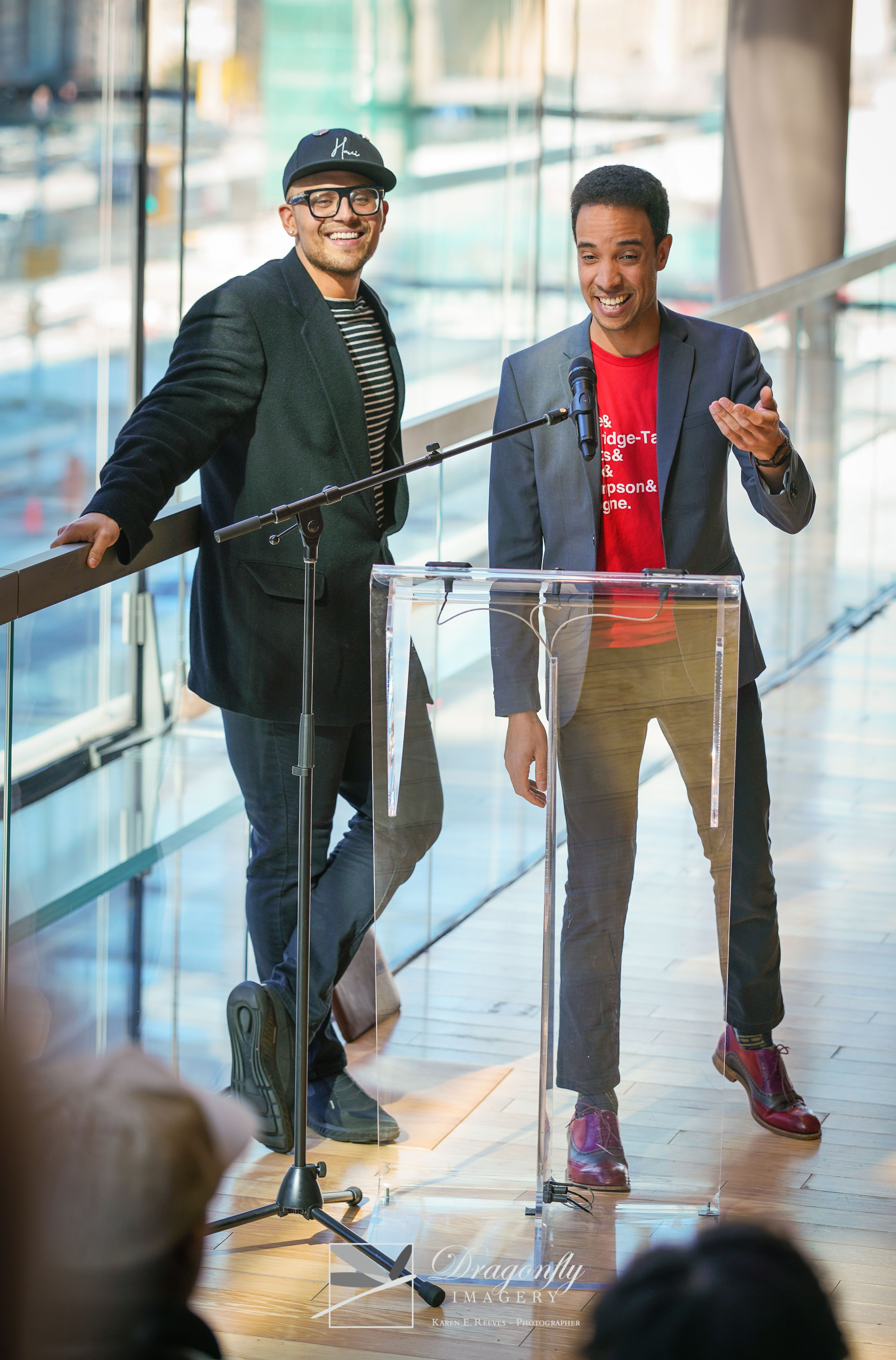
Sean Mayes and HAUI™ Interview Image by Karen E Reeves
Opera is the most spectacular art form, and we got to try some new approaches with it.
What is your current studio or workspace like? What instruments, tools, equipment, and space do you need to make music?
I recently moved, so I'm settling into my new space. I have a good setup for recording and creating work.
The beauty of this space is that it is minimalist and ordered.
From the earliest sketches to the finished piece, tell me about the creative process for your current release, please.
I'm currently in the process of creating a new art installation about Black history in Canada. The subject of the piece is Aunt Harriet, a freedom seeker in 1880s Canada.
I often tell people that the stories I'm gifted to share reveal the form. Because Aunt Harriet sought solace and made a living as a singer, it felt poignant to tell her story in this immersive environment through song.
My work is very research-based, which is the fun part. Unlike my opera, which took seven years to make, this process is a lot faster than my usual way of working. I often begin with images and ideas, and my impulses are often playing catch-up with my instincts.
I go into the studio next in September to lay down some audio with my collaborator on this project. I'm very excited to see where this one evolves.
What role and importance do rituals have for you, both as an artist and a listener?
I think ritual and ancestral connectivity have emerged in my process. My heritage is a key part of that distinction. My work often draws from diasporic influences in myth, history, and legends. This current work is another example of that.
I am often listening to that inner voice, that guiding spirit, I like to call it. That connection to ancestry and ritual used to be quite foreign to me. However, this connection has become more profound over the last few years. I guess you can call that my faith.
I know the experiences of those who have been here before me are guiding my creative process. That is something I've arrived at understanding, and I'm sure that will continue to shift as I keep exploring stories around themes of race, gender, and orientation.
Are you acting out parts of your personality in your music which you couldn't or wouldn't in your daily life? If so, which are these?
I'm a pretty open-hearted person. It is very true, and it's been said for years that I wear my heart on my sleeve. It is not often I feel like I have to hide who I am. I would say my work manifests and augments my personality.
I had a very clear distinction a few years ago when I realized I wanted my work to be about my inquiry with the world. Yes, I show up in it, but the music, the art that I create is about others.
Late producer SOPHIE said: “You have the possibility [...] to generate any texture, and any sound. So why would any musician want to limit themselves?” What's your take on that?
We are here to push ourselves beyond our limitations, to grow, shift, and change. I've been a performer, I've scored my own films, and I've written an opera. My take is really about how to keep myself on my toes to push my boundaries. Surprise myself, and I'm sure I'll surprise others.
I pride myself on being someone who has never been one-dimensional. Many have noted this, and I feel this is my greatest strength.
Do you feel that your music or your work as an artist needs to have a societal purpose or a responsibility to anyone but yourself?
Of course. Personally, I think it would be selfish to just create for oneself. Art and music are meant to be shared. This is very connected to what I said before about my work being about my inquiry with the world. My art is my activism.
I deeply hope, and have been told, that my work resonates with people, allowing them to address subjects that many would often shy away
from.
Once a piece is done and released, do you find it important that listeners understand it in a specific way? How do you deal with “misunderstandings?”
I actually think interpretation lies in the “misunderstanding.” I find it fascinating when consumers of my work have questions about meaning. I find myself now responding in a simpler way: “What does it mean to you?” This is a far more engaging approach and allows dialogue and exchange.
I don't like to spoon-feed people meaning. That is their job—to lean in, to redefine, and make sense of the work for themselves. When you are specific and intentional, you have the ability to speak universal truths. In that regard, I find myself more aligned with others.
However, that isn't to say that misunderstanding isn't a good juicy place for discussions to thrive.
Sound, song, and rhythm are all around us, from animal noises to the waves of the ocean. What, if any, are some of the most moving experiences you've had with these non-human-made sounds? In how far would you describe them as “musical?”
Any sound can carry inherent musicality because they evoke emotions and tell stories. However, it is always about the context in which it is used. When these sounds are purposeful and fit seamlessly into the world of the piece, they become musically intentional.
In the opera I recently created, we had numerous discussions about what constituted diegetic versus non-diegetic sounds. Our goal was to have as much, if not all, music coming from our musicians. This was elicited in very simple ways, with clarinets playing Morse code or symphonic sounds illustrating the drones of war. It was an effective and moving way of creating an illusion.
We can surround ourselves with sound every second of the day. The great pianist Glenn Gould even considered this the ultimate delight. How do you see that yourself and what importance does silence hold?
Firstly, beautiful shout out to Glenn Gould. He was a brilliant pianist and fellow Canadian.
Glenn had some curious insights around the language of music and solitude for creativity. I will quote my husband and say that I liken music to language. “Language is disagreement. We speak to change others. We don't speak when we are in complete felicitation or when it is too dangerous.”
The silence and emptiness are as powerful to me as the fulsomeness.
Do you feel as though writing or performing a piece of music is inherently different from something like making a great cup of coffee? What do you express through music that you couldn't or wouldn't in more 'mundane' tasks?
The innate difference for me is the lasting duration. When you orchestrate something, it can last for a long time.
While I do make a great cup of coffee, it ain't like nothing I've artistically bred.
What is a music-related question that you would like to ask yourself – and what's your answer to it?
What is next for you in your musical journey and artistic journey? Where can people learn more about you?
I'm currently developing a new work set during the Harlem Renaissance—a cultural, social, and artistic movement during the 1920s in Harlem, New York, where Black artists, writers, musicians, and thinkers celebrated and promoted African American culture and identity. I'm interested in exploring the blurred lines between fact and fiction, history and myth in this period.
I'm very excited about exploring this evocative time and bridging my collaboration with international Artists who want to push the envelope.
If you want to collab reach out at @woweehaui or haui.ca