

Name: Innersha
Occupation: Producer, DJ, songwriter
Nationality: Armenian
Recent release: Innersha's Inner Landscapes is out via QEONE.
Recommendations: Two of my favorite albums that I’d like to mention are: Acid Mt. Fuji by Susumu Yokota; Hong Kong by Monolake
If you enjoyed this Innersha interview and would like to find out more about her work, visit her on Soundcloud, and Facebook.
When I listen to music, I see shapes, objects and colours. What happens in your body when you’re listening? Do you listen with your eyes open or closed?
There are several aspects of listening; sounds can have physical, mental and emotional influences.
When I’m in front of a big sound system, I like to close my eyes and feel the sound waves passing through my body. While the mental experience is more about going through a story, that transports me through a range of emotional landscapes.
Entering/creating new worlds through music has always exerted a strong pull on me. What do you think you are drawn to most when it comes to listening and creating music?
Creating a musical piece often feels like stepping into uncharted territory, with no clear idea of where the journey will lead. But that’s what makes it so compelling.
The feeling of being connected to something beyond the physical has always fascinated me about music. It's invisible yet ever-present; you can sense it everywhere, and its creative potential feels boundless.
According to scientific studies, we make our deepest and most incisive musical experiences between the ages of 13-16. What did music mean to you at that age and what’s changed since then?
I had a ritual with my father where we’d spend long hours listening to his vast collection of classical music in our plant-filled living room. He was deeply into science and medicine, and one of his studies focused on how brain waves interact with sound frequencies.
I was always curious about those studies, and I think those moments played a big part in shaping my fascination with sound.
Tell me about one or two of your early pieces that you’re still proud of (or satisfied with) – and why you’re content with them.
I vividly remember my first liveset from five years ago during an outdoor event. It was a deeply satisfying and pivotal experience, surrounded by forest, where the connection with people felt very raw and real.
That moment stayed with me, inspiring to explore the depths of livesets further.
What is your current your studio or workspace like? What instruments, tools, equipment, and space do you need to make music?
I work in a small studio that used to be an old publishing house office. Over time, my partner and I transformed it into an acoustically treated space with a cozy atmosphere where we can spend hours immersed in music.
Among our equipment, my favorites are the vintage Yamaha CS-15D synth, which has an incredibly warm sound and the smoothest filter with rich overtones. Another one is an analog vintage Polyvox, which has a distinct utopian sound. It’s almost the opposite character of the Yamaha, thus creating a unique dynamic; we often have jam sessions with these two, engaging in musical conversations.
The studio has also become a welcoming space for musicians to visit, bringing their own gear to collaborate and create.
From the earliest sketches to the finished piece, tell me about the creative process for your current release, please.
The release with Qeone Records, my very first EP, holds a special place in my heart. I would describe it as an inner palette of colors that I wanted to put next to each other to express my emotions and moods in the current phase of my journey. It was important for me that this EP captured those inner landscapes, so I named it exactly that.
For me, the creative process always begins with a spark—an experiment or a jam that evolves into something more substantial. From there, I dive into mixing, which is where the heart of the music really comes alive. I can spend weeks on this stage, merging with every detail until the track feels like it’s breathing.
Then, I step away, giving myself space before returning with fresh ears to add those final touches that make it feel whole.
What role and importance do rituals have for you, both as an artist and a listener?
Rituals often arise naturally, acting as a process of self-organization. They’re a way of doing things in your own joyful way, helping you return to your center.
Some rituals have been with me since teenage years, like analyzing and archiving the world around me. I would hunt for and sample everyday sounds and snippets of conversations from my surroundings, even before I was into music production.
My first experiments in Ableton actually began with a few of those samples, weaving the outside world into patterns and rhythms.
Are you acting out parts of your personality in your music which you couldn't or wouldn't in your daily life? If so, which are these?
I think that whatever we carry inside is always trying to be reflected in some way, and music is one of those ways.
It’s like another language for expressing myself, which has definitely given me a new space to share parts of myself and connect with people in new ways.
Late producer SOPHIE said: “You have the possibility [...] to generate any texture, and any sound. So why would any musician want to limit themselves?” What's your take on that?
It’s an ongoing process of breaking the limits we hold in our minds, allowing us to see and hear deeper layers. Music has been a powerful practice for this kind of exploration.
In that process, it’s essential to tap into a limitless state, to become fearless and trust yourself. Eventually, you discover those specific sounds that truly resonate with you in that moment of time.
Do you feel that your music or your work as an artist needs to have a societal purpose or a responsibility to anyone but yourself?
While music and art are deeply personal expressions, they inevitably interact with the world around us. I wouldn’t say it’s a responsibility, but there’s potential for music to create space for reflection, evoke emotions, and even inspire change in subtle ways.
Once it's out there, it takes on its own life and can connect with others in ways that I might not have anticipated. Ultimately, though, I approach music as an open dialogue rather than as a directive with societal expectations.
Once a piece is done and released, do you find it important that listeners understand it in a specific way? How do you deal with “misunderstandings?”
Music is inherently subjective, and I respect the fact that each listener can have their own reactions and interpretations.
Releasing something also means letting go of expectations.
Sound, song, and rhythm are all around us, from animal noises to the waves of the ocean. What, if any, are some of the most moving experiences you've had with these non-human-made sounds? In how far would you describe them as “musical”?
Interaction with nature has always been a source of inspiration for my ears.
There are many layers of patterns we often overlook, so I enjoy listening to them closely when I’m in the woods or mountains.
I like to bring those organic sensations into my music, which might recreate the connection with the real world.
We can surround us with sound every second of the day. The great pianist Glenn Gould even considered this the ultimate delight. How do you see that yourself and what importance does silence hold?
I believe silence is incredibly healthy, especially when reaching a point of having a quiet mind. It allows to process everything I’ve experienced and move forward more clearly.
After wrapping up a project, I like to immerse myself in silence, letting go of the layers and ideas that have been swirling in my mind. It’s a reset, preparing me for what comes next.
Do you feel as though writing or performing a piece of music is inherently different from something like making a great cup of coffee? What do you express through music that you couldn't or wouldn't in more 'mundane' tasks?
If the mindset is right, I can enjoy cooking something in the same way I make music. I think everyday tasks are also steps to fall into that mindset, by becoming focused and present with what you do.
What is a music related question that you would like to ask yourself – and what's your answer to it?
Is it necessary to commit to a single musical genre or direction?
I’ve always been drawn to multiple genres and never wanted to choose just one; I’d like to maintain my connection to them, as each helps me unlock a new perspective and process in production.
I believe developing a sound true to your heart, regardless of genre, is what matters most.

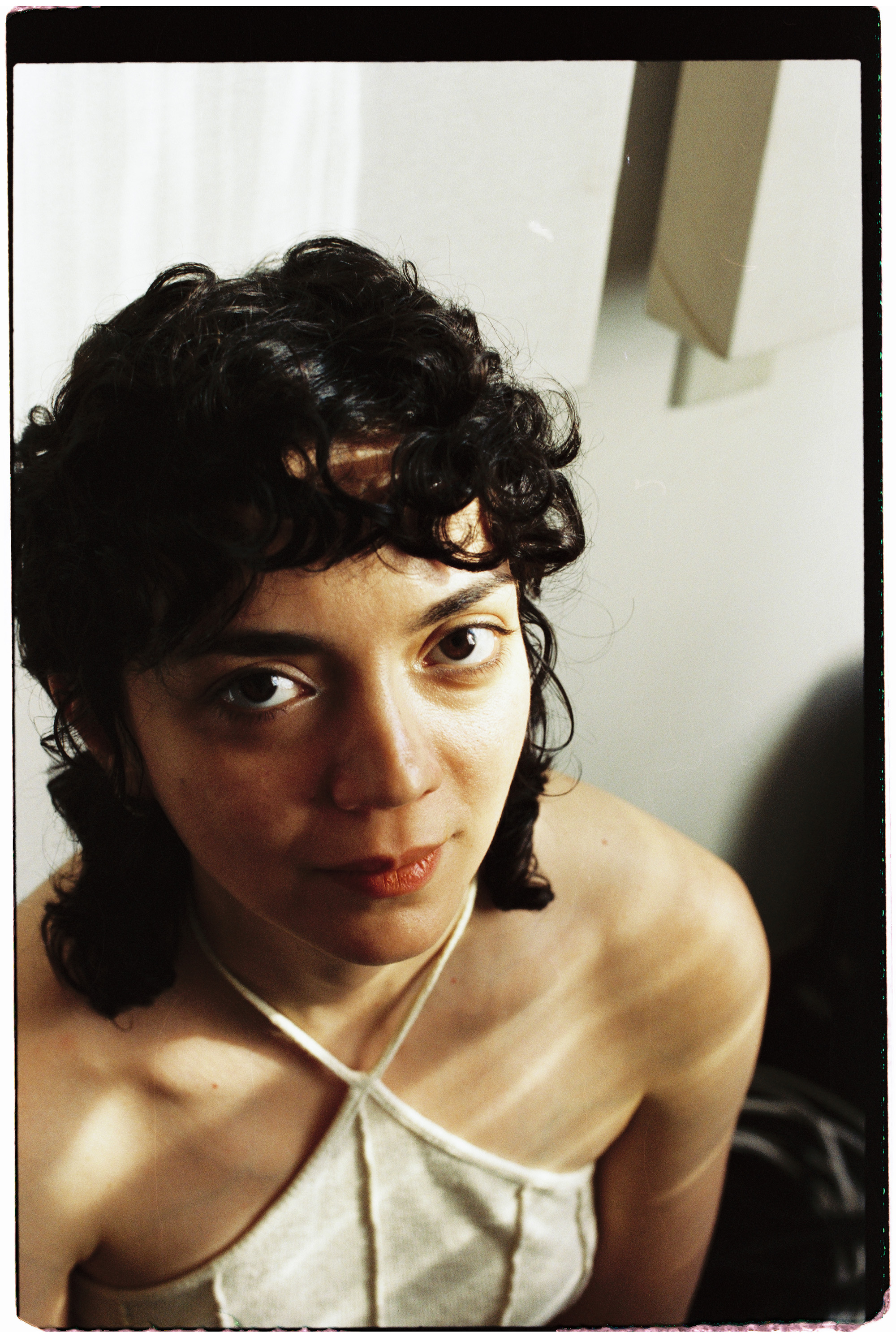 Innersha Interview Image by Viktor Zatikyan
"It’s essential to tap into a limitless state, to become fearless and trust yourself."
Video
