Published
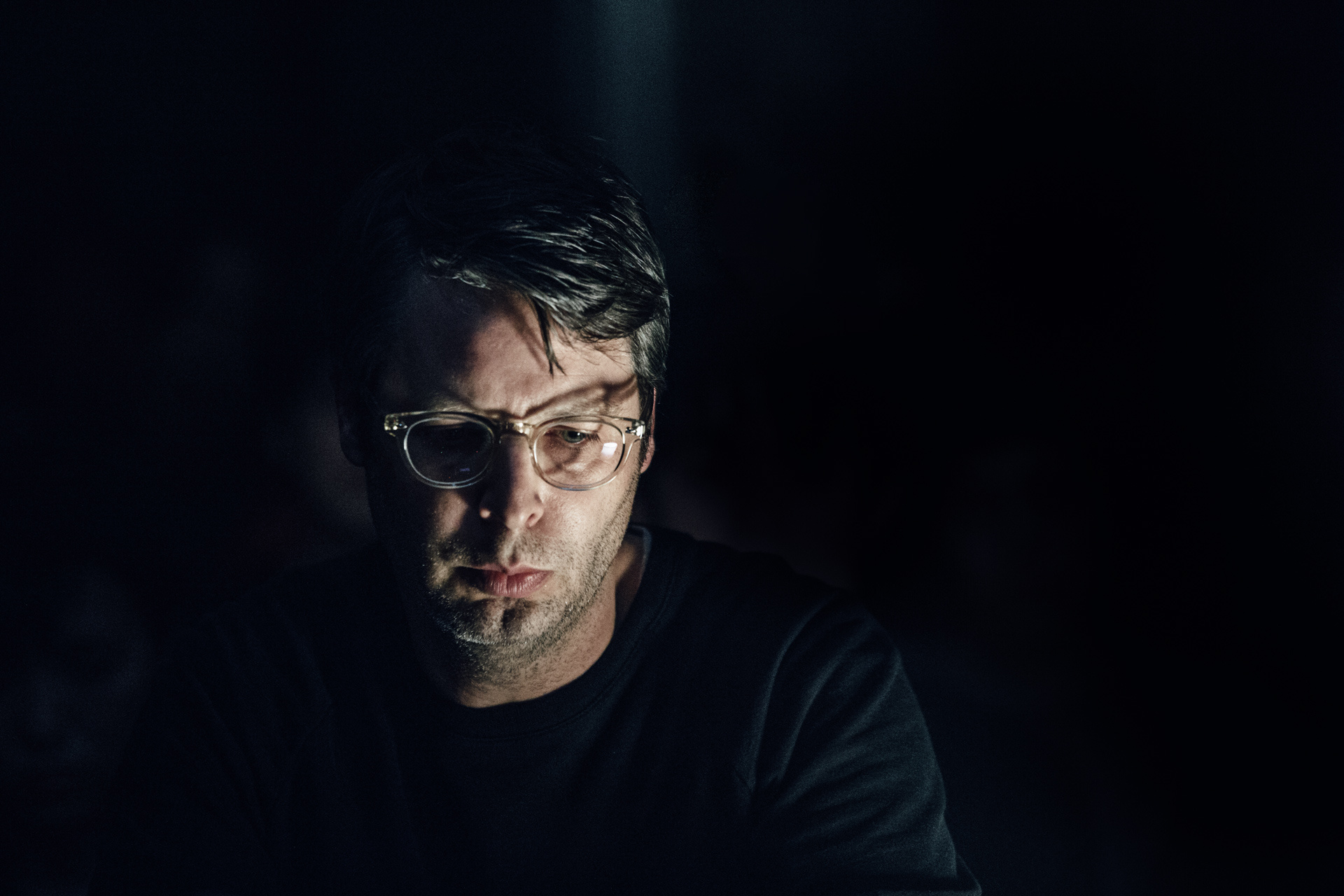
Name: Jan Jelinek
Nationality: German
Occupation: Producer, composer, sound artist
Current release: Jan Jelinek's new full-length album Social Engineering is out via Faitiche.
Recommendations: I recently went to the big Yoko Ono exhibition at the Tate in London. I'm a big fan of her work and "Music of the mind" was a must-see. There were 1-2 works that I was not still familiar with, including "White Chess Set / Play it by trust" from 1966, which is an installation with several white chess sets (there are no black pieces or squares). The idea is simple but extremely effective: 2 people are asked to play against each other - but the game can never be finished, as from a certain point neither player knows whose pieces are theirs and whose are their opponent's. So nobody can win.
Secondly, a book recommendation: Los autonautas de la cosmopista by Julio Cortazar and Carol Dunlop from 1982. The book is like a self-experiment by the two authors. They drive the highway from Paris to Marseille in a camper van and decide to spend one night at every rest stop along the way. They will not leave the highway for over a month. Their impressions are summarized in this book in a diary-like and extremely amusing way.
If you enjoyed this Jan Jelinek interview and would like to know more about his music, visit his official homepage or the website of his record label, faitiche. For the thoughts of two of his collaborators, read our Masayoshi Fujita interview, and our Frank Bretschneider interview.
When I listen to music, I see shapes, objects and colours. What happens in your body when you're listening? Do you listen with your eyes open or closed?
I actually listen to my music with my eyes open. For me, seeing is not a distraction so that I can mentally wander off. Very often, listening to music is more of an analytical nature for me - I'm afraid it's called an “occupational disease”.
But music still can function as a distraction. However, I don't hallucinate shapes or colors. It's more of a vehicle that leads to completely different trains of thought, which initially feel detached from my surroundings.
Entering new worlds and escapism through music have always exerted a very strong pull on me. What do you think you are drawn to most when it comes to listening to and creating music?
20 years ago, I thought the same way: music as an escapist door opener that creates distraction. That's a rather functionalist view of music.
Over the years, a component has been added that interests me more and more: The expressive moment of the artist. It's more of a voyeuristic attitude to listen to another individual trying to communicate and/or exert themselves.
But that doesn't mean that I practice this kind of music myself.
What were your very first steps in music like and how would you rate the gains made through experience?
I got into producing music by chance. Techno and club culture in the 1990s were a big influence, as well as their DIY idea. So I started experimenting with a drum machine and a sampler. I wanted to make collages that consciously refer to other music sources and deal with them in a playful way.
This principle has actually remained with me to this day. I still find it exciting to combine different sound sources, which I use to describe as an alchemical process: sometimes two different elements start to sparkle when you combine them. Such moments are exciting.
According to scientific studies, we make our deepest and most incisive musical experiences between the ages of 13-16. What did music mean to you at that age and what’s changed since then?
At that age, music already played a big role. However, I was only a consumer. It had an identity-forming function for me: Tell me what you listen to and I'll tell you what kind of person you are. A youthful fatalism that has naturally softened over the years. Today it no longer plays a role.
As I said at the beginning, I often listen to music for analytical reasons - so I don't necessarily have to like it. It's more about trying to understand it.
How would you describe your own relationship with your instrument, tools or equipment?
I'm not a machinist who strokes his prostheses. I actually have a very pragmatic relationship to instruments. They are production tools which realize my ideas as well as possible.
I often change instruments from album to album - if only because I quickly get bored of one instrument. But instruments are definitely inspiring and many of my project ideas are based on a certain instrument’s function.
Where does the impulse to create something come from for you? What role do often-quoted sources of inspiration like dreams, other forms of art, personal relationships, politics etc play?
I think it's a mixture of all of them. As described before, it's often certain instruments that inspire me. But of course there are also influences from the world I live in.
However, I try to create music that sees itself as universalistic. I try to stay out of it as much as possible as a private person. The message should be more universal, applicable and comprehensible for every listener, or reflective of their personal situation.
Are you acting out parts of your personality in your music which you couldn't or wouldn't in your daily life? If so, which are these? What, would you say, are the key ideas behind your approach to music?
As an author I would rather keep out of my work. I have no interest in presenting my private life to the public. It's about making a work that can be understood by everyone and used by everyone in their own individual way.
Music should stand for itself. That's why I've released so often under other identities. Thinking myself into a different identity makes it easier to take a step back from myself.
Of course, this is also just a deceptive trick - who is able to completely separate private life from artistic expression?
If music is a language, what can we communicate with it? How do you deal with misunderstandings?
Actually, I don't ask my listeners to hear or perceive my music in only one way. Consequently, there are no misunderstandings. Feeling misunderstood is a totalitarian claim that I find repugnant.
That's probably why I felt and still feel attracted to Functional Music. This artistic dictate does not exist there.
Making music, in the beginning, is often playful and about discovery. How do you retain a sense of playfulness and how do you still draw surprises from tools, approaches and musical forms you may be very familiar with?
That's actually easy. I often change my instruments - so it still remains exciting for me.
However, the idea of sound collage runs through my entire work. Strangely enough, it has never worn off. I still find it exciting to work with different sources and relate them to each other. Probably because the result is still unpredictable for me.
Who knows what happens when you combine Taylor Swift's voice with the field recording of a shell player in the city center of Geneva?
Sound, song, and rhythm are all around us, from animal noises to the waves of the ocean. What, if any, are some of the most moving experiences you've had with these non-human-made sounds? In how far would you describe them as “musical”?
I don't make the distinction between musical and non-musical. I actually always have a recording device in my bag when I walk through the streets. This sensitizes me to my acoustic environment. In fact, I often make recordings that then appear in my collages. These are often mechanically produced sounds that sound strangely different due to adverse conditions.
For example, a defective roller conveyor in an airport that suddenly starts howling like a wolf.
There seems to be an increasing trend to capture music in algorithms, and data. But already at the time of Plato, arithmetic, geometry, and music were considered closely connected. How do you see that connection yourself? What aspects of music do you feel can be captured through numbers, and which can not?
Algorithms are also nothing more than realized compositional ideas. They are an adequate means of organizing and structuring sounds. Ultimately, that's exactly what distinguishes a composition from a field recording.
There is purely algorithmic music that really stirs me up. Of course, a virtuoso saxophone solo by Pharoah Sanders also stirs me up. I don't make any distinctions.
How does the way you make music reflect the way you live your life? Can we learn lessons about life by understanding music on a deeper level?
It's the same with music as with art in general: it can be used as a vehicle to come to ideas and insights that you hadn't thought about before.
However, I prefer it when the artist doesn't take you by the hand, but leaves it up to the listener to follow this path or not.
We can surround us with sound every second of the day. The great pianist Glenn Gould even considered this the ultimate delight. How do you see that yourself and what importance does silence hold?
I still listen with great excitement. There are no signs of wear and tear. Listening to MUSIC in particular plays a very important role in my everyday life.
But if you don't really make a qualitative distinction between noise and music, silence doesn’t exist anymore. It's rather empty acoustic spaces that I sometimes try to create, which then remind of silence.
This year, for example, I made a radio piece about hotel corridors. There is a deceptive silence here, as micro acoustic events take place: The sound that penetrates through the room door to the outside, a soft wind whistling through the corridor. It is a sound of absence that could be interpreted as silence, but which can create a great deal of tension.
Do you feel as though writing or performing a piece of music is inherently different from something like making a great cup of coffee? What do you express through music that you couldn't or wouldn't in more 'mundane' tasks?
I wouldn't make a distinction, because both are a form of preparation. Coffee is perhaps a very simplified artistic process with an immediate intention.
Making music doesn't always have to have an intention - perhaps music is most beautiful when it doesn't do that.
If you could make a wish for the future – what are developments in music you would like to see and hear?
The recording of music should become even more democratized, so that literally everyone is able to communicate in the form of music.
Musical expression should not be tied to learning a musical instrument or physical conditioning.