Published
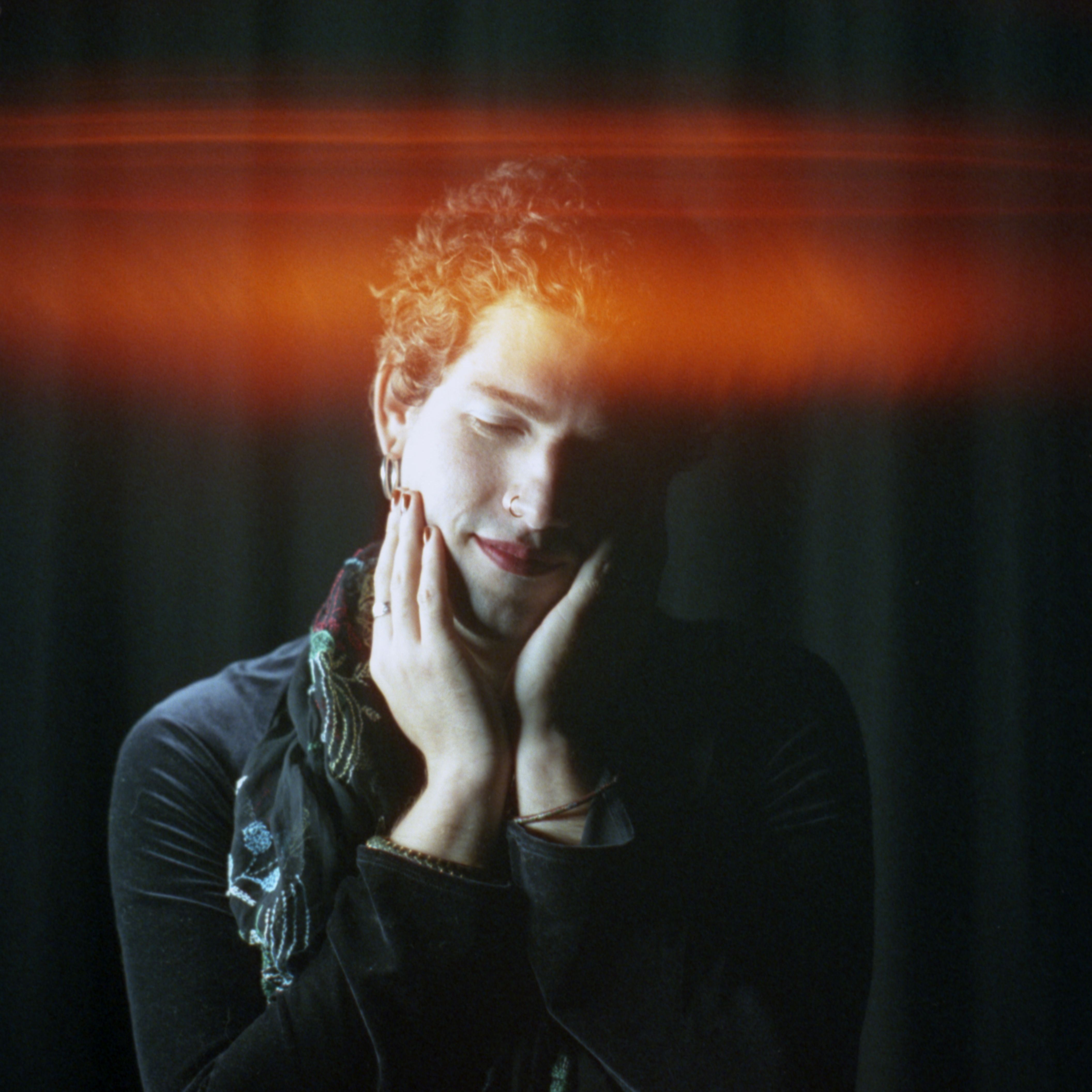
Name: Lauro Zanin aka Lau Ro
Nationality: Brazilian
Occupation: Singer, songwriter, producer
Current release: Lau Ro's Cabana is out via Far Out.
Recommendations: "Kolysanka" (Lullaby) by Andrzej Panufnik - is unforgettable, gives me the strangest mix of feelings. Like I’m melting into a cosmic soup of sweetness and despair. I also cried watching Anthony Shim’s Riceboy Sleeps recently, was so beautiful to see an immigrant story told with such grace.
If you enjoyed this Lau Ro interview and would like to know more about his music, visit him on Instagram.
When I listen to music, I see shapes, objects and colours. What happens in your body when you're listening? Do you listen with your eyes open or closed?
Really depends on the music. I’d say the main way I experience music is through bodily sensations, like certain ambient kind of arrangements feel like an expansion in my cells, like suddenly my lungs can hold more air and my nervous system is soothed. A bit like laying down in an ethereally soft bed.
Whereas rhythms give similar sensations to forms of physical impact, walking/strutting, running, dancing. Delicate melodies are like caresses on my skin.
Sometimes, usually at live concerts, I do see colours, kind of like fireworks or rays, and sometimes patterns form as well. Visions can form, too, like one time at a New Sear's Eves show I had the vision of a stampede of horses under a blood red sky.
Entering new worlds and escapism through music have always exerted a very strong pull on me. What do you think you are drawn to most when it comes to listening to and creating music?
I tend to like anything that feels authentic and nuanced really. Though due to my hypersensitivity, I usually steer clear of anything too aggressive or overbearing.
There’s a time and place, but walking out the front door is enough for me to get a hit of adrenaline haha. So most of the time I’m a sucker for feel-good stuff.
What were your very first steps in music like and how would you rate the gains made through experience?
Music has always just been there. At first I just found that I enjoyed the feeling of making sounds. I was always drawn most to rhythm and drums.
Then in my early teens I started playing guitar and it seemed to have a good effect on my reputation in school which led to a much-welcome decrease in bullying.
According to scientific studies, we make our deepest and most incisive musical experiences between the ages of 13-16. What did music mean to you at that age and what’s changed since then?
From my early teens I felt that I had to make music but I had no idea why or what it meant to me. I had a portastudio and a cheap copy of a sm-58. And half the time I was recording poppy songs with guitar, vocals and maracas.
The rest of the time I was making weird soundscapes using effects and exploring sound manipulation.
How would you describe your own relationship with your instrument, tools or equipment?
My journey with music was always very closely linked with DIY recording. I started recording on things like Audacity on an old computer running Windows xp with one of those minijack clip mics around the same time I started learning to play the guitar as a pre-teen. I just felt an undying urge to layer things, to create arrangements of all sorts.
I suppose it has always been incredibly gratifying for me to create my own world in sound and escape deep into it. And that is perhaps the overarching theme when it comes to my relationship with the creative process. So any instrument or equipment I end up using is like a key to a different part of myself and the collective mind.
Where does the impulse to create something come from for you? What role do often-quoted sources of inspiration like dreams, other forms of art, personal relationships, politics etc play?
I’m always trying to work that one out. I was struck by James Hillman’s idea of the Daimon as it seems to illustrate my experience of a mysterious outside force compelling me to create.
I spent many hours contemplating why I devote my life to making music and it never really seems like a decision I’m consciously making. I just feel pulled toward it, often with such vigour that everything else in life becomes secondary.
And through that practice I find myself processing just about everything from childhood trauma, relationships, dreams to my feelings regarding the world, society and life.
Are you acting out parts of your personality in your music which you couldn't or wouldn't in your daily life? If so, which are these? What, would you say, are the key ideas behind your approach to music?
Yes, particularly in my most recent album Cabana. I would say a big part of the process has been to create a safe space for these tender exiled parts of myself to express their grief and joy through the music. I find that it is through our most vulnerable parts that divine inspiration flows so we can experience the beauty of life.
The challenge is to be authentic and sensitive in a world where most people do their best to hide those parts of themselves.
If music is a language, what can we communicate with it? How do you deal with misunderstandings?
I think music lends itself really well as a language of emotion. The way we feel and the way we treat ourselves gets cemented in the work, and that work becomes a portal to that same place in the listener.
You can feel when something is created from a place of love and compassion. Or when it’s a celebration, or melancholy. And that connects us and makes us feel less alone.
I’m not sure about misunderstandings.. Perhaps they happen when a person has some kind of block that doesn’t allow them to resonate. Or if they don’t have the space to listen attentively enough. Either way I don’t think there’s much I can do to ‘deal’ with misunderstandings other than try and be as clear as possible.
Making music, in the beginning, is often playful and about discovery. How do you retain a sense of playfulness and how do you still draw surprises from tools, approaches and musical forms you may be very familiar with?
It’s like what I said about inviting one’s most tender and vulnerable parts. In childhood we are generally very much in touch with these parts, and then as we grow older that tends to get conditioned out of us.
Most of us learn that the world is not a safe place to be curious and open. So for me it has been a process of creating a supportive and safe environment within myself, where I’m not internalising other people’s fears and insecurities. If I can honestly say to myself ‘hey whatever you wanna do is alright. You don’t need to be good, just be you’, then all the excitement and childlike joy of making music comes flooding back.
That’s generally a work in progress. I’d say the most helpful things have been the last couple years of EMDR therapy and many psychedelic experiences.
Sound, song, and rhythm are all around us, from animal noises to the waves of the ocean. What, if any, are some of the most moving experiences you've had with these non-human-made sounds? In how far would you describe them as “musical”?
There came a point when I had to accept that no matter what, I would never be able to create anything more beautiful than birdsong, or the sound of water flowing, leaves rustling in the wind.
For a while it was quite disheartening, but then it actually brought a deep sense of freedom. All the most beautiful music is constantly being written everywhere by nature. And for me that includes the abrasive cacophony of the city too, although its beauty requires an even more keen ear for it to be revealed.
The world opens up when I relinquish ‘good’ and ‘bad’, and allow myself to be a flower.
There seems to be an increasing trend to capture music in algorithms, and data. But already at the time of Plato, arithmetic, geometry, and music were considered closely connected. How do you see that connection yourself? What aspects of music do you feel can be captured through numbers, and which can not?
Unfortunately I’m not great with numbers. I’ve not had much success understanding music theory. It seems there is a lot that can be understood in that way, and I do still aspire to learn more about it but I do also feel like the most important things for me don’t really require it.
Similarly I don’t really get how the algorithms work so long story short I’m probably not the best person to ask haha.
How does the way you make music reflect the way you live your life? Can we learn lessons about life by understanding music on a deeper level?
Yes I reckon life and music they flow into each other. Like I see the sensitivity that I harness in music also shapes how I interact with my parts and the beings around me. The ability to listen, resonate and empathise are all incredibly important in order to coexist in space.
So much of music is about listening rather than making noise. The quality of what we make is a direct reflection of our ability to listen to our own feelings, to our environment, to each other and the divine.
We can surround us with sound every second of the day. The great pianist Glenn Gould even considered this the ultimate delight. How do you see that yourself and what importance does silence hold?
I think I’ve touched on this a fair bit already, but it’s worth adding that I can’t recall ever having experienced silence. I’ve had tinnitus a long time, which is unfortunate because I often do crave quietness.
I think this is part of the reason I’ve found so much comfort in ambient music, because it creates a feeling of quietness and spaciousness similar to what I imagine silence would feel like.
Do you feel as though writing or performing a piece of music is inherently different from something like making a great cup of coffee? What do you express through music that you couldn't or wouldn't in more 'mundane' tasks?
I think they’re pretty similar to be honest. I think anything can be art. It’s about inspiration and authenticity.
If I was moved to devote my life to being a barista, I think I probably would’ve learnt as much from coffee as I have from music. It just so happens that in this life I’m all about music.
If you could make a wish for the future – what are developments in music you would like to see and hear?
It would be nice if things weren’t so centralised and homogenised. I think globally we’re craving to feel our roots again. We want connection to a specific landscape, way of life, fauna and flora.
It’s not just in music, with monocultures sweeping the earth. I hope in the future we can have more biodiversity than ever before.