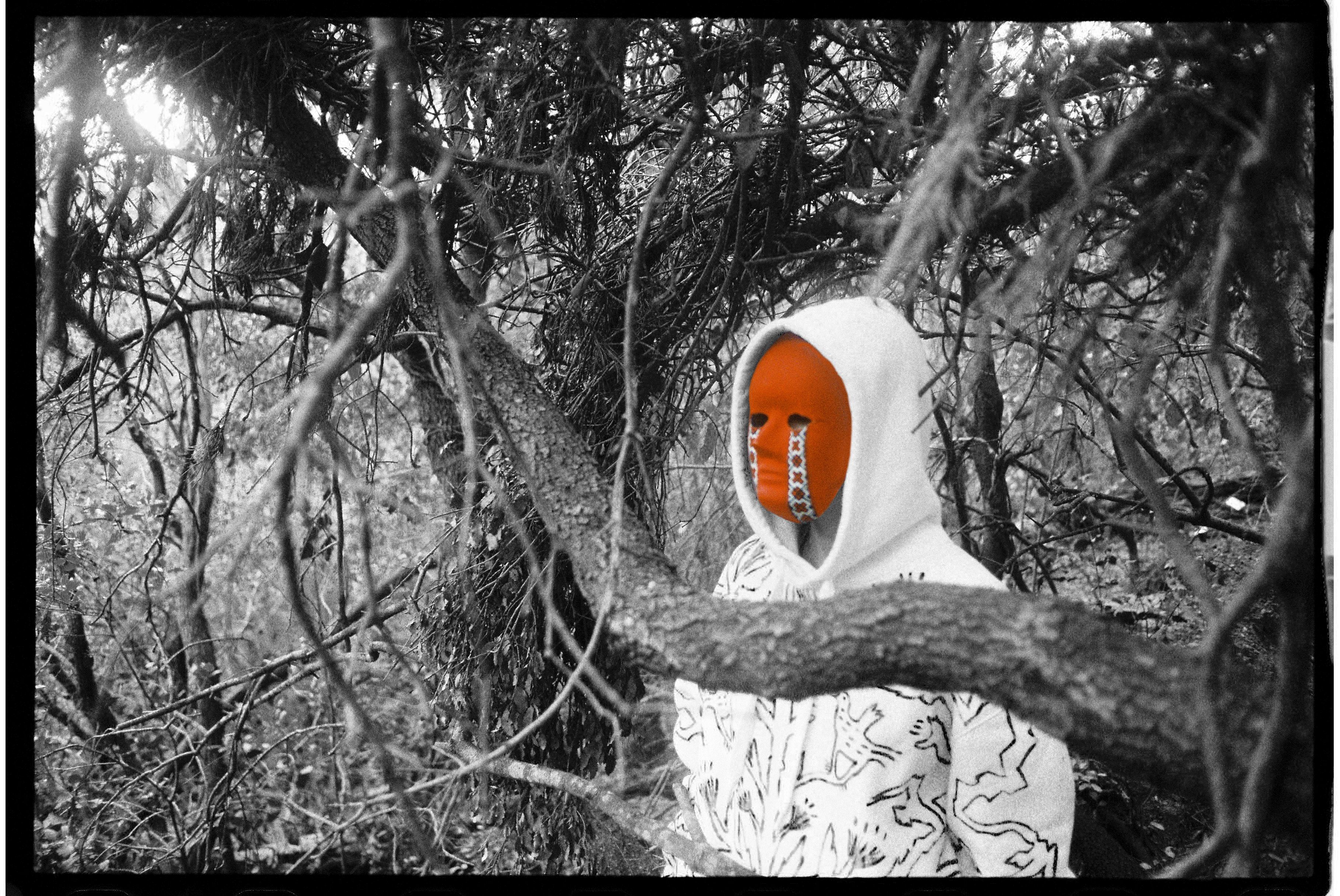
Published
Name: The Lazy Jesus
Nationality: Ukrainian
Occupation: Producer, DJ
Current release: The Lazy Jesus's UA TRIBAL vol. 2 is out via Shouka.
If you enjoyed this The Lazy Jesus interview and would like to know more about his music, visit him on Instagram, Soundcloud, and Facebook.
When I listen to music, I see shapes, objects and colours. What happens in your body when you're listening? Do you listen with your eyes open or closed?
When I listen to music, my body and mind respond in different ways.
I can feel the rhythm, vibrations, and emotions conveyed through the sounds. Sometimes, music gives me goosebumps or makes my heart beat faster. I feel the music penetrating inside me, filling me with energy and creating a powerful emotional experience.
My perception of music is more about feelings rather than visual images.
Entering new worlds and escapism through music have always exerted a very strong pull on me. What do you think you are drawn to most when it comes to listening to and creating music?
For me, listening to and creating music are particularly appealing because they allow me to express my individuality and emotions. Music enables a connection with deep feelings and experiences that are difficult to put into words.
Creating music is a process that gives me the opportunity to innovate, experiment, and discover new sounds and forms. Additionally, it allows me to influence the mood and state of listeners, transmitting my energy and inspiration to them.
What were your very first steps in music like and how would you rate the gains made through experience?
Throughout my life, music has been my constant companion, starting from a very young age.
I took my first steps in music at the age of seven, reluctantly attending piano lessons at a music school – initially, I didn't enjoy it. Later, I decided to delve deeper into my passion and enrolled in a music college, specializing in jazz bass guitar, which allowed me to pursue what truly interested me. Since then, I have created and performed in numerous jazz groups, blending electronic sounds with the freedom of jazz.
My life has always been dedicated to exploring new musical styles, and where I find myself now is just another stage of this journey. In the early stages of my career, I worked more as a session musician, but today I identify more as a sound producer and DJ.
According to scientific studies, we make our deepest and most incisive musical experiences between the ages of 13-16. What did music mean to you at that age and what’s changed since then?
Perhaps I will be an exception in these studies :) During those years, I lived a fairly ordinary teenage music life, listening to grunge and rock. However, it was during that time that I became fascinated with classical Indian music, which resonated with me in a special way.
I believe that it was during those moments that this music laid a deep foundation in how I perceive the world around me and defined the ultimate goals of my life.
How would you describe your own relationship with your instrument, tools or equipment?
Recently, I've been focusing more on music production.
Most of my production work is done on the computer, but just recently I purchased a Digitakt and started making music using an external instrument.
Where does the impulse to create something come from for you? What role do often-quoted sources of inspiration like dreams, other forms of art, personal relationships, politics etc play?
My primary source of creativity is perhaps more about connecting with the universal flow.
I always intuitively sense when it's time to create music. It's a feeling on a sensory level, as if I'm receiving a signal from beyond. Essentially, this may well be true, as I am merely a pencil in the hands of the divine creator.
Are you acting out parts of your personality in your music which you couldn't or wouldn't in your daily life? If so, which are these? What, would you say, are the key ideas behind your approach to music?
Perhaps so, to some extent. I've never really thought about it.
By nature, I'm more of a calm person, although the music I'm currently creating has a rather dynamic character.
If music is a language, what can we communicate with it? How do you deal with misunderstandings?
Music is a language, and not everyone can understand it because this language may simply be unfamiliar to some. I've encountered situations where the audience didn't grasp what was happening, as well as moments when they were completely enthralled by the connection with my musical language.
I handle misunderstanding quite calmly, analyzing and creating music with more accessible forms for those who aren't ready for complexity.
Making music, in the beginning, is often playful and about discovery. How do you retain a sense of playfulness and how do you still draw surprises from tools, approaches and musical forms you may be very familiar with?
I'm simply exploring new forms of creation. Currently, I'm making music on the Elektron Digitakt, which has expanded my creative spectrum and inspired me to explore new forms of artistic expression.
Sound, song, and rhythm are all around us, from animal noises to the waves of the ocean. What, if any, are some of the most moving experiences you've had with these non-human-made sounds? In how far would you describe them as “musical”?
The sounds made by birds have always amazed and fascinated me. It's the most powerful auditory experience for me, and it seems to grow stronger as I age.
There seems to be an increasing trend to capture music in algorithms, and data. But already at the time of Plato, arithmetic, geometry, and music were considered closely connected. How do you see that connection yourself? What aspects of music do you feel can be captured through numbers, and which can not?
I see the connection between arithmetic, geometry, and music as the foundation of harmony and structure in musical art.
Arithmetic helps to understand the mathematical relationships in musical intervals and chords, while geometry can reflect the harmonic organization of musical space. In the context of electronic music, arithmetic plays a crucial role in creating rhythms, sequencing algorithms, and digital processing, allowing artists and composers to experiment with new sounds and sound modulation techniques.
However, music is not limited to numbers and forms alone; it also conveys emotions, expresses human experience, and cultural aspects that are difficult or impossible to capture with algorithms and data.
How does the way you make music reflect the way you live your life? Can we learn lessons about life by understanding music on a deeper level?
The way I create music is deeply connected to how I live my life. Just like in music, where creativity, discipline, and emotional expression merge, these elements also shape my daily existence.
Making music teaches me patience, persistence, and the importance of harmony and balance. By exploring music on a deeper level, we can truly extract valuable lessons about life: about attentive listening, finding beauty in diversity, and facing both peaks and troughs with perseverance and dignity.
We can surround us with sound every second of the day. The great pianist Glenn Gould even considered this the ultimate delight. How do you see that yourself and what importance does silence hold?
I rarely find myself in silence, and to some extent, this is probably my issue. Because the ability to find solace in silence reflects one's level of inner peace and harmony.
Do you feel as though writing or performing a piece of music is inherently different from something like making a great cup of coffee? What do you express through music that you couldn't or wouldn't in more 'mundane' tasks?
I see a significant difference between these things. In the process of writing or performing a musical piece, I can express deep feelings, emotions, and ideas that are rooted in my soul.
Music allows me to explore and reveal aspects of myself that are not always accessible in everyday tasks. It's a way for me to express myself on a deeper level and connect with others through the universal language of music.
If you could make a wish for the future – what are developments in music you would like to see and hear?
I would wish for more experiments and new forms, because the truly eternally beautiful music has already been created.