Published
Name: Lina Filipovich
Nationality: Belarusian, France-based
Occupation: Producer, composer, sound artist, visual artist
Current release: Lina Filipovich's new full-length album Music for an imaginary dancefloor is out May 24th 2024 via Blank Mind.
Recommendations: Blue by Derek Jarman; Opera aperta by Umberto Eco; Ana Mendieta’s ‘Silueta series’
If you enjoyed this Lina Filipovich interview and would like to know more about her work, visit her on bandcamp, and Instagram.
Entering new worlds and escapism through music have always exerted a very strong pull on me. What do you think you are drawn to most when it comes to listening to and creating music?
For me, engaging in both playing and listening to music is all about the energy - something strong and vital that can be shared through an abstraction which is music.
It's a way for me to express myself nonverbally, sharing something that can't be evoked differently.
What were your very first steps in music like and how would you rate the gains made through experience?
My initiation into music commenced at the age of 5 when I began piano lessons. Introduced to classical and jazz music early on, I was deeply impressed and their influence remains strong even today.
After a long break from music, I returned to it during my studies at Art School in France. It became the most natural means for me to translate my theoretical and creative intentions into a deeply abstract and emotional form.
Initially, I didn't approach it seriously, it was just pure fun and the simplest way to convey my thoughts.
According to scientific studies, we make our deepest and most incisive musical experiences between the ages of 13-16. What did music mean to you at that age and what’s changed since then?
During that period, I was in an art school in Minsk, Belarus, where I devoted all my time to the studio, immersed in constant drawing. I was passionate about painting, and I practiced it every day while listening to music playing through my headphones.
In those days, the era of nu-metal was in full swing, and my friends and I regularly listened to bands like Deftones, Korn, Slipknot, and Linking park, as well as local Belarusian alternative rock bands. This musical backdrop remains one of the biggest influences on me, even though what I'm doing now is completely different.
How would you describe your own relationship with your instrument, tools or equipment?
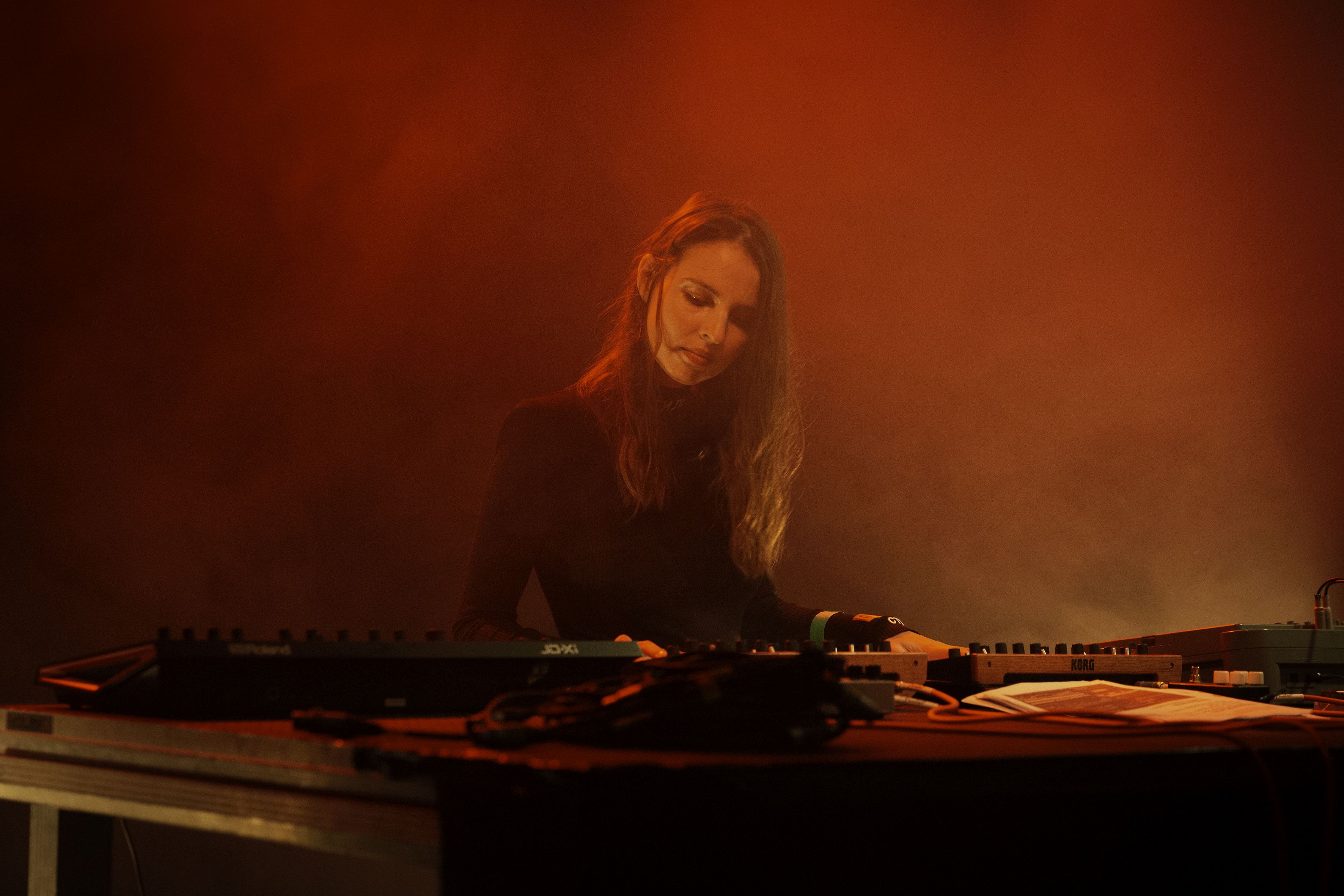
I love working with analog drum machines, synths, and delays to produce raw and unrefined sounds. I improvise and co-write with the machines, drawing from their aesthetics and my own imagination.
I deliberately embrace the unpredictability of these machines, welcoming accidents and imperfections to imbue the music with a sense of raw vulnerability.
Where does the impulse to create something come from for you? What role do often-quoted sources of inspiration like dreams, other forms of art, personal relationships, politics etc play?
As a visual artist, my two practices are interconnected, mutually influencing one another. Often, my music is a result of my artistic research and can be inspired by my personal experiences, various cultural phenomena, and my relationships I cultivate with them.
Music serves as a medium to transcend my visual practice, allowing me to translate visual images into an entirely different realm of expression.
Are you acting out parts of your personality in your music which you couldn't or wouldn't in your daily life? If so, which are these? What, would you say, are the key ideas behind your approach to music?
I believe it mirrors my darker side, but it's also an expression of freedom and creativity - letting go of control and exploring hidden facets of my personality.
I enjoy being astonished by what I've created in being the first listener of the music that emerges.
Central to my approach is the pursuit of authenticity over perfection, striving to align the output as closely as possible with my original vision.
If music is a language, what can we communicate with it? How do you deal with misunderstandings?
I'm receptive to various interpretations of my work and make an effort to remain attentive to all reactions and perceptions, even when it proves challenging.
I believe it's essential to observe how people from diverse backgrounds perceive my intentions. Often, these different perspectives lead to new research, enriching my practice and inspiring new ideas.
Making music, in the beginning, is often playful and about discovery. How do you retain a sense of playfulness and how do you still draw surprises from tools, approaches and musical forms you may be very familiar with?
I regularly change the machines and creative approaches to maintain freshness and to be able to be surprised by the results.
There is a lot of experimentation in my musical practice, and I would like to maintain this approach for as long as possible.
How does the way you make music reflect the way you live your life? Can we learn lessons about life by understanding music on a deeper level?
For me, music is more about lived experience rather than something purely pedagogical … but I think it has taught me to be bold in expressing ideas, and it has always connected me with great, passionate people.