Name: Meredi
Nationality: German-Armenian
Occupation: Composer
Current release: Meredi's Flourish EP is out via Deutsche Grammophon.
Recommendations: Die Stille im Kopf (book by Karl Lippegaus); Momo (book by Michael Ende)
If you enjoyed this Meredi interview, and would like to know more about her music, visit her official homepage. She is also on Instagram, and Facebook.
When I listen to music, I see shapes, objects and colours. What happens in your body when you're listening? Do you listen with your eyes open or closed?
When I listen to music passively or play it actively, I travel to places and moments in the past or future. I see things, smell things, and feel things.
I dissociate. I become the music and the story it tells.
Entering new worlds and escapism through music have always exerted a very strong pull on me. What do you think you are drawn to most when it comes to listening to and creating music?
It's the most satisfying moment when the music becomes a door to the universe that exists beyond our logical thoughts. I enjoy walking through it and letting it guide me.
What were your very first steps in music like and how would you rate the gains made through experience?
There was never a “start” as there is never an “end.”
But I do remember the moment when I first consciously understood that music was there. It was the moment it stopped. It’s almost like the ground underneath your feet, like gravity. The moment it changes, you realize that it was always there, but you never consciously thought about it being there, keeping you on this planet.
We had an old piano in our living room that I could never pass by without playing. My mom says I was too small to even see the keys. She caught me standing in front of the piano, playing my melodies, trying to touch the keys from down there.
I consciously started composing while I learned how to speak. It is still the most intuitive way for me to communicate.
According to scientific studies, we make our deepest and most incisive musical experiences between the ages of 13-16. What did music mean to you at that age and what’s changed since then?
Music was my escape, my island, my safe space. Especially during this phase, daily composing, my relationship with my piano, and learning about music theory were my only balance in a very unstable environment.
The music in my head would become so loud sometimes that I thought something was wrong with me. I went to a lot of doctors to check my head.
Over the years, I learned how to manage the music in my head and make it my strength, not my vice.
Where does the impulse to create something come from for you? What role do often-quoted sources of inspiration like dreams, other forms of art, personal relationships, politics etc play?
It feels like the music doesn’t come from me; it comes from the stars. I am only the transformer. It’s a form of communication that I somehow feel the urge to pursue. It feels like drinking water. If I stop creating, I will die of thirst.
Music is always in my head - sometimes louder, sometimes quieter. It’s also there in my dreams. I didn’t realize until I was 21 that it was always there also in the dreams … I just didn’t listen.
Recently, I get very inspired by personal stories, just looking into someone's eyes, reading their story, and translating it into a melody. If it were up to me, I would respond to people only through music, not through words.
Are you acting out parts of your personality in your music which you couldn't or wouldn't in your daily life? If so, which are these? What, would you say, are the key ideas behind your approach to music?
I need music to live; this is why it is there.
I don’t feel separated from the music. The music is me, and I am the music. 
Meredi Interview Image by Josephine Binder
If music is a language, what can we communicate with it? How do you deal with misunderstandings?
Music can communicate everything. If there is a misunderstanding, then the composer didn’t speak with their authentic voice; they didn’t make themselves vulnerable enough, didn’t open up, didn’t say what they really had to say. Or the listener didn’t listen with their heart. Sometimes it just means that we simply don’t speak the same language, and that’s okay.
I don’t mind misunderstandings. As long as you stick to your authentic voice, you will attract the people who need hear it.
Making music, in the beginning, is often playful and about discovery. How do you retain a sense of playfulness and how do you still draw surprises from tools, approaches and musical forms you may be very familiar with?
Music, for me, is not playful or fun. It is like praying to me. I have too much respect for the things I change around me every time I make a decision to change a tone.
I do feel satisfaction and excitement, though, which makes it kind of playful, I guess. My secret is to never lose curiosity for changing perspectives and to have the courage to feel.
There seems to be an increasing trend to capture music in algorithms, and data. But already at the time of Plato, arithmetic, geometry, and music were considered closely connected. How do you see that connection yourself? What aspects of music do you feel can be captured through numbers, and which can not?
I think everything in music is numbers. When I see scores or play music, I see numbers, codes, and hidden messages. My old teacher once said to me, "Being a composer is like being a detective. You are constantly looking for connections and trying to figure out what the music wants to tell you."
The human aspect comes in when the numbers form new constellations that we didn’t see before, when the perspective changes in a way that we can’t rationally explain. This is where the magic comes in and makes it authentic, vulnerable, and purely human.
How does the way you make music reflect the way you live your life? Can we learn lessons about life by understanding music on a deeper level?
Yes, we can. Music is a choice. Every note is a decision that you or someone else made to make it sound that way, consciously or subconsciously.
As the creator you give the art its justification for existence. So you have to believe in it. If you don't, who else will? If you decide to create it, you have to take care of it. In music, there is no right or wrong; there are just decisions.
Outside of music, it means that you create your own reality. If you want to believe in something, it becomes true for you. And eventually, if you consistently and strongly believe in it, other people might join you as well.
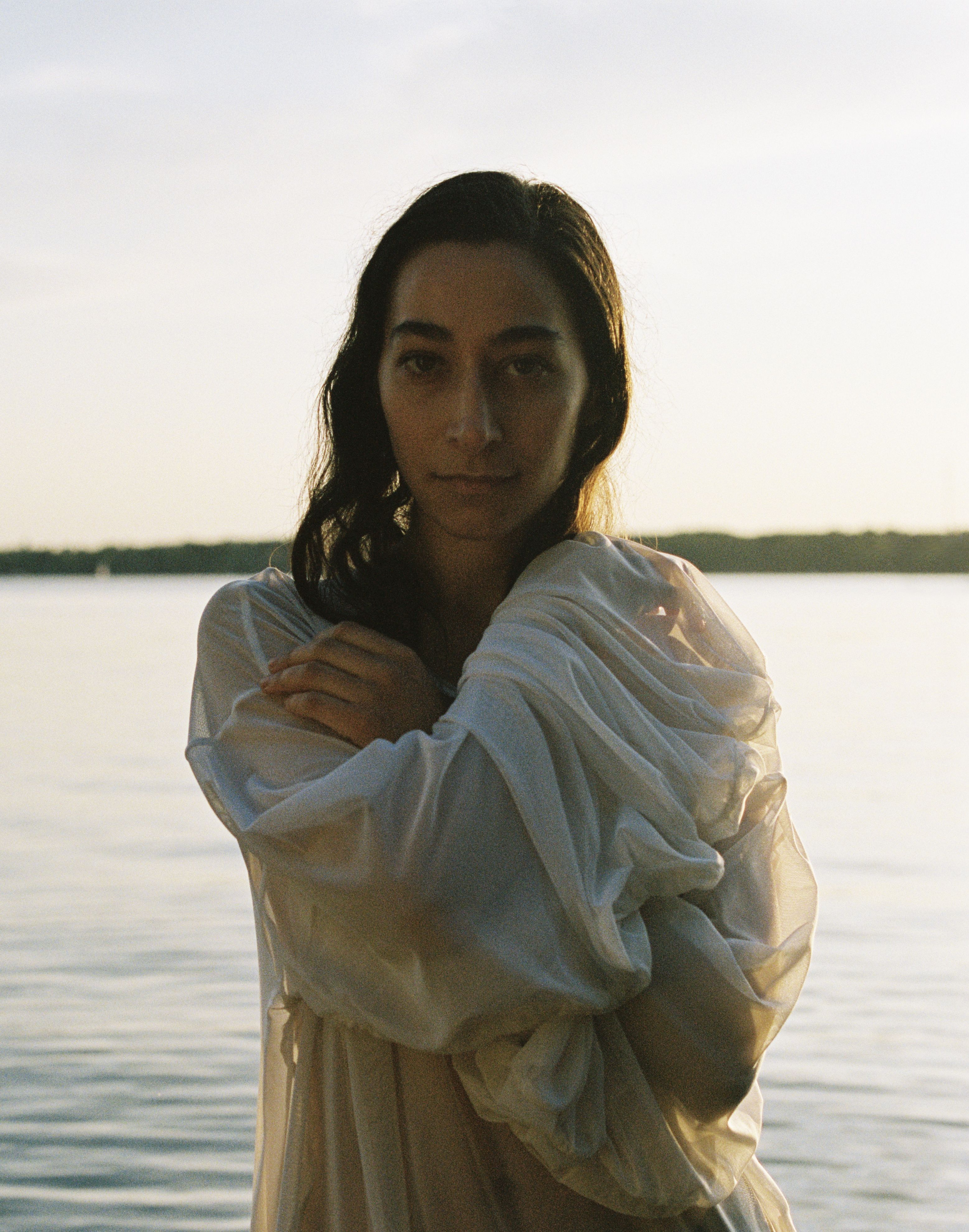
Meredi Interview Image by Carla Louise
We can surround us with sound every second of the day. The great pianist Glenn Gould even considered this the ultimate delight. How do you see that yourself and what importance does silence hold?
Silence makes you understand that music exists. Silence is the release after tension, the moment when things grow, when they process.
Although, for me, the silence after I play the last note is torture. Listening to music outside of my head is often torture.
Transforming the music from my head into reality is the most satisfying thing. Letting it play in silence is painful. Every second I'm not actively composing is painful.
Do you feel as though writing or performing a piece of music is inherently different from something like making a great cup of coffee? What do you express through music that you couldn't or wouldn't in more 'mundane' tasks?
I strive for immortality and am addicted to growth and becoming one with my surroundings.
I can’t become one with the world by making a cup of coffee, but if the tree next to me listens to my melody and understands my message, I will become the tree and the tree will become me. Then I am not a lonely, separate body anymore, and I will not die even when my body leaves this place.
If you could make a wish for the future – what are developments in music you would like to see and hear?
I would love for people to develop an understanding of the worth of art made by humans. I would love for artists to focus more on creating their own inner voice, showing their inner beauty and vulnerability. Understanding that only if you truly create your own music, you can't be replaced.
I hope that with AI being able to do all the service work, composers will focus on nothing less than the art itself.