Published
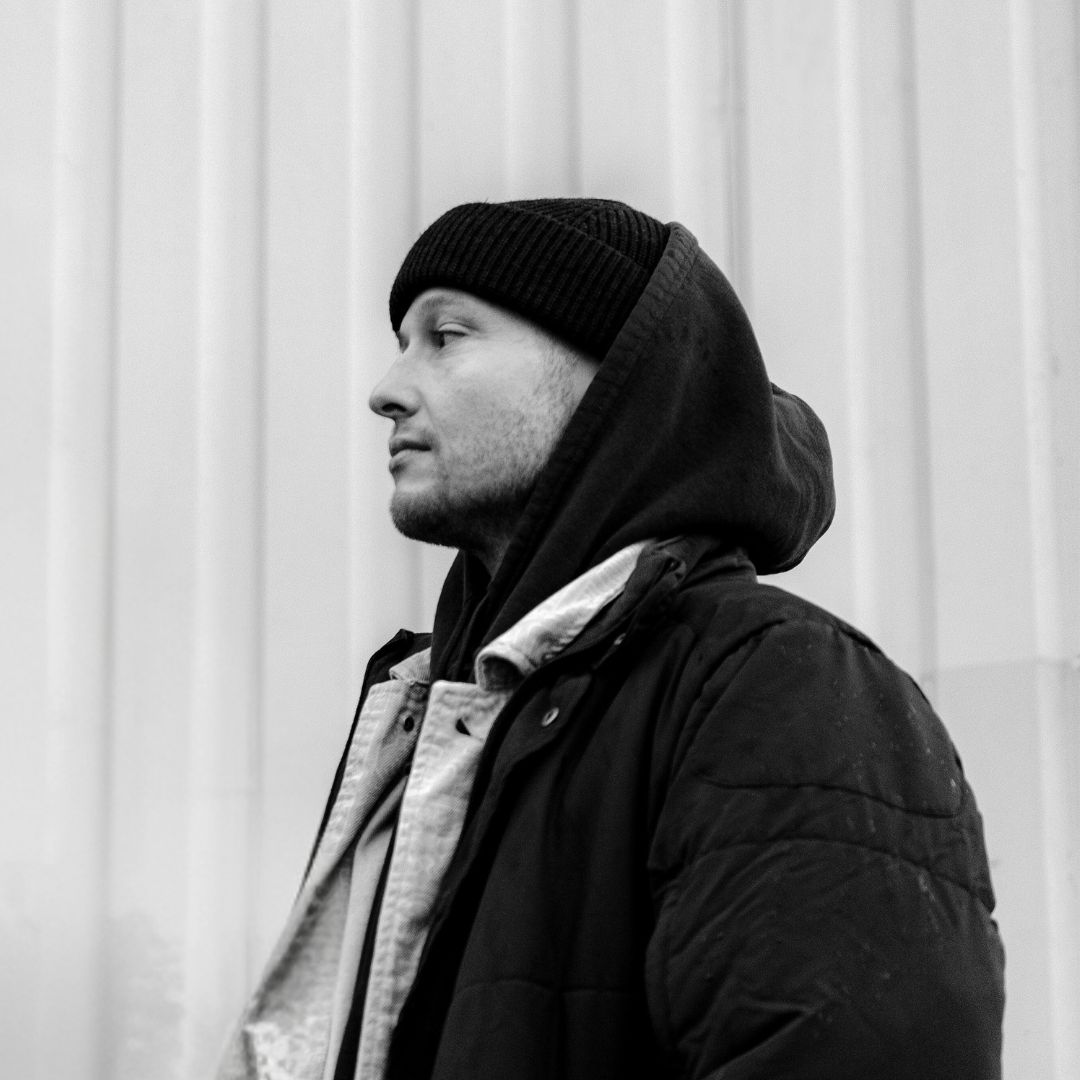
Name: Morrison aka Mor.lov
Nationality: Dutch
Occupation: Producer, songwriter, label founder at TLKBX RCRDS
Current release: Mor.lov teams up with Norah Jane for their GODSPEED LP, out October 15th 2024 via TLKBX.
Recommendations: I would say to be interested in the basics that shape life; it is not so much about a specific book or any particular art piece. I am personally a multi-lateral thinking type of person (at least I think so; who knows?), but I rarely concern myself with one outlet of information or inspiration. It is always a mash of things, or perhaps this is just my ADHD.
But hey, keep an eye out for: “Razeen, ZOOZILLA, Horsemen, Groove God Jaïr Darnoud, Lilo Milova, Norah Jane.”
When it comes to books, I would recommend “Constant Resonance” and his son’s book Entangled Life.
If you enjoyed this Mor.lov interview and would like to know more about his music, visit him on Instagram.
When I listen to music, I see shapes, objects, and colors. What happens in your body when you're listening? Do you listen with your eyes open or closed?
I think I do both; it depends on the music and the intensity of immersion.
Entering and creating new worlds through music has always exerted a strong pull on me. What do you think draws you most when it comes to listening to and creating music?
A very strong need to express and convey an emotion or feeling.
But it doesn’t need to come from me—I can easily empathize with the emotions of the artists I work with and adapt my frequency accordingly.
According to scientific studies, we make our deepest and most incisive musical experiences between the ages of 13-16. What did music mean to you at that age, and what’s changed since then?
Everything. It meant absolutely everything. Things weren’t great at that time. My family went completely bankrupt when I was 12, my relationship with my dad wasn’t good at all. School was really hard; I got bullied a lot and changed schools. I don’t know, at that time I was hiding in my headphones pretty much every day.
I think I low-key owe my life to music, being in bands, and discovering that whole world where it was just us, the instruments, and our imagination.
Tell me about one or two of your early pieces that you're still proud of (or satisfied with) – and why you're content with them.
This is such a hard question, to be honest. I guess there are two songs: "Took Her Home," the first time I stepped up with my face in front of a camera, and that really pushed me to present myself. I also wrote about a girl—Ellie, we’ll call her—I was madly in love, and I’ll always remember that.
The second track is the big one, “Voltaire,” from the heyday of the Lo-fi House period. We organized a VA release with several artists and labels. We were all connected through a Facebook group called “Strictly Lo-fi,” later known as “Our Houz.” Within this group, there was actually a large number of people who broke out in 2016, '17, and '18. In 2019, we really got picked up with this tune, with streams hitting millions on various platforms. It even became the downfall of the original “EELF” channel on YouTube due to copyright issues with the video clip he made for us back in the day, which was a huge loss for the community.
The song uses a sample from a TED Talk about suicide among people (men) between the ages of 17 and 25, which was skyrocketing at that time. Since we were also organizing an ADE event about mental health in the industry that year, it seemed fitting to release the track on the VA we were preparing for ADE, in collaboration with around 8 or 9 labels.
I don’t listen to the track often, but I can absolutely appreciate it, and honestly, I would love to have this one on vinyl someday.
What is your current studio or workspace like? What instruments, tools, equipment, and space do you need to make music?
I’ve scaled down big time. Covid wasn’t kind to my company (I had an art gallery), and in the basement was a really well-built studio. But these days, I work from home.
I have a pretty solid setup: a 16-inch MacBook Pro M2 Max, an RME interface FS802, and a couple of synths from the '80s. For example, A Yahama dsr1000, a Korg Poly-800, a wonky little FM synth that’s very awesome. I have an opencast bass guitar, an electric drum kit from Roland (with all the classics), and the MicroKorg, which is forever a little beast—chonky basslines with that one.
I work with samples as well, and I went deep into the Native Instruments ecosystem. I have the latest Komplete Ultra because I produce a lot of genres besides this, and I love film music and working on sound design projects. This VST bundle really provides solutions for a lot of ideas.
There’s more to mention, but it seems a bit over the top. One other little thing I love but rarely use these days is the Roli Seaboard—it’s such a cool, intuitive machine.
From the earliest sketches to the finished piece, tell me about the creative process for your current release, please.
Creating this album has been a significant journey, both challenging and rewarding. What started as the idea for an EP eventually grew into a full album, with the entire process taking about a year. We began with 30-ish demos and gradually narrowed it down to 16 tracks. Throughout, it was all about exploring ideas, getting into the studio, and letting the music take shape naturally.
Working with Norah and the other artists was a good, inspiring and educational experience. The process was intuitive—whether I was playing keys or drums, we would bounce ideas off each other, finding the right direction without overthinking it. Many genres got fused, and this was an awesome challenge.
Of course, there were some creative disagreements along the way, but once we focused on the music, something beautiful always emerged. I think this is completely natural when both parties are striving for the best possible result. The collaboration with session musicians also added immense depth and richness to the final product.
Looking back, I’m grateful for every part of the journey—the challenges, the moments of harmony, and the creative flow we discovered together.
What role and importance do rituals have for you, both as an artist and a listener?
I dunno. I guess if rolling a joint and talking about our week or weekend counts as a ritual, then yes. This would often turn into a vibe, and we’d just start playing around and get something going.
To be honest, I really enjoy the process I have with the artists I work with. I play stuff on keys and drums, they start writing, we check each other, and we put the first vibes and interpretations together and move from there. It’s really intuitive; we don’t think too much.
Are you acting out parts of your personality in your music that you couldn't or wouldn't in your daily life? If so, which are these?
Difficult to say, but no, I don’t think so. However, in the music, I do work with emotions that I don’t really show to the rest of the world. But I think this is quite healthy—having a space to communicate.
I still talk with my friends about my feelings, but music is definitely a strong gateway for me. It’s a gateway I really understand and one that allows me to be very subtle and nuanced about the feelings I wish to express.
Late producer SOPHIE said: “You have the possibility [...] to generate any texture and any sound. So why would any musician want to limit themselves?” What's your take on that?
It sounds boring, but I think this has to do with “markets” and frameworks of expectancy. People are used to things and look forward to certain expectations; they are not as open-minded as we all hope them to be. I mean, who is to blame? Life is not easy; there are loads of things to take into account. Some of us are in tune, some of us are not, and some of us relate differently. So, to say “limit” is really in the eyes of the beholder.
Yet, I do think that market systems limit the speculative framework in which artists can feel comfortable to produce and work within. Oh, and let’s not forget we are “pack” animals, and we learn by “monkey see, monkey do.” This means that in order to learn a level of depth in any expression, we mimic what we hear and see first. I could go pretty deep into this, but I guess I will save this for another time.
I do wish people were more open to doing weird things, but yeah, it’s like art, haute couture, etc. In the end, humans want something relatable, so they shop at Zarah and H&M looks ok, is affordable, makes it work—something that sparks a feeling of belonging, belonging to the pack.
And you know what? Perhaps that is also really fine. Because without that, what would we define as being a limit, and therefore, what is out of the “limit” and to question that “what would be my role in all of this” as a stranger to it all, I who is not interested in the normal, but like any creative is with one leg in utter chaos and with another on the border trying not to get to lost in the sauce ...
Do you feel that your music or your work as an artist needs to have a societal purpose or a responsibility to anyone but yourself?
Well, there is one thing that always bugs me a bit: “Music” is a big commodity in terms of general influence on information and, therefore, education. It bugs me that we are so careless about what we promote, what we make famous, and what we give attention to. But I guess if I go deep into this, we’re going to hit some Kanye-type of talk, haha.
Nah, for real though, music is more than entertainment. The more I work with studio neurology in relation to audio production, the more I realize how much of an influence sound has on people's day-to-day lives and how it can even create issues mentally, yet also solve them.
Once a piece is done and released, do you find it important that listeners understand it in a specific way? How do you deal with “misunderstandings?”
Haha, yes, me, myself, and I are annoyed with that, but then I quickly realize there is really no point in this. I mean, people listen how they listen and think what they think. You cannot really tell them anything else.
I mean, sure, you could tell them, but then what? Perhaps they accept it, perhaps they don’t, and perhaps they just do not care. Like, really, I make a tune. If I like it and labels like it, great! Let’s drop it.
Perhaps people like it now; perhaps they find it years later due to another tune they hear before it. It is all good; music flows where it goes.
Sound, song, and rhythm are all around us, from animal noises to the waves of the ocean. What, if any, are some of the most moving experiences you've had with these non-human-made sounds? In how far would you describe them as “musical”?
A (new) friend of mine, Finn Peters, is working on an album with just bird sounds, and among other things, composing with them as instruments. I have to say this is really hitting me hard as a concept.
We can surround ourselves with sound every second of the day. The great pianist Glenn Gould even considered this the ultimate delight. How do you see that yourself, and what importance does silence hold?
To be honest, considering I dislike Bluetooth AirPod thingies and the cable connection between an HD25 and an iPhone is horrible, I find myself walking with ambient city noise more than ever. I pay attention, I think. I look at my surroundings. And you know, sometimes you spot someone else who is not on their phone, and you both do a small nod and a smile. Good little moments in life that make it worth it.
So yeah, I don’t know. Music is so intrinsic to me I am not even sure if I really pay attention. I just listen, accumulate, and express.
Do you feel as though writing or performing a piece of music is inherently different from something like making a great cup of coffee? What do you express through music that you couldn't or wouldn't in more 'mundane' tasks?
Music is the most complicated math there is; there is very little that comes close to its role in our world. It is a system that uses the consistency of relapsing variables—variables that are shaped by human interpretation and conception / recreation. It can vary and distinguish itself from a deeper meaning, such as the cultural heritage you are a part of.
Music is an exact yet non-exact science. I mean, it’s so weird. We are just tossing frequencies that somehow, to our understanding, sound good together. It turns out some of those “guesses” over the years have had profound effects on us, and we can now learn to manipulate behavior through sound. This is where logical arguments and insights from neurology, sociology, psychology, and musicology come into play, illustrating how music can influence emotions and social connections.
It is quite an art to touch millions of people with “non-mainstream,” recognizable sounds. So, if you can capture the hearts of millions with classical, ambient, breaks, or anything but pop, I’d say you have done what very few can do, let alone learn to do. So yeah, this thing called music is definitely one of the top-tier art forms to work in.
Listen, getting a residency at an art gallery is crazy simple compared to getting signed to a nice label. And I can speak from three areas of experience: being “the gallery owner,” being “the painter” hoping to convince the gallery, and now trying to do this thing I love the most: music production. Music is serious dedication work. The most complicated industry I have seen
What is a music-related question that you would like to ask yourself – and what's your answer to it?
Why do I find it so hard to repeat my own piano compositions?
I hope that with the consistency of income and gigs within my music work, I can grow and also find a more consistent way of working, allowing me to fully focus on this all and perhaps incorporate more time to replay my own work.