Published
Part 1
Name: Nathan Bowles Trio
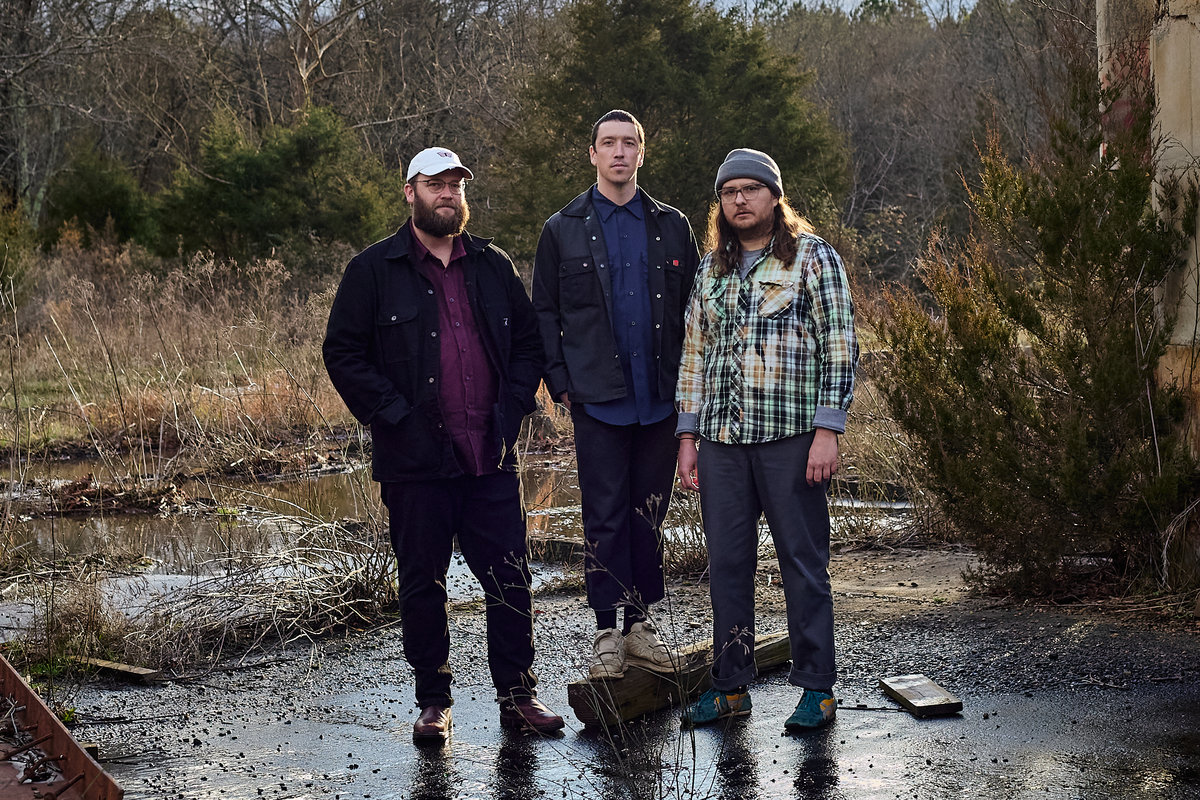
Members: Nathan Bowles (multi-instrumentalist), Casey Toll (double-bassist), Rex McMurry (drummer)
Nationality: American
Current release: Nathan Bowles Trio's Are Possible is out via Drag City.
Recommendations:
NB: Laszlo Krasznahorkai’s “Seiobo There Below” and Francis Bebey’s “Akwaaba: Music For Sanza”
CT: Anything by Louise Erdrich -- “The Sentence” is the one I’ve read most recently. The first Liberation Music Orchestra record.
RM: Japanese Super Rat’s part in Tightbooth “LENZ III”
If you enjoyed this Nathan Bowles Trio interview and would like to know more about her music, visit Nathan and Casey on Instagram.
When I listen to music, I see shapes, objects and colours. What happens in your body when you're listening? Do you listen with your eyes open or closed?
NB: I don’t think I’m synesthetic in that way. I occasionally find myself with my eyes closed during live music, both as a player and listener, though as a player I also like to keep an eye on what I or others are doing. At home I’m generally doing other things while I listen, though when I was younger I had my share of headphones on/eyes closed supine-on-the-couch sessions.
CT: When I’m really just listening, it’s with eyes closed and everything around me goes slack. Maybe I’ll smile, maybe I’ll cry. Often I’m listening to learn things, in which case I’ll get all sorts of tense and wonder whether I’m capable of creating music at all.
RM: Eyes open but seeing things in my mind's eye.
Entering new worlds and escapism through music have always exerted a very strong pull on me. What do you think you are drawnto most when it comes to listening to and creating music?
NB: I tend to think spatially when I make music. I’m drawn to sound that feels like a space. If it’s my own stuff or stuff I’m making collaboratively I like the space to feel like all those people. I like repetition too, obviously. It isn’t until you’re in something for a bit that things really get cooking. Maybe drones are like a billion small repetitions.
CT: Whenever I’m truly moved by someone’s creation, it’s like a new filter for the rest of my existence. Parts of it replay in my head and alter the way I react to the world around me. What I seek in creating and discovering music is a new way of understanding things, looking for clarity or peace that I didn’t know before.
RM: Loss of self.
What were your very first steps in music like and how would you rate the gains made through experience?
NB: I don’t fully understand what “gains” means in this context, but I certainly gained an appreciation for how physical and in-the-room sound could be at a young age just by messing around on piano. The dynamic range of the sounds that could radiate out from that object was pretty thrilling. I had a very encouraging teacher, and I grasped early on how to concentrate on the relationship between my physical actions and the sounds being generated.
CT: I asked to begin piano lessons when I was 6 and was gifted a guitar from my grandfather shortly thereafter. I have an early memory of first picking up a guitar and trying to retune all the strings to a match the pitches of “Wild Thing”. I’d like to think that what I’ve learned and gained through experience and study has brought me closer to that initial inclination towards music. Bumps in the road notwithstanding.
RM: I was always drawn to drums. My parents encouraged me to pursue playing. They were always really supportive, letting me practice in the basement, hosting band practices, etc. I rate that as crucial.
According to scientific studies, we make our deepest and most incisive musical experiences between the ages of 13-16. What did music mean to you at that age and what’s changed since then?
NB: That was when my headphones-on-with-boombox-and-liner-notes era was in full bloom. I made some dumbass mixtapes for myself too, like a mix of radio songs, tape/CD songs, introductions, skits, etc. Music felt boundless then and still does, really. The vastness of it helps me to be comfortable in choosing somewhat minimal means by which to engage with it, if that makes sense.
CT: I was listening to everything I could get my ears on at that point, and beginning to perform. I was really into punk rock for a bit, then classic rock, some jazz, and then reading pitchfork and discovering indie rock. Everything was about the energy and not the details. I've slowly learned to pay more attention to the nuances - and I'm always seeking to find new ways to recreate that raw energy that first drew me in.
RM: I started playing drums at 13. Playing became my main interest during those years. Music meant freedom of expression as well as identity. It also meant (and still means) friendship to me.
How would you describe your own relationship with your instrument, tools or equipment?
NB: My approach is almost gear-phobic, at least to the degree that seeking out specific gear or instruments gives me analysis paralysis. I prefer finding the tools that either helps me make what I’m hearing in my head or having stuff find me that presents a discrete, but exciting, set of possibilities for me to explore. I basically think of myself as a percussionist who just uses different tools to ultimately rhythmic ends.
CT: I’ve never been a big gear head, but slowly I’ve acquired pieces and kept them in the arsenal for long periods of time. Got my first fully carved bass in 2021, so still learning and loving that one very dearly. (1960’s Juzek)
RM: My gear is very specific to me and therefore I’m close to it. I enjoy all aspects of using it. Packing gear is an artform in itself.
Where does the impulse to create something come from for you? What role do often-quoted sources of inspiration like dreams, other forms of art, personal relationships, politics etc play?
NB: That feels impossible to answer succinctly. All of life, the actual and potential, influences me. Records and books and architecture and nature are obvious things but relationships, personal/political/individual/societal/etc, are always thrumming even deeper under the surface of my stuff too.
CT: I labeled myself as a musician from an early age, and never really veered far from that path - that urge has always been there. Like anyone I’m constantly absorbing the world from my relationships, the art around me, and what’s happening in the world around me. I wouldn’t say I lean heavier on any one source, but I aim to be constantly learning and honing in on what I think is beautiful.
RM: For me rhythms come from positive emotion. A call to act. Lived experience and movement inspire me.
Are you acting out parts of your personality in your music which you couldn't or wouldn't in your daily life? If so, which are these? What, would you say, are the key ideas behind your approach to music?
NB: I’ve never thought of my (or our, in this case) music as acting out anything. Music might come partly from ideas but it isn’t about ideas, really.
CT: Yes, I’m generally pretty shy and reserved. Unless I’m talking shit, I’m pretty good at that. I suppose performing gives me an opportunity to speak out and be assertive in ways I would rarely do in other parts of my life.
RM: No.The qualities I aspire to as a drummer are the same that I aspire to as a person.