Published
Name: Nicky Elisabeth
Nationality: Dutch
Occupation: Producer, DJ
Current release: Nicky Elisabeth's The Way Of Love is out via Anjunadeep. To stream the album, go here. For a vinyl copy, order directly from the label's official store.
Recommendations: The first one is a book called The Solve for Happy. I read it a couple of years ago during a time when I wasn’t feeling my best. It’s about finding happiness in everyday life, even when things feel tough and overwhelming. I’ve had my own dark periods where it was hard to stay positive, and this book really changed my perspective. One of the key things I took from it is how moldable our brains are. It helped me shift my mindset and gave me tools to navigate those challenging times. It’s a book that has had a lasting impact on how I approach life every day.
The second piece is an album by Mk.gee called Two Star & The Dream Police. It was released this year, and the mood of the album instantly transports me to a hot summer night, but with a dark and romantic edge. There’s a melancholic beauty to it that I find utterly captivating. It’s one of those albums that stirs deep emotions, and I think everyone should experience it.
If you enjoyed this Nicky Elisabeth interview and would like to know more about her music, visit her on Instagram, Soundcloud, and Facebook.
When I listen to music, I see shapes, objects and colours. What happens in your body when you're listening? Do you listen with your eyes open or closed?
I mostly listen with my eyes open, but I experience music visually, too. There’s a strong connection between sound and color for me—almost like each track has its own palette.
When I’m working on new demos, I’ll often go to Pinterest to find an image that represents the feeling or color of the track and attach it as artwork.
Entering/creating new worlds through music has always exerted a strong pull on me. What do you think you are drawn to most when it comes to listening to and creating music?
What draws me most is the emotional depth that music can unlock. Whether I’m listening or creating, I’m always seeking that profound connection, that moment when a sound or melody stirs something deep within.
Music, for me, is about creating an immersive experience—a space where people can lose themselves, feel something raw and authentic, and even escape for a moment. It’s not just about hearing the music; it’s about feeling it in your core.
I love exploring how a track can evoke different emotions, from a sense of longing or joy to reflection or melancholy. That emotional resonance is what keeps me coming back to music, both as a listener and a creator—it’s where I feel most connected to myself and the world around me.
According to scientific studies, we make our deepest and most incisive musical experiences between the ages of 13-16. What did music mean to you at that age and what’s changed since then?
That period in my life was actually when I felt quite disconnected from both myself and music. I was having a hard time at home, and it’s a time that I’ve sort of blocked out. Music wasn’t a big part of my life then because I was so focused on just getting through everything.
But after that phase, music re-entered my life in a meaningful way. I started singing a bit in high school, and when I moved to Amsterdam, I fell in love with the electronic music scene. That’s when my real musical journey began, and it’s now become such a core part of who I am.
Tell me about one or two of your early pieces that you're still proud of (or satisfied with) – and why you're content with them.
“Celeste” is one of my earliest tracks, and I’m still incredibly proud of it. It became the title track of my EP on Kompakt and was the first piece I truly finished. I spent countless hours refining it, making sure every detail was perfect.
That track represents a pivotal moment for me—it’s when I realised that I could actually do this. It gave me more confidence in my abilities and set the foundation for everything that followed.
What is your current studio or workspace like? What instruments, tools, equipment, and space do you need to make music?
I love making music in different spaces, especially in low-key environments as there’s less pressure. I’ve started ideas sitting at my dinner table or even in more casual settings, like on the sofa or on a plane —it helps me feel more relaxed and sometimes more creative.
The essentials for me are a keyboard to play melodies and a microphone since vocals are a big part of my work. While I do have some hardware, I actually enjoy working mostly with software because it gives me the freedom to explore without being tied to a specific setup. I use soft synths like Diva, Repro, and Serum, along with the Soundtoys plugins, for sound design.
For me, it’s less about the space and more about the ability to create in a comfortable, pressure-free environment.
From the earliest sketches to the finished piece, tell me about the creative process for your current release, please.
The Way of Love was a three-year journey, and every track had its own distinct process. Some started with a vocal idea, while others began with a melody, but the creation was always fluid and open. Often, I’d be doing something completely unrelated when a melody or idea would suddenly come to me, and those spontaneous moments ended up shaping some of my best work.
The title track, “The Way of Love,” actually started as part of another song but evolved into something entirely new.
That’s what I love most about the creative process—it’s unpredictable, and each track takes on its own story and life along the way.
What role and importance do rituals have for you, both as an artist and a listener?
I’m not really someone who participates in rituals. I try to approach each day and moment as it comes, without being tied to a set routine.
However, I do believe in consistency. I don’t wait for inspiration to hit—I make sure to show up and work on my craft every day. Some days I feel more inspired than others, but I’ve learned that progress comes from daily effort, not just moments when inspiration hits.
The great thing is then that when it does come, you’re absolutely ready for it.
Are you acting out parts of your personality in your music which you couldn't or wouldn't in your daily life? If so, which are these?
My music definitely shows a side of me that I don’t always express in daily life. It’s highly emotional and vulnerable, and that’s something I usually reserve for those closest to me. I have a small, tight-knit circle of people who see that side of me, but through my music, I get to share those deeper emotions with a wider audience.
It’s not that I’m hiding parts of myself, but music allows me to express things I might not otherwise show in everyday situations.
Late producer SOPHIE said: “You have the possibility [...] to generate any texture, and any sound. So why would any musician want to limit themselves?” What's your take on that?
I completely agree with SOPHIE. Music is a space without limits, and that’s what makes it so exciting—the freedom to explore, experiment, and push boundaries. I remember when my teacher asked me why I wanted to learn to make music, I said, “I want to know what I sound like.” That curiosity to discover myself through sound is still what drives me today.
Music is about more than just creating—it’s about uncovering new ways to express emotions and ideas. Limiting yourself only restricts that discovery. 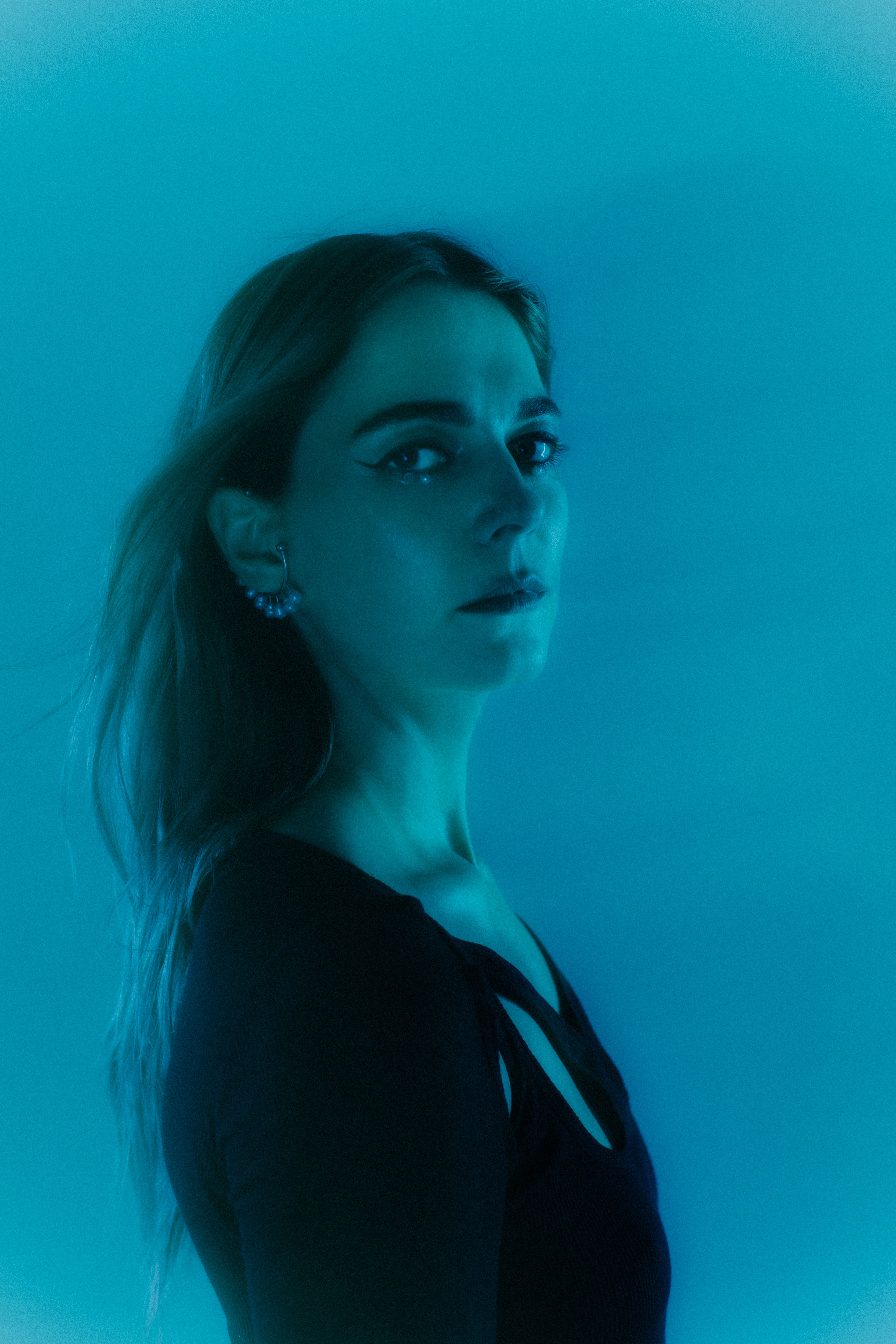
Nicky Elizabeth Interview Image (c) the artist
Do you feel that your music or your work as an artist needs to have a societal purpose or a responsibility to anyone but yourself?
Most of my music comes from personal reflections and meaningful experiences I've had over the years. I don’t just aim to entertain—I want my music to stir something in people, to encourage them to reflect and connect with the themes that have shaped my journey. Whether it’s self-love, acceptance, freedom, or personal growth, these are ideas I think about often, and I try to infuse them into my music.
When I share the stories behind my tracks, it’s not just about the sound; it’s about creating a space for listeners to think or even shift their perspectives in a positive way. Art can be a beautiful experience on its own, but its true value, I believe, comes when it goes deeper—when it makes you think or see the world differently.
I believe everyone in society could benefit from taking a step back for reflection at times, and hopefully my music encourages that.
Once a piece is done and released, do you find it important that listeners understand it in a specific way? How do you deal with “misunderstandings?”
I don’t think my music needs to be understood in any one way. Music is so personal, and everyone’s experience of it is unique. I write from emotion, and I believe those emotions will resonate with people in different ways, depending on their own experiences.
That’s the beauty of art—it’s open to interpretation. If someone connects with a track in a way I didn’t intend, that’s fine by me. What matters is that the music touches them in some way, and how that happens is up to the listener.
Sound, song, and rhythm are all around us, from animal noises to the waves of the ocean. What, if any, are some of the most moving experiences you've had with these non-human-made sounds? In how far would you describe them as “musical”?
Nature has always been a source of calm and inspiration for me. The sound of rain on the roof at night or the crashing of ocean waves calms me deeply. There’s a certain rhythm and flow to these natural sounds that I find incredibly soothing.
I’m not sure if I’d describe them as "musical" in the traditional sense, since I associate music more with melody and structure, but in a way, these sounds are like Earth’s own form of music. They create atmosphere and evoke emotion, and that’s something I connect with on a very deep level.
We can surround ourselves with sound every second of the day. The great pianist Glenn Gould even considered this the ultimate delight. How do you see that yourself and what importance does silence hold?
I really value silence. Listening to music is an active experience for me—I like to fully immerse myself in it. So, while some people can have music playing in the background while they work or write, I prefer silence when I’m focusing. Silence gives me space to reset and reflect.
After spending so much time creating music, I need that quiet time to recharge. It’s in those moments of silence that I find clarity, and it helps me return to my music with a fresh perspective.
Do you feel as though writing or performing a piece of music is inherently different from something like making a great cup of coffee? What do you express through music that you couldn't or wouldn't in more 'mundane' tasks?
Writing and performing music is completely different for me. When I’m making coffee or cooking, there’s care involved, but it’s functional.
Music, on the other hand, is where I explore my emotions and dive into parts of myself that I can’t access through everyday tasks. When I’m playing or writing, I can lose myself in the music—it’s a form of expression that feels almost limitless.
I don’t get that same depth or flow from more routine tasks, though I’m sure others might feel that way in their own crafts.
What is a music related question that you would like to ask yourself – and what's your answer to it?
Instead of asking myself a question, I just want to take a moment to thank everyone who has taken the time to read this interview. In an age where we consume content so quickly, it takes extra effort and intention to carve out space for longer-form pieces like this one.
I really appreciate that you've taken the time to engage with my thoughts and my journey—it means a lot.