Published
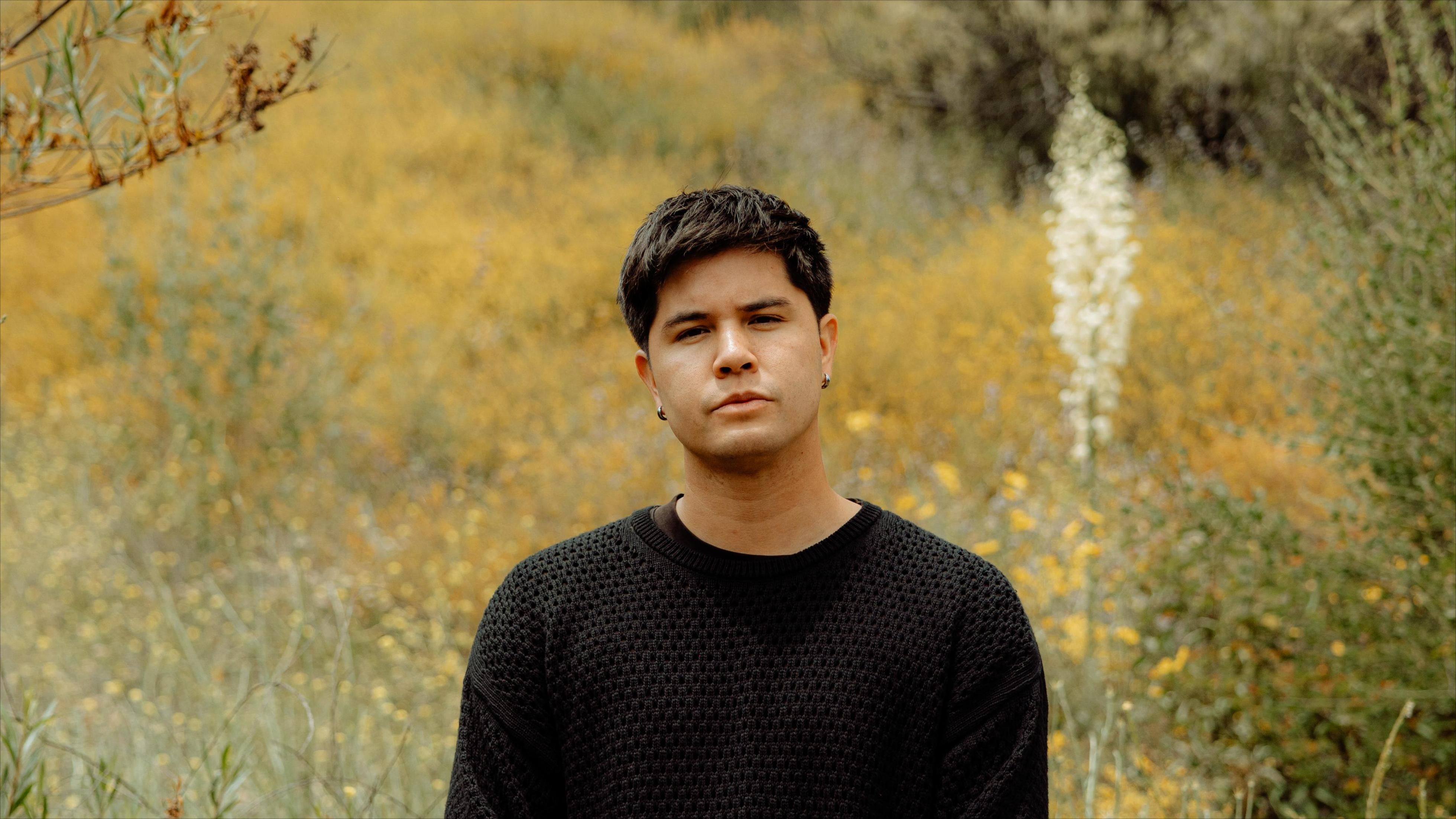
Name: Cole Edwards aka OAKK
Nationality: Canadian
Occupation: Singer, songwriter, producer
Current release: OAKK's debut album I Made This For You is out via Twenty Twenty London.
Recommendations: A weird and wonderful book that I read recently called Convenience Store Woman by Sayaka Murata. And an album I’m obsessed with at the moment is Your Day Will Come by Chanel Beads.
If you enjoyed this OAKK interview and would like to know more about his music, visit his official homepage. He is also Instagram, Soundcloud, and Facebook.
When I listen to music, I see shapes, objects and colours. What happens in your body when you're listening? Do you listen with your eyes open or closed?
I like to think of myself being transported to a moment in time or a place, whether it's a real memory or something imagined. It's akin to reading a book and conjuring a scene in real-time within my mind.
When I listen to music leisurely I keep my eyes open, but during live performances, I often close my eyes to fully absorb every nuance of the song.
I love when music moves me to dance, yet I equally cherish those moments when I can close my eyes and delve inward, exploring the emotions the music evokes within me.
Entering new worlds and escapism through music have always exerted a very strong pull on me. What do you think you are drawn to most when it comes to listening to and creating music?
When it comes to listening to music, I am captivated by the emotions that arise from a particular melody or lyric. I have always been enamored with the way music can transport you to different parts of your psyche, simply through its arrangement.
When I create music, I rarely start with the lyrics; instead, it is the melodies and chord progressions that set the mood and provide the emotional backdrop for the lyrical content.
What were your very first steps in music like and how would you rate the gains made through experience?
My musical journey began as a child with the discovery of the guitar. It remains the cornerstone of my songwriting, especially for crafting melodies and chord progressions.
From there, I extend my theoretical knowledge to other instruments such as the keyboard, bass, and beyond.
According to scientific studies, we make our deepest and most incisive musical experiences between the ages of 13-16. What did music mean to you at that age and what’s changed since then?
Simply put, music was my life. At that age, I lived and breathed the guitar, and it was around that time that I began to explore synthesizers, samplers, and other facets of music composition.
When creating, I often try to reconnect with that period of my life, drawn to the sense of freedom and playfulness that defined my musical exploration during those formative years.
How would you describe your own relationship with your instrument, tools or equipment?
My instruments and gear feel like an extension of myself, as I have developed a profound connection with them through countless hours spent together. Each piece holds a unique timestamp, marking different phases of my life, particularly those used in specific projects.
They are as integral to my life as some of my personal relationships. Though I remind myself they are inanimate objects, they nonetheless feel like my cherished companions.
Where does the impulse to create something come from for you? What role do often-quoted sources of inspiration like dreams, other forms of art, personal relationships, politics etc play?
Writing music serves as a form of therapy for me, a way to express everything that resides in my mind.
My lyrics often originate from my journal, making my songs deeply personal, drawing from my experiences, dreams, and observations of human behavior.
Are you acting out parts of your personality in your music which you couldn't or wouldn't in your daily life? If so, which are these? What, would you say, are the key ideas behind your approach to music?
In my music, I certainly express facets of my personality, though not necessarily ones I suppress in daily life.
Some of my songs are directed towards individuals that I lack the strength to communicate directly. Composing these pieces provides the push I need to convey my feelings through music.
If music is a language, what can we communicate with it? How do you deal with misunderstandings?
Music possesses a unique communicative power, transcending language barriers and allowing us to appreciate songs in languages we don't understand. Its beauty lies in its subjectivity; a single piece can evoke countless interpretations based on each listener's perspective.
As a writer, I find it profoundly beautiful that while I may imbue my music with a specific meaning, someone else can listen and derive an entirely different significance from it.
Making music, in the beginning, is often playful and about discovery. How do you retain a sense of playfulness and how do you still draw surprises from tools, approaches and musical forms you may be very familiar with?
Limitations. I frequently employ a technique of self-imposed limitation to spark creativity. Whether it’s crafting a compelling concept with only a few elements or producing a track on an old tape deck without the aid of a computer, my aim is to create without relying on the extensive tools and knowledge I’ve accumulated over the years.
This is why I avoid using templates in my sessions. When burdened by preconceived notions, my work can become stale or uninspired, and I miss out on those serendipitous discoveries of new techniques that arise when I step outside of my usual setup.
Sound, song, and rhythm are all around us, from animal noises to the waves of the ocean. What, if any, are some of the most moving experiences you've had with these non-human-made sounds? In how far would you describe them as “musical”?
One vivid memory is from an onsen I visited in the mountains of Japan. The symphony of rushing water, whispering trees, and distant birds and wildlife created a serene auditory landscape that was profoundly enchanting.
To me, anything can be musical; there are no boundaries. Natural soundscapes hold the same musicality as any form of written or produced music.
There seems to be an increasing trend to capture music in algorithms, and data. But already at the time of Plato, arithmetic, geometry, and music were considered closely connected. How do you see that connection yourself? What aspects of music do you feel can be captured through numbers, and which can not?
To me, music is fundamentally mathematical. Chords and scales are formulas that we have meticulously pieced together through intricate relationships.
While the composition or creation of any musical piece can indeed be represented numerically, its true value eludes quantification by algorithms and data. Once the essence of music becomes reduced to mere valuation, its artistic soul is lost.
How does the way you make music reflect the way you live your life? Can we learn lessons about life by understanding music on a deeper level?
I strive to live my life with the same freedom of expression that guides my music creation—pushing boundaries to their fullest extent.
While it’s easy to deviate from this path, my constant aim is to return to that core principle. The question of finding meaning in life is as expansive as it is profound, as delving deeply into any subject can impart significant life lessons.
The curiosity required to seek deeper understanding will continually reveal insights about oneself, making it essential to nurture and never lose that sense of wonder.
We can surround ourselves with sound every second of the day. The great pianist Glenn Gould even considered this the ultimate delight. How do you see that yourself and what importance does silence hold?
To me, that represents the ultimate nightmare. I hold complete silence in as high regard as the music and sounds I cherish.
Just as the concept of negative space is vital in visual art, silence in music is equally crucial. It serves as an essential tool for crafting rhythm, movement, and drama, enriching the composition with depth and nuance.
Do you feel as though writing or performing a piece of music is inherently different from something like making a great cup of coffee? What do you express through music that you couldn't or wouldn't in more 'mundane' tasks?
I take pleasure in approaching mundane tasks with the same perspective as my creative practices, believing it’s crucial to intertwine these experiences.
For instance, my passion for cooking aligns closely with my approach to music and design. I often say, “simple food is the hardest to execute, because there’s nothing to hide behind. Everything needs to be perfect or else the whole dish fails.”
This philosophy reflects the precision and care required in both culinary and artistic endeavors.
If you could make a wish for the future – what are developments in music you would like to see and hear?
I envision a more balanced music industry, where the challenges faced by artists are addressed more equitably. It has become increasingly difficult for artists to sustain themselves financially, as essential resources are becoming harder to obtain, while corporate and executive revenue continues to flourish.
Although technology has made it more obtainable to create high-quality music from home studios, there remain untapped opportunities for fans to engage more directly with the artists they admire.
Let’s cut out the middle man that’s taking the biggest piece of the cake.