Published
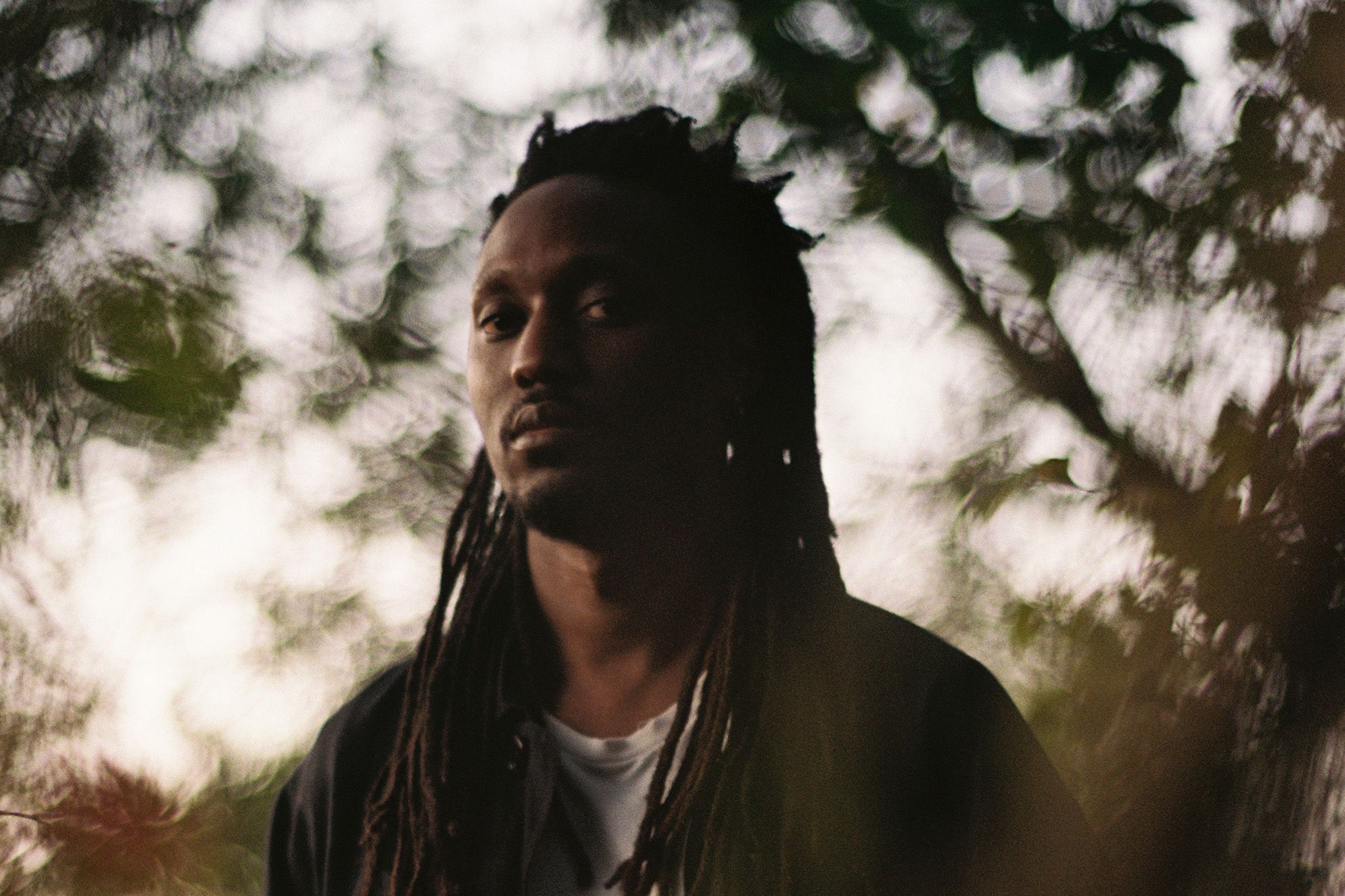
Name: Africanus Okokon
Nationality: American
Occupation: Multi-media artist, producer, composer, educator
Current release: Okokon's new album Offering is out via Other People.
Recommendations: Louis Armstrong’s collages; Sous Bois by Lili Boulanger
If you enjoyed this Okokon interview and would like to know more about his music, visit his official homepage. He is also on bandcamp.
When I listen to music, I see shapes, objects and colours. What happens in your body when you're listening? Do you listen with your eyes open or closed?
I am always listening to music. During the day, in the art studio, at home, before bed. Eyes closed, eyes open, eyes half-closed and half-open. Talking over it, in silence.
When I am truly transfixed by music, I can feel it working on my breathing, moving through my body. When it really hits, it feels extrasensory and beyond the five senses we know.
Entering/creating new worlds through music has always exerted a strong pull on me. What do you think you are drawn to most when it comes to listening to and creating music?
I think I am particularly drawn to music that sounds as if it wasn’t supposed to be heard by anyone.
Music that feels like a world, for sure, but also music that feels idiosyncratic, personal, or secretive, like finding a time capsule.
According to scientific studies, we make our deepest and most incisive musical experiences between the ages of 13-16. What did music mean to you at that age and what’s changed since then?
Those were very formative ages for my my musical discoveries. I was a skater in my early teens, and skate video soundtracks were a major source of musical discoveries. The first time I heard Velvet Underground, Edith Piaf, Can, Lee Perry, Joy Division, Funkadelic, and Jimi Hendrix were in skate videos at around the age of 13.
The videos gave me a broad taste in music, and you would hear two completely different genres or styles back-to-back. I still carry that with me.
Tell me about one or two of your early pieces that you're still proud of (or satisfied with) – and why you're content with them.
Everything on my first album Turkson Side was the first time I ever tried making music.
There’s a real playfulness in that project that I admire and strive to cultivate when I make anything.
What is your current your studio or workspace like? What instruments, tools, equipment, and space do you need to make music?
My music studio is my art studio and vice-versa. So, you’ll find samplers, synthesizers, pedals, computers, drum machines, paintings + paints, loads of 16mm film, projectors, piles of silkscreens, sculptures, video installation prototypes, tons of cassettes all in the same space.
When the studio is really going well I jump from project to project - maybe adding something to a song and making a move on a wall work all in the same day.
From the earliest sketches to the finished piece, tell me about the creative process for your current release, please.
Offering began as an instrumental album, with the exception of “Fruit Bat”, and it was very short—around 25 minutes. In many ways, it could have been done, but I knew it wasn’t.
After taking a long break from the album, I recorded “Mentor”, which moved the project in a new direction, using my voice as an instrument in more than one song. Eventually, the themes, narrative, and shape of the album took form organically.
What role and importance do rituals have for you, both as an artist and a listener?
Everything is a ritual.
Are you acting out parts of your personality in your music which you couldn't or wouldn't in your daily life? If so, which are these?
Music is a vehicle that allows one to explore both the depths of oneself and the personas of imagined or channeled others.
Late producer SOPHIE said: “You have the possibility [...] to generate any texture, and any sound. So why would any musician want to limit themselves?” What's your take on that?
Forgive me for the platitude—but just because you can, doesn’t mean you should.
But also—who cares what you should or shouldn’t do?
Do you feel that your music or your work as an artist needs to have a societal purpose or a responsibility to anyone but yourself?
No, and it doesn’t need to have a purpose or responsibility to myself either.
After any art is made it doesn’t belong to maker anymore. It belongs to everyone and no one. What they glean or don’t glean from it, is what the art is.
Once a piece is done and released, do you find it important that listeners understand it in a specific way? How do you deal with “misunderstandings?”
Misunderstandings are often the most exciting part. They also make me reconsider my actual, latent intentions.
Misunderstandings are a form of criticism; a misunderstanding is often an exposure of a failure from which one can learn.
Sound, song, and rhythm are all around us, from animal noises to the waves of the ocean. What, if any, are some of the most moving experiences you've had with these non-human-made sounds? In how far would you describe them as “musical”?
Late at night visiting relatives in somewhat rural outskirts in Ghana, I would hear many noises in the night, frogs, birds, and things I don’t know the origin of.
It is absolutely musical, each one playing their part.
We can surround us with sound every second of the day. The great pianist Glenn Gould even considered this the ultimate delight. How do you see that yourself and what importance does silence hold?
I really like the Mark Hollis quote: 'I’d rather hear one note than I would two, and I would rather hear silence than I would hear one note.'
I don’t know if I necessary feel the same way, but silence is more important than any sound could dream of being.
Do you feel as though writing or performing a piece of music is inherently different from something like making a great cup of coffee? What do you express through music that you couldn't or wouldn't in more 'mundane' tasks?
It’s like making a cup of coffee with the conviction of someone who has absolutely no idea how to operate a coffee maker, but is certain they know what a great cup of coffee tastes like and is determined to make one.
What is a music related question that you would like to ask yourself – and what's your answer to it?
How do you know when it’s done? Trust yourself.