Published
Name: Raissa Febriani
Nationality: Indonesian
Occupation: DJ, producer, fashion designer
Current release: Raissa Febriani's Hutan Timur EP is out via Human Pitch.
Recommendation for her hometown of Bali: Sanur Beach. It’s much more peaceful compared to other beaches in Bali. The calm waves, beautiful sunrise, and quiet atmosphere make it a perfect place to relax and recharge.
Topic I rarely get to talk about: Fashion is another passion of mine. Besides being an electronic music producer, I’m also a fashion designer, and it’s something that really excites me. It allows me to express myself in a different way, and I love blending creativity across different forms of art.
If you enjoyed this Raissa Febriani interview and would like to stay up to date with her music, visit her on Instagram, Soundcloud, and bandcamp.
When I listen to music, I see shapes, objects and colours. What happens in your body when you're listening? Do you listen with your eyes open or closed?
My body naturally responds to music. When I hear something great, I often get goosebumps, and if the rhythm moves me, I’ll start dancing. When I’m DJing, my body instinctively connects to the beat, almost like a conversation with the music.
I listen with both my eyes open and closed. It depends on the moment and how I want to experience the sound.
If we forget about streaming numbers, target audiences, social media followers, and sales - why are you drawn to sound and music as a creator and listener? What is it that you give and receive through it?
For me, music is a medium of communication. It's how I bring ideas to life and express myself. The abstract nature of music makes me realize that it's something I deeply need in my life.
As a producer, I want to translate the ideas in my head into sound. As a listener, I want to receive those abstract emotions and energy. whether they feel good, strange, or something in between.
According to scientific studies, we make our deepest and most incisive musical experiences between the ages of 13-16. What did music mean to you at that age and what’s changed since then?
At that age, music felt like pure art to me. I loved going to karaoke with friends, taking vocal group classes, and always looked forward to music lessons in school. I enjoyed every moment.
What’s changed since then is my deeper understanding of music. It's more than just art. It’s emotion, energy, and a necessity. It has become a medium for me to bring ideas to life. What I love most is that music is timeless.
Tell me about one or two of your early pieces that you're still proud of (or satisfied with) – and why you're content with them.
My first EP, Durma, and my collaboration project, Lasti, are two works I’m especially proud of.
I’m really proud of Durma because it was proof to myself that I could do it. I actually push myself to learn and create. It was a big step in my journey as an artist.
Lasti, my collaboration with choreographer Ayu Anantha, is also something I cherish. It’s thrilling to see the project continue to be showcased at festivals over the years. Watching different dancers bring their own interpretations to Lasti is an amazing feeling.
What is your current your studio or workspace like? What instruments, tools, equipment, and space do you need to make music?
My studio is a space that truly reflects who I am. I’ve designed it to feel personal, filled with things I’ve created, like bookshelves, paintings, and decorations.
My music setup is quite simple: a laptop, an Ableton Push, and, of course, speakers.
I need a cozy space with a bit of color and cute elements. I love primary colors red, blue, and yellow. That kind of atmosphere keeps me inspired.
From the earliest sketches to the finished piece, tell me about the creative process for your current release Hutan Timur, please.
Besides working in the studio, I love going to different places. I believe the environment can be a powerful source of inspiration.
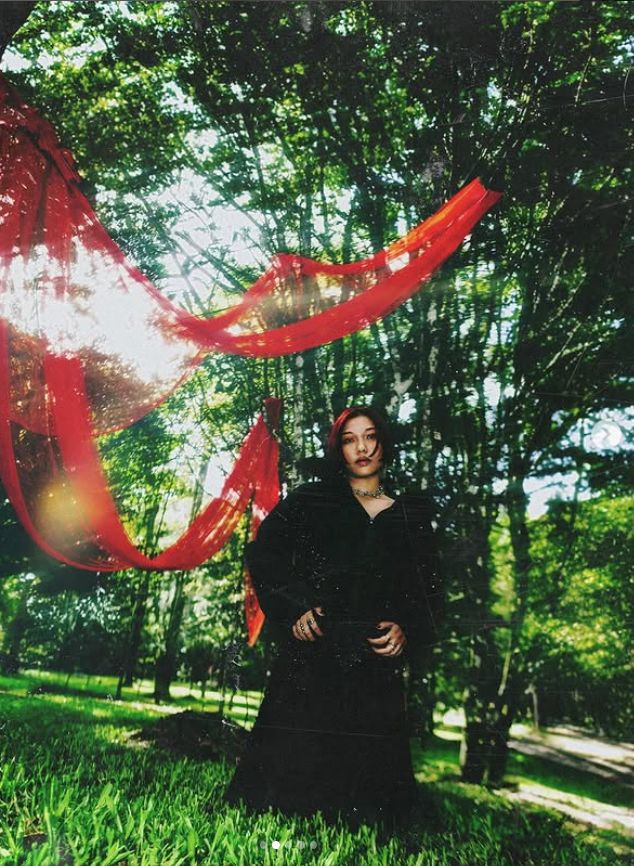
While working on this EP, I spent time in Bedugul, a vast and beautiful forest. I would sit there, surrounded by towering trees, listening to the sounds of insects. From there, I could see the lake and the moon, and it brought back many mystical stories connected to the forest.
Back in the studio, I carried all that inspiration with me. I continued working on the tracks, and that’s how Hutan Timur was born.
Every track is different, but one thing I believe is that the theme is about the sound of the Eastern Forest. Not many people know how beautiful yet mysterious it is, or maybe that’s just how I’ve created it.
What role and importance do rituals have for you, both as an artist and a listener?
Rituals are an essential part of my creative process, shaping how I engage with music as both an artist and a listener. When creating, I like to set the mood, whether it’s organizing my workspace, lighting incense, or taking a quiet moment before diving into production. These small rituals help me focus and create with intention.
As a listener, I enjoy immersing myself in music in different ways. Sometimes I walk outside and let the surroundings blend with the sound; other times, I listen in the dark, fully absorbing every detail. Even playing music in the background while working adds a layer of meaning.
These rituals make the experience more personal, allowing me to connect with music on a deeper level.
Are you acting out parts of your personality in your music which you couldn't or wouldn't in your daily life? If so, which are these?
Yes, in a way. My music allows me to explore emotions and ideas that I might not fully express in daily life.
It’s a space where I can be bolder, more experimental, or even more vulnerable, things that might feel different in everyday interactions.
Late producer SOPHIE said: “You have the possibility [...] to generate any texture, and any sound. So why would any musician want to limit themselves?” What's your take on that?
I completely agree with that. Sound has infinite possibilities, I love experimenting with different textures and unexpected elements, blending organic and electronic sounds to create something unique.
For me, music is about discovery. There's no reason to limit myself when there’s so much to explore.
Do you feel that your music or your work as an artist needs to have a societal purpose or a responsibility to anyone but yourself?
At first, I don't think my music needs to have a societal purpose, but I do believe in creating honestly and consistently.
If my music resonates with others, I think that would be great!
For me personally, music has in many instances influenced my decisions and views and literally changed my life. What has this been like for you and how do you think does music make its power felt?
I believe music has a unique ability to connect with us emotionally, sometimes before we even understand why.
It goes beyond words and logic, creating a direct link between sound and feeling, making it an incredibly personal yet universal experience.
I would love to know a little about the feedback you've received from listeners or critics about what they thought some of your songs are about or the impact it had on them – have there been “misunderstandings” or did you perhaps even gain new “insights?”
I often gain new insights from listeners and critics. Their interpretations sometimes differ from my original intent, but I love that. music is open-ended, and everyone experiences it in their own way.
Sound, song, and rhythm are all around us, from animal noises to the waves of the ocean. What, if any, are some of the most moving experiences you've had with these non-human-made sounds? In how far would you describe them as “musical”?
I really enjoy the sounds of nature, they inspire me a lot when creating music. They carry textures, rhythms, and emotions that I love to translate into my music, shaping the atmosphere and depth of my sound.
We can surround us with sound every second of the day. The great pianist Glenn Gould even considered this the ultimate delight. How do you see that yourself and what importance does silence hold?
I have a habit where I dedicate a day without listening to any music. It helps me reset, reflect, and appreciate sound even more when I return to it.
Silence creates space for new ideas and allows me to be more intentional with the sounds I choose.
Do you feel as though writing or performing a piece of music is inherently different from something like making a great cup of coffee? What do you express through music that you couldn't or wouldn't in more 'mundane' tasks?
I think it’s completely different. Making music is a deeper form of expression, it allows me to channel emotions, ideas, and abstract feelings in a way that everyday tasks like making coffee can’t.
Music holds intention, storytelling, and connection, whereas mundane tasks are more about routine.