Part 1
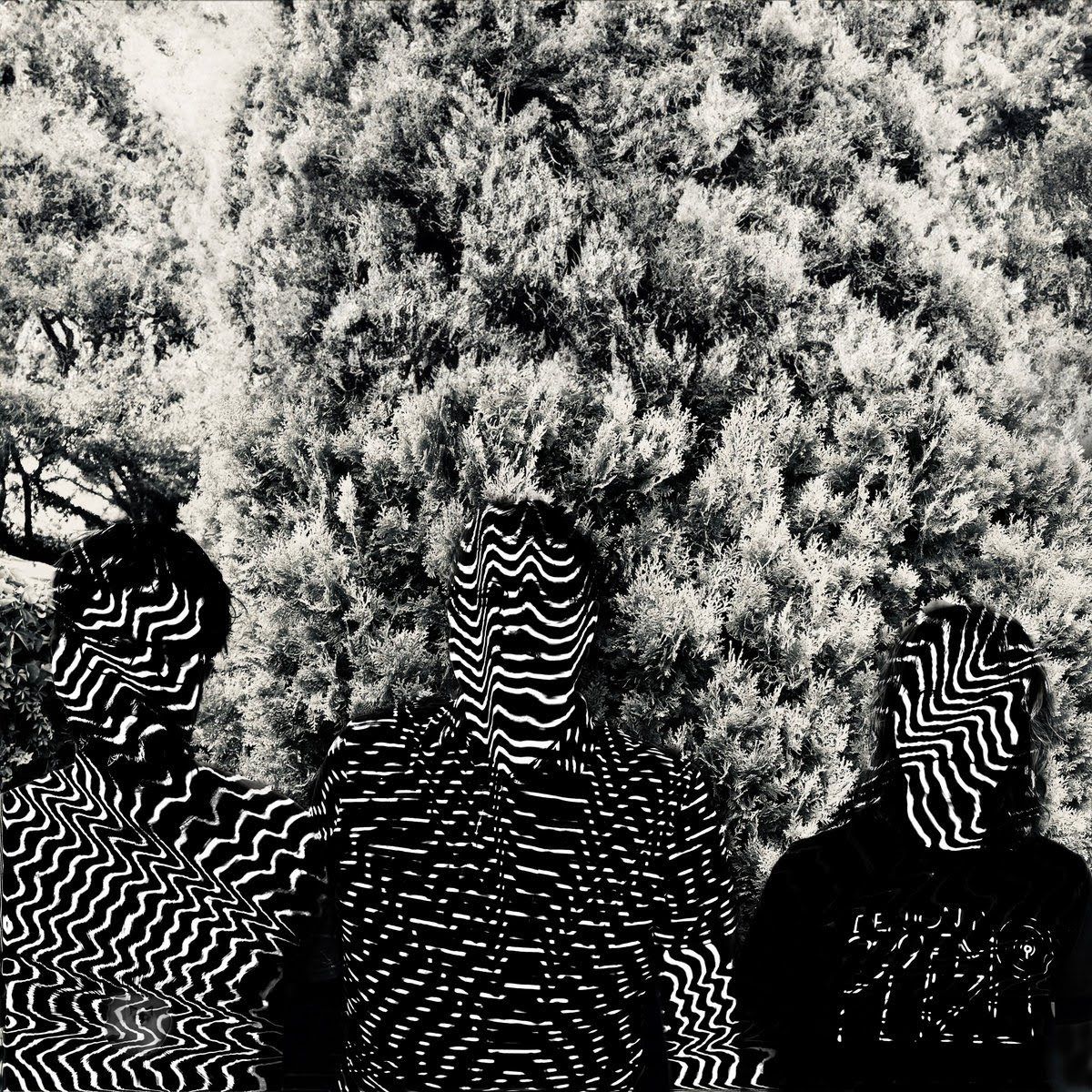
Name: Reunion Island
Members: Ashley Leer, Matt Leer, Brad Loving
Interviewees: Matt Leet, Brad Loving
Nationality: American
Current release: Reunion Island's new full-length album Night Words, featuring John McEntire on drums, is out June 4th 2024 via Tall Corn Music.
Recommendations:
Matt: I just started reading John Lurie’s The History of Bones: A Memoir; Société Etrange: Chance LP
Brad: Soul of Angola Compilation; Nine Days (film from 2020)
If you enjoyed this Reunion Island interview and would like to know more about the band and their music, visit the trio on Instagram, and bandcamp.
When I listen to music, I see shapes, objects and colours. What happens in your body when you're listening? Do you listen with your eyes open or closed?
Matt: I don’t immediately see visual representations of things in my head when I listen to music, I think it’s more abstract for me – I have to try too much. Ultimately am I just thinking I’ve seen the sounds because all I’m doing is thinking about doing it?
I do think listening with eyes closed can enhance the listening experience, but maybe the same can be said about driving a car. I think music has the power to change the way people feel.
Brad: I don’t typically have a synesthetic relationship to music, but I am fascinated by it. It’s something I’ve tried to emulate within videos – mirroring audio and visual details.
I listen to music in so many contexts – sometimes I’m utterly focused on the music alone, headphones on, eyes shut. Other times, it’s just part of the fabric of the day; doing dishes or whatnot.
I’m a painter, and I like to listen quite intently while I’m painting which I suppose goes back to a synesthesia of sorts. Sometimes music will inform me where a painting might need to go next.
Entering new worlds and escapism through music have always exerted a very strong pull on me. What do you think you are drawn to most when it comes to listening to and creating music?
Matt: I’m drawn most to the concept that I’m creating art. I used to care quite a bit more about being technically good enough or getting caught up in the with the stupid idea music was more of a sport.
Usually, you can hear when someone is playing like they have something to prove, it’s a bit icky to me. Then there are the freaks that just are so good it looks effortless. I think I’ve landed at trying really hard to not play too much and sound decent category.
When I listen to other music I can be drawn to any number of things – it could be a drum sound or beat, the performance, the composition. It all hovers around this notion that I know what I like and what I think is good and that’s one of the things … Answering that question to yourself “would I listen to this thing if I didn’t play it?”
Brad: As far as creating music I think it’s about trying to chase after a soundtrack in my head. Some sound will inspire another and those two overlapping yet another. Add, subtract, hone, add, subtract, hone … Try and pay attention to where the track might want to go. I adore that feeling when a track comes together.
I suppose when it comes to listening, it’s a similar pursuit but maybe more expansive? I think I’m drawn to the emotional resonance of the music. Where is this or that music taking me and is that someplace that I feel like exploring?
What were your very first steps in music like and how would you rate the gains made through experience?
Matt: I don’t come from a musically inclined family. The first musical experience I can think of is whenever I’d go to a relative’s place that had an instrument, like an old acoustic guitar, in the basement that I would just detune the strings and hit them in some spastic kid-rhythm.
I really liked the detuned “boing-boing-bong-buououng buururgghghhg” of the low string getting lower and buzzing out to nothing. And then twist the tuning pegs the other way until eventually breaking a string. I thought that was maybe how guitar was played … I had no idea about fretting notes. I’ve been breaking strings ever since.
Brad: I played a little bit of piano, clarinet, and sang as a kid, but none of those really resonated with me. In hindsight, I think my initial forays into music were somewhat hindered by minor dyslexia – European methods of notation always seemed inscrutable to me.
However, in my twenties, I discovered there was a vast realm of music seemingly distinct from those conventions. I realized music can be about listening and responding intuitively and organically. That realization opened up a whole new world of musical expression to me.
According to scientific studies, we make our deepest and most incisive musical experiences between the ages of 13-16. What did music mean to you at that age and what’s changed since then?
Matt: That period of time was when I started attempting to play music with people, along with the discovery of effect pedals. I never really learned to read music, I relied on my ear and guitar tabs. I did have some some great guitar teachers in this time. Having a friend with a cool older brother who was into good music helped! Music grew in importance and basically took over by the time I was finishing high school.
Brad: That definitely doesn’t track for me. I was a late bloomer. I grew up in pretty small towns and didn’t have much exposure to what I’d now consider “noteworthy” music until I went to art school in Denton, Texas.
Since then, I’ve basically taken in as much music as possible. I’m a real omnivore. I adore music from all of the world and have gotten to travel a good amount to try and explore it – and yeah, obviously technology has blown the doors off any constraints one used to have.
How would you describe your own relationship with your instrument, tools or equipment?
Matt: I’m not sure … I think equipment “should” come secondary to musicianship in creating a distinct voice, but that being said I have been known to splurge on a piece of gear for instant gratification / inspiration or to fill a missing piece of some sonic puzzle in my head. For me it’s been a push-pull between keeping things simple and overcomplicating them.
I think the pursuit of that flow state when hours pass by in what feels like minutes and it’s not always easy to recall how something was made is the best. The second any menu-diving or scrolling through presets or a steep learning curve on a piece of gear happens, I reach for the guitar or bass or the oldest synth I own.
Brad: My favorite instrument that I own is a Sequential Prophet~6 synthesizer. It’s the coolest “object” I’ve ever owned. There are no menus whatsoever, so it feels exceptionally tactile and intuitive. It’s not the most versatile synth there is, but what it does, it does really well.
[Read our feature on the Sequential Prophet-6]
My relationship to it sort of feel likes that smart friend who helps you articulate something better than you would be able to do on your own.
Where does the impulse to create something come from for you? What role do often-quoted sources of inspiration like dreams, other forms of art, personal relationships, politics etc play?
Matt: The impulse to create something comes from that notion of moving forward.
I’ve noticed I’m not at my best when I get lazy and don’t have something to work on. But I work a bit harder when there’s a deadline, not that it is always the best way to be. I’ve found that it’s easy to fall into a rut if I have too much time to work on something. The hardest part is simply starting a new project.
Influence and inspiration can come from anywhere – all of the above. I really hate politics though.
Brad: I’m certainly influenced by the myriad of things that enter my reality on a daily basis, but the impulse to create feels almost like its hardcoded in my DNA or something. It’s actually rather difficult to articulate what the origin of that might be.
I don’t want to sound too cliché about it, but maybe analogous to the craving for caffeine? Something from my limbic system says “make something …”
Are you acting out parts of your personality in your music which you couldn't or wouldn't in your daily life? If so, which are these? What, would you say, are the key ideas behind your approach to music?
Matt: The key idea behind my approach to music has always been a form of communication. I think making music is totally a social game, and interpersonal skills definitely come into play.
The best bands are that rare mix of a group of people who this thing clicks musically and they share a common vision. Some bands work when there is a dictator, and some do when it is a true collective.
I try to not have a templated way in which I work. In Reunion Island, I think it’s reacting to what Brad has brought to the table and trying to arrange or add the missing piece. On this record that was a lot of beats and bass parts, but we melted ideas together in this process of adding and subtracting and editing and re-editing.
Some tracks I honestly don’t know who is playing what. Some of this stuff is probably impossible to play “exactly” live.
Brad: I wouldn’t say there are parts of my personality that are being revealed other than perhaps the need to experiment.
Key ideas are exploration, articulation, tension, resolution.
I fear this won’t make any sense, but I found myself thinking about the sculptures of Richard Serra a lot while I was making Night Words. Something about wanting to make things substantial – balancing tension and stillness. Wanting the music to oscillate in unique ways, but still feel grounded.
I just saw this morning that he had passed away. Maybe I somehow cursed him by evoking his name.