Published
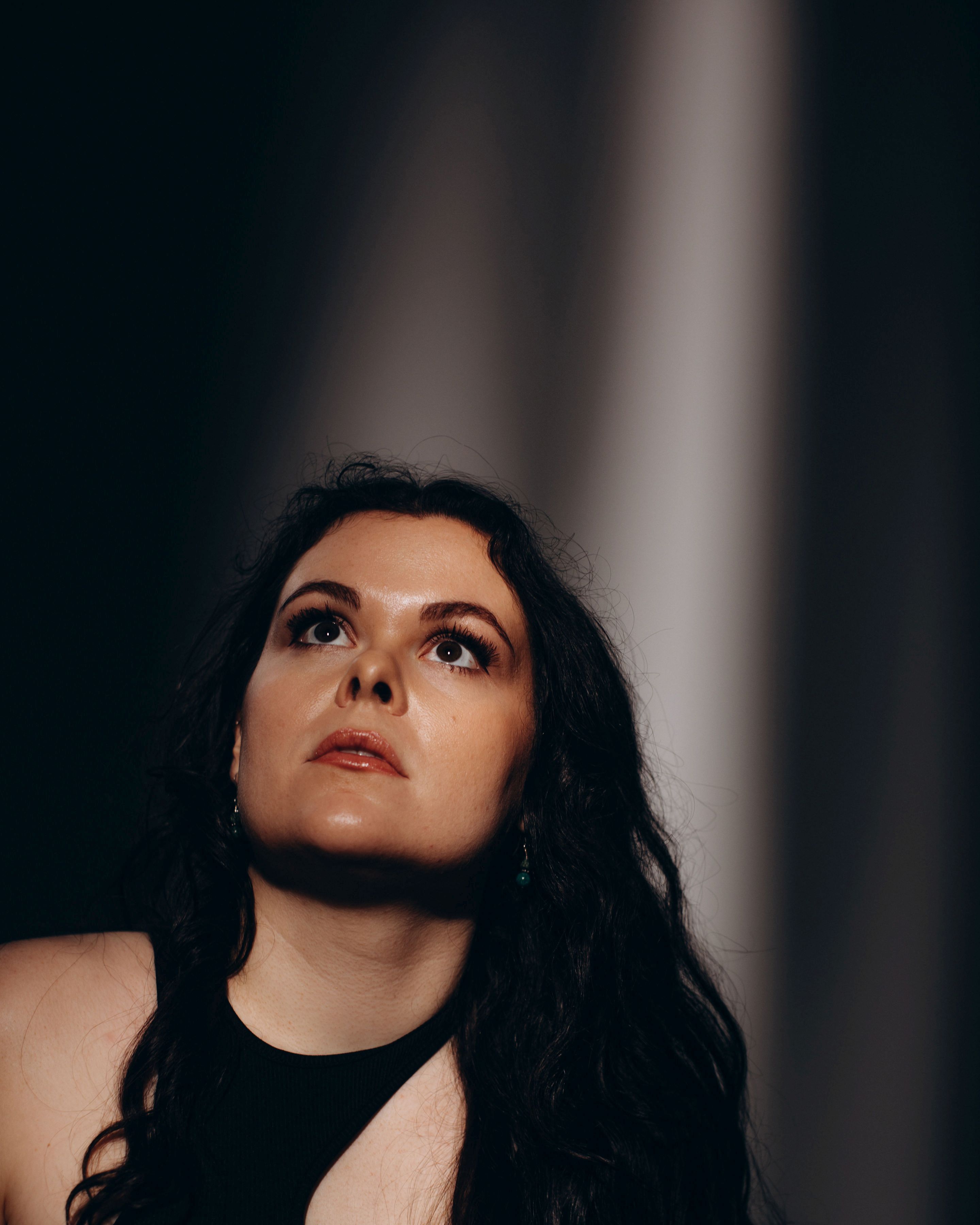
Name: Rosalind Anketell
Nationality: Irish-Australian
Occupation: Singer-songwriter, podcaster, comedian
Current release: Rosalind Anketell’s "begin" is out August 16th. Pre-save the song here.
Recommendations: "Castle in the Air," by M.C. Escher is one of my favourites. I have a print that hangs above my bed. As for music, ‘Light on’ by Maggie Rogers is one of my favourite songs.
If you enjoyed this Rosalind Anketell interview and would like to know more about her music, visit her official homepage. She is also on Instagram, and twitter.
When I listen to music, I see shapes, objects and colours. What happens in your body when you're listening? Do you listen with your eyes open or closed?
I recently learnt that I have aphantasia, which means I don’t have mental images, or see pictures when I’m thinking. So, I don’t see colours or shapes. Honestly, that is part of music’s beauty for me. When I’m really listening to a song I enjoy, it feels like it fills me up entirely.
My favourite way to listen to music is through movement. If I have time and solitude, I’ll put on my favourite songs and dance along. It’s cathartic, and it connects you to the music in a very grounded and powerful way.
Entering/creating new worlds through music has always exerted a strong pull on me. What do you think you are drawn to most when it comes to listening to and creating music?
When I write songs, I think of them as poetry to music. The lyrics are so important to me, whilst the melody and arrangement are used to heighten the feeling you’re trying to capture. It’s so layered, each element building on each other.
But my favourite songs are ones that pull me in and make me feel something deeply. So whilst lyrics are really important to me, it’s the emotional connection that I’m drawn to.
According to scientific studies, we make our deepest and most incisive musical experiences between the ages of 13-16. What did music mean to you at that age and what’s changed since then?
Life was pretty tough at that age. I was diagnosed with depression very young. At that age, music was an escape, and the best way I knew to process everything going on in my life.
When I was around 14, my brother took me to a music store and bought me my first guitar. It was very quiet, and I remember walking down the rows thinking that the lights made each guitar look like a work of art at a museum. I pulled one down and immediately fell in love. When they found me, the store clerk said to my brother; ‘well I guess anything I tell you doesn’t matter, she’s already chosen’.
I think that is still true. Whatever anyone says, I’ll always make music for me first. So that period of my life completely informed the relationship I have to music now.
Tell me about one or two of your early pieces that you're still proud of (or satisfied with) – and why you're content with them.
One of the first songs I ever wrote was called "Captain," which I wrote for my sister. The song can be summed up in it’s opening lyrics;
“I remember our childhood,
You were my very own Robin Hood;
You’d take the bad times, and make them good”
I still love the song because it reminds me of the endless summers of my Australian childhood. The light was golden. The sky was always blue. The watermelon was sweet and sticky.
Life at home wasn’t perfect, so I loved spending time outside. I would lie under the orange tree, and make up songs. Sometimes, as hard as you try, art will fall short of the feeling you’re trying to capture. But I got pretty close with "Captain."
What is your current your studio or workspace like? What instruments, tools, equipment, and space do you need to make music?
All I need is a notebook, a feeling, and some chords. Occasionally, I’ll wake up in bed and record a voice memo on my phone with an idea for a melody or some lyrics.
But I’ve written some of my favourite songs in forgotten corners with my guitar, or late at night sitting at a friend’s piano.
From the earliest sketches to the finished piece, tell me about the creative process for your current release, please.
I wrote "begin" at my mother’s house back in Australia. It was during covid lockdown and (as so many of us were) I was feeling pretty isolated. I had just come out as a lesbian, and this overwhelming feeling of freedom and potential for connection was stymied by the fact we all had to stay locked inside.
I was sitting at her piano, and started playing chords, and pretty soon it all spewed out. The first verse was written in about five minutes. After the first day, I recorded a rough version of it, and then started laying vocal harmonies on top. The first rough demo was very stripped back and moody. I sat with it a long time, but I knew almost immediately that I wanted to record it.
After I moved to Amsterdam, I found two hugely talented producers; Doris Veldman and Pat Stewart. They took the melody and chords I’d written, and helped to arrange the music for the recording. I recorded begin at the end of last year, which was an incredible process of trial and error; finding what is missing and filling up the soundscape, playing with texture and sound.
What role and importance do rituals have for you, both as an artist and a listener?
I’ve never enjoyed strict routines. So, when I write, I’ll do whatever feels right at the time. Sometimes I will find the melody first and then put words to it, other times I have a few phrases I need to find a melody for. But mostly they come together at the same time.
I do have my little performance rituals though. When I perform, I love taking time to do my makeup. It’s a process of steadying myself and pulling my confidence around me.
When listening to music, it also depends entirely on my mood. I might listen to one song on repeat for hours, or I might queue up an ecclectic mix of tunes.
Are you acting out parts of your personality in your music which you couldn't or wouldn't in your daily life? If so, which are these?
I am pretty silly in real life, I’m actually a stand-up comedian and perform improv comedy. I love absurdity, and connecting with people through laughter and silliness.
But despite that, I’ve never written funny songs. Music has always been about expressing the emotions I find it hard to talk about, or expunging some overwhelming moment so I can breathe.
Songwriting is a very vulnerable process for me.
Late producer SOPHIE said: “You have the possibility [...] to generate any texture, and any sound. So why would any musician want to limit themselves?” What's your take on that?
I think it’s true. We are limited only by what we can imagine, and that’s why I love collaborating. I grew up with American folk music, 70s rock music and Portuguese fado music. Acoustically, my songs sound like folk songs. But as soon as I’m in a room with a producer, it opens up so much possibility.
I can create pop music with so much texture and layering. I can stand there and say wild things like ‘what about an ethereal, cavey, boom boom sound?’ and then we can go hunt for it and find something perfect.
Do you feel that your music or your work as an artist needs to have a societal purpose or a responsibility to anyone but yourself?
No, I don’t think art has any responsibility other to try and communicate whatever the artist wishes to express. I do love when art has a social purpose, some of the most powerful art does. But some art is just made to be beautiful.
Sometimes I write socially conscious music, one of the songs on my EP Rosalind, "Ruins," is about the climate crisis. But I wrote it because I feel deeply about it, not because I had a responsibility to.
Once a piece is done and released, do you find it important that listeners understand it in a specific way? How do you deal with “misunderstandings?”
No, I prefer that people interpret my music for themselves! So much of my writing is about deeply personal experiences I’ve had. I’m always so pleased when someone tells me that my music moved them, or got them through something
There’s no right and wrong way to feel, and it’s honestly such a privilege when people connect to my music.
Sound, song, and rhythm are all around us, from animal noises to the waves of the ocean. What, if any, are some of the most moving experiences you've had with these non-human-made sounds? In how far would you describe them as “musical”?
Honestly, I’ve hummed along with my vacuum before, and I once wrote the start of a song in my car to the beat of my indicator signal. So I think anything can be musical.
But as for moving experiences, I have really strong memories of crickets in the early evening. When their buzz seems to fill up the whole world, and the light slowly fades. Beautiful.
We can surround us with sound every second of the day. The great pianist Glenn Gould even considered this the ultimate delight. How do you see that yourself and what importance does silence hold?
I think silence can be a very sacred, meaningful thing. Silence can feel expectant, like you’re sitting on your hands with impatience for something to happen. It can feel ominous too, or perhaps full of possibility. It can also be peaceful, like everything has washed away for a moment, like a wave pulling back into the ocean.
Often my best writing happens after sitting in silence. It can give you the space to let whatever feeling you need to express bubble up to the surface.
Do you feel as though writing or performing a piece of music is inherently different from something like making a great cup of coffee? What do you express through music that you couldn't or wouldn't in more 'mundane' tasks?
No, not always. Sometimes there is a cosmic feeling about songwriting or performing. It’s this huge ebullient feeling that is overwhelming and beautiful. But other times it’s just strumming a guitar on a Tuesday morning, or writing a couple of really terrible songs about a crush you have, and immediately forgetting them.
Sometimes it’s nonsense words, or a joke, or a little hum to wake yourself up. Sometimes it’s fleeting and ordinary, and sometimes its transcendent, it can be both.
What is a music related question that you would like to ask yourself – and what's your answer to it?
What would I be without music? I sometimes wonder who I would be if I didn’t or couldn’t write songs. I wonder if I would have turned to some other form of art to express myself, or if perhaps I would have bottled it all up.
I want to ask myself the question, mostly because I don’t think I know the answer!