Published
Name: Seven Blood
Members: Azaria Nasiri (vocals), Oli Arnold (guitar), Anfy Hartmann (drums), Josi Hille (bass)
Nationality: German
Current release: Seven Blood's debut single "Killing from the Inside" is out now.
Recommendations: Azaria: I really enjoy the new album by From Indian Lakes - Head Void
Oli: I’m in love with the last two EPs from The Plot in You.
If you enjoyed this Seven Blood interview and would like to know more about the band and their music, visit their official homepage. They are also on Instagram, and Facebook.
When I listen to music, I see shapes, objects and colours. What happens in your body when you're listening? Do you listen with your eyes open or closed?
Azaria: I can focus on music best when I listen to it with my eyes closed.
I don‘t really see anything then but rather feel the depth more. And of course, I get goosebumps at the most intense moments.
Entering new worlds and escapism through music have always exerted a very strong pull on me. What do you think you are drawn to most when it comes to listening to and creating music?
Oli: Since I was a kid, music was like a burning-glass. It helps to translate complex topics, emotions etc. to the world.
I have that feeling of “oh wow this song covers the feeling so well, more than 10 books could probalbly do“ on a regular basis.
What were your very first steps in music like and how would you rate the gains made through experience?
Azaria: My parents listened to music all the time when I was little. I think this had a big impact on me. I took vocal lessons for many years, but never took this passion to the stage. I wasn‘t brave enough to start anything on my own and at a certain point I just laid the idea of a possible carrier as a singer to rest.
But then the band happened! We met and everything just happened in a very natural flow.
So I guess what I gained is the awareness for the need of having the right people around me and that I can, and should, trust in myself and in my abilities.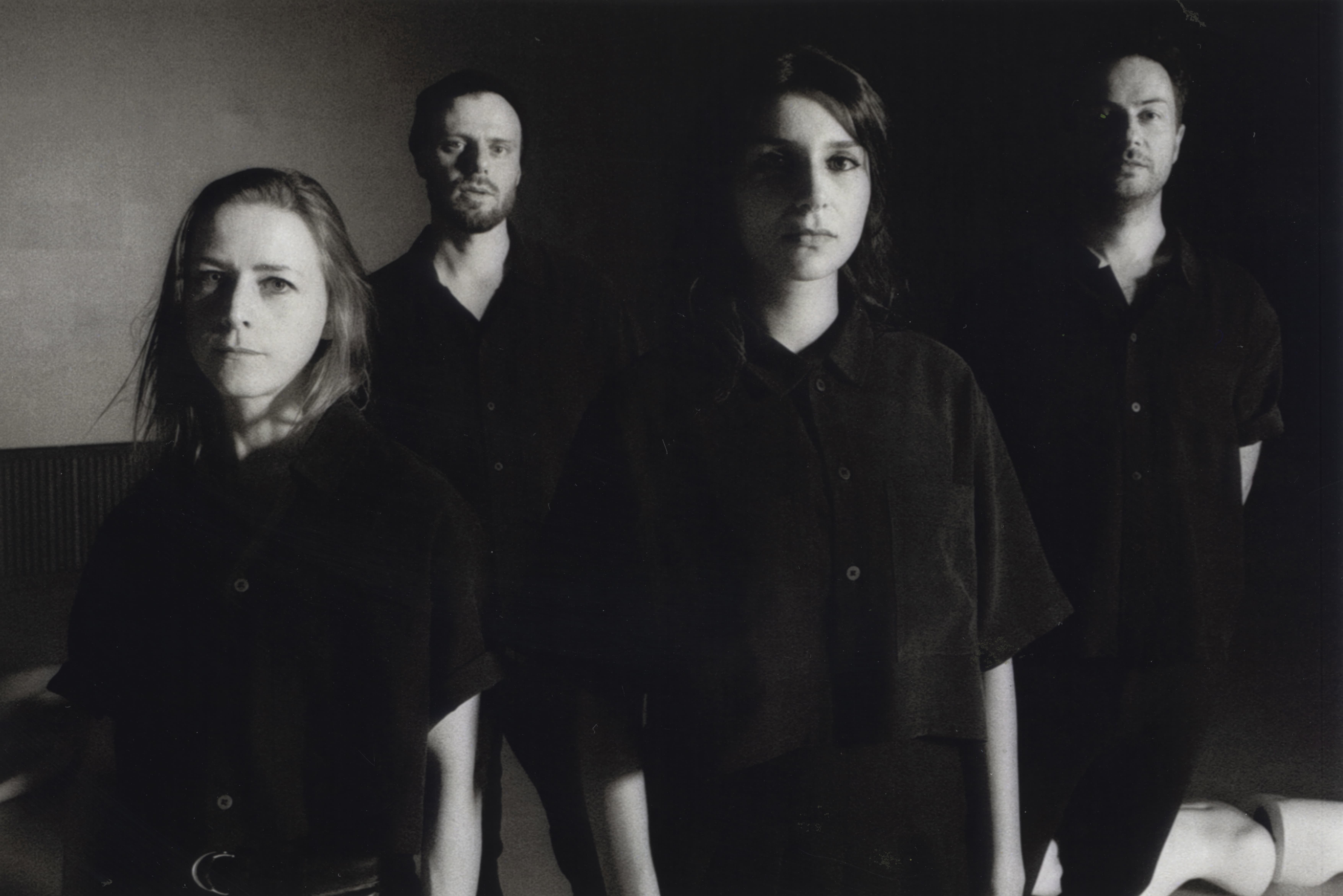
Seven Blood Interview Image by Stefan Kraupner
According to scientific studies, we make our deepest and most incisive musical experiences between the ages of 13-16. What did music mean to you at that age and what’s changed since then?
Oli: I heard about that study, but I can not relate to that. When we write songs I’m often surprised that there are ideas from deep inside that are obviously influenced by radio music when I was 8 years old. On other days my influences are more from current music. It’s just very different.
But I absolutely believe that this age plays an essential role, when it comes to discovering yourself, which often happens via music. I myself discovered this whole new world of punk, metal, grunge. Music plays a massive role from then until now.
How would you describe your own relationship with your instrument, tools or equipment?
Azaria: As a singer, the relationship with my instrument wasn‘t always friendly, but I try to be nicer to myself. There were times, where I got frustrated very easily and it didn‘t lead me nowhere.
Instead of reacting that way, I now try to analyze where the issues could be rooted and just practice towards dissolving those problems.
In the end, my instrument is my very own body and I think we should all try to treat our bodies a bit more friendly.
Where does the impulse to create something come from for you? What role do often-quoted sources of inspiration like dreams, other forms of art, personal relationships, politics etc play?
Oli: The sources of creative impulses are very diverse.
Over the years I realized that an important base is it to turn your analytic brain off and help your unconscious part of the brain to shine. Because that’s in my opinion where the magic lies and where the really interesting ideas come from. Going for a walk, driving bicycle or via car can help.
Are you acting out parts of your personality in your music which you couldn't or wouldn't in your daily life? If so, which are these? What, would you say, are the key ideas behind your approach to music?
Azaria: Oh yes, my musical persona is different compared to the daily-life-me. I am saying things, I probably would not articulate in a usual conversation. I am also a loud and explosive person, which is almost serves as an outlet for emotions that build up in my daily life.
The key idea of our music is to translate our emotions into sounds that are accompanied by words that stem from thoughts that haven‘t been said out loud.
If music is a language, what can we communicate with it? How do you deal with misunderstandings?
Oli: I think if we take music as a language it’s more complex than only words. The combination of music and words is so special. This language can create joyful or happy moments and impressions, but also create unpleasant emotions. It works as a mirror which can work in very different directions.
That also implies misunderstandings, because in a creative process artists don’t overthink everything. Sometimes they just keep on telling, which can create weird situations.
So I think when art is honest, also misunderstandings are a part of it. I myself would comment and revise those ideas before sending it to the world.
Making music, in the beginning, is often playful and about discovery. How do you retain a sense of playfulness and how do you still draw surprises from tools, approaches and musical forms you may be very familiar with?
Azaria: Since we are in the early phase of our band, we are still discovering who we are.
However, I am not scared of losing this playfulness - we all listen to many different kinds of genres and are curious about new ideas and open to trying out new elements.
Sound, song, and rhythm are all around us, from animal noises to the waves of the ocean. What, if any, are some of the most moving experiences you've had with these non-human-made sounds? In how far would you describe them as “musical”?
Oli: I think as humans beings we can easily relate to some sounds because they have their origins in the nature. From rain drops to creaking wood to urban sounds like a train, it all triggers thoughts and emotions. That’s why I think it’s so much fun to use it in music.
With Seven Blood we try to work with those sounds, too. When I was a kid, I listened to ”Riders on a storm” by The Doors.
It starts with thunder and the sound of heavy rain. It makes you feel like you’re a part of the scenario. That’s really great.
There seems to be an increasing trend to capture music in algorithms, and data. But already at the time of Plato, arithmetic, geometry, and music were considered closely connected. How do you see that connection yourself? What aspects of music do you feel can be captured through numbers, and which can not?
Azaria: As a person making music, I think it is useful to use musical math as a tool - for example, when I am stuck in the process of finding the right chord progressions.
Regarding algorithms - I personally think that emotions should be more important than any data. I am really sad about the fact that the music business is so focused on algorithms. It takes away the non-numeral values of creativity, emotion and passion. It limits potential.
How does the way you make music reflect the way you live your life? Can we learn lessons about life by understanding music on a deeper level?
Oli: I think music describes my inner thoughts and feelings, but it’s really not biographical.
I guess, no one from outside could really read my life from outside. You can not read how many kids I have, what school I visited, but the music can give a deeper and really vulnerable perspective in my emotions and thoughts.
We can surround us with sound every second of the day. The great pianist Glenn Gould even considered this the ultimate delight. How do you see that yourself and what importance does silence hold?
Azaria: I love listening to music and be surrounded by sounds.
But I also think it is very important to be able to sit alone with your thoughts for a bit. To give your nervous system a little rest and just focus on your thoughts.
Do you feel as though writing or performing a piece of music is inherently different from something like making a great cup of coffee? What do you express through music that you couldn't or wouldn't in more 'mundane' tasks?
O: I think creative processes are everywhere. It doesn’t matter if you design your garden, make a coffee, cook, write a book or a song.
If you could make a wish for the future – what are developments in music you would like to see and hear?
Azaria: I am very happy with the current evolvement of genre-openness.
Generally, I wish for more authenticity and bravery in music. I want artists to be able to try out new things that they feel is true to them - without being judged for that.