Published
Name: Sion
Nationality: South Korean
Occupation: Singer, songwriter, producer
Current event: Sion recently performed at 2024's Reeperbahn Festival. His latest EP, sociavoidance, is out via Beautiful Noise.
If you enjoyed this Sion interview and would like to know more about his music, visit him on Instagram and tiktok.
When I listen to music, I see shapes, objects and colours. What happens in your body when you're listening? Do you listen with your eyes open or closed?
I don’t know if it’s about open or closed eyes—it’s more about the way the sound cuts through me, the way it alters the space I’m in. Listening becomes a process of reconstructing memories, of seeing things not through the literal eye but through fragments of emotion and sensation.
Sometimes, it feels like the music is moving through me, other times I’m moving through it, almost like I’m dissolving into the sounds.
Entering/creating new worlds through music has always exerted a strong pull on me. What do you think you are drawn to most when it comes to listening to and creating music?
I think it’s about the in-between spaces, where things don’t fully resolve. Music becomes a way to explore contradiction—pain and joy, memory and forgetting.
I’m drawn to the dissonance, the fractured parts that still feel whole in some way. It’s less about making sense of things and more about letting them exist as they are, without needing to tie them up neatly.
Maybe that’s where new worlds emerge, not from what’s created but from what’s left undone. There’s a pull toward what’s incomplete, what can never fully be understood but is still felt deeply.
According to scientific studies, we make our deepest and most incisive musical experiences between the ages of 13-16. What did music mean to you at that age and what’s changed since then?
When I was around 13 to 16, I had to make some big decisions about my path in music I decided to step away from classical music, which had been a huge part of my life, and focus more on school. For the first time, I allowed myself to explore other kinds of music, and that was really freeing.
Music became a refuge, a space to escape into but also a place where I could confront things I didn’t have words for. It was raw and immediate—like a mirror but also a place to hide behind. Back then, it was pure instinct, an emotional release.
What’s changed is now I see music as more than just an outlet. It’s become a tool, not only to express but to question, to dismantle. At that age, I was reacting to sound and feeling, but now it’s about understanding how those sounds interact with the world around me—how music can disrupt, reshape, and challenge the structures I’m moving through.
That shift started when I stepped away from classical music and let myself hear something new.
Tell me about one or two of your early pieces that you're still proud of (or satisfied with) – and why you're content with them.
That’s a tough one, because I usually make music to process what’s weighing on me at the moment. So with time, it’s hard to stay connected to older pieces—they start to feel distant, like they belong to someone else.
But there’s something about the track ‘grow’ that still stands out. It’s got this charm, almost fragile, because it holds both the innocence and naivety of me stepping into a new space, and the slow realization that once you lose that, you can’t get it back. It’s like capturing the moment when that purity slips away.
The other one would be ‘Molting,’ my debut single. It’s full of rough, unpolished ideas—some might call it messy, but I think that’s why I still connect with it. There’s a boldness there, a kind of freedom in not knowing too much yet, not being weighed down by expectations.
Sometimes I wish I still had that unknowingness, to make choices that feel as weird and raw as those did.
What is your current your studio or workspace like? What instruments, tools, equipment, and space do you need to make music?
My setup is pretty minimal. Just a PC, a MIDI keyboard, an electric and an acoustic guitar, and one Waldorf synth.
When I first started making music, all I had was the PC—no MIDI keyboard—so I was literally clicking in the notes with a mouse and adjusting each velocity by hand. It was tedious, but looking back, it taught me patience. I see a lot of artists now start with all this high-end gear but don’t really know how to use it.
For me, I only get new equipment when I’ve fully exhausted what I already have—when I’ve pushed every possibility out of the tools in front of me. Once I hit that wall, that’s when I know it’s time to add something new to my palette. One new piece of gear can completely change your soundscape.
People underestimate how much restriction pushes creativity. If you start out with everything, you miss that process of discovery, the choices that come from working within limits.
From the earliest sketches to the finished piece, tell me about the creative process for your current release, please.
On past releases, I couldn’t silence the noise in my head—constantly questioning what people would like, what would resonate, what wouldn’t.
But this time, I only had two months to create six tracks before the deadline. It was like a speedrun, no time to overthink or worry about what would sell. I had to focus purely on what I wanted to say in the moment, and the result is those six tracks. It was another freeing experience, stripping away all the external pressures. I want to keep working like that. If I like what I’m hearing, there’s got to be at least one other person out there who will too, right?
Sociavoidance explores my experiences with social interactions—those with people I love and those I can’t stand, the ones who love me and those who don’t. I instinctively blended genres that shouldn’t really go together, like electronica, jazz, and hyperpop. To me, that mix perfectly captures the chaotic nature of my thought process throughout the album.
What role and importance do rituals have for you, both as an artist and a listener?
Rituals hold a deep significance for me, both as an artist and a listener. They create a sense of structure in the chaos, a way to ground myself amidst the noise.
As an artist, rituals help me enter a certain headspace, whether it’s lighting a candle, playing a specific record before I start, or even just the act of setting up my workspace. These small acts signal to my mind that it’s time to create, allowing me to tap into a more instinctual flow.
As a listener, rituals become a way to deepen my engagement with music. Whether it’s a certain time of day when I put on an album or a specific environment that enhances the experience, those rituals heighten my connection to the sound. They create a space for reflection, allowing me to immerse myself fully in the music.
In both cases, rituals are about creating a meaningful context—transforming everyday moments into something sacred.
Are you acting out parts of your personality in your music which you couldn't or wouldn't in your daily life? If so, which are these?
Absolutely. My music is a place where I can explore aspects of myself that I don’t always show in my day-to-day life.
There’s a lot of vulnerability in my lyrics, and I talk about things that weigh on my mind—anxiety, depression, confusion. In everyday interactions, I might not feel comfortable diving into those heavy topics or showing that side of myself. When I’m in the studio, though, I can let all that out. I can be raw and honest without worrying about how people will perceive me.
It’s liberating to express the darker, more introspective parts of my personality. I can also experiment with different styles and ideas, which allows me to channel different emotions and perspectives.
For me, music is like a safe space. I can act out these parts of me—whether it’s the cynic, the philosopher, or the kid who’s still figuring things out. It’s a way to process my experiences and connect with others who might relate to that feeling of being trapped or misunderstood in their own lives.
Late producer SOPHIE said: “You have the possibility [...] to generate any texture, and any sound. So why would any musician want to limit themselves?” What's your take on that?
I completely resonate with what SOPHIE said. The beauty of music today is that we have access to an incredible palette of textures and sounds, and that opens up limitless possibilities for expression.
But I also think there’s something profound about limitation. While it’s tempting to explore every sound available, restrictions can actually push creativity in unexpected ways. They force you to dig deeper into your ideas and find innovative solutions within a defined space.
For me, it’s about balance. I love the freedom to experiment, but I also appreciate how boundaries can shape a unique artistic voice. So, while we can generate any sound, it’s the choices we make—consciously or unconsciously—that define what we create. In that sense, limitations can become a source of inspiration rather than a hindrance.
Do you feel that your music or your work as an artist needs to have a societal purpose or a responsibility to anyone but yourself?
I think there’s a natural tension between personal expression and societal responsibility in music. On one hand, my work is deeply personal—it’s about processing my experiences, emotions, and thoughts. It’s a reflection of my inner world. But on the other hand, I can’t ignore the context in which I’m creating.
Music has the power to resonate with others, to reflect societal issues, and to spark conversations. While I don’t feel a strict obligation to create with a societal purpose, I do believe that art can’t exist in a vacuum. When my music connects with someone else or speaks to a larger experience, that adds a layer of meaning that goes beyond just me. It’s about finding that balance—staying true to my voice while also being aware of the impact it can have.
Ultimately, if my work can contribute to something bigger or help someone feel less alone, that’s a beautiful outcome - but it’s not the driving force behind what I create.
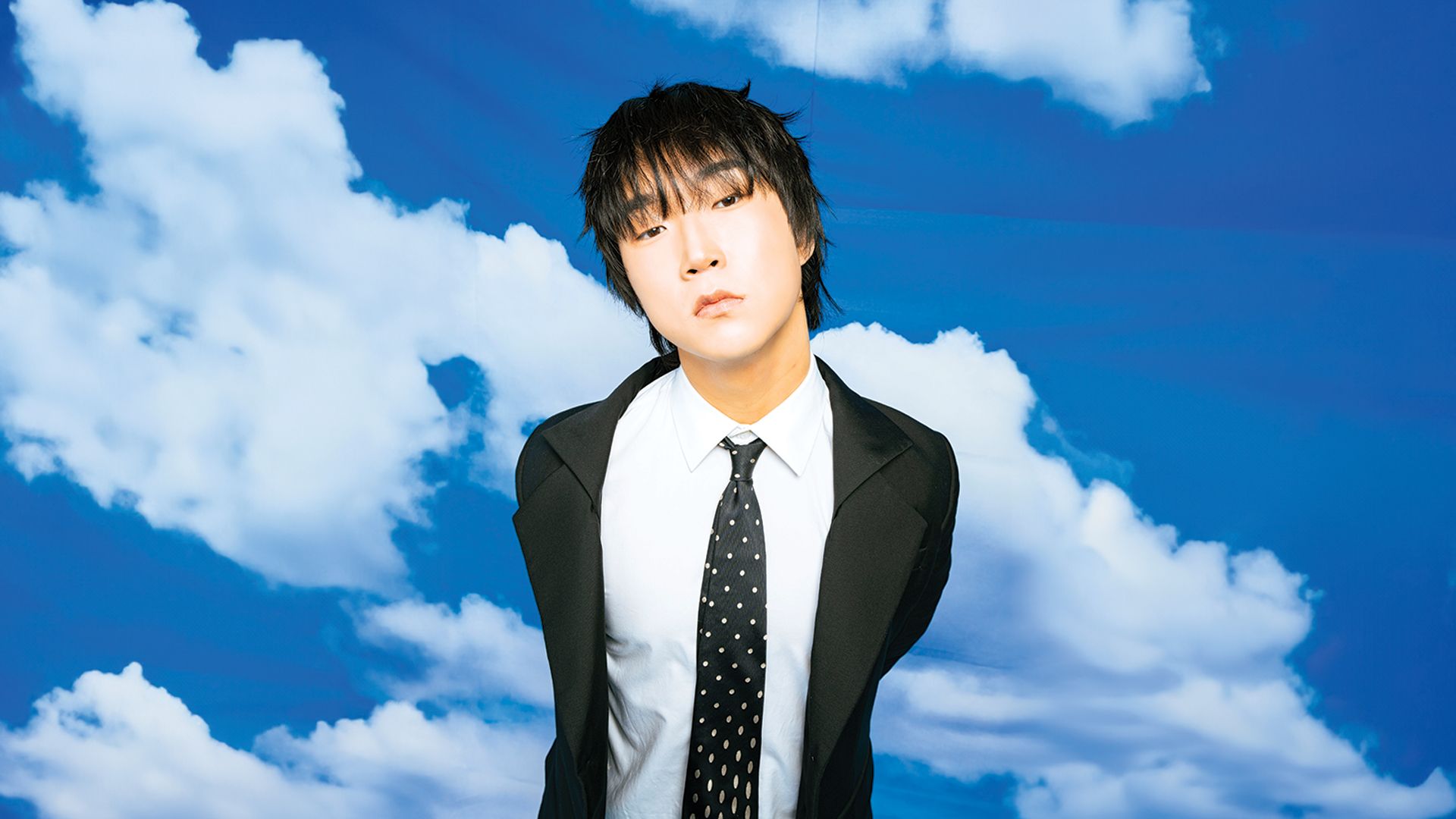
Sion Interview Image by SEAN.D.NO
Once a piece is done and released, do you find it important that listeners understand it in a specific way? How do you deal with “misunderstandings?”
Once a piece is out in the world, I find it less important for listeners to understand it in a specific way. Music is inherently subjective, and each person brings their own experiences, emotions, and interpretations to what they hear. I love that about it—how a single piece can resonate differently with everyone.
As for misunderstandings, I see them as part of the process. If someone interprets my work in a way I didn’t intend, that’s okay. It opens up a dialogue and can lead to insights I hadn’t considered. I think of it as a living thing that evolves beyond my original intention. I can’t control how people experience my music, and trying to do so would only stifle the art.
Ultimately, what matters most is that the music connects with people in some way, even if it’s not how I envisioned it. That connection, however it manifests, is what makes creating worthwhile.
Sound, song, and rhythm are all around us, from animal noises to the waves of the ocean. What, if any, are some of the most moving experiences you've had with these non-human-made sounds? In how far would you describe them as “musical”?
Sound is a fundamental part of our existence, woven into the fabric of life itself. From the rustling of leaves to the calls of animals, these natural sounds create a rich tapestry that can be incredibly moving. I often find inspiration in these elements, as they remind us of our connection to the world around us.
To me, listening to nature is like listening to an orchestra without a conductor. Each sound has its place, creating an immersive experience that transcends traditional notions of music.
This highlights the idea that music is not just something we create but also something that exists in the world around us. It encourages us to listen more deeply, to find beauty in the everyday, and to recognize the artistry of nature itself.
We can surround us with sound every second of the day. The great pianist Glenn Gould even considered this the ultimate delight. How do you see that yourself and what importance does silence hold?
I think there’s a beauty in being surrounded by sound at all times. It can create a rich tapestry of experiences and emotions, much like Glenn Gould described. Sounds—whether music, nature, or the everyday noise of life—can provide comfort, inspiration, and a sense of connection to the world around us.
I love the idea of sound being this constant presence, shaping our moods and thoughts. But silence also plays a crucial role. It’s in those quiet moments that we can truly reflect and process what we’ve heard. Silence creates space for thought, allowing us to listen to our inner voices and find clarity amidst the chaos. It’s like the pause between notes in music—essential for creating tension and resolution.
For me, both sound and silence are vital. They exist in a delicate balance, each informing the other. When you embrace both, you can find a deeper understanding of your own experiences and emotions, which ultimately enriches your connection to the music you create and the world around you.
Do you feel as though writing or performing a piece of music is inherently different from something like making a great cup of coffee? What do you express through music that you couldn't or wouldn't in more 'mundane' tasks?
Writing or performing music feels fundamentally different from something like making a great cup of coffee. Both activities can be acts of creation, but music is a deeper form of expression for me.
When I create music, I’m tapping into my emotions, thoughts, and experiences in a way that transcends the ordinary. It allows me to explore complex feelings and ideas that might be difficult to articulate otherwise. With music, I can weave together layers of sound and emotion, creating something that resonates on multiple levels. It’s a way to connect with others, to share a piece of my inner world, and to evoke feelings that might not find a voice in everyday life.
Making coffee, on the other hand, is a ritual—an important one, but it’s more about the sensory experience and the pleasure of a moment. It has its own kind of satisfaction, but it doesn’t carry the same weight of personal expression that music does.
In essence, music is a more profound and expansive outlet for me, allowing me to explore the complexities of human experience in ways that mundane tasks simply can’t. While both have their place in my life, music is where I truly find my voice.
What is a music related question that you would like to ask yourself – and what's your answer to it?
Question: “What role does failure play in my creative process, and how do I embrace it?”
Answer: Failure is a crucial part of my creative journey. Every time I experiment with a new sound or idea, there’s a chance it won’t resonate the way I hoped. But I’ve learned to embrace those moments as essential learning experiences.
Each ‘failure’ teaches me something valuable, whether it’s about my musical choices, my emotional expression, or my connection to the audience. Instead of shying away from what doesn’t work, I try to lean into it, dissecting what went wrong and why. This helps me grow as an artist and encourages me to take more risks.
I’ve found that some of my best ideas have emerged from the ashes of something that didn’t go as planned. So, in a way, failure isn’t the end of the road—it’s just a stepping stone towards creating something more authentic and meaningful.