

Name: Society of the Silver Cross
Members: Karyn Gold-Reineke, Joe Reineke
Nationality: American
Current release: Society of the Silver Cross's Festival of Invocations is out now.
Recommendations: Temple of the Trees - we designed and built this studio ourselves during covid. Our inspiration was a gothic cathedral from a mystical dimension. We milled the trees that were growing here before and used the wood inside for the sound treatments and cladding. The entire build was like one giant art project. We hope you enjoy it.
Book: The Prophet by Kahlil Gibran
If you enjoyed this Society of the Silver Cross interview and would like to know more about the band and their music, visit their official homepage. They are also Instagram, bandcamp, and Facebook.
When I listen to music, I see shapes, objects and colours. What happens in your body when you're listening? Do you listen with your eyes open or closed?
Karyn: Thanks for having us and I love this question! I very much relate to music being a visceral and energetic experience.
I understand seeing or even sensing colors, but most of all, I experience music somatically in my physical body and energy field through feelings and sensations. If I feel a deep heart resonance with any particular music or especially someone’s voice, it will often make me cry, no matter the genre, my heart just feels cracked open.
I heard once that music is a bridge to the spiritual realm, and I personally would agree that this has been my experience.
Entering new worlds and escapism through music have always exerted a very strong pull on me. What do you think youare drawn to most when it comes to listening to and creating music?
Joe: I most enjoy music when it is able to take me out of my thoughts and into a different place, just like seeing a movie and being lost in it for the whole time, it's what I really miss about listening to records in their entirety.
Instead of being drawn to something while creating I do my best to let go and clear the path for new ideas that haven’t been a part of my normal musical highway.
What were your very first steps in music like and how would you rate the gains made through experience?
Karyn: Well, I began classical piano lessons at age 4, so my first experiences to start were mostly technical. I had a really mean and strict teacher, so I didn’t enjoy playing until later on in my teenage years, when I finally started composing, then I instantly fell in love.
I think the most valuable things I’ve gained are the ability to tune in and listen for ideas, this is more of an intuitive process than technical and comes with time, as well as the blessing of what feels like pure love and joy when writing or simply playing. There’s simply nothing else as exhilarating and rewarding for me.
According to scientific studies, we make our deepest and most incisive musical experiences between the ages of 13-16. What did music mean to you at that age and what’s changed since then?
Joe: I learned to play guitar then and was curious about the world of music.
I’m still a student of the world of music but I listen in a different way.
How would you describe your own relationship with your instrument, tools or equipment?
Karyn: I see any instrument as a tool and it can be wielded in many different ways depending on whose hands it's in. We are the ones that give it meaning and it becomes a vehicle to express deep emotions and moods where words simply fall short.
I have the utmost respect for what any instrument can bring to the world and the process of playing feels like a merging of spirit and matter. If you are lucky, eventually you learn to let the instrument play you.
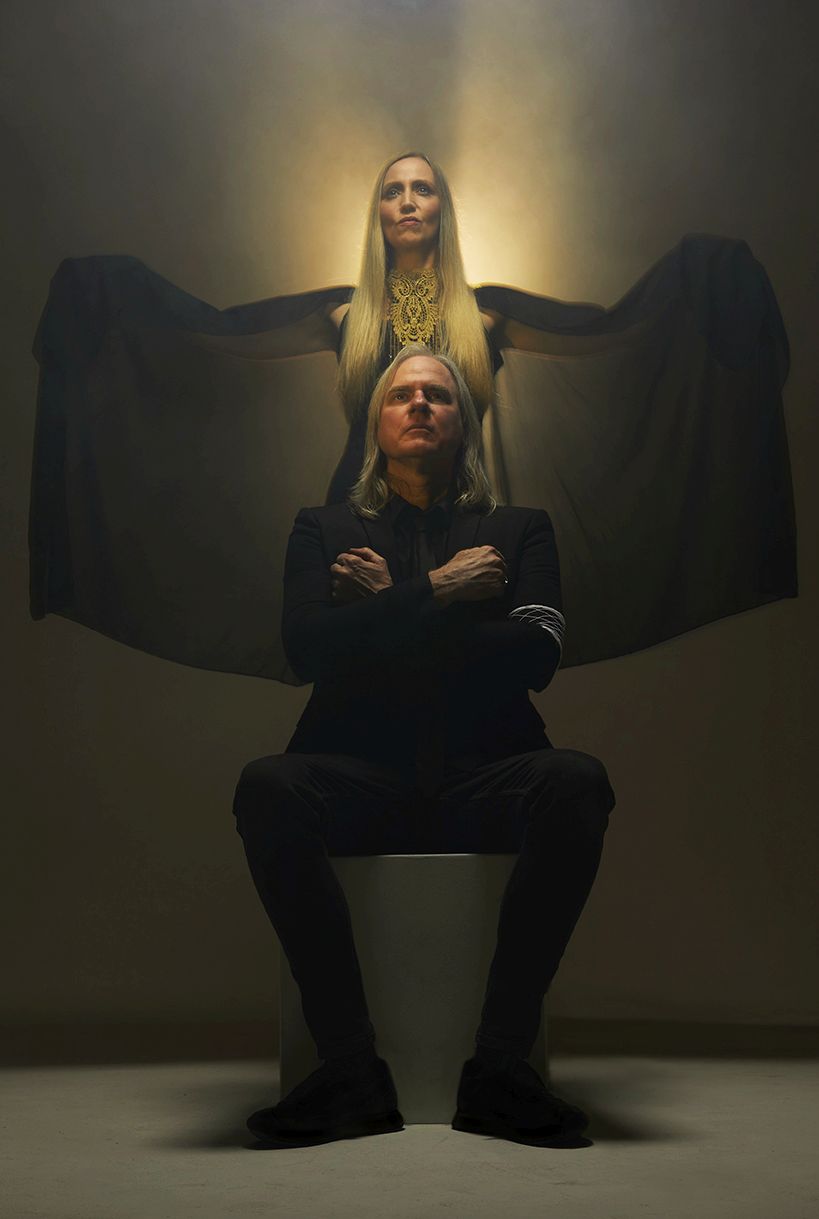
Society of the Silver Cross Interview Image by Sven Doornkaat
Where does the impulse to create something come from for you? What role do often-quoted sources of inspiration like dreams, other forms of art, personal relationships, politics etc play?
Joe: Where does anything new come from, where does the next thought come from? I think you answered your own question within the question.
How we play our roles is more important than the roles themselves.
Are you acting out parts of your personality in your music which you couldn't or wouldn't in your daily life? If so, which are these? What, would you say, are the key ideas behind your approach to music?
Karyn: I wouldn’t say acting is involved. There is the idea of a stage persona, but I’m very shy and don’t like that kind of attention - although I see the benefit of playing in that realm and having fun with persona’s too.
For me, it's much more about expressing myself authentically and being in touch with parts of me that I want to experience inwardly but also share with others.
If you really want to connect vs just be seen outwardly - it requires a certain vulnerability that really requires being your true self without total acceptance and without apology. That’s what I strive for most.
If music is a language, what can we communicate with it? How do you deal with misunderstandings?
Joe: We communicate everything we can’t say in non verbal forms through music. Remember when you made a mixtape for a “crush” that said all the things you didn’t have the nerve to say aloud just in hopes that they would understand you better?
I’ve been practicing non-conclusions during misunderstandings. It's super hard but there is freedom there. I feel it's best to understand first then be understood. Another one that is super hard to do but again, there is freedom there.
Making music, in the beginning, is often playful and about discovery. How do you retain a sense of playfulness and how do you still draw surprises from tools, approaches and musical forms you may be very familiar with?
Karyn: Tuning into something beyond my own ideas and mental thoughts is the best approach. Playfulness and curiosity are great tools to keep the mind open.
I like to feel into things, and the quality of an idea or song. They either resonate or don’t, or fall somewhere in the middle. We often have created at least ten new song ideas before we agree one is a keeper. It’s about being flexible and fluid, and not getting stuck on perfection, but allowing one idea to lead you to the next idea until the lightbulb goes off.
Everything has its place in the creative process, the biggest part is getting out of your own way.
Sound, song, and rhythm are all around us, from animal noises to the waves of the ocean. What, if any, are some of the most moving experiences you've had with these non-human-made sounds? In how far would you describe them as “musical”?
Joe: I like the sound of my dog barking and the sound of my cat meowing. I think they should be the kick and snare of the next TikTok I make.
There seems to be an increasing trend to capture music in algorithms, and data. But already at the time of Plato, arithmetic, geometry, and music were considered closely connected. How do you see that connection yourself? What aspects of music do you feel can be captured through numbers, and which can not?
Karyn: I think there are many commonalities between science and creativity. Music has 12 notes in the standard octave and you can also play with them infinitely.
However, just like everything in this universe, they are bound in a quantum field which holds everything and has its own governing laws of frequency and vibration, which we are just simply playing the role of artist. We think we are in control, and we do have some freewill and influence yes, but when you zoom out - much greater forces are always at work and holding everything together.
The part you can’t capture in numbers or scientifically is the consciousness which experiences things.
How does the way you make music reflect the way you live your life? Can we learn lessons about life by understanding music on a deeper level?
Joe: Music for me always represents where I’m at in life. I don’t know what “we” can do, only know how I could. I only have my experiences and others have theirs. That's what is great about it.
I can tell you this that I think I’ve learned a fuck load about life though music and on the other hand still don’t know anything really. We wrote a song about this very thing on our record called “We All Belong To Time”.
We can surround us with sound every second of the day. The great pianist Glenn Gould even considered this the ultimate delight. How do you see that yourself and what importance does silence hold?
Karyn: Extremely important. Silence has its own language and there are things to be experienced and gained by embracing it daily.
Joe and I are long time meditators, so we practice a set of techniques daily, and end with what’s “sitting in the silence” for a long period. Here is where the meditation actually begins. Since starting meditation, I’ve noticed a quality or presence that stays with me - and it feels pure, like a calm anchor among the waves of life.
I believe there is a similar seat of stillness needed when you are intuiting creative ideas as well, so I feel this personal practice of meditating and embracing silence also influences and benefits our song writing. It’s often more influential than anything I hear outwardly in the world.
Do you feel as though writing or performing a piece of music is inherently different from something like making a great cup of coffee? What do you express through music that you couldn't or wouldn't in more 'mundane' tasks?
Joe: Yes, don’t be silly. Again, don’t be silly.
If you could make a wish for the future – what are developments in music you would like to see and hear?
Karyn: Just more authentic music continuing to be made - that’s the quality that always resonates most with me.
I'd also like to see artists get paid for their work since there is so much unfair practice in the music industry. It would be a gift for artists to be able to focus their time and energy on creativity first and foremost, that’s what we were put on this planet for.

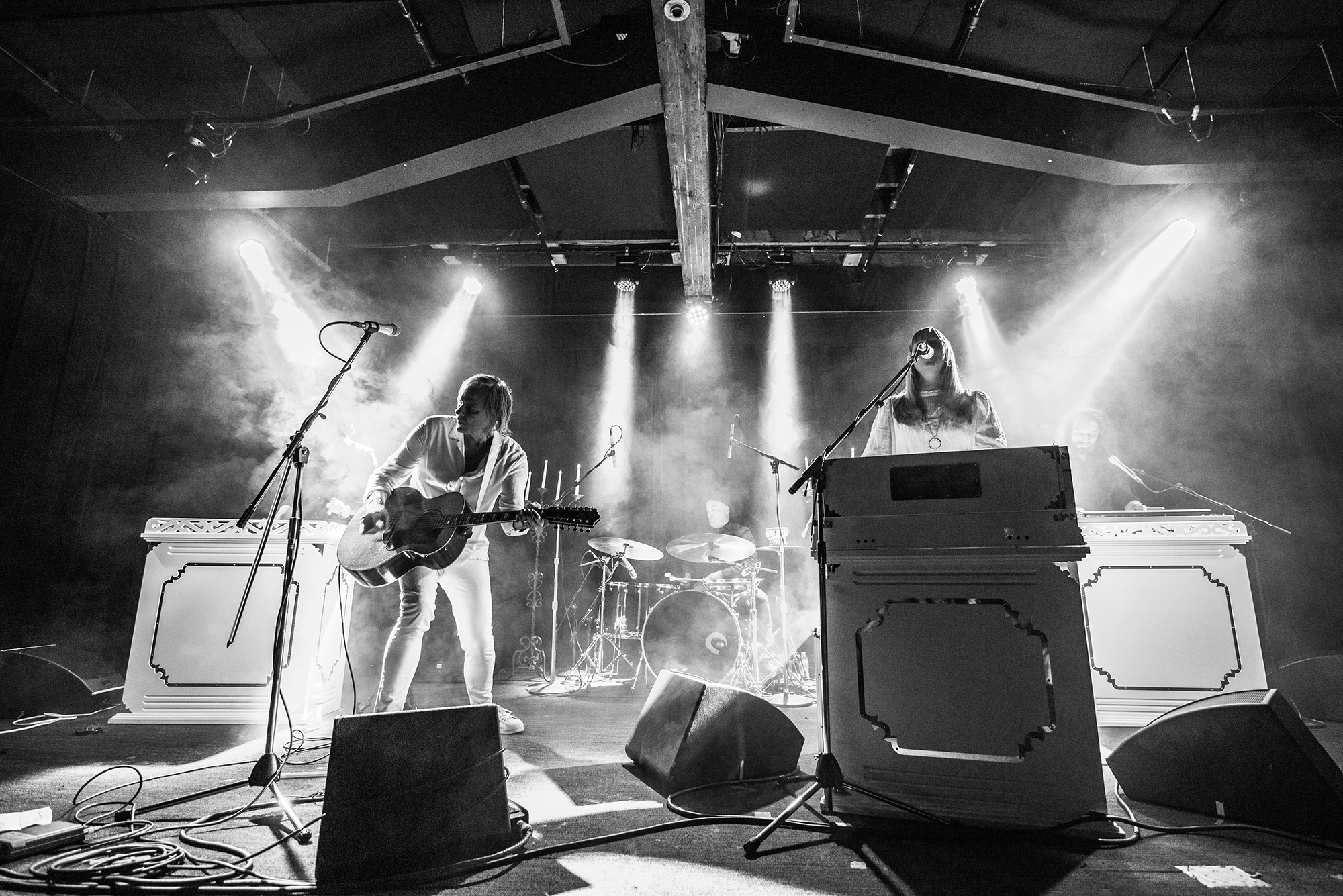 Society of the Silver Cross Interview
“I have my experiences and others have theirs. That's what is great about music.“
Video
