Published
Name: Felipe Puperi aka Tagua Tagua
Nationality: Brasilian
Occupation: Producer, songwriter
Current release: Tagua Tagua's Todo Tempo EP is out May 24th 2024 via Wonderwheel.
Recommendations:
Book - La Plaça del Diamant (Mercé Rodoreda // Barcelona)
Album - O Reino dos Afetos (Bruno Berle // Brazil)
If you enjoyed this Tagua Tagua interview and would like to know more about his work, visit his official website. He is also on Facebook, and Instagram.
When I listen to music, I see shapes, objects and colours. What happens in your body when you're listening? Do you listen with your eyes open or closed?
It really depends on the mood I'm in at the time I'm listening.
I mainly feel the music, I don't think about it. It brings back memories. I can remember some specific days and moments I've experienced when I listen to music.
Entering new worlds and escapism through music have always exerted a very strong pull on me. What do you think you are drawn to most when it comes to listening to and creating music?
Like I said, it's important for me to feel the music. Sso when I'm creating it, I keep going until I find that feeling, until I create something that makes me travel without moving, something that I want to listen to over and over again.
What were your very first steps in music like and how would you rate the gains made through experience?
I started very young, at the age of 6. My mother took me to music classes. I hated it. Then, when I was 13, something changed and I learned some instruments. I fell in love with it, it never stopped.
Learning music at this age was very important for me because it's an age where you don't understand many things, not even your own feelings.
Music was a safe place, where I could put all my fears, insecurities and doubts without fear of being judged by others.
According to scientific studies, we make our deepest and most incisive musical experiences between the ages of 13-16. What did music mean to you at that age and what’s changed since then?
It was exactly at that age that I started to discover myself through music.
Everything changed after that, I was able to feel the world more, I made different friends, people who had the same connection with music as me. It was a new world of possibilities.
How would you describe your own relationship with your instrument, tools or equipment?
Once I was more attached to instruments than I am today. But these things awaken my creativity, so I see it as sacred for me.
Where does the impulse to create something come from for you? What role do often-quoted sources of inspiration like dreams, other forms of art, personal relationships, politics etc play?
Everything can be an inspiration. I get a lot of inspiration when reading something that touches me, or when experiencing a specific situation - an enchantment, a breakup, someone's problem, someone's story.
Even dreams. I have a song (4AM) that talks about it.
Are you acting out parts of your personality in your music which you couldn't or wouldn't in your daily life? If so, which are these? What, would you say, are the key ideas behind your approach to music?
Probably yes, because I generally like to think about the characters in my lyrics. These characters may have a different personality than mine, sometimes more extroverted, or perhaps deeper.
Music needs to communicate in any way, even without saying anything. An instrumental song can be as powerful as an anthem for me.
If music is a language, what can we communicate with it? How do you deal with misunderstandings?
I like the idea that this language can be interpreted in different ways. I can listen to a song with my perspective, my traumas, memories, values and you can feel the total opposite.
Maybe this is the only language that allows this without being a mess.
Making music, in the beginning, is often playful and about discovery. How do you retain a sense of playfulness and how do you still draw surprises from tools, approaches and musical forms you may be very familiar with?
This is tricky for me. But as I consider myself a creative person, a different tool or instrument brings a new perspective and usually opens my mind. So, I know it's important to try different things, environments, instruments, platforms or tools.
The new is exciting. When you play an instrument for the first time, when you see a landscape for the first time. I believe that this kind of thing is fuel for my creativity.
Sound, song, and rhythm are all around us, from animal noises to the waves of the ocean. What, if any, are some of the most moving experiences you've had with these non-human-made sounds? In how far would you describe them as “musical”?
Oh yes, I listen to a lot of music in nature. Even in silence.
But I love the way a bird can inspire a melody, I also love how waves can create cycles, sounding repeated, but never the same.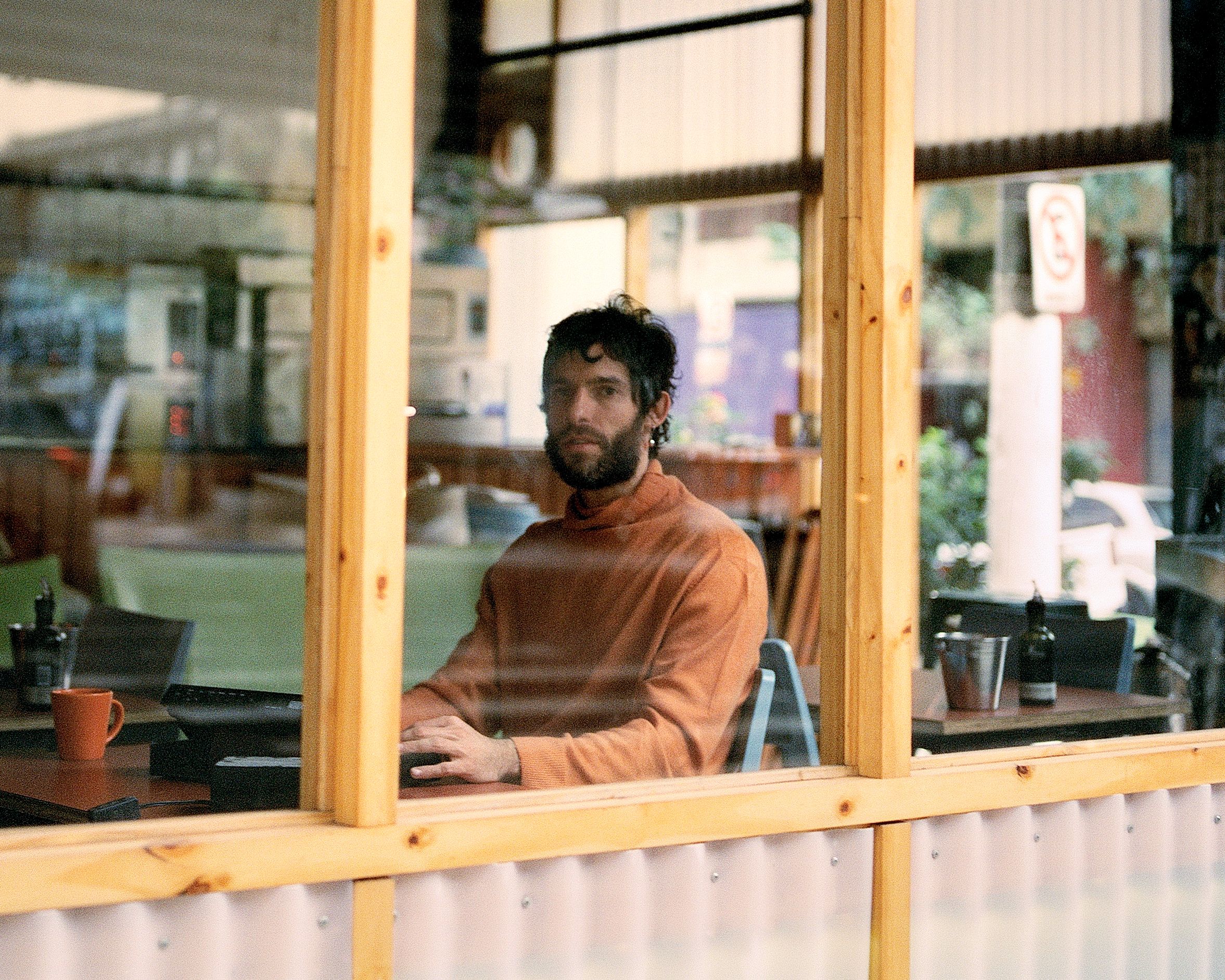
Tagua Tagua Interview Image by Guillermo Calvin
There seems to be an increasing trend to capture music in algorithms, and data. But already at the time of Plato, arithmetic, geometry, and music were considered closely connected. How do you see that connection yourself? What aspects of music do you feel can be captured through numbers, and which can not?
I see this kind of thing happening, but I don't really care that much.
Of course, music is mathematics, we cannot deny it. If you've ever studied music theory this is pretty obvious, but the beauty is how you can take something so exact and do it by feel, going beyond numbers and combinations. It's magic.
That's what I believe, not Spotify's algorithms and numbers.
How does the way you make music reflect the way you live your life? Can we learn lessons about life by understanding music on a deeper level?
Music gives me a sense of responsibility. The music I make matters to a lot of people, they want to hear what I have to say, they can feel what I express. So I have this little power to give voice to the things that matter.
I can help people with this, I can change things with this. That's a lot, you know? And it's actually quite beautiful.
We can surround us with sound every second of the day. The great pianist Glenn Gould even considered this the ultimate delight. How do you see that yourself and what importance does silence hold?
Silence is everything and it is rare. Really. As you mentioned before, even in nature there are a lot of sounds happening all the time ... so it's hard to be silent.
But I love it. Sometimes I need to spend a long period of time in silence, without listening to anything to bring the music back to my imagination. Especially when I'm composing, I try to stop listening to other things.
Do you feel as though writing or performing a piece of music is inherently different from something like making a great cup of coffee? What do you express through music that you couldn't or wouldn't in more 'mundane' tasks?
I agree, I see art in everything. A surgeon is an artist, no doubt.
The fact is that in music I can express some kind of subjectivity in the form of imagination that maybe in “mundane” tasks it wouldn’t be possible. I’d risk saying I'm allowed to be a daydreamer.
If you could make a wish for the future – what are developments in music you would like to see and hear?
I wish AI wouldn't keep making music instead of humans.