Published
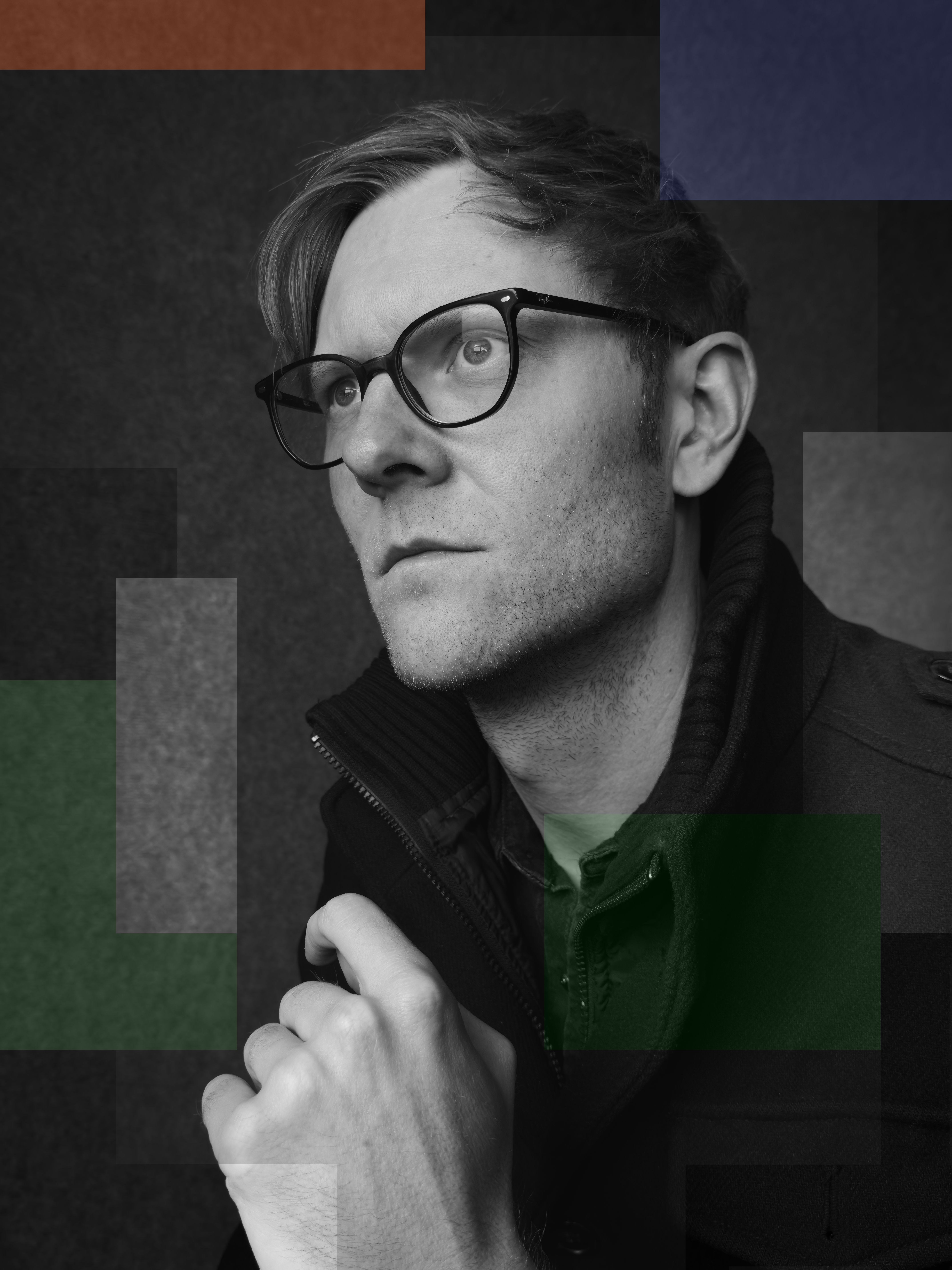
Name: Thomas Stieger
Nationality: German
Occupation: Composer, bassist, improviser
Current release: Thomas Stieger's Choices is out now. It features contributions by and collaborations with Randy Brecker, Will Lee, Tim Lefebvre, Wolfgang Haffner, Alma Naidu and Simon Oslender.
Recommendations: Dollar Brand - African Marketplace (Album); Jaco: The Extraordinary and Tragic Life of Jaco Pastorius by Bill Milkowski
[Read our Tim Lefebvre interview]
[Read our Simon Oslender interview]
If you enjoyed this Thomas Stieger interview and would like to know more about his music, visit his official homepage. He is also on Instagram, and Facebook.
Thomas answered a previous version of the 15 Questions for his quartet Marriage Material. Read it here.
When I listen to music, I see shapes, objects and colours. What happens in your body when you're listening? Do you listen with your eyes open or closed?
I usually listen with my eyes open - sometimes I feel like music can be kind of a soundtrack to certain moments in life.
Whether I’m traveling by train or plane, walking or just sitting somewhere and just listen; I feel music helps to put you in a different kind of mood. It can wake you up, help you relax, brighten your mood or do the exact opposite, it can give you focus and strength - and smoothen the rough edges.
Entering/creating new worlds through music has always exerted a strong pull on me. What do you think you are drawn to most when it comes to listening to and creating music?
I know that a good groove or an interesting rhythmic idea or feel helps me with creating music; that doesn’t mean it has to be super intricate but rather make me feel something. Even though I’m not a good dancer I’m very drawn to the rhythmic movement of a track, whether I’m creating or just listening.
I’m also noticing that the older I get the more I appreciate space in music. I like hearing details and letting room for them.
The second thing I’m drawn to immediately is melody and that is directly connected to the harmony of an idea; the underlying harmony always defines the moments of tension and release in a melody and puts it into context.
According to scientific studies, we make our deepest and most incisive musical experiences between the ages of 13-16. What did music mean to you at that age and what’s changed since then?
Music meant pretty much everything to me at that age - listening to music always was the fastest way to escape from reality.
Further on, when I discovered playing with a band and played my first gigs I immediately knew that that was what I wanted to do - to be part of a team on stage against the rest of the world. Moreover, at the age of 15, I seriously started to practice the bass and dive into theory and transcriptions.
Since then, not much has changed in my relation to music, it is still the most important thing in my life and there’s no replacement for the joy of being on stage and playing for an audience.
Tell me about one or two of your early pieces that you're still proud of (or satisfied with) – and why you're content with them.
There’s a ballad I wrote entitled “Changes“ that I’m still proud of, I love to play it live and it still is challenging to play.
The harmony is quite simple but complex at the same time; I feel like this piece really mirrors my personality and the way I feel music.
What is your current your studio or workspace like? What instruments, tools, equipment, and space do you need to make music?
At the moment, it is just a laptop, a pair of headphones, an interface, a bass guitar, a keyboard and an electric guitar (sometimes an SM57). That’s pretty much all I need to write/compose and get inspired.
For more sophisticated recordings such as drums or acoustic piano I like to go to a professional recording studio with great rooms and mics though.
From the earliest sketches to the finished piece, tell me about the creative process for your current release, please.
This first solo recording was super special for me - many songs evolved over a longer period of time; I had a first sketch, then I let it sit for a while and then went back to it later again. I wanted to give the material time to develop, like a good wine. So this time it was quite a slow process which I enjoyed a lot.
On this album, many songs came from initial harmonic or melodic ideas. That informed the instrumentation quite early on in the process which led to the arranging, in some cases quite ambitious arrangements for string quartet and brass sections.
After recording the basic tracks and all the overdubs, the editing and mixing stages are still quite challenging for me. You want to make the music comprehensible for the listener; at the same time you want to surprise yourself with fresh choices and give the music a new perspective.
In the end, you have to be ok with the fact that it’s never going to be perfect, a record is a document of everything you felt in all those countless hours writing and producing - and that’s the beauty of it, you have to embrace that.
What role and importance do rituals have for you, both as an artist and a listener?
To be honest, rituals are not important for me, I really don’t have any - except for my morning coffee.
Are you acting out parts of your personality in your music which you couldn't or wouldn't in your daily life? If so, which are these?
Yes, definitely. I guess there are many side of my personality that are kept under control in real life; definitely the super adventurous kind, sometimes the super dark side and then again the super happy one.
I guess you would describe my personality as quite controlled. Anyway, I guess that this is also the reason why I make music - to let all those extreme emotions come out somehow.
Late producer SOPHIE said: “You have the possibility [...] to generate any texture, and any sound. So why would any musician want to limit themselves?” What's your take on that?
I feel the exact same, why would you do that? I think that creating new sounds and textures is super important in this art form, the world keeps turning and so should music and art. I always admired artists that create their own world, something that is not comparable - that is what I want to hear and see.
Having said that, limitations can be a creative tool as well sometimes, especially at this point in time. Having all the options in the world can be overwhelming; I also find myself scrolling through all the possible options of combining sounds instead of focusing on the core of the music.
I guess the art is to find that balance between looking for fresh new ways while also limiting yourself.
Do you feel that your music or your work as an artist needs to have a societal purpose or a responsibility to anyone but yourself?
Good question, I don’t think it needs to have a societal purpose.
Having said that, I would like to think of my music as something that should give positive energy - even though it has its dark moments.
Once a piece is done and released, do you find it important that listeners understand it in a specific way? How do you deal with “misunderstandings?”
I find it rather interesting how people pick up a song - I’m not too concerned about misunderstandings.
Since my music is instrumental most of the time, I think it’s great that people use their own imagination while listening to a piece. I am happy as long as people feel something when they listen to my music.
Sound, song, and rhythm are all around us, from animal noises to the waves of the ocean. What, if any, are some of the most moving experiences you've had with these non-human-made sounds? In how far would you describe them as “musical”?
I love sitting and walking in nature and just listening to all the surrounding sounds - they all have rhythm, harmony and melody - well, in the end everything is rhythm anyway.
In fact, the last track on this album, “Ocean“ is obviously inspired by the sounds of the water and the waves - and the light feeling that I get when I’m standing by the water and forget all my sorrows and just enjoy the moment.
We can surround us with sound every second of the day. The great pianist Glenn Gould even considered this the ultimate delight. How do you see that yourself and what importance does silence hold?
This is a very interesting question; nowadays you have the greatest music available at all times, pretty much everywhere you go. When I grew up, that was different, you had to go to a record store and do your research to find the new hip stuff.
I sometimes wonder if this is overwhelming for people and if they still appreciate the art form of recorded music; or if it’s just becoming a kind of “background noise”. That is such a strange thought because music (in every form) means so much to me and I know the work that goes into it.
I can say for myself that silence is super important, it helps me to appreciate the fresh musical ideas in my head more and it recharges my brain and resets my thought processes.
Do you feel as though writing or performing a piece of music is inherently different from something like making a great cup of coffee? What do you express through music that you couldn't or wouldn't in more 'mundane' tasks?
Well, there are no rules when it comes to writing music. I think that’s what always fascinated me; we know if it’s good or bad but how we get there doesn’t really matter, nobody cares if you know chords or scales as long as you transport something in your music.
I guess that is the main difference to making a great cup of coffee, the way you get there is pretty much laid out.
What is a music related question that you would like to ask yourself – and what's your answer to it?
Who is the most important band leader (and mentor) you shared the stage with?
My answer would be: Wolfgang Haffner.