

Name: Varv
Members: Andrea Cappi (keyboards), Francesco Mascolo (drums)
Interviewee: Andrea Cappi
Nationality: Italian
Current release: Varv's Lowlands is out via Off.
Recommendations: Since I don't like to make lists that cover a broad span of time, I'll recommend something I've enjoyed in recent months. Spring, Summer, Fall, Winter ... and Spring is a famous film by Kim Ki-duk that explores the cycle of life.
For music, I recommend a recent album: Refract by Jason Moran, Marcus Gilmore and BlankFor.Ms.
If you enjoyed this Varv interview and would like to know more about the band and their music, visit the duo on Instagram, and Facebook.
When I listen to music, I see shapes, objects and colours. What happens in your body when you're listening? Do you listen with your eyes open or closed?
Most of the time when I listen to music, I find myself in the living room at home. Usually, I am lying on the couch with my eyes looking upward. My eyes remain open and usually fixed on a random point on the ceiling.
My listening is quite rational, where I am intent on perceiving what the various instruments are doing and, if I try to visualize some image, this is what I see: the musicians intent on playing and constantly making choices that direct the music.
Entering new worlds and escapism through music have always exerted a very strong pull on me. What do you think you are drawn to most when it comes to listening to and creating music?
During my teenage years, music meant being able to cultivate a deep interest and embark on a process of discovery. I had had other small passions, mostly fleeting, but nothing comparable to what happened with music.
So for me, rather than representing an escape from reality, music has represented and still represents reality itself. It is a constant source of fun and exploration ... it involves fairly repetitive and mechanical situations alternated with others of great intellectual and spiritual height ...
It includes the awareness of one's mistakes and the effort required to correct them: it is a life experience in its deepest essence.
What were your very first steps in music like and how would you rate the gains made through experience?
I started playing the piano at the age of 10 in a small private school. At first, I wasn't very interested; I didn't enjoy playing other people's pieces that much. I wasn't a good student, so I eventually quit.
Years later, I picked it up again, and something had changed. I began writing my own music, simple at first, based on my very basic background. However, I was able to discover things on my own with my instrument, and that was fascinating. Shortly after, I started listening to jazz, and this, along with resuming academic studies, opened my ears to new harmonies and new ways of communicating through music.
Since then, I have spent the vast majority of my time trying to discover something new in this world. Trying to improve as a musician and constantly keeping an open mind, allowing oneself the benefit and especially the insecurity of doubt, is a mental attitude that gradually becomes a lifestyle.
According to scientific studies, we make our deepest and most incisive musical experiences between the ages of 13-16. What did music mean to you at that age and what’s changed since then?
Unfortunately, as I mentioned earlier, at that age I almost completely stopped playing ... I certainly still pay the consequences of this and I deeply regret it.
My most impactful musical experiences, from an emotional point of view and in terms of the speed and quantity of absorbing notions, date back to a few years later ... I would say between the ages of 19 and 25.
How would you describe your own relationship with your instrument, tools or equipment?
It was a very 'physical' relationship for many years.
As I believe happens to many musicians, you almost constantly need to touch your instrument and feel that you have control over it: sensing that your hands are ready and have that right feeling with the keyboard that allows you to realize the ideas you have in your head. Unfortunately, this does not always happen, or in any case, it is a process that takes a lot of time.
Lately, however, by approaching instruments other than the traditional keyboard, like in our track “White Kitten” where I almost exclusively play Arturia’s Microfreak synth. I think I’ve developed a slightly different relationship, less physical, less focused on instrumental technique, and more inclined towards general listening.
I believe this has partly freed me from some of my paranoia derived from self-judgment ... although the road is still long.
Where does the impulse to create something come from for you? What role do often-quoted sources of inspiration like dreams, other forms of art, personal relationships, politics etc play?
As far as I'm concerned, what stimulates me to write or create original music can have very different roots.
For example, the tracks on the recent Varv album (Lowlands) came to life from a sort of workshop where Francesco and I delved into certain aspects of music. The idea was to choose a few elements to use, starting, for example, from a sound or a group of notes, and to work on that together to see where it would lead.
Obviously, the choice of this initial inspiration can stem from different things: some more rational, like listening to musical material, others more emotional, like our mood regarding something we are experiencing at that moment or, as you mentioned in your question, it can come from other forms of art.
For instance, I am very passionate about cinema and during the production of this album, I binged on Asian films, especially Korean and Japanese ones. I can't tell you how much they influenced the music on the album, but they certainly led me to various reflections that I believe, even if only implicitly, influenced my work during that period.
Are you acting out parts of your personality in your music which you couldn't or wouldn't in your daily life? If so, which are these? What, would you say, are the key ideas behind your approach to music?
In music, I feel very free in terms of expression. Musically I always try to express myself without boundaries, without seeking to belong to a specific genre where one would expect a certain sound and language.
On our album Lowlands you’ll find very free and loose moments that leave a lot of space for improvisation (such as our track “All Fulness”), others on which everything is written and predetermined (such as “Drizzle”), others with more experimental sounds (“White Kitten”), and even unexpected genres such as electro-rock (“Kings Of Weno”).
I really enjoy alternating between written music and improvisation, dosing these two elements in different quantities depending on tracks throughout an album.Moreover, I like to alternate between written and improvised music, mixing these two elements in different proportions ...
On the album, you can hear various examples of what I’m talking about. It is therefore an extremely free situation that might seem chaotic and lacking a precise direction, but it is what I feel like doing at this moment.
If music is a language, what can we communicate with it? How do you deal with misunderstandings?
As I mentioned earlier, studying jazz music at the conservatory has helped me immensely to understand how and in how many ways musicians can interact with each other. Jazz and improvised music are certainly musical expressions that have taken the concept ofinstruments dialoguing to the extreme, from the call and response typical of blues music to the experiments of free jazz.
Thus, if we accept to speak with music as we do with words, it may happen that we agree and both strengthen each other in our starting theses, or we may be in contrast, and perhaps the situation becomes even more interesting ... this contrast can end in essentially two ways: either one eventually fully accepts the other's positions and follows them, or both arrive at something new that is the result of a compromise between the parties.
Therefore, even misunderstandings can serve as a stimulus to introduce new topics and, in music as in life, to learn something new.
Making music, in the beginning, is often playful and about discovery. How do you retain a sense of playfulness and how do you still draw surprises from tools, approaches and musical forms you may be very familiar with?
Unfortunately or fortunately, there is nothing about music that I know so thoroughly as to avoid being surprised. This element of surprise is still very present in any subject I choose to tackle in a given project.
The difficult thing nowadays is where and what to study/listen to and thus how to ensure a certain discovery during the "game". There are so many good musicians, so much informative and educational material, but also a lot of garbage and many avoidable things, so I believe the key is precisely this: being able to choose among this vast amount of material.
Sound, song, and rhythm are all around us, from animal noises to the waves of the ocean. What, if any, are some of the most moving experiences you've had with these non-human-made sounds? In how far would you describe them as “musical”?
I would say that the experience of ‘musique concrète’ dating back to the mid-20th century, and subsequently rooted and absorbed in subsequent and contemporary experiences, has definitively expanded the concept of music. Sounds derived from musical instruments alternate with noises that are "stolen" from nature and moments of everyday life, such as the voices of passersby and the sounds of vehicles.
I don't have enough historical and aesthetic knowledge of music to provide even a vaguely comprehensive answer on the subject of what "music" is or isn't. However, I can say that, as far as I'm concerned, any experience involving sound elements, such as changes in their characteristics, like the envelope (attack, sustain etc ...), filtering, or modifications in intensity, duration, and so on ... all these experiences have to do with music.
Personally, some memories from my childhood always have a musical or sound element accompanying them, as if this contributed to rooting them even more deeply in my memory.
Lately, I've gotten used to getting up very early, and what I like most about this time is being able to slowly perceive all the sounds as the city gradually wakes up and resumes its daily activities.
There seems to be an increasing trend to capture music in algorithms, and data. But already at the time of Plato, arithmetic, geometry, and music were considered closely connected. How do you see that connection yourself? What aspects of music do you feel can be captured through numbers, and which can not?
It's clear that there is a deep connection between music and mathematics.
Just consider the relationship between frequencies, the division of the musical scale into twelve tones, and much more. It's a profound connection that is further developed and studied in certain fields, such as electronic and experimental music.
I believe that applied sciences in art, like mathematics or physics, are the greatest tools for accessing new artistic expressions. In music, this is evident, for example, in the construction of new instruments created in modern times such as synthesizers or samplers.
However, understanding how many and which aspects of music can be captured through numbers, and therefore through something extremely rational and repeatable, is not easy. For example, reproducing the human voice is an element that is difficult to replicate through numbers.
How does the way you make music reflect the way you live your life? Can we learn lessons about life by understanding music on a deeper level?
The life of a musician involves hours of constant practice and research. To do this, a great deal of self-discipline is needed, pursuing the best possible time management.
Each person has their own rituals, habits, and methods that they acquire over time through the teachings of other musicians, but also and above all through the synthesis of their own journey and experiences, gradually choosing the things they feel most connected to and want to delve deeper into.
In the end, this subjective management of the time dedicated to music (and to all other artistic and non-artistic resources that one can draw upon and that can influence their choices in the field of music) becomes the distinctive trait of a musician, what sets them apart from others and leads them to do certain things rather than others. I think this constitutes an important lesson about life too.
We can surround us with sound every second of the day. The great pianist Glenn Gould even considered this the ultimate delight. How do you see that yourself and what importance does silence hold?
There is a quote by Cage that goes: 'I realized that there is no real and objective separation between sound and silence, but only between the intention to listen and the intention not to.'
Complete silence is unachievable ... so we can always hear something, such as our heartbeat. What we consider silence is just a condition where it becomes more challenging to hear something. And therein lies its importance.
Do you feel as though writing or performing a piece of music is inherently different from something like making a great cup of coffee? What do you express through music that you couldn't or wouldn't in more 'mundane' tasks?
I have always thought of music as a craft in which the musical instrument is nothing more than a tool with a purpose. We should know as much as possible about that tool because the better we learn to use it, the better we can make use of it.
For this reason, I believe there is not much difference between 'making music' and doing many other things that we consider more mundane. It always depends on the intention, how subjective we make that thing, and the care we put into doing it.
If you could make a wish for the future – what are developments in music you would like to see and hear?
I would like those who are interested in music, whether they are musicians, other industry professionals, or simply listeners, to make more effort to attend concerts and support local initiatives, provided they find them worthwhile.
Too often, out of laziness—and I include myself here—we do not sufficiently strive to appreciate what we already have around us. I believe this is the starting point for hoping for greater support from cultural policies.

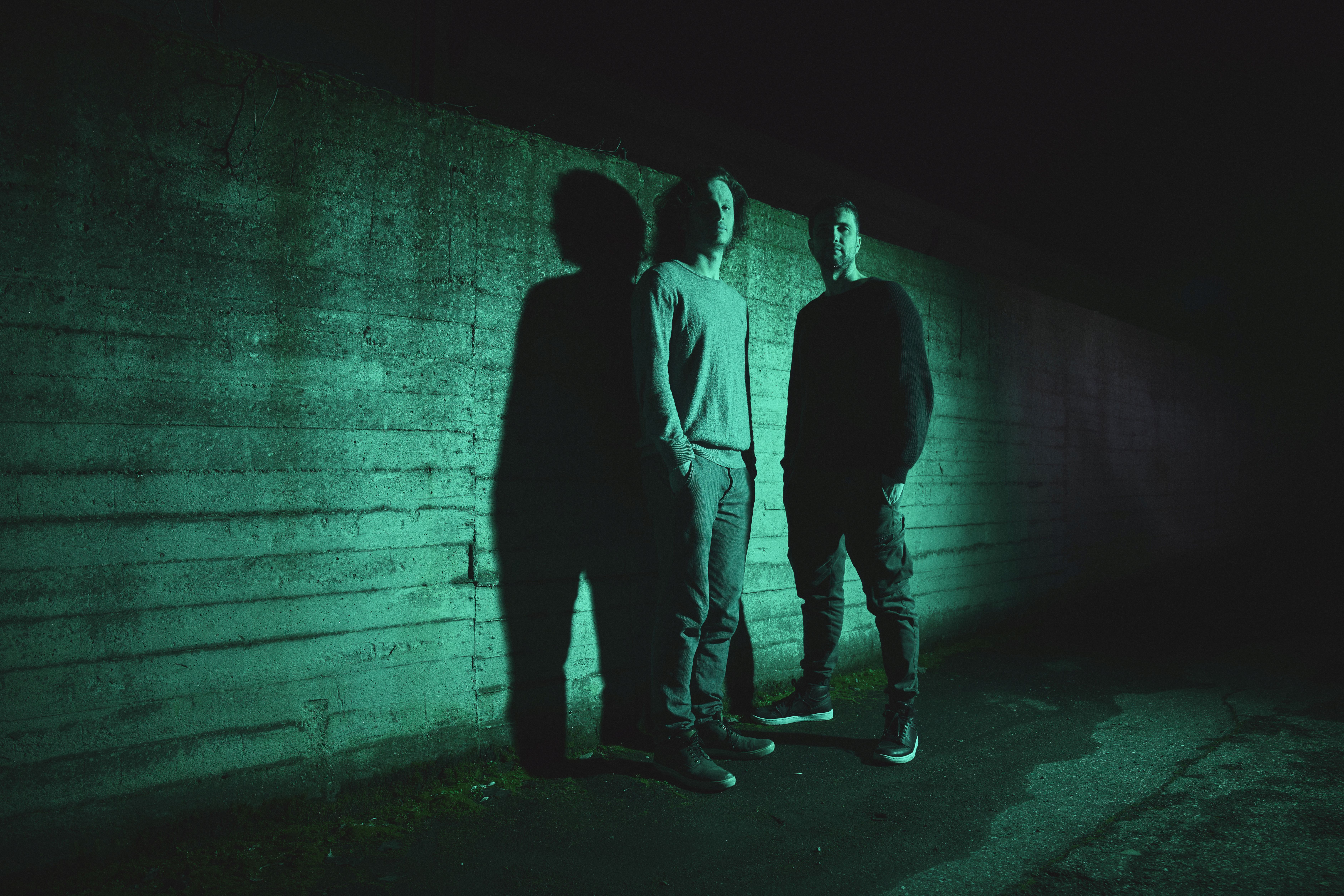 Varv Interview Image (c) the artists
Andrea Cappi: "The element of surprise is still very present in any subject I choose to tackle in a given project."
Video
