Published
Part 1
Name: Your Favorite Color
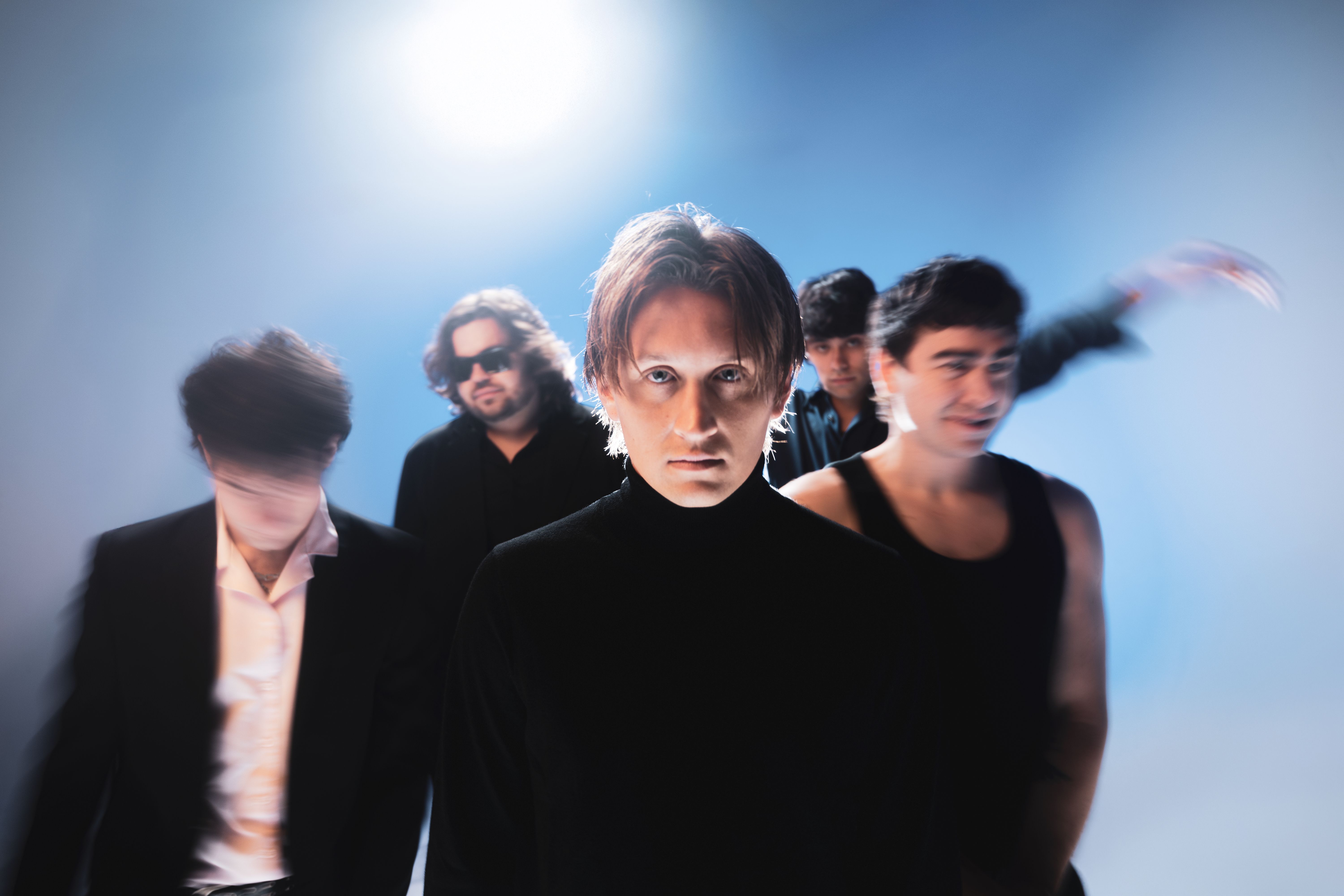
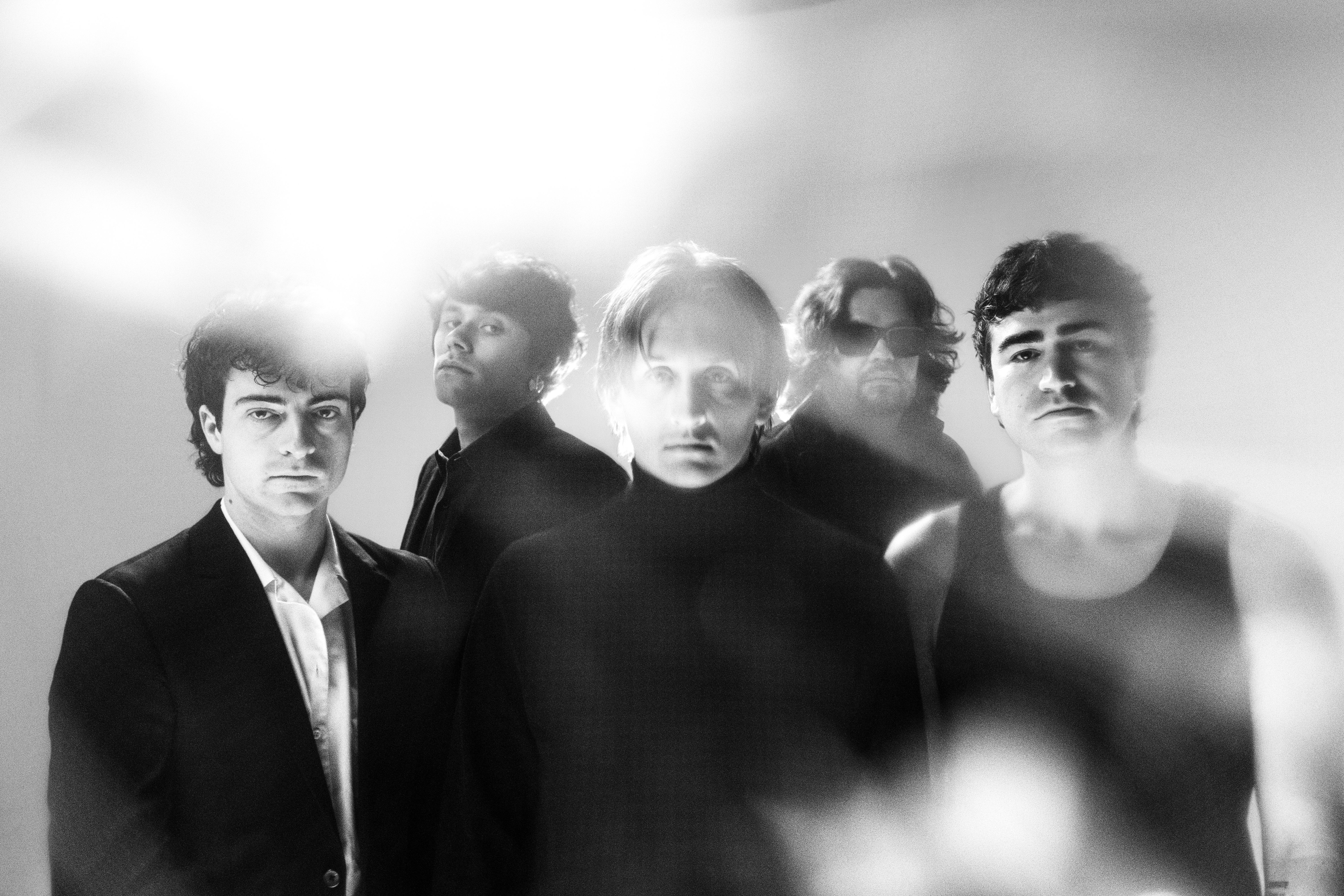
Members: Matt Warren (vocals), Nicky Neighbors (keyboards), Cameron Pearson (bass), Matthew Fosmire (drums), David Silveria (guitar)
Nationality: American
Current release: Your Favorite Color's debut album For You is out via Prajin.
Recommendations:
Cameron: There's an artist, a very famous artist, that inspired has inspired a lot of music in me. His name is, Francis Bacon. There’s a king or something called Francis Bacon. There's a just a lot of paintings by Francis Bacon that I look at, and the feelings that it invokes in me inspire, like, lines and songs or guitar parts and stuff like that. That was a big one for me.
Also the music of John Cage. He inspired me to have a very experimental mindset when it comes to composing music and thinking outside the box and playing instruments wrong and that there is no correct way to play music. It's just about owning it and loving it.
Matt: Two pieces of art that I would recommend would be 2001 A Space Odyssey by Stanley Kubrick, from the late 60s. Very eye opening movie. Pretty transcending. Also, an artist called Tomcbumpz.
Nicky: I would say, something a little bit more niche or a little more artsy. On YouTube there’s a surfing movie called Psychic Migrations, and that, I think, is a beautiful video to watch because of the soundtrack, the colours, and the lighting in it. You're watching these people basically dance on the water. I think that's a really sick piece of art.
Any surfing movie in general is really inspiring. I feel like a lot of people in the general public don't know about them. Maybe Psychic Migrations then another surf movie called Cluster. Those are fire.
David: Tenet by Christopher Nolan, the movie. The second one thing is To Kill A Mockingbird.
If you enjoyed this Your Favorite Color interview and would like to know more about the band and their music, visit their official homepage. They are also on Facebook, and tiktok.
When I listen to music, I see shapes, objects, and colours. What happens in your body when you're listening to music? Do you listen with your eyes open or closed?
Matt: My eyes can be open or closed. Mostly, I'll see and feel scenes almost similar to movies. Usually, they're very specific or grand, like the type of vision you would get when you read a book and you're imagining what's happening when you have this movie in your head playing as you're reading or listening along. Sometimes it's visions of a person. Sometimes it's visions of yourself. And sometimes, you know, feelings of sadness or happiness or hopefulness.
Typically, my favourite songs are the ones that make me feel emotionally confused. You know, getting a mixture of happiness and sadness, kind of a balance thing. Sometimes in colour as well.
Nicky: Yeah, sometimes a good song can make you play out a scene, and I like when everything in the song aligns and then you get some goosebumps. That's kind of the best feeling for me.
Entering/creating new worlds through music has always exerted a strong pull on me. What do you think you are drawn to most when it comes to listening to and creating music?
Matt: I typically get drawn to feelings in music that explore hardship and struggle, but still carry signs of hopefulness and triumph to become the best version of yourself. I try not to be too inspiring because I don't wanna come off like a motivational band. But at the same time, there usually is some sort of self-talk always happening and inner conflicts and trying to overcome them or deal with them in some sort of way.
Nicky: I think it's cool when tonally songs feel like they're beautiful, but a little bit broken at the same time - or like a machine, it wants to be a good version of itself, if that makes any sense.
Cameron: For me, it’s definitely a form of the highest quality, the highest grade escapism I can get in this life.
According to scientific studies, we make our deepest and most incisive musical experiences between the ages of 13 - 16. What did music mean to you at that age, and what's changed since then?
Matt: To me, it was a form of identity in a town where I did not fit in with anybody.
Nicky: Oh yeah. That’s kind of the best form of expression. I remember listening to a lot of really fast punk music and needing to get energy out. So it's how you can rebel and then process your growing young brain and all of that.
Cameron: I agree with the guys. Like, I still have the same relationship with that music. It still pushes me to expand my music taste and what music is. I think every day since probably that age of 13, it's been challenged. And, you know, I'm always trying to find what makes certain songs good to my ears.
Around that that age, around 14/15, I started a band with another local friend of ours, and eventually Matt joined that band, when we're about 16 or 17 or something like that. That definitely was a huge turning point for all of us. I think we're like, ‘oh, you can actually do this and have fun with your friends’.
And I think ever since those days we've just always chased that that feeling, whether it's been separately and for separate projects, but now we're all here together and still doing the same thing because we really love it.
Tell me about 1 or 2 of your early pieces that you're still proud of and why you're content with them still.
David: I think some of our earlier stuff that I'm proud of is - it's not a deep cut because it's on Soundcloud, but, you know, we have some songs that we recorded and released on our own that I still think sound good for what they are. I'm proud that we did that ourselves without anybody producing it or mixing it. It was just all done in Matt's house by us.
The songs like ‘Flower Shop’ or ‘Humans’, songs like those.
Matt: There is an EP we released on Soundcloud, and I think one that sticks out to me isn't necessarily a song I totally relate with anymore or wanna play live anymore, but it was such a quintessential moment for our band, and it was a song called ‘Heartache’.
It was kind of the song that I think started this band.
It was a song I wrote in my room, and one of my friends came over. I showed it to him, and he twisted my arm to put it out. I did not think it was finished, but he twisted my arm to put it out. And I'd said, okay. Fine. So I put it out and got a little bit of buzz around my friends in high school. And I remember looking at it one day, and I'm like ‘woah, 400 plays in a day’. It's crazy.
That is ultimately what started a lot of the local friends that Cameron mentioned wanting to start a band because of that song. That's what led us to write more songs and eventually play live, and that's kind of how the band started was that song. So even though it's not what I want to play anymore or relate with totally, I have to be proud of it because it did kinda start everything.
Cameron: Matt became insanely popular in high school.
Matt: I became the coolest kid on the block, and everyone wanted to be my friend. I’m just kidding.
What's your current studio or workspace like? What instruments, tools, equipment, and space do you need to make music?
Matt: Right now, we have kind of two primary studios. One of them is at my house. I have a small studio, just an interface system, a few monitors to listen to playback, and then, like, a guitar and a bass, an SV7 vocal mic. A lot of the seeds of the ideas come from that room.
Then once we get it to a place where we're pretty happy with it, we'll if we think it's worth exploring more or taking the next level, we'll bring it to our studio and our producer in Tustin, California, Stefan Back, and that's when it really gets the sauce and the magic put on it to eventually get released.
Stefan has a wide range of modular synths, old vintage synthesizers, and, tons of how would you describe it, Cameron? Like, just, like, analogue gear that helps us get the most, like, robust sounds and mixes for stuff?
Cameron: Yeah, it is very professional. It has everything you need to have a really good sounding song is in that studio and a lot of cool instruments, things that can inspire new ideas.
From the earliest sketches to the finished piece, tell me about the creative process for For You.
Matt: The creative processes were all over the place. We took songs and old skeletons of songs that we wrote in high school, in college, all the way up until a few weeks before we recorded the full album.
Again, most of the songs started out in my room, as basic ideas produced to the best of our ability. And then, typically, those songs come about by David or Nicky or somebody playing some sort of music that inspires a melody for me. Usually, the melody sounds like a bunch of gibberish, but maybe there's a line or two that come out of the song that are catchy that will try to that give us a little bit of a hint of a story, and then we'll try to flush out the rest of the story around that line or 2.
Once we flush out the skeleton and the lines, we then bring it into our studio and bring it to a more professional, robust sounding song, maybe rearranging the structure, maybe changing some of the lyrics, rerecording all the instruments or most of the instruments. Typically, that was the process for the album For You.
The song ‘For You’ came from a jam session, out in the desert. I feel like David really drove that song. He played on a new guitar he hadn't played before, and it definitely inspired a new playing style that kinda gave us an identity of, ‘oh, okay, this is the sonic sound we wanna go for. This feeling needs to resonate through the rest of the album.’ That song was kind of like a pinnacle song for the album.
What role and importance do rituals have for you both as an artist and a listener?
Matt: I don't have any rituals.
Cameron: I bet you do.
Matt: Maybe I do. I don't know about them. Like rituals in writing music?
Cameron: No. Like rituals like satanic.
Matt: Of course. I feel like I try not to get too in my head about when is an inspiring time or not. Like, I feel like you could always figure out a song if you just put in the work, and it's more just about sitting yourself down and getting after it and going for it and just making it happen.
Same with the live shows. You know, you're tired. You don't feel like doing it. You're out in a weird time zone. You feel sick, but you just you just have to show up. The show must go on.
You gotta keep writing songs. Writer's block, I feel like, doesn't really exist. I think that's just a thing in our heads, and you just gotta keep trying, and you'll eventually get it.