Published
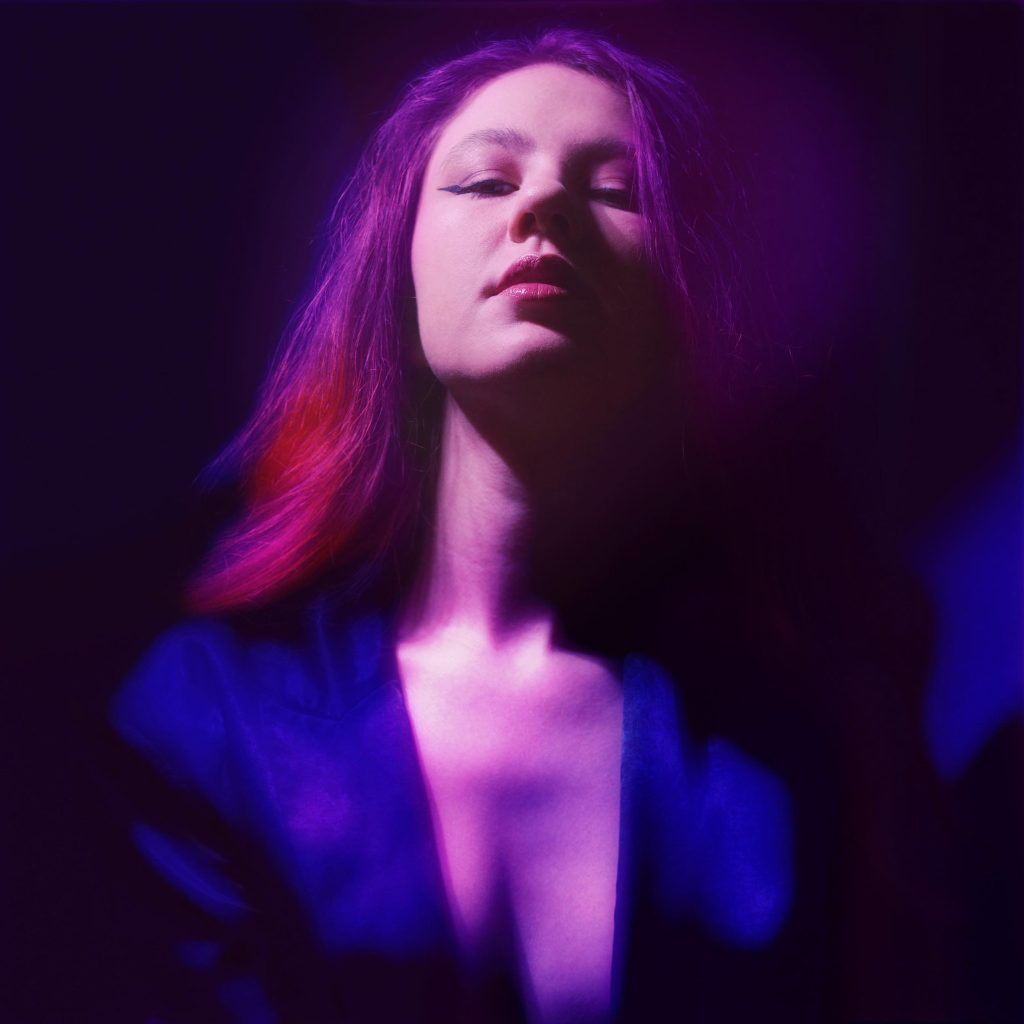
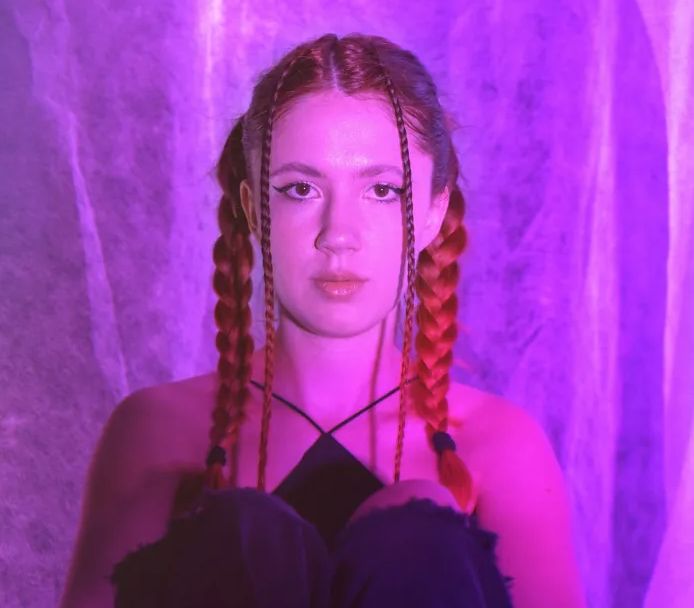
Name: Yvonne Mos aka Yvonne
Nationality: Romanian
Occupation: Singer, songwriter
Current release: Yvonne's new single “Should have Listened” is out now.
Recommendations: I used to read poetry, but I should start again if I think about it now.
Milk and Honey by Rupi Kaur inspired me a lot in the creative process. I also really liked Melanie Martinez's new album Portals, a very interesting rebranding of the artist.
Of course, you can stay tuned as there are many surprises from me that are worth listening to, very very soon.
If you enjoyed this Yvonne interview and would like to know more about her music, visit her on Instagram, Facebook, and tiktok.
When did you start writing/producing/playing music and what or who were your early passions and influences? What was it about music and/or sound that drew you to it?
My first guide to music was my mother, who decided to take me to learn classical piano. I was a child back then and for me, it was just a playground.
Later, when I grew up, the moment when I fell madly in love with music was when I felt the adrenaline on stage that cannot be compared to any other feeling.
The writing process was always there, but I needed validation from myself and the courage to make my story and experiences known - the courage to be vulnerable.
When I listen to music, I see shapes, objects and colours. What happens in your body when you're listening and how does it influence your approach to creativity?
For me, the mood that a song gives me matters a lot. Am I angry, am I sad? I want to beat someone when I listen to that song and that boils down to creativity. If I want to write a love song, then I'm looking for reference songs in this direction.
The song is always different depending on the vibe of the sounds it produces, not necessarily the lyrics.
How would you describe your development as an artist in terms of interests and challenges, searching for a personal voice, as well as breakthroughs?
Most of all, I think I find myself in ambition. Music showed me how many times you can lose only to to get a huge profit in the end. That's if, of course, you don't give up. Your focus needs to be in one direction once you discover it, and then no one can take away what you want to become one day.
I really think that I kept my own sound at the risk of not being liked by everyone. With all the ideas and thoughts put on paper combined with the sounds of my producer Vlad Rădoi, a true version of what I live and feel every day came out.
Tell me a bit about your sense of identity and how it influences both your preferences as a listener and your creativity as an artist, please.
Music must be lived. I've said it before and I'll say it again every time. When you identify yourself with what you say, you cannot lie to the people around you - and then it is normal for them to follow you, to listen to you.
I listen to any kind of music, if it's honest, I want to understand and experience the state that the artist wants to convey, whether it's Slipknot or Aurora, two different worlds.
What, would you say, are the key ideas behind your approach to music and art?
Continuity, the ceaseless search for ideas, and perseverance. If I don't sit down every day to compose or research music, it won't fall from the sky into my arms.
Inspiration comes from constantly working on new ideas, discovering new perspectives every day, and not dreaming about "how good it would be, if ..."
How would you describe your views on topics like originality and innovation versus perfection and timelessness in music? Are you interested in a “music of the future” or “continuing a tradition”?
I like to discover new appearances in music that resemble what I do. I find myself thinking about the present/future, but I don't say no to the past either. A good artist is and will always be good.
But I will always be all about originality and innovation, pushing boundaries rather than aiming for perfection or timelessness. I'm interested in shaping the music of the future, not just continuing the tradition.
Over the course of your development, what have been your most important instruments and tools - and what are the most promising strategies for working with them?
I think that belief in my own powers and the balance of focus helped me the most to stay on this path if it comes to cerebral tools. But the piano was always loyal to me and helped me compose and understand that any sound can be a melody.
The strategy is to remain constant in what you do, to transpose any new thing in the direction you want to follow, no matter how unusual and different it is.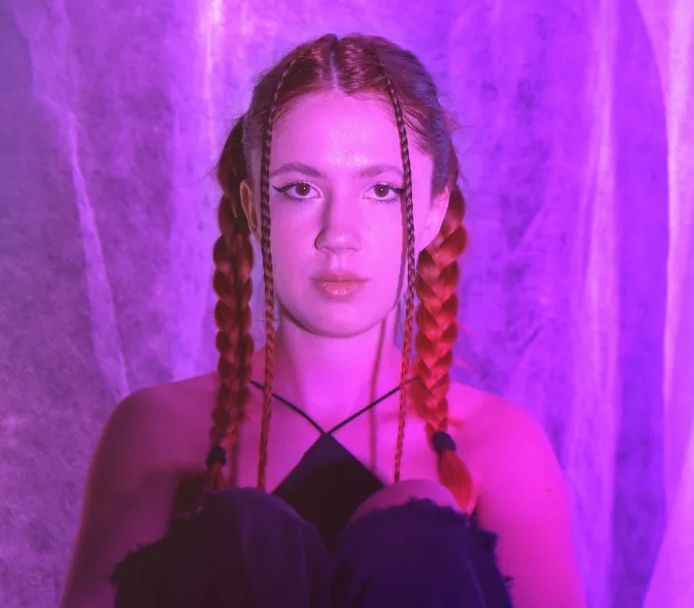
Yvonne Interview Image (c) the artist
Take us through a day in your life, from a possible morning routine through to your work, please.
This is an impossible question haha ... Every day is different, and at the moment I live in 3 different cities in Romania.
In addition to music, I am also continuing my master's studies in promotion and communication in German at Cluj-Napoca. I live in Timisoara to work a part-time job in marketing, in addition to music, because here I have the studio where the magic happens and I also periodically go to my hometown to visit my parents and close friends, in Lugoj. Sometimes I wonder how I can gather my thoughts …
However, a typical day starts with a very tasty coffee and ends with a glass of wine in the studio, composing a new song, finishing another, thinking strategically about the promotion of another, and planning a new video.
So it's almost impossible to determine a routine, but I can say that I can never get bored.
Could you describe your creative process on the basis of a piece, live performance or album that's particularly dear to you, please?
Take my latest song "Should have Listened" for example. The chorus was composed a year ago and I really liked the idea, but I couldn't continue it until a few months ago.
I have too many unfinished ideas that are looking for an end, and sometimes the end in the song is not yet a finished feeling in real life, if that makes sense. I really like to combine old ideas with new ones to bring back to life a memory and why not an emotion that I would not want to forget.
Of course, this is just an example. There are also cases where I manage to write a song in a few hours or less.
Listening can be both a solitary and a communal activity. Likewise, creating music can be private or collaborative. Can you talk about your preferences in this regard and how these constellations influence creative results?
In general, when I compose a new song, I cannot be surrounded by people. Whether it's someone known or unknown, I can't gather my thoughts and get lost in the sounds very easily.
If I manage to put some ideas on paper, I can improve and continue with other people, but I need a starting lead to have stability on what I want to create.
How do your work and your creativity relate to the world and what is the role of music in society?
I think that my music and not only music in general is like a breath of fresh air. You are free to feel and experiment in different ways, in your way of being, with the music you love.
There are no barriers when your body asks to be de-stressed and I think that this helps people in society to be free with what they feel in their soul, not only with what they "have" to do day by day.
Art can be a way of dealing with the big topics in life: Life, loss, death, love, pain, and many more. In which way and on which occasions has music – both your own or that of others - contributed to your understanding of these questions?
People who lived before can conceive art afterwards. I think that through art we can further understand what words cannot describe, what feelings really mean. Our body reacts even when there are no words or rational understanding and I think music can help when you don't know how you can be helped.
Music helped me de-stress and free myself, and that's what I'm trying to create through my music as well.
How do you see the connection between music and science and what can these two fields reveal about each other?
Music and science are like two sides of the same coin, both driven by curiosity and a desire to understand the world. While music evokes emotions, it also holds patterns and structures ripe for scientific exploration. Conversely, science, like music, requires creativity and intuition.
Together, they offer endless possibilities, from using music to enhance learning to employing scientific principles in music composition.
Creativity can reach many different corners of our lives. Do you feel as though writing or performing a piece of music is inherently different from something like making a great cup of coffee? What do you express through music that you couldn't or wouldn't in more 'mundane' tasks?
While both music and mundane tasks allow for creativity, music offers a deeper avenue for expressing emotions and experiences that transcend words or actions. It's like comparing a fleeting moment of pleasure to a symphony that reverberates through the ages.
Through music, I can pour my heart out in a way that feels truly authentic, capturing the essence of who I am.
Music is vibration in the air, captured by our eardrums. From your perspective as a creator and listener, do you have an explanation how it able to transmit such diverse and potentially deep messages?
Music's diverse and deep messages stem from its ability to tap into something primal within us, transcending language and logic. It's like a language of the soul, resonating with our emotions and experiences in a way that words alone cannot.
As creators and listeners, we're attuned to the frequencies of the universe, vibrating in harmony with the music that moves us.