Published
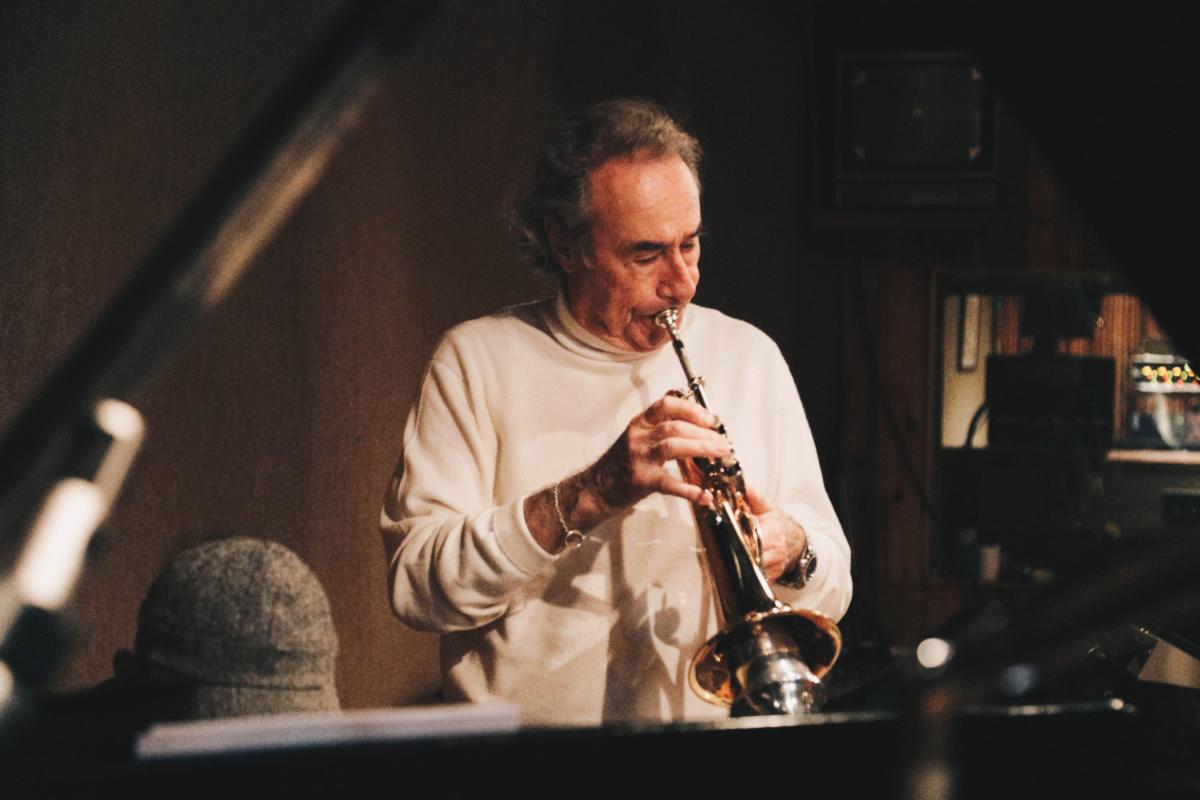
Name: Franco Ambrosetti
Nationality: Swiss
Occupation: Trumpet player, flugelhornist, composer, improviser
Current Release: Franco Ambrosetti's Sweet Caress is out via Enja. It features contributions by and collaborations with Alan Broadbent, John Scofield, Scott Colley, Peter Erskine, and Sara Caswell.
Recommendations:
Books: Konstantinos Kavafis, Poems; Gabriel Garcia Marquez, One Hundred Years of Solitude
Music: Giant Steps, John Coltrane; Turn Out the Stars, Bill Evans
Sculptures: Giacometti’s statues
If you enjoyed this Franco Ambrosetti interview and would like to know more about his music, visit his official website.
Do you think that some of your earliest musical experiences planted a seed for your interest in improvisation?
Yes, I definitely believe that I was influenced by my father who was a jazz musician (playing alto sax, and a bopper)
When did you first consciously start getting interested in musical improvisation? Which artists, teachers, albums or performances involving prominent use of improvisation captured your imagination in the beginning?
From the very beginning. In our house the only music was jazz.
Tell me about your instrument and/or tools, please. What made you seek it out, what makes it “your” instrument, and what are some of the most important aspects of playing it?
I started with piano lessons (classical).
When I was 18, I started to play the trumpet. Influences: Dizzy, Miles, Clifford Brown …
How would you describe your own relationship with your instrument – is it an extension of yourself/body, a partner and companion, a creative catalyst, a challenge to be overcome, something else entirely?
It’s a partner and companion.
But I also play piano, I compose and write with the piano. It's like a little brother.
Derek Bailey defined improvising as the search for material which is endlessly transformable. What kind of materials have turned to be particularly transformable and stimulating for you?
Jazz standards, jazz composers from Kind of Blue to Giant Steps.
Do you feel as though there are at least elements of composition and improvisation which are entirely unique to each? Based on your own work or maybe performances or recordings by other artists, do you feel that there are results which could only have happened through one of them?
Composing is a kind of improvisation. Of course, there are elements that are unique to each.
When you're improvising, does it actually feel like you're inventing something on the spot – or are you inventively re-arranging patterns from preparations, practise or previous performances? What balance is there between forgetting and remembering in your work?
When I improvise, it’s a new adventure every time. A new happening.
And a lot depends on WHO you’re playing with! INTERCHANGE! among each other.
Are you acting out parts of your personality in your improvisations which you couldn't or wouldn't through other musical approaches? If so, which are these? What, would you say, are the key ideas behind your approach to improvisation?
Improvisation shows who you are. It shows your mood, happiness, sadness, nervousness, etc.
But the idea is to respect the form and add something to the tune you’re playing.
In terms of your personal expression and the experience of performance, how does playing solo compare to group improvisations?
Group improvisation should be as short as possible, otherwise it’s simply a mess.
In your best improvisations, do you feel a strong sense of personal presence or do you (or your ego) “disappear”?
My personality appears in every improvisation I do.
In a live situation, decisions between creatives often work without words. From your experience and current projects, what does this process feel like and how does it work?
Sensitivity is the answer: you do feel when something has to be done while improvising. The drummer can give a hint, or the pianist, etc.
Like friends: you don’t have to talk, one look is enough to understand what he or she means.
Stewart Copeland said: “Listening is where the cool stuff comes from. And that listening thing, magically, turns all of your chops into gold.” What do you listen for?
I listen and learn from everything, jazz, folk, classical, from Bach to Hindemith, from Armstrong to Coltrane, from Indian ”raga” to “yodel.”
There can be surprising moments during improvisations – from one of the performers not playing a single note to another shaking up a quiet section with an outburst of noise. Have you been part of similar situations and how did they impact the performance from your point of view?
If somebody in my band doesn’t follow the rules, I finish the solo and fire the guy.
I have always been fascinated by the many facets of improvisation but sometimes found it hard to follow them as a listener. Do you have some recommendations for “how to listen” in this regard?
Learning the theme before the improvisation starts is a good way to understand the improvisation of any musician. Learning the sequence of chords (changes) is essential.
In a way, improvisations remind us of the transitory nature of life. When an improvisation ends, is it really gone, just like a cup of coffee? Or does it live on in some form?
Here's something that Gary Bartz once told me: After you've played the 12 bar blues for the first time, every time you play those 12 bars again, it's a continuation of the very same blues you played once many years before …