Published
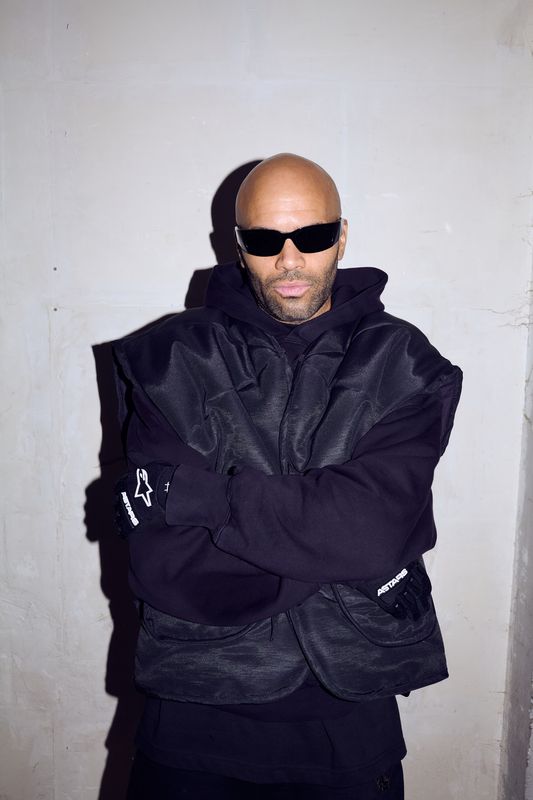
Name: François Xavier-Zoumenou aka Francois X
Nationality: French
Occupation: Producer, DJ
Current Release: François X's Straight Edge Society EP is out via his own XX LAB.
Recommendations for François's hometown of Paris: A nighttime walk along the Quai de Seine is magical. You can feel the city’s history and vibrant energy. It’s an unforgettable experience.
Topic I rarely talk about: Tennis is a huge passion of mine. The focus, strategy, and emotion involved are incredibly inspiring, and it’s a refreshing break from my work in music.
If you enjoyed these thoughts by François X and would like to know more about his music, visit him on Instagram, Facebook, and Soundcloud.
For a deeper dive, read our earlier François X interview.
What were some of the musical experiences which planted a seed for your interest in electronic music?
It wasn’t a single musical experience that sparked my interest, but rather my first moments in a club.
I remember stepping into a club for the first time and feeling the physical interaction with the music, the bass, the loud sound system, and the lights. It was an overwhelming sensory experience that created a lasting impact on me. It wasn’t just a musical moment but a vivid, life-changing experience.
Later, a summer vacation in Riccione, Italy, in the early 2000s amplified this interest. Riccione was famous for its nightlife with clubs featuring legends like David Morales, Little Louie Vega, and Frankie Knuckles. That trip made me realize that this world was where I wanted to belong.
[Read our David Morales interview]
[Read our Little Louie Vega interview]
Most genres of music make use of electronic production means. What does the term “electronic music” mean today, would you say?
“Electronic music” can be understood in two ways. Technically, it refers to music created using synthesizers, drum machines, and software, essentially everything “inside the box.” Aesthetically, it’s broader, encompassing anything infused with electronic elements.
For me, electronic music is rooted in dance music, genres revolving around the club and dance floor, like techno, house, or jungle.
However, rap music today also incorporates electronic themes, especially with artists like Yeat and producers like BNYX using 8-bit sounds and atmospheric textures reminiscent of 90s soundscapes.
It’s fascinating to see these crossovers.
I’ve been somewhat disappointed by most new releases in electronic music. What’s your view on the creative health of the scene?
I understand the sentiment, but I see it differently.
Today, an overwhelming amount of music is released daily, and while this can dilute focus, it doesn’t mean quality has declined. Instead, the challenge lies in navigating through the sheer volume to find what resonates. Social media amplifies this flood, showcasing endless music and personalities.
But I believe there are more creative voices out there than ever before. The task is to filter through and discover what’s meaningful to you.
What recent releases or performances in electronic music have left a deep impact on you?
Recently, I’ve been inspired by Ignez, whose sound reminds me of early Ben Klock productions from 2006 to 2010. His work feels fresh yet rooted in something timeless.
I’ve also been exploring the evolving sounds in rap, particularly producers like BNYX, Wondagurl and artists like Yeat, Hardrock. Their approach to production is incredibly innovative and has influenced me deeply.
Additionally, soundtracks like Hans Zimmer’s Dune have been inspiring with their rich atmospheres and soundscapes.
What kind of sonic materials and ideas are particularly stimulating for your work right now?
Rap music and cinematic soundtracks are heavily influencing my current work. I’m drawn to atmospheric pads, textures, and soundscapes, elements that feature prominently in my tracks.
The emotional depth of film scores, especially Hans Zimmer’s recent work, resonates with me and shapes my approach to production.
Where do most of your inspirations to create come from? Internal impulses or external influences?
Creating music feels like writing a diary for me. It’s deeply personal and reflective of my emotional state. Right now, a lot of my inspiration comes from my dual heritage, my French and Beninese roots.
This duality fuels my work, especially as I navigate questions of identity, ethnicity, and societal position. These internal struggles and reflections often translate into my music, even if subtly (Check my track titles).
Do you think there are still city scenes with distinct, unique sounds?
Yes, but in a globalized world, scenes are more interconnected than ever. For example, Afrobeat and Afro-house from Nigeria have a unique identity but are now influencing music worldwide.
Locally, my city’s beauty and history inspire me more than a specific sound. It’s less about a defined local sound and more about how my environment shapes my artistic DNA.
How do you balance honoring electronic music’s roots with exploring the unknown in your work?
To move forward, you must know where you come from. My roots in electronic music provide a foundation, but I’m always striving to explore new territories. Striking this balance is essential.
Clinging too tightly to the past can stifle innovation, while venturing too far forward without roots can lead to disconnection. For me, it’s about maintaining this dialogue between past and future.
How much potential for something new is there still in electronic music?
The potential is infinite.
As long as people have unique stories to tell, music will continue to evolve. Each individual brings their own perspective and creativity, ensuring that there will always be new frontiers to explore.
Do you think there is a limit to what can be done in sound design?
No, I don’t think so. Technology is constantly advancing, offering new tools and possibilities.
Sound design will always be a playground for experimentation, limited only by imagination.
How would you describe the interaction between your music and DJ culture?
There’s a deep connection between my production work and DJing. When I produce, I often visualize a fictional club, a dark, intimate space with immersive lights and an atmosphere where people can lose themselves. This vision guides my music.
Similarly, DJing informs my production, as I draw inspiration from the energy of the crowd and the dynamics of the dance floor.
What role does AI play in composition and production for you?
AI is an incredible tool. It’s like having a collaborator in the studio, someone who can generate ideas, provide suggestions, and expand creative possibilities.
While it won’t replace human composition, it’s a valuable resource for pushing boundaries.
Are there artists, festivals, or labels you feel are taking electronic music into the future?
Rather than pointing to specific names, I’d emphasize the importance of our community as a whole. Together, we need to push boundaries and create music that is timeless, classy, and forward-thinking.
Avoiding trends and focusing on authenticity is key to taking electronic music into the future.