Published
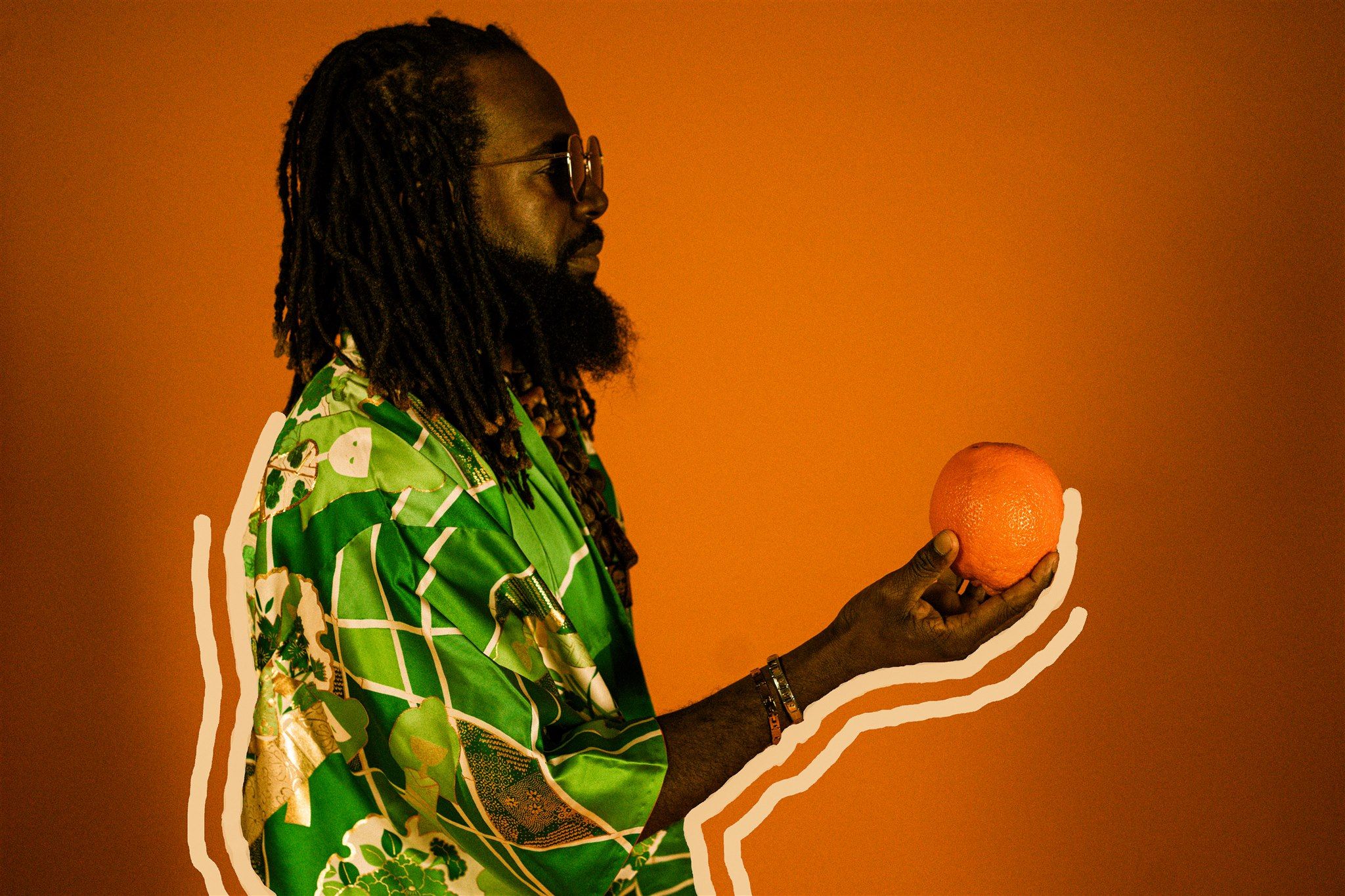
Name: Franz Von
Nationality: British
Occupation: Rapper, songwriter
Recent release: Franz Von's debut album Take What You Want is out via Bridge the Gap.
Recommendation for Sheffield, UK: I would recommend visiting Sheffield to attend one of the local festivals like Tramlines festival, Migration Matters, Sheffield Doc Fest, Sharrow festival, Peace in the Park, No Bounds festival plus more. You will have the chance to experience incredible local bands and artist and feel part of an independent driven welcoming community.
If you enjoyed this Franz Von interview and would like to stay up to date with his music, visit him on Facebook, and Soundcloud.
What were some of the musical experiences which planted a seed for your interest in hip hop?
Listening to “F**k Tha Police” by N.W.A planted the first seed for my interest in rap and hip hop. It’s crazy how music can make such an impact, especially at a young age.
N.W.A.’s "F**k Tha Police" is such a heavy song, and hearing it as a child in Jamaica added a whole new layer of cultural complexity. The raw anger and defiance in that track probably made it stand out, even though I didn’t fully understand all the social context at the time. It definitely had an edge that made hip hop feel rebellious, relatable and real.
My mom was an LL Cool J fan and she had the Bigger And Deffer (BAD) album on vinyl, that was another vibe altogether.
LL’s style was smooth, fun, and charismatic, a contrast to N.W.A.’s aggressive energy. But both artists were pioneers in their own right, and I got a taste of both ends of the spectrum. The way LL balanced tough talk with love and swagger made me appreciate the versatility of the genre.
After moving to the UK and discovering even more hip hop music I spent so much time listening to everything I could get to my ears, I became hooked on the storytelling aspect of hip hop realising that rhyming wasn’t just about flow, it was about weaving stories, making statements, challenging social injustices and representing your truth.
The ways in which wordplay, metaphors, and rhythm are used to communicate something deeper was fascinating and planted the seed for my own approach to writing lyrics.
Hip hop has always been about a lot more than just music. For you personally, is hip hop a way of life – and if so, in which way?
Absolutely, hip hop is a way of life for me. It's not just something I listen to or create, it's in how I move, think, and express myself.
In my song writing process, whatever the genre, I approach it with the same spirit that defines hip hop, storytelling, truth, and creativity. It's about paying homage to the past while creating something new. My album Take What You Want is a big fusion of sounds and genres with an underlying element of pure hip hop throughout.
Beyond the music, hip hop influences how I dress, how I carry myself, and the energy I bring to the stage. There's a confidence and raw honesty that comes with it. Culturally, I stay connected to the roots, the community, the struggle, the celebration. It all shapes who I am as an artist and as a person.
Hip hop isn’t just in the music I make, it’s in my attitude, my presence, and my day-to-day life.
What, would you say, are the key ideas behind your approach to creativity?
For me, creativity is all about connection and experimentation. I love collaborating with different artists, musicians, and producers because it allows us to share ideas, bounce off each other’s energy, and push boundaries together. That exchange brings something fresh every time.
I’m also really into fusing different genres and sounds. I never want to be boxed into one style. My album blends hip hop with dance, jazz, jungle, reggae – dancehall and African rhythms, I’m always looking for ways to create something that hits differently.
Another big part of my creative approach is bringing high-energy tracks that are made for festival vibes, songs that people can feel in their chest and move to. But I also want my lyrics to be real. I try to write in a way that’s relatable and meaningful to people in my community, reflecting our stories, struggles, and celebrations.
Creativity, for me, is about making music that moves people, both physically and emotionally.
Where do most of your inspirations to create come from – rather from internal impulses or external ones? Which current social / political / ecological or other developments make you feel like you need to respond as an artist?
My inspiration comes from both internal and external impulses.
Internally, there’s this constant drive to express what I feel and what I see. But externally, there’s so much happening around me, especially in my community, that fuels my need to create. There are so many untold stories and unheard voices that deserve to be amplified, and I feel a responsibility to do that through my art.
I feel like I have to respond to the oppressive system we live in, the pressure to conform, the way our youth are criminalised, and the heartbreaking loss of young lives to knife crime, gun crime, and the prison system. These aren’t just statistics to me, they’re real people and real families experiencing real pain.
At the same time, I’m constantly inspired by the people around me, their resilience, creativity, and strength. Through my music, I try to highlight the injustices we face, but also to celebrate the beauty and power within our community. As an artist, it’s about reflecting reality, challenging it, and creating space for hope and change.
There has always been a close connection between hip hop and jazz. What role does improvisation play in your current creative process?
Improvisation plays a big role in my creative process, especially when it comes to live performances. I perform with a live band, and my songs are tailored specifically with that live energy in mind. Playing live is where I really come alive as an artist, there’s a freedom in it, a raw connection with the crowd, and improvisation is a huge part of that.
The link between hip hop and jazz is something I fully embrace. You can hear it all throughout my album and feel it in my live shows, from the way the band interacts to the flow of the lyrics and the space we leave open for spontaneous moments. That jazz influence allows me to experiment, switch up the vibe, and keep things fresh every time we are on stage.
Improvisation isn’t just about freestyling lyrics or riffs, it’s about being in the moment, responding to the energy in the room, and letting the music breathe. That’s what keeps it real and exciting, both for me, the band and the audience.
Hip hop has always had an interesting relationship between honouring its roots and pushing the music forward. What does the balance between these two poles look like in your music?
For me, finding that balance is essential, it’s about respecting where hip hop comes from while still keeping the sound evolving and relevant.
Musically, I work closely with my bandmate and producer Chris Mayall, and together we make a conscious effort to capture that old-school boom bap hip hop energy in parts of the music. I’m definitely an old-school hip hop head, I love referencing the ‘90s golden era both musically and lyrically. That era shaped so much of what I do.
At the same time, we’re not stuck in the past. With the fusion of sounds and genres on my album Take What You Want, and Chris Mayall’s contemporary approach to production, I feel we’ve created something that honours hip hop’s roots while also pushing the sound forward.
It’s about blending that raw foundational energy with new influences and modern ideas, keeping the soul of hip hop alive but not being afraid to experiment and innovate. This is sometimes a challenging process but that tension between tradition and progression is where some of the most exciting music happens.
It can sometimes seem as though, in hip hop, production is the main force of progress. Do you feel like there is still space for genuinely new ideas for lyrics and vocals as well? If so, what could these look like?
Yes, there is definitely still space for new ideas when it comes to lyrics and vocals.
While production often leads the way in terms of innovation, the lyrical side of hip hop is far from done evolving. Lives are constantly changing, social norms shift, slang develops, demographics move and grow, and all of these changes create new perspectives and new stories to tell.
Even though we’re still dealing with many of the same social issues like racism, police brutality, and other forms of injustice, there’s always space to respond to these problems in new and different ways vocally. That’s part of the power of hip hop, it’s always found fresh ways to speak truth to power.
An example of this is reflected in the time gap between 'The Message' by Grandmaster Flash & The furious Five released in 1982 …
… and 'Alright' by Kendrick Lamar released in 2015. Both songs address similar issues in very different ways vocally.
In the tradition of hip hop, we can create new space for lyrics and vocals by learning from the past, honouring the legends, and then pushing forward with an innovative mindset. Whether that’s through flow, structure, delivery, or subject matter, there’s still a lot of unexplored ground.
The voice, both literally and lyrically remains one of the most powerful tools in hip hop, and it continues to evolve with every new generation.
From Star Wars via The Hitchhiker's Guide to the Galaxy to the Fifth Element, there have always been amusing sci fi ideas about how music could look like at some point. For a not too distant future, where do you personally see it going?
I think we're already seeing signs of where music might be heading. I feel that there is a reflection of the fast-paced, digital world we live in.
I see songs, EPs, and albums getting a lot shorter, potentially even down to 1 minute tracks becoming the norm. That’s a direct reflection of our fast food culture and how quickly we consume content online. Platforms like TikTok and Instagram, with their 20 second stories and 1 minute reels, are already influencing the structure and length of music. Algorithms push shorter formats, and artists are adapting to fit those spaces.
This could have a major impact on how future generations experience music, there is a risk of it becoming more of a quick fix than something to sit with and absorb deeply. But at the same time, I’m hopeful there might be a shift in attitude.
As people begin to crave more meaning and connection, we could see a renewed appreciation for longer projects like full LPs and physical formats like cassette tapes, CDs, and vinyl — things you can hold, collect, and really listen to from start to finish.
Although I feel the future might bring more fragmented, bite-sized music experiences, I think there’s also space for a parallel movement that values depth, storytelling, and the physicality of music, just like we used to.
How, would you say are your live performances and your recording projects connected at the moment? How do they mutually influence and feed off each other?
Right now, my live performances and recording projects are deeply connected — they feed off each other in a really organic way.
While writing my debut album, I made a conscious decision to approach each track as if I were already performing it live on stage. I wanted every song to carry that energy, that presence, and that connection with the crowd from the very beginning of the creative process.
As soon as a song feels ready, I include it in my live set and test it out at shows. Performing it in front of an engaged audience gives me immediate feedback — I can feel what resonates, what needs adjusting, and how the energy flows. That process shapes how I go back and refine the track in the studio.
It’s a cycle — the studio work influences the live performance, and the live performance, in turn, helps shape the final recorded version. It keeps the music alive, dynamic, and responsive to real people and real reactions, which is what hip hop and live music are all about.
For many artists, life-changing musical experiences take place live. How do you see that yourself?
I definitely relate to that. I’ve had a few life-changing experiences live on stage that have shaped me not just as an artist, but as a person. There’s something powerful and unforgettable about performing live, when the energy between you, the band and the crowd is completely in sync.
Playing various stages at Glastonbury Festival multiple times has been a huge highlight, those moments were surreal and gave me the confidence to keep pushing forward with my music. I’ve also had the chance to play incredible shows around Europe, which opened my eyes to how universal music really is and how it can connect people across cultures.
But honestly, some of the most meaningful moments have happened right in my home city of Sheffield. Those wholesome community-based events, where people really know your journey and show genuine love, hits differently. They remind me why I do this — to share stories, connect, and give something back.
Live music has a way of grounding you and elevating you at the same time.