Published
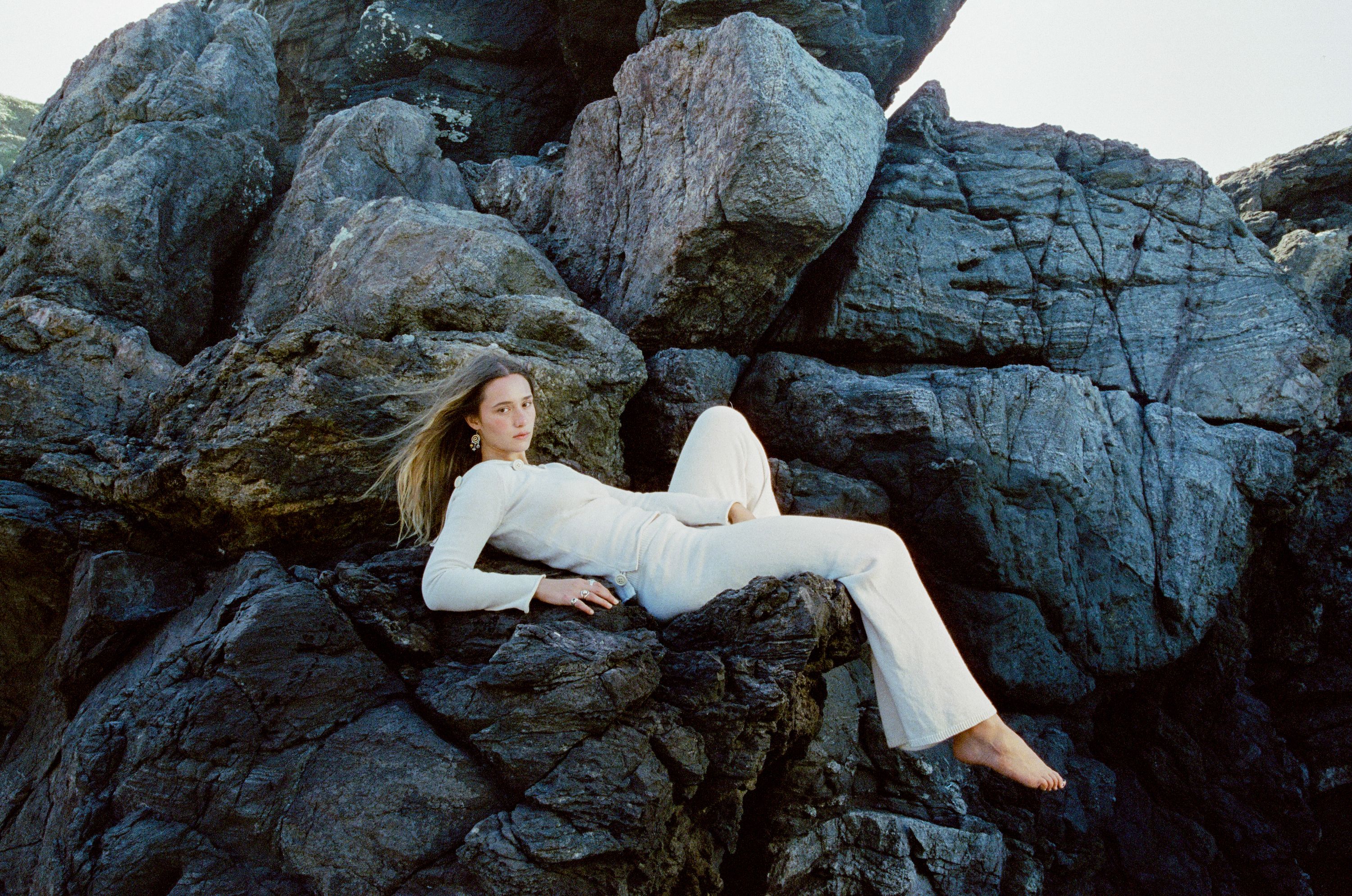
Name: Gab Ferreira
Nationality: Brazilian
Occupation: Singer, songwriter
Recent release: Gab Ferreira's "Seu Olhar" is out now. It is the second taster of her upcoming full-length album Carrossel, announced for October 10th 2025 via DVLPMNT / Balaclava.
Recommendations for São Paulo, Brazil: Brazil is magical overall, but São Paulo definitely has its own vibe. I’m never great at recommending specific places, but honestly—just go to a party. Any party. Brazilians are the best at that.
If you enjoyed this Gab Ferreira interview and would like to stay up to date with her music, visit her on Instagram.
When it comes to experiencing strong emotions as a listener, which albums, performances, and artists come to mind?
I’ve always loved drama and theatricality in music, so Madonna will always be my favorite—especially her Truth or Dare performances. Her song “Incredible”, it’s the one I put on whenever something great happens in my life, like a personal ritual of celebration that instantly lifts me into a euphoric state.
More recently, Addison Rae’s album has been my favorite of the year to be honest. It’s tied to some beautiful core memories of dancing with friends on an island in Brazil, feeling soooo happy.
There can be many different kinds of emotions in art – soft, harsh, healing, aggressive, uplifting and many more. Which do you tend to feel drawn to most?
Euphoria, always. In meditation they call it heart-opening—that expansive, glowing sensation of love and connection radiating from the chest—and I feel it most easily through music.
Sometimes I’ll be in the car with my headphones on, and suddenly it takes over my whole body. I just close my eyes and let it carry me.
I have had a hard time explaining that listening to death metal calms me down. When you listen to a song or composition, does it tend to fill you with the same emotions – or are there “paradoxical” effects?
YES! I’m super into noisy, hard-hitting music, especially electronic. Going to the club gives me this sense of spiritual ecstasy—I’ve always been deeply connected to dancing.
I can raw dog five hours straight with just one drink in me, completely carried by the vibes.
In as far as it plays a role for the music you like listening to or making, what role do words and the voice of a vocalist play for the transmission of emotions?
For me, it always has to evoke feeling. It doesn’t matter if the lyrics are deep or shallow—what matters is that they’re convincing. Even the simplest words can carry so much sensation.
When I’m recording, I’m always searching for that honesty, almost like stepping into a character: am I here to seduce the listener, to make them cry, to make them think?
When it comes to experiencing emotions as a creator, how would you describe the physical sensation of experiencing them? [Where do you feel them, do you have a visual sensation/representation, is there a sense of release or a build-up of tension etc …]
I’ve always been a storyteller in my own life—everything that happens to me, I filter through reflection, and every project feels like research into my own emotions.
With my new album Carrossel, it was the first time that I knew exactly how I wanted it to sound and feel even before writing the first song.
I think it’s so important as an artist to experience life in a deeply meaningful way, almost as if you’re living for your own biography. Our memories and perspectives are all we truly have, and if you want to create something original, you have to dive fully into yourself.
When it comes to composing / songwriting, are you finding that spontaneity and just a few takes tend to capture emotions best? Or does honing a piece bring you closer to that goal?
I think a lot of musicians can relate to this—letting go of demos is the hardest part.
For me, there’s nothing like the excitement of that first draft; I hate polishing. My favorite songs come in one breath—they feel like a gift. “Law of Nature,“ my most recent track, was exactly like that: I was at home making the beat with my producer, had no idea what I wanted, we hit record, and the whole song just came out. No rewrites.
It’s almost like I’d heard it in a dream. That’s my favorite, always.
How much of the emotions of your own music, would you say, are already part of the composition, how much is the result of the recording process?
I’d say it really depends, but often the emotions come from a subconscious part of my brain. After I write something, I sometimes have to decode my own words—like, what did I really mean by that?
I think the way I write music is very similar to how I express myself in real life—blunt, honest, and unfiltered.
For your Carrossel, what kind of emotions were you looking to get across?
I think a big theme of this album is finding the beauty in everything.
I often feel like an observer of my own life, witnessing all the small moments in between and I try to understand that both the good and the bad always carry bigger lessons. Even in the sadder, more emotional tracks, there’s a sense of quiet acceptance, of letting go.
I’m not interested in writing as a victim of my circumstances, but more about exploring that space of vulnerability.
How do you capture the emotions you want to get across in the studio?
I need to feel cozy and comfortable in the studio.
Sometimes it’s all about how my body feels—if I’m recording something energetic and fun, I’ll drink a lot of coffee and get myself excited. For something more chill, I’ll sit in complete darkness in the booth, turn my headphones up, and almost whisper the words.
I’ve done a lot of voice acting, and if you’ve ever seen how people record that, it’s wild—how you finish a word can completely change the meaning of a sentence. I’m very aware of that, and I carry it into my music.
What role do factors like volume, effects like distortion, amplification, and production in general for in terms of creating the emotions, energies or impressions you want?
For me, production is probably 90% of what makes a song work or fall flat—it shapes how the listener feels it in their body.
Everything comes back to one question: what is the song asking for? Sometimes a track needs a lot of instrumentation to feel big and epic, and other times it’s about honoring an intimate, vulnerable space.
I used to struggle with filtering my ideas, cause sometimes you just want to see how big the track can get, but now I’m much more aware of the importance of restraint.
Kind of like that advice: “before you leave the house, take off one thing”—music is the same. Before sending a track to the mix, sometimes you just need to remove one layer lol.
In terms of emotions, what changes when you're performing live on stage, with an audience present, compared to the recording stage?
My background in music has always been about performance, and I’m honestly obsessed with it—sometimes too much lol.
Nowadays, I make songs thinking about how they’ll work live, because that’s when the full vision really comes to life.
How does the presence of the audience and your interaction with it change the emotional impact of the music and how would you describe the creative interaction with listeners during a gig?
I love artists who think about their shows from the audience’s perspective—you can always tell when someone cares about the listener’s experience.
It’s like theatre: it has to be eye-catching and seductive, like if you leave to go to the bathroom, you’ll miss something very important.
Every time I put on a show, I ask myself, ‘If I didn’t know me and was seeing this for the first time, what would impress me?’
What kind of feedback have you received from listeners or concert audiences in terms of the experience that your music and/or performances have had on them?
In the beginning, I sometimes felt really shy, and it was the worst because people could see right through it. I’ve always been against being nonchalant on stage—that’s not the place for that. Go big or go home.
I started experimenting with it and seeing how far I could go: a while ago, I was doing these wild electronic shows in clubs, acting completely crazy—dancing, smoking, throwing myself on the floor—and people LOVED IT.
Would you say that you prefer to stay in control to be able to shape the emotions or do you surrender to them and allow the music to take over? Who, ultimately has control during a live performance?
Honestly, trying to control your emotions on stage is useless. Performing is about evoking emotion in other people.
I see it as my duty to make the audience leave with something. A thought, a feeling, an experience that will impact them in some way.
The emotions that music is able to generate can be extremely powerful. How, do you think, can artists make use of this power to bring about change in the world?
The impact of art for me is incredibly beautiful.
I think about all the artists who, not only through their work but through the way they carried themselves, inspired me to connect more deeply with who I am. Art can be political even when it’s not trying to say anything—simply being in touch with yourself feels radical in today’s world.
There’s also the impact of closeness: I grew up in a small town where music felt completely out of reach as a career, and seeing other artists do their thing had a huge impression on me. It made me realize I could do the same.
The best art is often relatable—art that makes you think, ‘I can be that too.’