Published
Name: Gabbarein
Members: Cecilie Hafstad (vocalist), Christopher Bono (composer, producer)
Interviewee: Christopher Bono
Nationality: American (Christopher), Norwegian (Cecilie)
Current event: Gabbarein's self-titled debut album is out via Our Silent Canvas. Also available is Gabbarein Remixed, which features seven remixes of the album's material by Nils Olav, Peter Greenwood, Trulz & Robin, SnifferGod and Mental Overdrive.
Recommendations:
Hazrat Inayat Kanh – The Mysticism of Sound and Music
Yongey Mingyur Rinpoche - The Joy of Living
Karl Berger - Music Mind
Nous, Laraaji and Arji Oceananda – Circle of Celebration
Nous Alpha – A Walk in the Woods
Karl Berger – Music Mind, Film and Book
If you enjoyed this Gabbarein interview and would like to know more about the band and their music, visit the duo on Instagram, or their group page on the Our Silent Canvas website. Also, head over to the personal Instagram accounts of Cecilie Hafstad and Christopher Bono.
For a deeper dive, visit our earlier Christopher Bono interview.
Do you think that some of your earliest musical experiences planted a seed for your interest in improvisation?
Definitely. My first real music teacher, Robert Newton in Columbia South Carolina, was a master improvisation teacher. He had played and toured with several fusion and jazz greats through the years and after quitting my baseball career after some injuries I stayed in Columbia for a couple of years just to study with him at least five times a week.
He may have taught me more about music and life than anyone beyond my parents. He was an incredible improviser and a wonderful soul.
When did you first consciously start getting interested in musical improvisation? Which artists, teachers, albums or performances involving prominent use of improvisation captured your imagination in the beginning?
When I began learning guitar as my first instrument I was immediately interested in classic rock, meaning Led Zeppelin, Pink Floyd, all the other stuff.
A big part of learning guitar at that age was memorizing the solos which often were improvised or at least partially so. I’m not sure I registered how they were created at that time, but when I began studying with Robert he turned me on to so much music it was mind-blowing.
I had studied a little Blues beforehand, but he literally took me down to the Blues clubs in Columbia South Carolina, and threw me on stage with the old timers, true trial by fire. He would assign me listening, and besides all the rock, pop, and classical stuff I began really listening deeply to blues at that time, primarily Muddy Waters, Wes Montgomery, and Albert King, but also started digging into Jazz history.
Robert prepared me for Berklee School of Music. While at Berklee, I listened deeply to Jazz history, but really from an academic standpoint. It was years later, after many projects and many stylistic transformations, that I dug deeper into Jazz and improvisational listening.
Around the time that I designed the first lineup of my improvisational ensemble NOUS.
Tell me about your instrument and/or tools, please. What made you seek it out, what makes it “your” instrument, and what are some of the most important aspects of playing it?
In music, my passion is to constantly shape, create, and design new sounds. A big part of this is learning instruments. I practice piano religiously every day for one hour, but in my spare time, I love to be an absolute beginner on an instrument.
I just did a three-week session for the third album from my project Nous Alpha which I do with British electronic musician Gareth Jones. We’re building an immersive Quad installation using audio text from a very special guest.
[Read our Gareth Jones interview]
In that session, I played violin, Tenor Sax, trumpet, bass trombone, French horn, oboe, clarinet, flutes, organ, piano, and electric bass. So I get around. 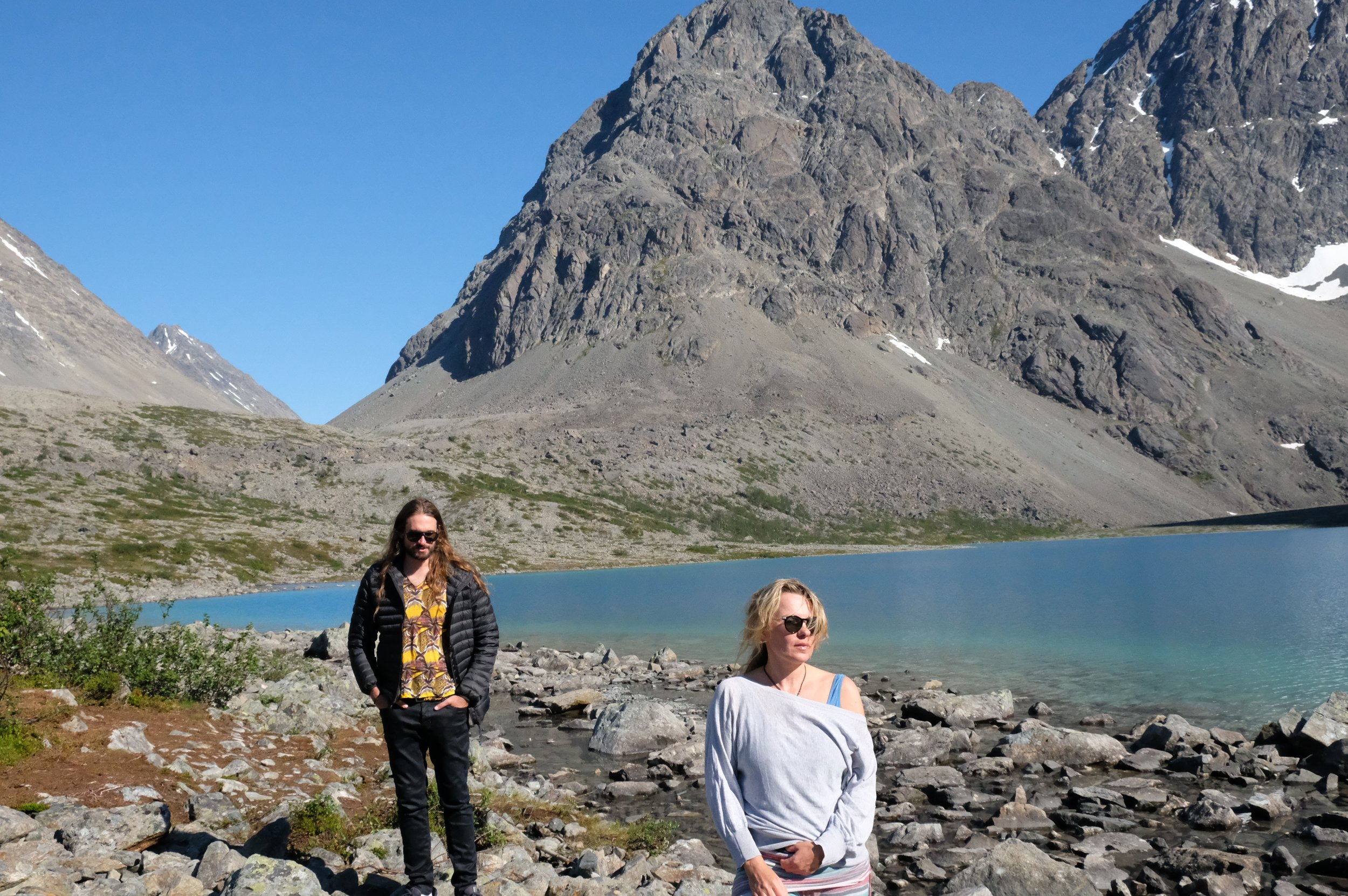
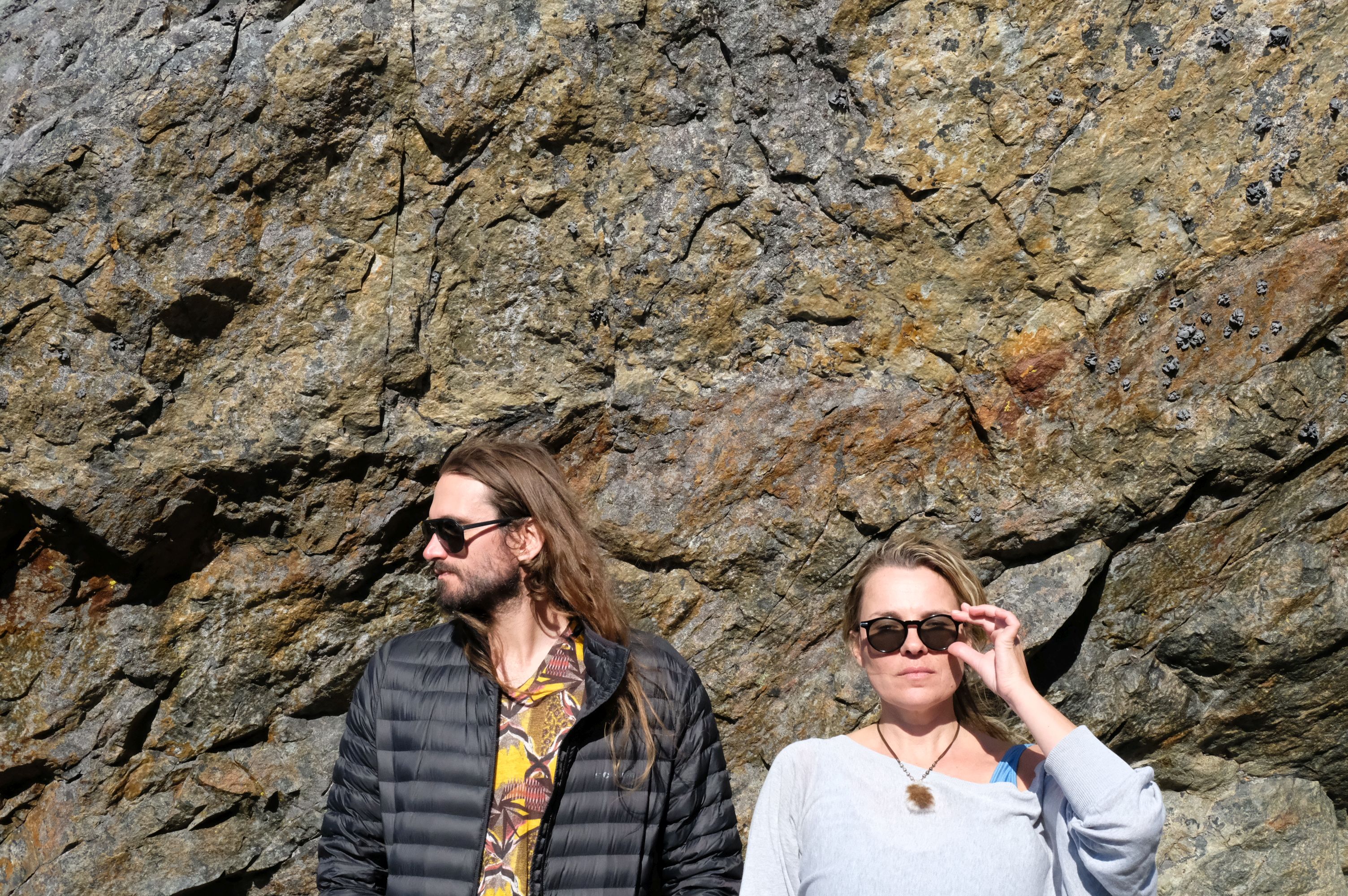
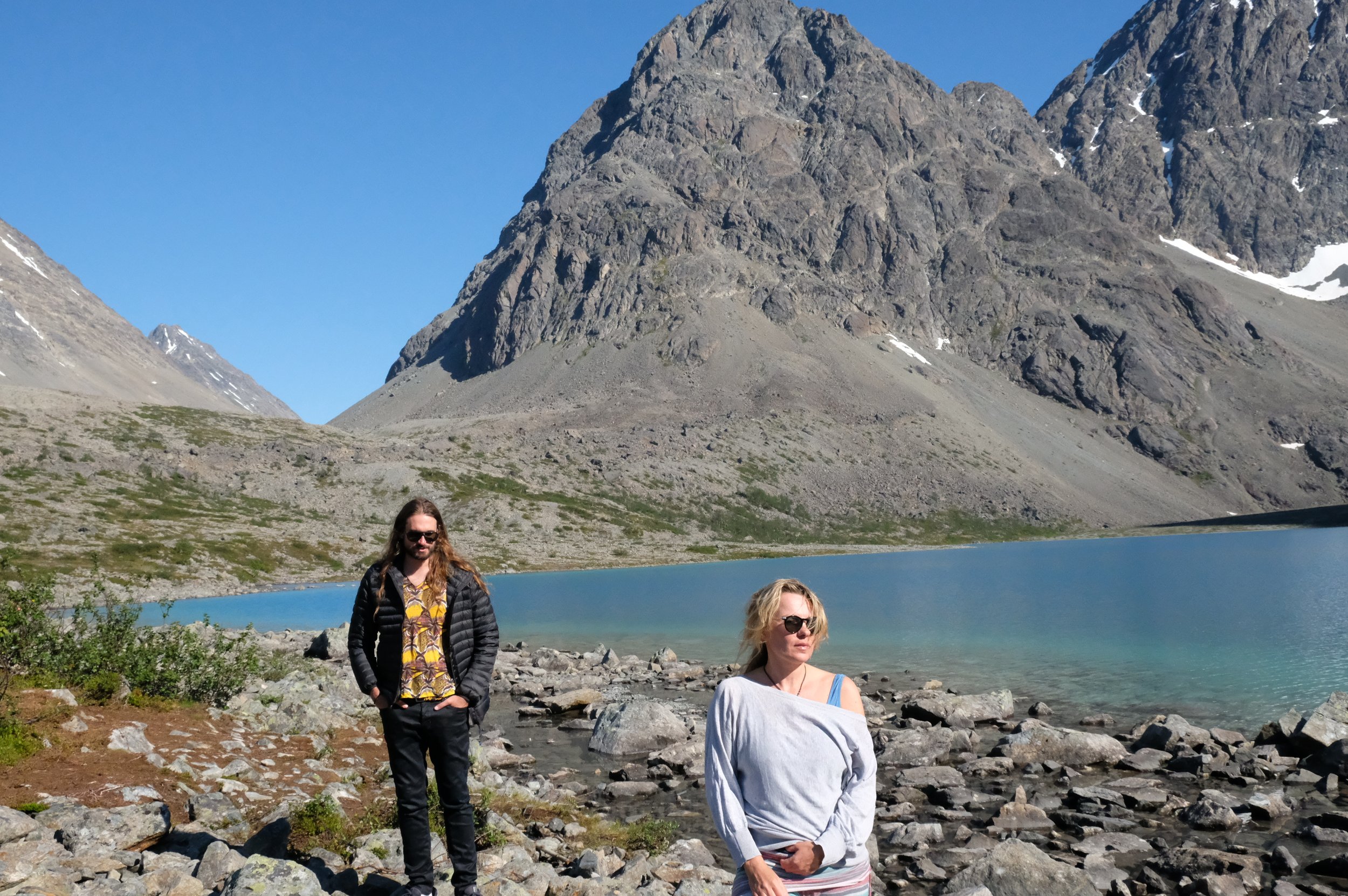
Gabbarein Interview Image (c) Our Silent Canvas
How would you describe your own relationship with your instrument – is it an extension of your self/body, a partner and companion, a creative catalyst, a challenge to be overcome, something else entirely?
An ally for exploration. A journey to evolve within.
I’m always amazed at the unexpected sounds I get out of being a novice on a new instrument.
Derek Bailey defined improvising as the search for material which is endlessly transformable. What kind of materials have turned to be particularly transformable and stimulating for you?
I have tried to explore the spectrum of different approaches to improvisation over the years.
This really developed for me during the first NOUS project where I designed something like 70-80 modular ideas to seed a group improvisation. I explored everything from traditional lead sheets with a bass and topline melody, to complete free noise moments, text-based suggestions, minimal modular choice-based compositions, geometric mandala meditations converted to sound, and many other approaches.
Digging deep into all the possible ways I could imagine improvising definitely informed my approach to music in general. For instance in this latest release, Gabbarein, we improvised simple beautiful songs in the Arctic Circle in Norway. The approach was very folk and minimal, but it was truly channeled and written at the moment with no through-composed material.
Do you feel as though there are at least elements of composition and improvisation which are entirely unique to each? Based on your own work or maybe performances or recordings by other artists, do you feel that there are results which could only have happened through one of them?
Yes, I’ve thought of this a lot. No one can improvise the logical beauty of a Beethoven symphony, and really any great masterful ensemble work. Even Stravinsky’s early works, which have an experience of chaos and randomness to them, I believe sound and feel different than classical works that have incorporated aleatoric sections.
While at the same time, you can not notate the complexity of an improvisation. A reading classical player can not read off the page the present moment sounds that a great improviser will tune into. If they were read or even memorized, the spirit or the energy of the piece is very different.
They both have benefits and setbacks, like anything in this universe. They have similarities and differences and can be met in the middle or be explored within a single piece of music as many composers have done, including myself.
For instance, in my Orchestral work “Bardo,” the majority of it is a classical score, but it incorporates many improvisational moments, both guided and cued.
When you're improvising, does it actually feel like you're inventing something on the spot – or are you inventively re-arranging patterns from preparations, practise or previous performances? What balance is there between forgetting and remembering in your work?
In my case, usually, I’m purely inventing on the spot. But if we’re working with a pre-composed theme or melody, then that is a kind of skeleton from which everything hangs. The balance is found by practicing and preparing but developing the capacity to drop it all and just be fully present in the moment of creation.
As Laraaji told me after we tracked the fourth NOUS album, “I just open up and trust.” That’s it.
Are you acting out parts of your personality in your improvisations which you couldn't or wouldn't through other musical approaches? If so, which are these? What, would you say, are the key ideas behind your approach to improvisation?
Not consciously. I just try to be myself. Sometimes that’s wild, kind of insane. Other times calm and peaceful. Each moment is fresh and ripe with possibilities never seen before.
I’m currently in the studio mixing for Dolby Atmos the next NOUS release, a series of five albums I did with late jazz great Karl Berger. We had five different ensembles come in for five different studio dates and recorded a ton of music. Karl became a mentor, kind of guru to me and he carried a profound jazz lineage connected to all of the jazz greats of the sixties and seventies as we know them.
He would often talk about how when you play a note on the piano, or a piece on the same instrument, for now, just choose the middle c on the piano. Every day you come in and play that note it’s a totally different sound, a totally different universe, totally fresh, totally new.
The weather is different, the atmosphere, you’re a different person, emotions, perceptions, physical atoms age all change all the time. Even if we think about the fact that the earth moves around the sun at 67,000 miles an hour and the sun and solar system are moving at approximately 448,000 mph.
This is wild, real stuff. We’re in a totally different space every sliver of a moment. Everything is totally impermanent. This view is the key to improvisation.
In your best improvisations, do you feel a strong sense of personal presence or do you (or your ego) “disappear”?
In the best moments of music, you are so fused and present with what is happening that any sense of self has momentarily dissolved. Sometimes self-consciousness is present, out of fear or anxiety. But being with that and allowing those thoughts to just be allows you to move through the arising of those emotions and eventually reconnect with the present moment experience.
This is why I personally believe the best practice for improvisation is meditation and studying the view of the great contemplative traditions.
Stewart Copeland said: “Listening is where the cool stuff comes from. And that listening thing, magically, turns all of your chops into gold.” What do you listen for?
I try to listen to the environment in which you’re playing. A world is created in that moment, and you’re hearing your instrument, your ideas, your friends, the room, so much.
Generally, the focus is on what your bandmates are playing, and then your own instrument. However, this is really a non-cognitive process, or at least at its best it is this.
There can be surprising moments during improvisations – from one of the performers not playing a single note to another shaking up a quiet section with an outburst of noise. Have you been part of similar situations and how did they impact the performance from your point of view?
Definitely, Karl Berger did this a lot, I also do it a lot, often just breaking up the mood or the direction, sometimes the energy needs a dramatic shift sometimes.
It is subtle, the “Music Mind” as Karl called it, or the wisdom mind as we would call it in Buddhism often will guide these types of transitions.
I have always been fascinated by the many facets of improvisation but sometimes found it hard to follow them as a listener. Do you have some recommendations for “how to listen” in this regard?
Karl used to often tell a story of how the Sixteenth Karmapa gave him instructions on meditation for life. He told him to just be aware of the sounds arising and passing. This is basic sound meditation in the Buddhist tradition, an incredibly powerful practice for any Musician and audience member to develop.
There is a way to listen intellectually or cognitively, by knowing musical structure, texture, theory, harmony, melody, etc. All of these can be a very wonderful way to listen. But the best way is to just be present to the sound arising and passing in the present moment and be completely immersed in the aliveness of the experience of music.
In a way, improvisations remind us of the transitory nature of life. When an improvisation ends, is it really gone, just like a cup of coffee? Or does it live on in some form?
Well, as a Buddhist I believe only the relative form of everything is “born” and “dies." The true nature of a phenomenon is never born, therefore can not die.
The most profound teachings of Wisdom tell us about the dreamlike nature of reality, that it is really a dream that just lasts longer than the ones we experience at night. Music is a great messenger or teacher of this wisdom, it is so ethereal, so nothing, so intangible yet can move us deeply and change our lives.
On a physical level, the mechanical energy of the sound continues on to vibrate throughout the cosmos and transfer its energy into endless forms. On a mental, and spiritual level, we’re changed by everything, and it therefore shifts our direction sometimes in subtle and sometimes in gross ways.
But every decision we make and everything we consume is a cause for new conditions.