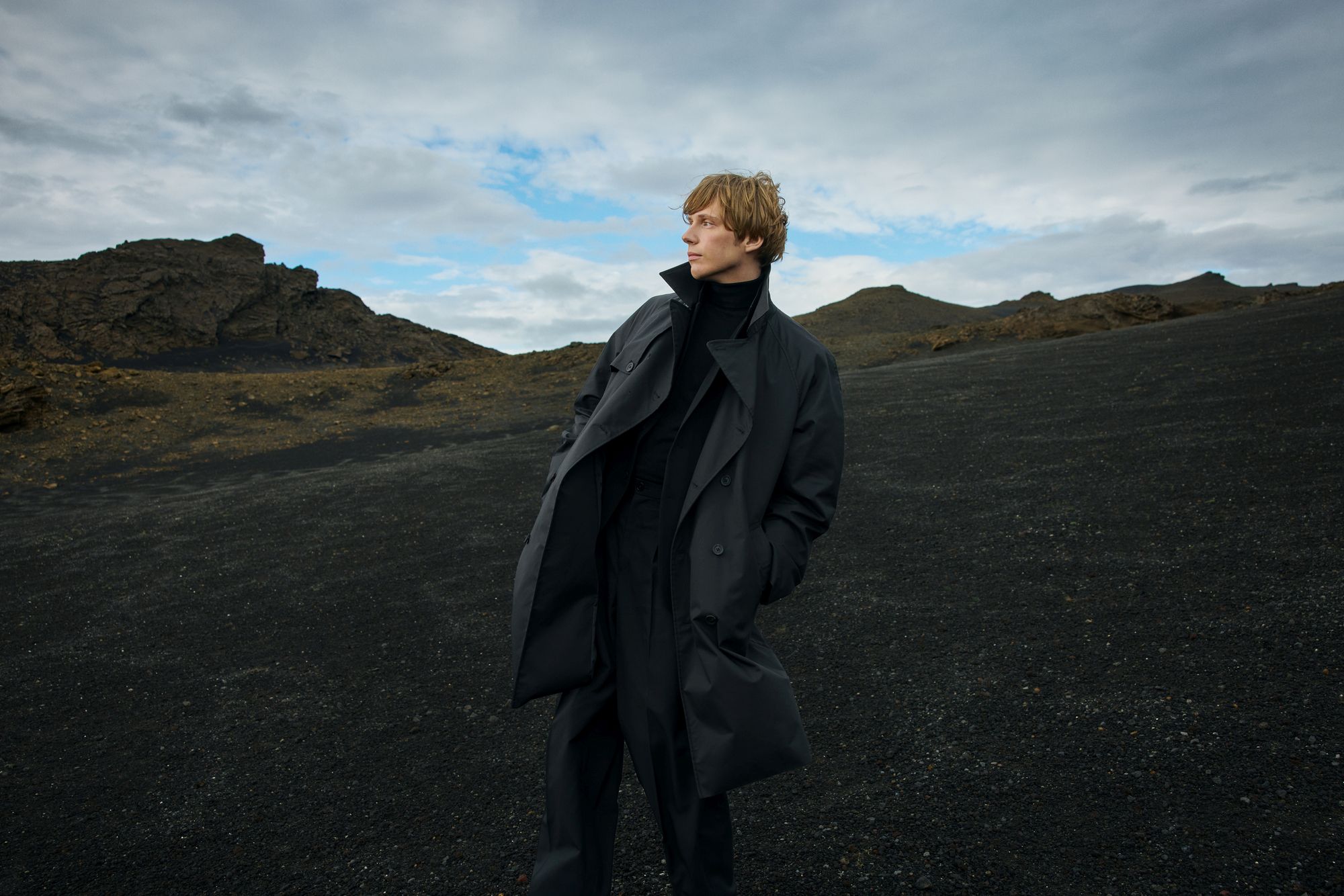
Published
Name: Gabríel Ólafs
Occupation: Pianist, composer, founder of Reykjavik Orkestra
Nationality: Icelandic
Recent release: Gabríel Ólafs's new full-length album Polar is out via Decca.
Recommendations on the topic of sound: On the theme of my new work Polar which is heavily influenced by the sounds of whales, I would like to recommend the book Fathoms by Rebecca Giggs which has a chapter about whale song; and Songs of the Humpback Whale by Roger Payne.
I also always have a copy of Classical Recording: A Practical Guide in the Decca Tradition on my studio table, for those wondering about capturing sound.
If you enjoyed this Gabríel Ólafs interview and would like to know more about his music, visit his official homepage. He is also on Instagram, and Facebook.
When I listen to music, I see shapes, objects and colours. What happens in your body when you're listening? Do you listen with your eyes open or closed?
I like to take a walk, for example with my dog, or sometimes I just pace around - so my eyes are open but they are not really looking at anything.
I am very visually minded so I like to picture something while listening and especially when composing. When I compose I usually have visuals or colors in mind to go along with the music.
How does listening with headphones and listening through a stereo system change your experience of sound and music?
I have access to some really amazing sound systems - both in my studio in Harpa which my engineer designed and he also has a Dolby Atmos studio which we’ve mixed in.
I think it’s a lovely experience and very immersive and interesting because you can hear sounds you wouldn’t otherwise notice.
[Read our Bob Clearmountain interview about mixing in Dolby Atmos]
That being said, I highly prefer headphones for the intimacy. I guess it also comes down to what you’re used to. I really want a better stereo system at home, maybe then I’ll listen more for enjoyment in that setting, because I have a lot of vinyl LPs that I love.
Tell me about some of the albums or artists that you love specifically for their sound, please.
Ryuichi Sakamoto comes to mind for me, especially his album async (2017).
I love both beautiful recorded sounds but also in my opinion synthesized analog sounds and even digital sounds can be very satisfying too.
Do you experience strong emotional responses towards certain sounds? If so, what kind of sounds are these and do you have an explanation about the reasons for these responses?
I have a very strong affinity for highly reverberated sounds. So I love artificially long reverb tails. My favorite reverb is the Lexicon 224. Learning how to record and mix, I was always told to use a tasteful amount of reverb which I have thrown out the window.
[Read our Thomas Lemmer interview which also discusses his favorite reverb]
I also really love notes that bend into the next note or intervals that connect. That was really the main thing on my new work Polar (2025) where I collected sounds like the “connected” bowed string-instrument sound portamento / glissando and the sounds of the pedal steel and lap steel guitars.
I think it sounds like whale-song which is my favorite sound in the world.
There can be sounds which feel highly irritating to us and then there are others we could gladly listen to for hours. Do you have examples for either one or both of these?
According to my mother, when I was a baby I cried rarely but I was highly upset over a certain music-box which had a harsh and shrill tone.
These are sounds I still dislike today - I prefer smooth sounds.
Are there everyday places, spaces, or devices which intrigue you by the way they sound? Which are these?
Aside from the obvious enjoyment of highly reverberant spaces, I have always love the sound of the ocean which I think is very calming and enjoyable.
I was also partly inspired by these sounds for my new work because I live by the harbor in Reykjavík, Iceland.
Have you ever been in spaces with extreme sonic characteristics, such as anechoic chambers or caves? What was the experience like?
I once played in a huge cave in Iceland as a teenager which was amazing but I would love to go back and play something new there.
There are also some very interesting echo chambers in Harpa Reykjavík which I enjoy. Nothing beats a good reverb tail.
What are among your favourite spaces to record and play your music?
I’ve recorded most of my music in Harpa Concert Hall which is pretty much Iceland’s only truly orchestral space and it’s a pretty new building.
I’ve played some concerts in churches in Europe which I always enjoy because they are often designed for live music without needing much amplification.
How important is sound for our overall well-being and in how far do you feel the "acoustic health" of a society or environment is reflective of its overall health?
Sound is deeply tied to our emotional and physical well-being. Natural sounds have been shown to reduce stress.
The acoustic environment of a society varies greatly and it’s part of the reason why I’ve stayed and worked in my home country for so long is because there is a quiet space for sound.
Sound, song, and rhythm are all around us, from animal noises to the waves of the ocean. What, if any, are some of the most moving experiences you've had with these non-human-made sounds?
Living in Iceland, I’m surrounded by nature’s music - the crash of waves or the sound of strong winds.
One of the most moving experiences for me is hearing glaciers crack and shift. It’s a stark reminder that the Earth is alive, breathing, and in constant transformation.
Many animals communicate through sound. Based either on experience or intuition, do you feel as though interspecies communication is possible and important? Is there a creative element to it, would you say?
Absolutely. I believe music itself is a form of interspecies communication — a language without words that can bridge beings.
The way whales sing across vast distances is inherently musical. And I was very intrigued by it from an early age when I did a presentation about whales in primary school and I learned that we didn’t quite understand the intricacies of their sophisticated communication, and I think scientist still don’t fully understand it!
We can surround us with sound every second of the day. The great pianist Glenn Gould even considered this the ultimate delight. How do you see that yourself and what importance does silence hold?
I like the idea of consciously curating our sound environment, but I also think silence is essential. I prefer to not hear too much or listen to too much music while working on something, I feel I need to have fresh and not tired ears.
If I indulge in too much consumption of sound I feel I crave to compose loud or busy music which is a sound I have not desired in my own work so far.
Seth S. Horowitz called hearing the “universal sense” and emphasised that it was more precise and faster than any of our other senses, including vision. How would our world be different if we paid less attention to looks and listened more instead?
Shifting our attention from sight to sound might make us more attuned to subtlety and connection, both with each other and the world around us.