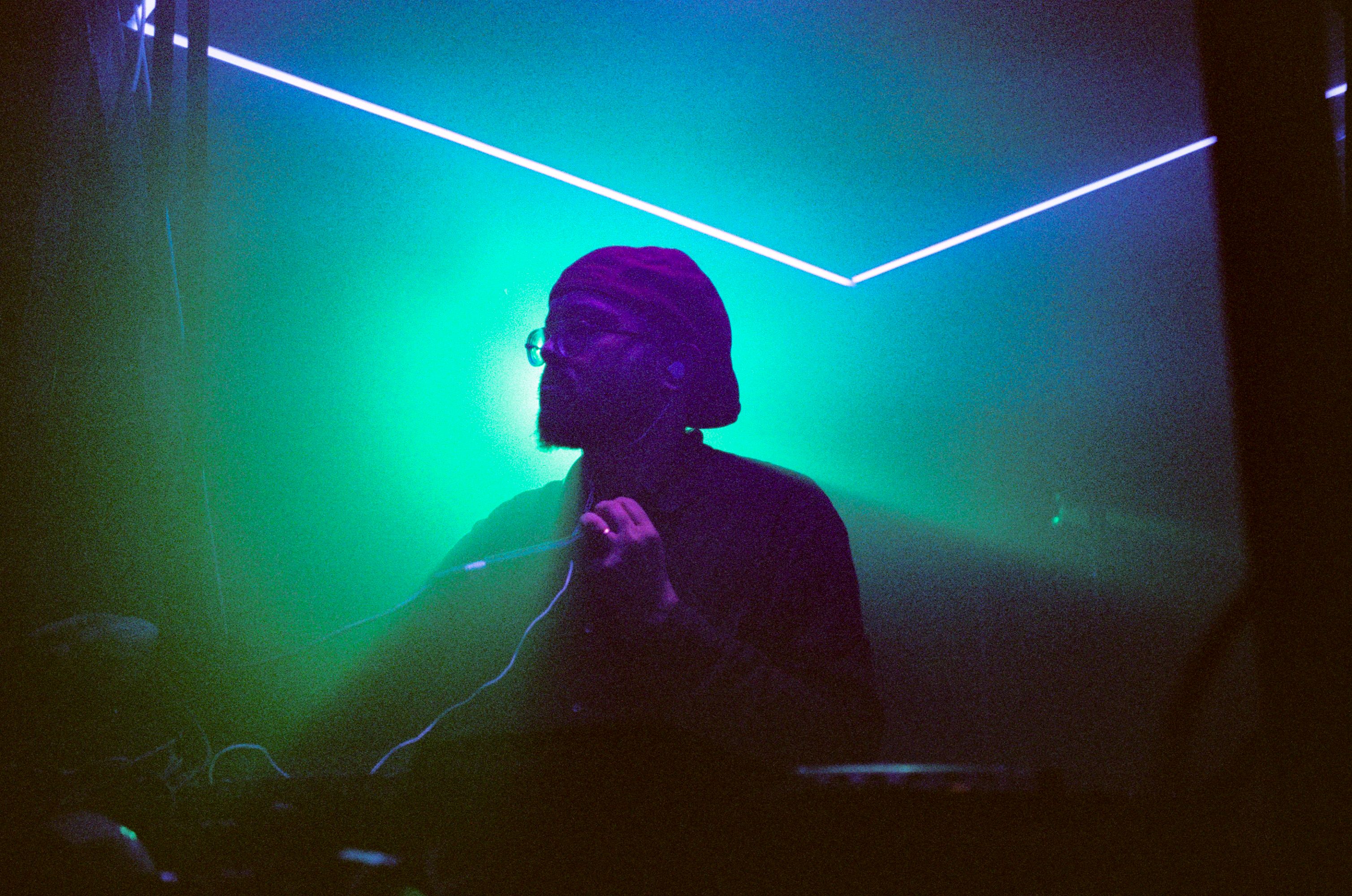
Published
Name: Galcher Lustwerk
Nationality: American
Occupation: Producer, DJ
Current release: Galcher Lustwerk's Vestibule EP is out via Stratasonic.
Recommendation for NYC, USA: Phil’s Stationery in midtown NYC.
Topic I am passionate about but rarely get to talk about: Urban planning, US cities and how historical and cultural factors have shaped them. Growing up in a “rust belt” city (Cleveland) is kind of knowing how an empire dies. So it’s nice to travel the world and learn how other cities tick.
If you enjoyed this Galcher Lustwerk interview and would like to stay up to date with his music, visit his official homepage. He is also on Instagram, Soundcloud, Facebook, and bandcamp.
When it comes to experiencing strong emotions as as a listener, which albums, performances, and artists come to mind?
Tracks like Galaxy 2 Galaxy “Hi Tech Jazz”, Tears For Fears “Working Hour”, Goldie “Timeless”, Kid Cudi “Solo Dolo”, Other people place “let me be me”, Luther Vandross “a house is not a home”, French Montana “sanctuary.”
Albums like Clockers OST, Marvin Gaye - Here my dear, John Beltran - ten days of blue, Little Brother - Getback, Cannibal Ox - The cold vein, Erykah Badu - New America 1/2, Trail of Dead - Source tags and codes, Cocteau Twins - Heaven or Las Vegas, Doves - lost souls.
There can be many different kinds of emotions in art – soft, harsh, healing, aggressive, uplifting and many more. Which do you tend to feel drawn to most?
I’m drawn to certain melodies, harmonies, lyrics, and rhythm brought together. The power of the riff, the chord change, the bridge, etc. When done in a remarkable way, these disparate elements come together to form emotion.
I appreciate that split second where your hair stands up and you get goosebumps. I chase that feeling more than a specific emotion.
In as far as it plays a role for the music you like listening to or making, what role do words and the voice of a vocalist play for the transmission of emotions?
They are the guide, indexer, storyteller, moderator, contextualizer.
Sometimes a song title isn’t enough to guide the listener’s ear, so I rely on language and delivery. An instinctive grounding happens when you’re being spoken to, or listening in on something.
On my track “Vestibule” there’s talk of views, plans, tea, cars and tools used to convey surveillance and anticipation.
When it comes to experiencing emotions as as a creator, how would you describe the physical sensation of experiencing them? [Where do you feel them, do you have a visual sensation/representation, is there a sense of release or a build-up of tension etc …]
A sense of excitement or novelty, daydreaming, dancing, nodding my head, the innate feeling of pattern recognition
When it comes to composing / songwriting, are you finding that spontaneity and just a few takes tend to capture emotions best? Or does honing a piece bring you closer to that goal?
Spontaneity works best for me. A record feels more real when it's performed completely, even with regards to sequencing.
I don’t punch in vocals. I record all my sequences in real time, muting and fading until i think it’s long enough.
How much of the emotions of your own music, would you say, are already part of the composition, how much is the result of the recording process? For your current release, what kind of emotions were you looking to get across?
For the Vestibule EP, it started with instrumentals. The vocal performance follows the instrumentals, which is this sort of deadpan restlessness or tiredness.
I guess that speaks to the transient life of a touring DJ which comes with adventure, uncertainty, speed and leisure.
How do you capture the emotions you want to get across in the studio? What role do factors like volume, effects like distortion, amplification, and production in general for in terms of creating the emotions, energies or impressions you want?
I pick the sounds that are emotive. When I’m working, I like to keep a loop going quietly for a few hours while I do other things, mindful of if I want to finish the track.
I don’t play loud, ever. Having the music be at a conversational volume is a way of keeping my vocal levels consistent, too.
Mixing considerations like EQ, compression, are usually done after the initial work, when my ears are refreshed.
In terms of emotions, what changes when you're performing live on stage, with an audience present, compared to the recording stage?
There’s an overall casual, approachable nature that maybe comes across in recording. But in nightclubs where I mainly play, the mood is heightened usually, faster, higher pitched, louder vocals, because the sound system needs to overpower crowds of people.
I wish I could re-create the quiet vocals, but in a loud club environment it's near impossible to achieve.
What kind of feedback have you received from listeners or concert audiences in terms of the experience that your music and/or performances have had on them?
It’s hard to tell. It’s not necessarily constructive.
I think people have experiences with specific songs more than any performance. If I’m playing a song and you hear a few “wooos” and whistles, that’s usually a good sign.
I remember moments like that when I decide to release a finished track.
Would you say that you prefer to stay in control to be able to shape the emotions or do you surrender to them and allow the music to take over? Who, ultimately has control during a live performance?
It’s important to read the energy of the night and adjust accordingly. Letting the music be presented in the most honest and high quality fashion is my job in that moment.
I appear emotionless when performing because I’m so focused. Unlike a DJ set, I need as much control as possible.
The emotions that music is able to generate can be extremely powerful. How, do you think, can artists make use of this power to bring about change in the world?
There needs to be continuing education about music, its history and its purpose in the 21st century. Lack of music education has fractured collective taste.
My fear is that we stop evolving as listeners, becoming sonically illiterate, like with reading, and accept capitalism as the only purpose for music. A world without music for music’s sake isn’t the world I want to live in.