Published
Name: The Jazz Defenders
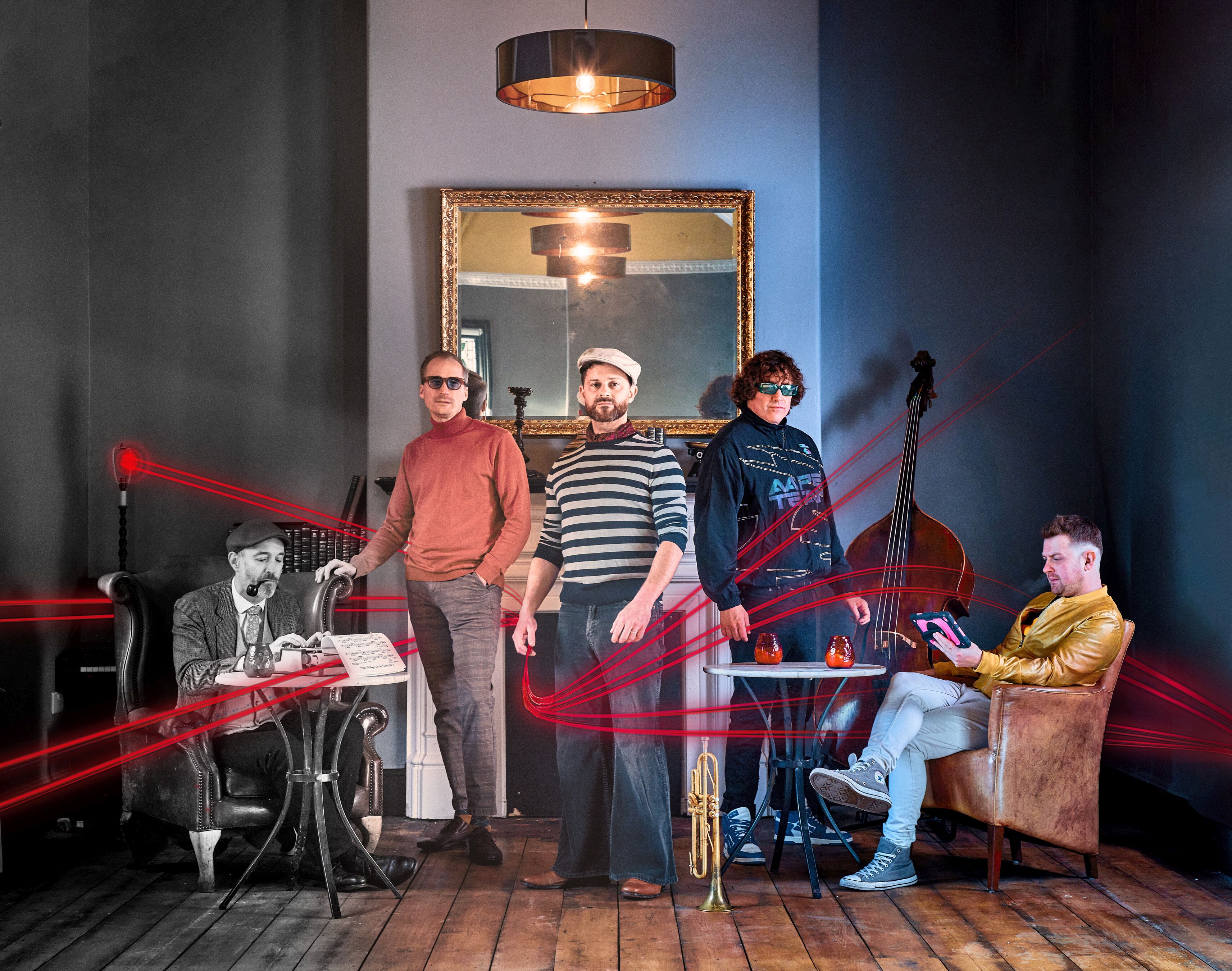
Members: George Cooper (piano/keyboards), Will Harris (bass), Nick Malcolm (trumpet), Ian Matthews (drums), and Jake McMurchie (tenor sax)
Interviewee: George Cooper
Nationality: British
Current release: The Jazz Defenders' new full-length album Memory in Motion is out via ITI.
Recommendations: One of my favourite pieces of music is a John Mayer cover by a phenomenal artist called Yebba and it’s called “The Age of Worry” from her 2022 EP Live at Electric Lady.
The other is selfishly a piece that I wrote for my Gran called “The Oracle.”
If you enjoyed this Jazz Defenders interview and would like to know more about the band, their music and upcoming live performances, visit their official homepage. They are also on Instagram, and Facebook.
Do you think that some of your earliest musical experiences planted a seed for your interest in improvisation?
Certainly! My first musical experience was as a drummer aged 5, and I was always encouraged to improvise around various grooves and exercises that I was learning.
After that I used to learn film themes on the piano when I was about 8 or 9, and although my mum was an accomplished pianist and sight reader and wanted me to learn the pieces from the music, I used to bat her hands out the way once I could hear what the music was because I was so eager to play it rather than read it!
So I think playing by ear and improvising has always been very natural for me.
When did you first consciously start getting interested in musical improvisation? Which artists, teachers, albums or performances involving prominent use of improvisation captured your imagination in the beginning?
For me it was playing in DYJO (Devon Youth Jazz Orchestra), when I was about 11.
That was the first time I started to improvise with other people my own age, and learn and discover harmony together.
Tell me about your instrument and/or tools, please. What made you seek it out, what makes it “your” instrument, and what are some of the most important aspects of playing it?
I guess I would say that my first instrument is really drums, as that’s how I came to music in the beginning. Then I moved to piano when I was 8 or 9, and played both for many years until I was 18 - that’s when I started touring Europe with a Dixieland Jazz Band on piano and after that have always been known as a pianist.
But piano is still very much a percussion instrument and the rhythmic element of it for me is totally paramount - I think had I not played drums first and gotten so invested in rhythm and time, I probably wouldn’t be half the pianist I am today!
How would you describe your own relationship with your instrument – is it an extension of your self/body, a partner and companion, a creative catalyst, a challenge to be overcome, something else entirely?
It’s definitely an extension of my character, a way of getting music out of me. I love the piano and I hate the piano depending on the circumstance.
When I love it the most is when music suddenly opens up and I see the piano keys like Neo first sees the code in the Matrix - in those moments I don’t have to think about playing the piano as it becomes part of me.
Derek Bailey defined improvising as the search for material which is endlessly transformable. What kind of materials have turned to be particularly transformable and stimulating for you?
I guess writing your own music leads to the deepest exploration of improvisation - because when you’re writing, you’re pushing your own boundaries harmonically to find the melodies and phrases that seemingly come to you externally from the ether.
So when you then come to improvise over it then you’re again pushing the limits of what you know.
Do you feel as though there are at least elements of composition and improvisation which are entirely unique to each? Based on your own work or maybe performances or recordings by other artists, do you feel that there are results which could only have happened through one of them?
Absolutely - often when you’re improvising you’re constantly reaching out and trying to grab something that sometimes isn’t there - this can differ from composing because you have time to stop and think, or even put it down completely and have a cup of tea and come back to it.
This means that composing is generally a much more crafted experience that can have the best bits of your musical personality shining through, as opposed to the much more raw and volatile experience of grabbing whatever comes to you in the moment and translating it through your instrument.
When you're improvising, does it actually feel like you're inventing something on the spot – or are you inventively re-arranging patterns from preparations, practise or previous performances? What balance is there between forgetting and remembering in your work?
I guess this comes back to my earlier comparison of Neo in the Matrix - when you’re lucky enough to be ‘illuminated’ and have access to free flowing music without thinking, that’s usually when I’m at my best improvising because I’ve forgotten everything I know and am at one with my instrument and whatever is flowing through me. But that probably happens twice a year, if I’m lucky!
The rest of the time I guess we’re all trying to engineer those moments, and in doing so are often forced to fall back on existing patterns, shapes, devices and harmonic knowledge in order to try and reach something new and external.
Sometimes the hardest thing about The Jazz Defenders when we’re touring is to try and re-create the magic in solo sections every singe night - very quickly you can become disillusioned with what has come before - and there’s definitely a certain black magic involved in making solos fly - for me it’s very often based on the audience and how they are responding to what you do.
In your best improvisations, do you feel a strong sense of personal presence or do you (or your ego) “disappear”?
I would say that my ego follows me around everywhere! And also I think an ego is essential in delivering what you do to an audience. You have to have a certain amount of self-belief in order to communicate things with conviction and make them land.
Improvisation is a fickle and fragile business, so the more solid and meaningful you are and bring your own personality to the table, the more you’ll be able to tame the beast!
In a live situation, decisions between creatives often work without words. From your experience and current projects, what does this process feel like and how does it work?
I think when a project is ‘tour fit’, that is to say, when it’s playing most nights and the energy you’re all creating together becomes second nature, some really interesting things can happen.
My absolute favourite is when I play a reasonably complex, rhythmic comping phrase behind a soloist, and the drummer plays the exact same thing on the drums to support the soloist.
Those moments are so rewarding because it brings a comradery amongst your brothers and sisters on stage, and makes you feel like you are all tapping into the same pot of inspiration to draw expression from.
There can be surprising moments during improvisations – from one of the performers not playing a single note to another shaking up a quiet section with an outburst of noise. Have you been part of similar situations and how did they impact the performance from your point of view?
Sometimes a soloist can be trying so hard to make something happen, but because of external factors or even internal factors, it just isn’t. In those moments it can be difficult to support as a rhythm section because the emphasis is then suddenly on you to provide inspiration to the soloist.
Those are generally the moments that surprise me - when the flow is halted.
I have always been fascinated by the many facets of improvisation but sometimes found it hard to follow them as a listener. Do you have some recommendations for “how to listen” in this regard?
I wouldn’t say that there is a right or wrong way to listen to anything as music and improvisation is so subjective - simply that when a phrase or passage resonates with you and makes you feel something, then music has done its job!
In a way, improvisations remind us of the transitory nature of life. When an improvisation ends, is it really gone, just like a cup of coffee? Or does it live on in some form?
I often think of this concept. Sometimes I feel like I’ve just played the best solo of my life but no one will ever get to hear it again, and (self-indulgently) I won’t ever get to listen to it from an audience point of view either.
I guess there’s something quite magical about this though - as it gives the audience listening in that moment a truly exclusive experience that is only shared right there and then with the people around them.
If music did its job right and made someone feel an emotion in those moments, then hopefully some of that magic will live on in those people; possibly forever.