Published
Name: Gisela Horat Trio
Members: Gisela Horat (piano), Samuel Büttiker (drums), Simon Iten (double bass)
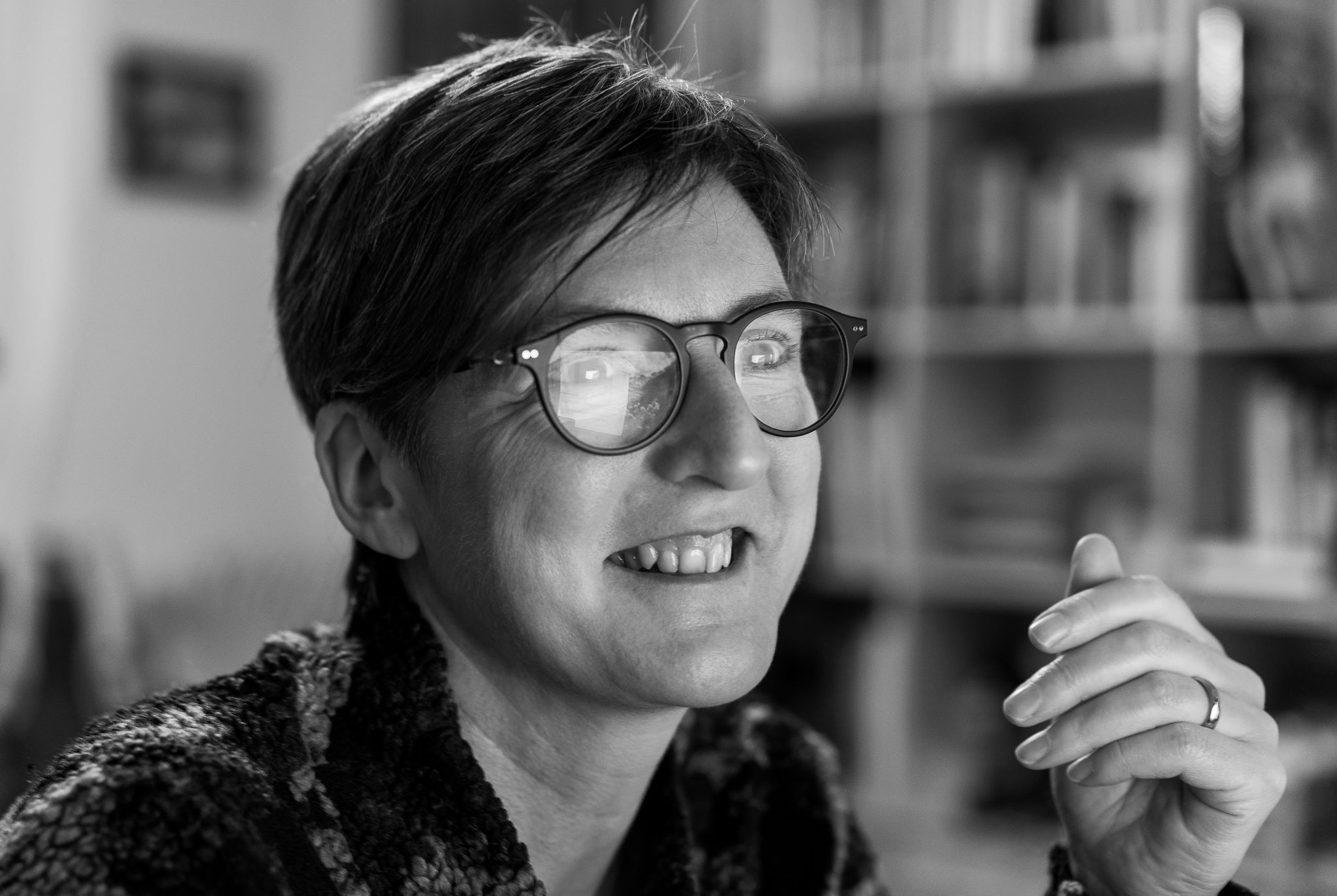
Interviewee: Gisela Horat
Nationality: Swiss
Current release: The Gisela Horat Trio's new album Live in Leipzig is out via unit.
Global Recommendation: The Sihlfeld Cemetery, with its large, old trees, offers peace and contemplation in the middle of the city.
Topics I am passionate about but rarely get to talk about: The thoughtlessness and recklessness with which we humans treat the Earth, the foundation of our existence. The intolerance, selfishness and xenophobia that rule the world. This leaves me feeling incredibly helpless and speechless.
If you enjoyed this Gisela Horat interview and would like to stay up to date with her music and catch her live, visit their official homepage. She is also on Instagram, and bandcamp.
When did you first consciously start getting interested in musical improvisation? What was your first improvisation on stage or in the studio and what was the experience like?
Actually, I already wanted to make music and study it as a teenager. Back then, that would have meant studying classical music at the conservatory in Lucerne. But my parents were against it and told me: first you have to learn something proper. So I studied biology at ETH Zurich.
There, a fellow student took me to a Keith Jarrett concert. After the concert, I knew that I wanted to be able to make music like that. After finishing my biology degree, I decided to make music, my own music.
I can't remember my first improvisation on stage, but working with violinist Maria Geiger from 1997 to 2005 was very important for my musical work and its development. From the very beginning, I experienced improvisation as a form of liberation.
Tell me about your instrument and/or tools, please. What made you seek it out, what makes it “your” instrument, and what are some of the most important aspects of playing it?
My father's dream was to form a Ländlerkappelle (Swiss folk music group) with his children. Because the piano was still missing from the line-up, I was given piano lessons. My father's Ländlerkappelle never became a reality, but the piano has definitely become my instrument.
I also learned to play the saxophone and percussion. But the piano or grand piano is simply fascinating. It is a huge sound box that I can make vibrate and resonate, and with imagination I can create many different tones and sounds to express my feelings and tell stories.
How would you describe your own relationship with your instrument – is it an extension of your self/body, a partner and companion, a creative catalyst, a challenge to be overcome, something else entirely?
My own wonderful Bösendorfer in my practice room is my partner, with whose help I can express myself and continue my musical and artistic development.
When I play it, I immerse myself in the sounds and my instrument, becoming one with it. Beautiful sounds intoxicate me and I can then simply listen to a single note for a long time.
The instruments at concerts or in studios are new acquaintances that I get to know during the sound check. And as with people, some are more likeable than others. A likeable instrument inspires me, lets me immerse myself, while a less likeable instrument is a challenge and remains at a distance.
Derek Bailey defined improvising as the search for material which is endlessly transformable. What kind of materials have turned to be particularly transformable and stimulating for you?
My materials are short melodic or rhythmic phrases, which I combine with a feeling to try to create a story. This material can and should change every time I play it.
An example of this is the improvisation ‘Leben’ (Life). It can be found on almost all of my releases. I have been playing it for over 20 years and also in every concert.
I find it exciting and challenging to experiment with a familiar motif and explore what else is possible with it. Especially when I set myself the goal of trying to create something new every time.
And just as life itself is perceived differently in every moment, improvisation hopefully changes again and again.
Do you feel as though there are at least elements of composition and improvisation which are entirely unique to each? Based on your own work or maybe performances or recordings by other artists, do you feel that there are results which could only have happened through one of them?
Composition and improvisation both have their own characteristics.
For me, composition helps me with improvisation. I often use composed elements as a starting point. On very creative days, this leads to new ideas.
I can simply describe when an improvisation is successful and, while playing, creates the feeling that anything is possible, the disbelief and amazement at one's own ideas, the intoxication that arises and the pure joy of making music.
When you're improvising, does it actually feel like you're inventing something on the spot – or are you inventively re-arranging patterns from preparations, practise or previous performances? What balance is there between forgetting and remembering in your work?
For me, improvisation is both. It is a creative approach to patterns and compositional elements as well as spontaneous invention.
The combination of preconceived patterns with spontaneous ideas, the contrast between prepared and spontaneous, tonal and atonal, rhythmically defined and timeless, is exciting and always gives rise to something new. Experimentation, research and trial and error are central elements for me.
Sometimes such a pattern or element is simply present in my mind as a starting point. For me, the titles (for example, ‘Verloren’ [Lost]) of the improvisation are much more important as a starting point because they express the basic feeling.
Then, when I play, I simply immerse myself in the sounds, listen to them and let them guide me.
Artists from all corner of the musical spectrum, not just “free jazz” have emphasised the importance of freedom in their creativity. What defines freedom for your improvisations?
That I am able to realize my ideas at any moment and am not held back by external limitations such as the capabilities of the instrument I am currently playing or my musical and technical abilities.
That I can concentrate fully on the moment and succeed in making music in the present, perceiving my fellow musicians and supporting them in their ideas.
Taking your recent projects, releases, and performances as examples, what, would you say, are the key ideas behind your approach to improvisation?
For me, successful improvisation always revolves around a few concrete ideas (spontaneous and/or preconceived) that help me express a feeling or tell a story.
Only playing what is absolutely necessary. Finding the single note that is needed to express what I want to say, and deciding what is important at that moment. Focusing and giving myself completely to the moment. (see Live in Leipzig)
In your best improvisations, do you feel a strong sense of personal presence or do you (or your ego) “disappear”?
There are two aspects to this.
I myself feel a strong personal presence, which should enable the listener to feel themselves in the music and to experience a feeling or a story detached from me.
What are some of your favourite collaborators and how do they enrich your improvisations?
My two trio partners, Samuel Büttiker and Simon Iten. With their personalities, creativity and unique interpretations of my basic ideas (compositional elements), they enrich these ideas and also help me and us to develop musically.
We challenge each other with great trust and experiment together. I am regularly amazed and delighted by how the improvisations develop in rehearsals or concerts.
Then there is my duo partner Christine Stöckli, with whom I tell spontaneously invented stories, she in words and I in sounds. It is exciting to see how my improvised music gives rise to the story and how the story influences my musical improvisation.
In a live situation, decisions between creatives often work without words. From your experience and current projects, what does this process feel like and how does it work?
I can't explain exactly how this communication works. It has a lot to do with absolute mutual trust.
Perceiving each other, understanding each other, respecting each other, listening to and appreciating each other, trying to put yourself in the other person's position.
Stewart Copeland said: “Listening is where the cool stuff comes from. And that listening thing, magically, turns all of your chops into gold.” What do you listen for?
I try to perceive and hear what the other person wants to tell me. I try to put myself in their position and sense where their thoughts might be going. Then I can decide how best to support them.
Sometimes it works and sometimes it doesn't. Sometimes you understand each other and sometimes you don't. But even misunderstandings can be enriching and lead to new ideas.
There can be surprising moments during improvisations – from one of the performers not playing a single note to another shaking up a quiet section with an outburst of noise. Can you tell me about such situations from your own performances and how they impacted the performance?
During a concert, we don't decide who starts improvising, who in the trio plays the first idea or how they play it. But the person who plays the first idea then sets the course and the way we go down that path together.
Sometimes I guide this as the bandleader. What I specify in each case is the order of the improvisational ideas or titles in order to create a rough basic structure and dramaturgy for the concert and, with the help of the titles of the improvisations, to give the audience the opportunity to use their own imagination and to enter into our music.
In addition, the audience influences how the improvisations develop with its energy and reactions, which makes the concert situation very exciting and enriching for us musicians.
As a listener, do you also have a preference for improvised music? If so, what is it about this music that you appreciate as part of the audience?
I like listening to different kinds of music. But improvised music just moves me the most. Music has to touch me emotionally, stimulate my imagination and conjure up images.
What's always important to me at concerts is that the artists communicate with the audience and have something to say to me.
In a way, we improvise all the time. In which way is your creative work feeding back and possibly supporting other areas of your life?
Being able to live in the moment and enjoy it.
Responding flexibly to situations, trying to be aware of my surroundings and fellow human beings, respecting them and responding to them.