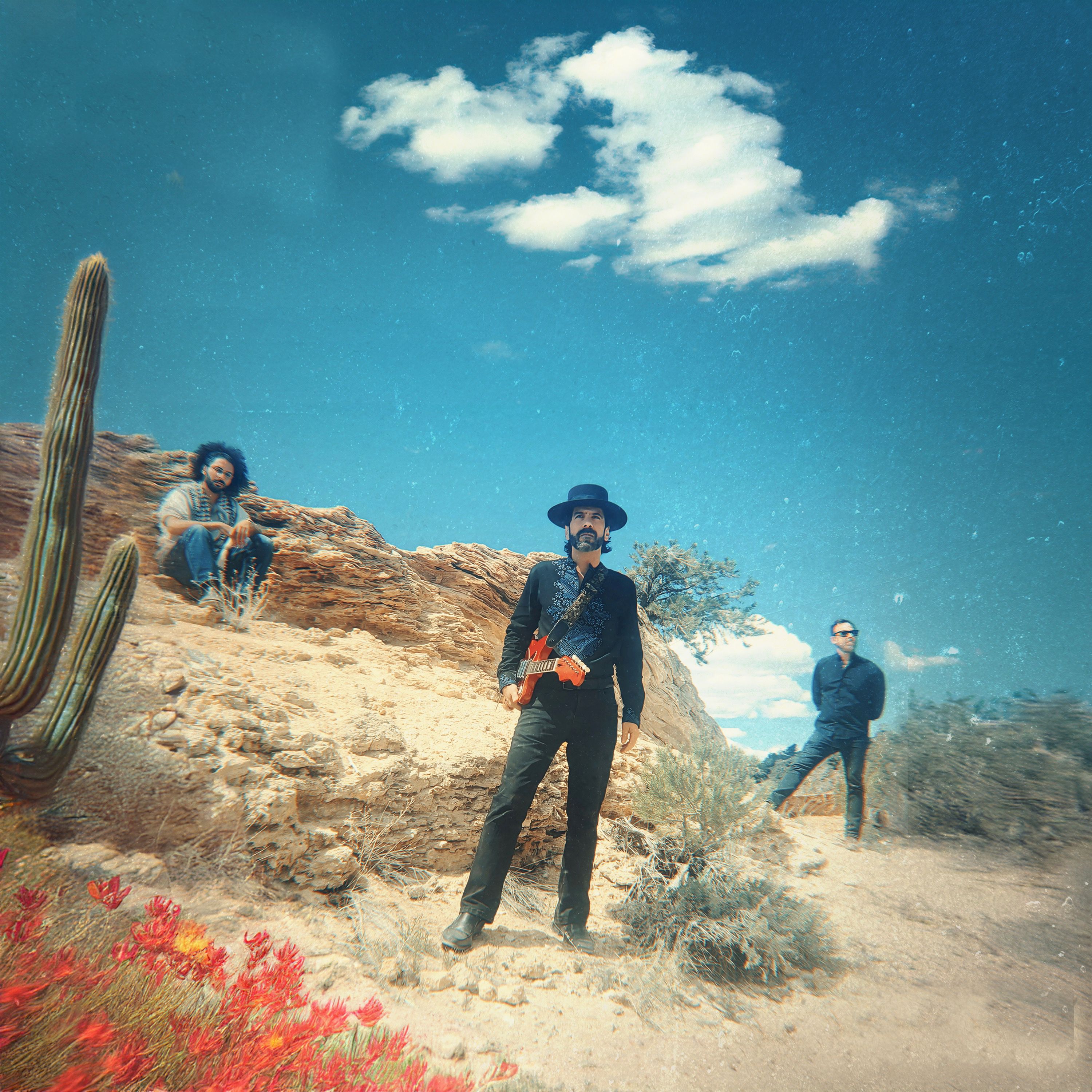
Published
Name: Brian J aka Gitkin
Occupation: Guitarist, composer, producer
Nationality: American
Current release: Gitkin's new album Golden Age is out via Wonderwheel.
If you enjoyed this Gitkin interview and would like to stay up to date with his music, visit his official homepage. He is also on Instagram.
Where does the impulse to create something come from for you? What role do often-quoted sources of inspiration like dreams, other forms of art, personal relationships, politics etc play?
I am not sure where the impulse comes from. But I would venture to guess it was something I was born with. Music is intertwined with my spirit.
Dreams, relationships, and art are part of the world that gets stirred into the mix, but I’m not always conscious of how.
I actually try not to get too involved with the creative process, more just give art the opportunity to happen and try and stay out of the way.
For you to get started, do there need to be concrete ideas – or what some have called a of the finished work? What does the balance between planning and chance look like for you?
There’s definitely an element of chance—good word choice. I never know exactly why or when an intriguing idea is going to come, but when it does, I try to ride the wave.
Sometimes I try an idea and it doesn’t work. The song “Delta Mystic” was started in 2018. I felt there was something worthwhile there but I couldn’t get it to work. I fiddled with it a few times and finally abandoned it. I opened the track by chance when I was working on Golden Age and I finally cracked the code.
What I really loved about the track was the bass and the drums so I muted everything else and built a new idea over the rhythm section.
Is there a preparation phase for your process? Do you require your tools to be laid out in a particular way, for example?
Preparation can vary. Sometimes I’ll dive straight in other times I do everything but music till the mood is right.
Do you have certain rituals to get you into the right mindset for creating? What role do certain foods or stimulants like coffee, lighting, scents, exercise or reading poetry play?
You called it … good coffee and healthy food are crucial.
I try and keep my daily yoga going as well.
What do you start with? And, to quote a question by the great Bruce Duffie: When you come up with a musical idea, have you created the idea or have you discovered the idea?
Haha that question is a little above my pay grade.
But without getting too metaphysical I guess you could say it’s like the music exists somewhere already, and I’m just pulling it down, helping it manifest.
The guitar, the studio—they’re tools to unlock something beautiful.
Many writers have claimed that as soon as they enter into the process, certain aspects of the narrative are out of their hands. Do you like to keep strict control or is there a sense of following things where they lead you?
It’s a dance. I for sure follow things as they unfold but I try and keep an eye on the original vision to keep me on track.
There are many descriptions of the creative state. How would you describe it for you personally? Is there an element of spirituality to what you do?
Yes, I feel it’s a spiritual thing but I try not to over think it or pin it down. It’s moving target and the second you get cocky it’s gone.
Once a piece is finished, how important is it for you to let it lie and evaluate it later on? How much improvement and refinement do you personally allow until you’re satisfied with a piece? What does this process look like in practise?
Most of the time I let a track sit and come back to it. Sometimes it takes a lot of fiddling and revising.
The song “The One” had quite a few revisions. Tried a few different bass lines and fiddled with the guitars and keys. At a certain point I got it as far as I could and that was that.
Some tracks like “Ice Coffee” I recorded in a few hours and it was done.
When you're in the studio to record a piece, how important is the actual performance and the moment of performing the song still in an age where so much can be “done and fixed in post?“
The performance is crucial.
My music is pretty simple. There is not a ton of overdubs. I try and make each element count and a big part of that is performing with conviction and finesse.
Even recording a solo song is usually a collaborative process. Tell me about the importance of trust between the participants, personal relationships between musicians and engineers and the freedom to perform and try things – rather than gear, technique or “chops” - for creating a great song.
I tend to be a lone wolf in the studio. I play a lot of instruments to varying degrees of proficiency. On instruments like drums, congas and keys I know how to get the result I am after but I am not real technical on those instruments.
On this record I was able to include my live band - Simon Moushabeck on Keys and Washington Duke on drums - on a few songs which was super fun. Beautiful vocalist Carol C helped me out on “Delta Mystic.”
I also included a collab with my dear friend Assaf Spector on the title track “Golden Age.”
We’ve been doing a bunch of tracks together and have a great working relationship.
What’s your take on the role and importance of production, including mixing and mastering for you personally? In terms of what they contribute to a song, what is the balance between the composition and the arrangement
(performance)?
The studio is it’s own instrument. Production is an integral way that I tell my story. I use a lot of vintage elements, tape, spring reverb, ribbon mics … I love a warm inviting sound …
That is why the album is not mastered very loud. Loudness requires compression and limiting which at first sounds impressive but can be fatiguing to the ear.
After finishing a piece or album and releasing something into the world, there can be a sense of emptiness. Can you relate to this – and how do you return to the state of creativity after experiencing it?
Every time I finish an album I actually get a jolt of energy. It’s liberating to be completely done.
Also, by the time an album is actually released I’m knee deep into the next album.
Music is a language, but like any language, it can lead to misunderstandings. In which way has your own work – or perhaps the work of artists you like or admire - been misunderstood? How do you deal with this?
That’s the beautiful thing about instrumental music … each person can have their own interpretation - either consciously or not.
Creativity can reach many different corners of our lives. Do you personally feel as though writing a piece of music is inherently different from something like making a great cup of coffee? What do you express through music that you couldn’t or wouldn’t in more mundane tasks?
I think at it’s best, art is communicating a slice of the divine.
There are people who’s life is art like Neal Cassady or Charlie Chaplin or somebody like that. I imagine those guys making could make the task of coffee compelling.